The Clotilda: Underwater Archaeological Discovery of America's Last Slave Ship
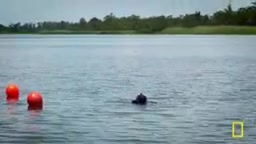
Underwater archaeologists discover the Clotilda, America's last slave ship, in Alabama's Mobile River Delta.
Nearly 160 years after being deliberately burned and sunk to hide evidence of illegal slave trafficking, the Clotilda was discovered by marine archaeologists in Alabama's Mobile-Tensaw River Delta. Key evidence including a 13-foot centerboard, an oversized cargo hold, and char marks confirmed the wreck's identity. The documentary also explores related discoveries of Danish slave ships off Costa Rica and an Underground Railroad vessel in Lake Michigan.
On the night of July 9, 1860, a schooner named the Clotilda quietly slipped into Mobile Bay, Alabama. On board were 109 enslaved Africans—the last group of African captives ever trafficked to the United States. Shortly after, the ship vanished into the darkness, never to be seen again. Nearly 160 years later, a team of marine archaeologists finally uncovered its resting place.
This National Geographic documentary, Drain the Oceans, not only tells the story of the Clotilda's discovery but also weaves together the stories of multiple shipwrecks from the transatlantic slave trade—from a Danish slave ship off the coast of Costa Rica to a "freedom vessel" at the bottom of Lake Michigan—using underwater archaeological technology to illuminate one of the darkest chapters in human history.
A Million-Dollar Bet: Why the Clotilda Set Sail
In 1808, the U.S. Congress had explicitly banned American participation in the slave trade, though slavery itself remained legal in many states. By 1860, a group of men in Mobile made a wager—equivalent to roughly one million dollars today—betting they could smuggle enslaved people from Africa right under the noses of federal marshals.
Ship owner Timothy Meaher dispatched the Clotilda to the port of Ouidah in present-day Benin, where 109 Africans were purchased for $12,500 (approximately $375,000 today). Once brought to America, their market value would reach $5 million. After a six-week voyage, the Clotilda returned to Alabama and promptly disappeared.
Captain William Foster recorded his final actions in his ship's log: he transferred the enslaved people to a riverboat, hid them in sugarcane thickets, then personally set fire to his own schooner, burning it to the waterline and sinking it to the riverbed. The reason was simple—slave trading was then equivalent to piracy, and if caught, the captain faced the death penalty.
The Underwater Search: Tracking a Shipwreck in Alligator-Infested Waters
Archaeologist James Delgado led this major investigation. The search area centered on the Mobile-Tensaw River Delta—a vast wetland several miles north of Mobile. The environment was extremely hostile: hot and humid, infested with alligators and water moccasins, with near-zero underwater visibility.
The team used underwater sonar scanning and discovered numerous shipwreck traces in a bend of the river that had never been explored with modern equipment—a veritable "ship graveyard" with 12 potential targets identified. Since the Clotilda was an 86-foot wooden schooner, the archaeologists eliminated all larger targets and metal hulls, ultimately zeroing in on "Target 5"—a wooden wreck whose bow shape, as revealed by sonar, closely matched expectations.
Dive team member Kamau Sadiki came from "Diving With a Purpose," an organization dedicated to preserving slave ship remains. He described the underwater work as "Braille archaeology"—divers could barely see their own hands in front of them and had to navigate entirely by touch. Visibility was just six inches.
Key Archaeological Evidence: Centerboard, Cargo Hold, and Char Marks
In the dark water, divers touched an important structural component—a 13-foot wooden centerboard. The centerboard was a critical feature of mid-19th century sailing vessels, particularly fast schooners like the Clotilda. A 13-foot centerboard indicated a vessel approximately 80 feet long, closely matching the Clotilda's recorded length of 86 feet.
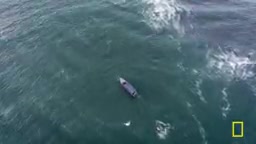
Through sonar data reconstruction, the complete profile of the wreck gradually emerged: a high bow, slightly offset; a stern buried under several feet of silt. Even more striking was the ship's unusually deep cargo hold—ordinary bay schooners designed for shallow-water navigation typically had low, flat hulls, but this vessel's hold resembled that of an ocean-going ship. This was precisely the Clotilda's design characteristic: she was intentionally built larger and deeper to accommodate large numbers of human "cargo."
The definitive evidence came from 3D high-resolution scanning and laboratory analysis. The scans revealed distinct black char marks on the centerboard—this ship had been subjected to intense burning, with its thick oak framing reduced to near-charcoal. This perfectly matched Captain Foster's log entry about "burning the schooner to the waterline."
As Delgado stated: "Short of finding a nameplate, every piece of evidence points to the same conclusion—this is the Clotilda."
A Danish Slave Ship off Costa Rica: An Unexpected Archaeological Find
The documentary also tells another shocking story. More than 1,500 miles from Mobile, off the coast of Costa Rica, archaeologist Lynn Harris investigated two shipwrecks believed to be slave ships.
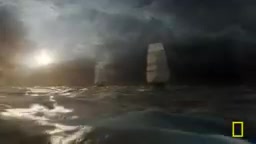
The first wreck was equipped with multiple 18th-century muzzle-loading cannons and measured approximately 118 feet in length. The second wreck, though its wooden hull had completely deteriorated, left behind thousands of neatly stacked yellow bricks. By comparing brick dimensions, Lynn determined these were Danish bricks, and subsequently found records in the Danish West India Company archives of two Danish ships lost at Punta Cahuita in 1710.
The two ships were the 144-foot Fredericus Quartus (carrying 433 African captives and 24 cannons) and the 118-foot Christianus Quintus (carrying 373 enslaved people). After departing in October 1709, they drifted 1,200 miles off course. By February 1710, disease, dehydration, and starvation had claimed the lives of 135 Africans aboard the two vessels. Local legend holds that some of the enslaved people escaped after the crews abandoned ship, integrating into local indigenous communities.
The "Freedom Vessel" at the Bottom of Lake Michigan and the Underground Railroad
170 feet beneath the surface of Lake Michigan, archaeologist Mallory Haas discovered an 84-foot schooner named the Home. This vessel was reportedly part of the Underground Railroad network—a secret organization that helped fugitive slaves travel across half a continent to freedom.
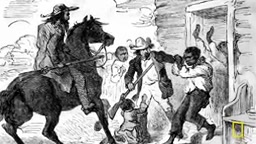
The hull's starboard side bore a massive impact hole, perfectly matching a reported collision on October 19, 1858. But the real breakthrough came from archival research: Captain James Nugent's sailing records showed that in 1848 he frequently traveled between Buffalo and Sandusky on Lake Erie—both known Underground Railroad escape nodes. After the Fugitive Slave Act of 1850 was passed, Nugent began charting new routes to Canada.
The most compelling evidence came from a journal published after Nugent's death: "Those fugitive slaves were hidden in the cargo hold of a schooner, transported to Canada... accomplished by a late captain, a man of conscience and heart." The Home's forward cargo hold measured 8 feet long by 6.5 feet wide—large enough to conceal several people. It is estimated that vessels like the Home helped approximately 40,000 enslaved people escape to freedom and new lives in Canada.
Africatown: A Community Born from the Suffering of a Slave Ship
Just months after the Clotilda sank, the Civil War broke out. When the war ended, the ship's survivors finally gained their freedom. They sought to return to Africa but could not raise the fare. Instead, some chose to establish their own community along the Mobile River—"Africatown"—which still exists today.
Lorna Woods, a direct descendant of the Clotilda's captives, displayed iron shackles passed down through generations: "These chains represent bondage. They validate where we came from, who we are. That ship gives us that connection. When they said 'we found the ship,' you could feel the souls of our ancestors speaking to us: 'We knew this day would come.'"
Conclusion: Underwater Archaeology Safeguards an Indelible History
The transatlantic slave trade transported 12 million Africans to the New World—the largest forced migration in human history. To date, fewer than 10 slave ships have been positively identified. The discovery of the Clotilda is not only a major archaeological achievement but also a defense of historical memory.
As the documentary concludes: "The African slave trade was a crime against humanity, and the Clotilda is a key piece of physical evidence. We must ensure that attempts to erase this history from memory will never succeed."
Related articles
Sakana AI Launches RSI Lab: The Path to Recursive Self-Improvement Where AI Builds AI
Sakana AI launches RSI Lab for recursive self-improvement, letting AI autonomously improve its own architecture. Explore their four-stage roadmap and key breakthroughs.

Sakana AI in Practice: Reshaping Banking Lending Operations with AI Agents — Technology and Strategy
Deep dive into how Sakana AI applies AI Agents to banking lending operations, covering end-to-end support from information gathering to approval document generation, plus technical challenges and human-AI collaboration design.

Instagram Enters the Living Room: Long-Form Video, Series, and Live Streaming Challenge Netflix
Instagram is building a TV app with long-form video, episodic series, and live streaming to challenge Netflix. Deep analysis of its living room strategy and industry impact.