Sakana AI in Practice: Reshaping Banking Lending Operations with AI Agents — Technology and Strategy
Sakana AI shares practical insights on building AI Agents for banking lending operations in Japan.
Sakana AI engineers reveal their approach to building AI Agents for banking lending operations, covering the full workflow from information gathering to approval document generation. They discuss unique challenges of financial-grade AI including quality redefinition, multi-constraint architecture, and responsibility boundary design, while sharing their AI-native development culture and strategy for evolving from PoC to enterprise-grade platforms.
Introduction: When AI Agents Enter Core Financial Operations
AI Agents are moving from the lab into real business scenarios, and the financial sector is undoubtedly one of the most challenging yet valuable directions for deployment. Japanese AI research company Sakana AI launched its Applied Team, focusing on applying cutting-edge AI technology to social infrastructure domains including finance and defense.
Recently, two software engineers from Sakana AI — Shota Sakai, who leads financial project development, and Katsuhiro Honda, the engineering team manager — shared their practical experience building AI Agent products for banking lending operations. Their frontline developer perspectives reveal the real challenges and opportunities of deploying AI Agents in enterprise-grade financial scenarios.
How AI Agents Support Banking Lending Operations: The Full Picture
End-to-End Support from Information Gathering to Approval Document Generation
Sakai explained that the team is currently developing a product that uses AI Agents to support banking lending operations. Lending operations are inherently complex — bank staff need to collect and organize customer information, financial data, and business details, analyze them, and then produce approval documents (ringi-sho) and other materials.
Their AI Agent system covers multiple stages including initial analysis, information organization, financial simulation, and approval document draft generation, while also developing the platform infrastructure to ensure these Agents operate securely.
What you might not immediately notice is that the design philosophy here isn't about replacing human judgment — it's about reducing the burden of analysis and document preparation so bank staff can focus their energy on client conversations and discussions of key issues. This positioning of "AI as collaborative partner rather than replacement" is particularly important in finance, a field that heavily relies on professional judgment.
Unique Technical Challenges Facing Financial-Grade AI Agents
Compared to typical web application development, embedding AI Agents into financial operations presents fundamentally different technical challenges. Sakai provided an in-depth analysis across several dimensions:
Redefining quality standards. Traditional web applications have relatively clear inputs and outputs, with mature testing and quality assurance systems. But AI Agent outputs vary depending on prompts, context, and model behavior — the question of "what constitutes good enough quality for business purposes" itself needs to be redefined.
Architecture design under multiple constraints. The financial sector has strict requirements for security, cloud environments, and integration with existing systems. The architecture must be designed to safely and reliably deliver AI Agent services while meeting diverse environmental and operational requirements.
Granular responsibility boundary delineation. Developers need to carefully define: what information is passed to the AI, where the AI's autonomous authority ends, and which steps are controlled by humans or the application layer. This involves not just model invocation and result display, but an entire mechanism encompassing context management, tool execution, permission management, audit logging, human confirmation checkpoints, and error recovery.
AI-Native Development: Balancing Speed and Governance
Designing Workflows with AI as a Premise
Sakai mentioned that as an "AI-native" company, Sakana AI's working methods differ fundamentally from traditional enterprises. Rather than retrofitting AI into existing business processes, they design their workflows from the ground up with AI usage as a given — neither overly fearful nor underestimating AI's capabilities.
In daily development, the team extensively uses AI across various scenarios, but it's far from simply "handing things off to AI." At the organizational level, they've established clear prompt design standards, verification environments, and sandbox execution mechanisms, with information governance and quality assurance as foundational prerequisites. On this basis, humans focus on architecture design, specification decisions, code review, and quality and risk assessment, while AI handles the automatable portions.
The direct result of this division of labor: the discretionary authority and scope of attention granted to each individual has expanded significantly. Sakai noted that compared to his previous role, he now needs to make judgments across multiple dimensions — product value, user experience, technical feasibility, security, and operability — with substantially more autonomous decision-making space.
Collaboration Patterns in a Multi-Background Team
Honda described the team's organizational structure. The roles he manages fall primarily into two categories:
- Software Engineer: Working in a full-stack capacity, responsible for core common domains including platform and product, covering architecture design, development productivity, and shared infrastructure. A key responsibility is elevating PoC-level systems to enterprise-grade operational quality.
- Solution Engineer: Responsible for deployment and integration in customer environments, particularly navigating the various constraints that financial institutions and large enterprises impose around security, networking, and operations.
Team members come from extremely diverse backgrounds — not just web development engineers, but also data scientists, SI (systems integration) professionals, cloud computing specialists, SRE engineers, and product developers. This diversity has fostered a culture of cross-role collaboration, where each person maintains professional depth while also crossing functional boundaries to advance projects.
From PoC to Production: The Evolution Path of Enterprise AI Products
Dual-Track Drive: Short-Term Delivery and Long-Term Platformization
Honda's expectations for the team reflect clear strategic thinking:
The short-term goal is to solidly complete customer deliveries. In the enterprise domain, systems must hold up under real-world operations and various constraints — this requires not just technical capability, but the collaborative ability to work with customers and various roles, and the execution power to see things through to the end.
The mid-to-long-term goal is to feed knowledge gained from individual projects back into the platform and products. Rather than letting each case remain siloed, the approach is to drive platformization and productization based on feedback from delivery engagements, creating a continuous improvement cycle. Going further, this improvement process itself should be optimized through AI, reducing development and operational costs.
Product Vision for the Future
Sakai's vision is ambitious: to establish Sakana AI's technology and products as the de facto standard for AI applications in Japan. He emphasizes that the goal isn't "software made for AI's sake," but rather software that enables people to collaborate with AI within natural business workflows — AI provides support at the right moment, humans make the decisions, and then the process flows into the next action.
Honda focuses more on the deeper transformation AI brings to how software engineers work and how development processes evolve. He believes we can't simply stay at the level of using AI tools — we need to think about how organizations and processes should change accordingly.
Key Takeaways: Critical Elements for AI Agent Deployment in Finance
From this interview, we can distill several critical elements for deploying AI Agents in highly regulated industries like finance:
- Human-AI collaboration, not replacement: AI handles repetitive analytical and document generation work; humans focus on judgment and communication
- Redefining quality standards: Traditional testing methods don't apply to AI Agents; new evaluation frameworks must be established
- Granular responsibility boundary design: Clearly define the AI's autonomous scope, human confirmation checkpoints, and error recovery mechanisms
- Evolution from projects to platforms: Experience from individual delivery projects must be distilled into reusable platform capabilities
- AI-native organizational culture: Don't layer AI on top of old processes — redesign workflows with AI as a foundational premise
AI Agent applications in finance are still in their early stages. As Sakai put it, "this is a field where there are no fixed right answers yet." But it's precisely this uncertainty that creates an enormous window of opportunity for teams that understand both financial operations and the boundaries of AI capabilities.
Related articles
Sakana AI Launches RSI Lab: The Path to Recursive Self-Improvement Where AI Builds AI
Sakana AI launches RSI Lab for recursive self-improvement, letting AI autonomously improve its own architecture. Explore their four-stage roadmap and key breakthroughs.

The Clotilda: Underwater Archaeological Discovery of America's Last Slave Ship
The Clotilda, America's last slave ship, was discovered by underwater archaeologists in Alabama nearly 160 years after sinking. Learn about the search, key evidence, and other slave trade shipwreck discoveries.
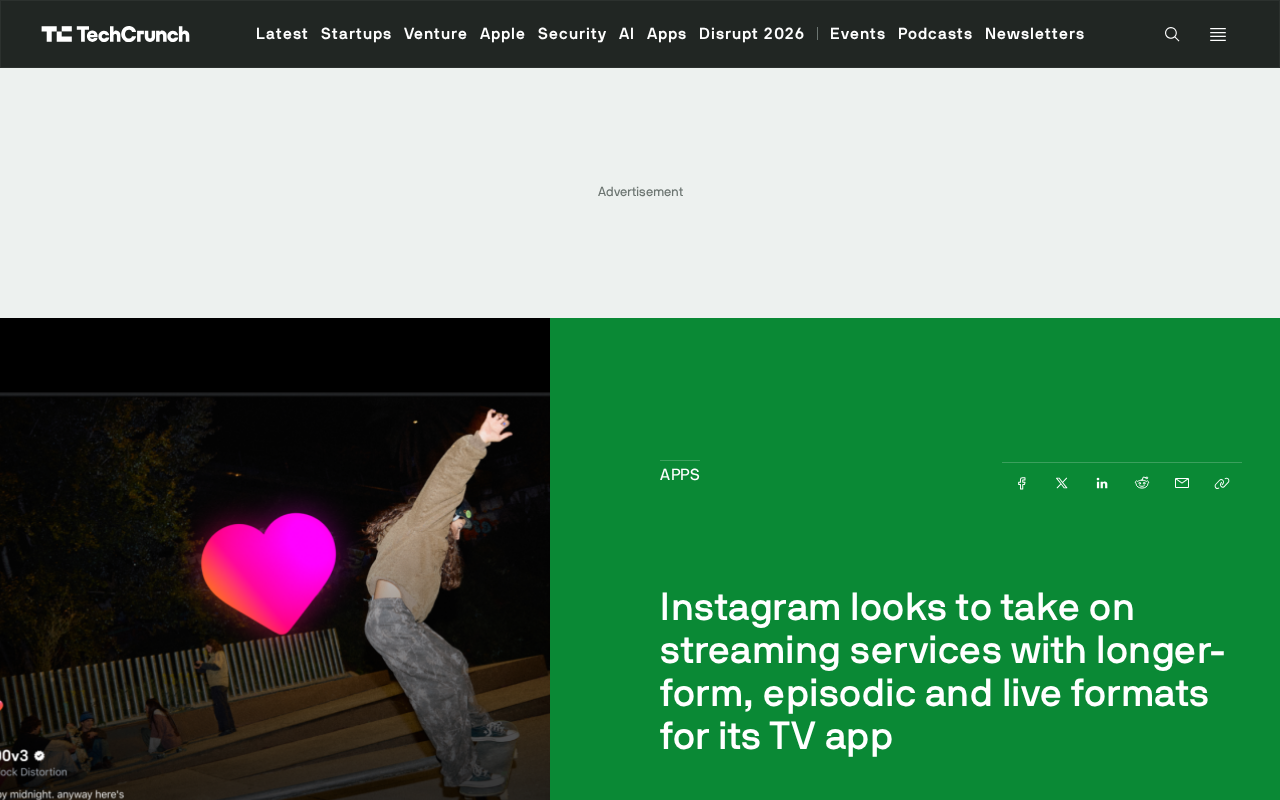
Instagram Enters the Living Room: Long-Form Video, Series, and Live Streaming Challenge Netflix
Instagram is building a TV app with long-form video, episodic series, and live streaming to challenge Netflix. Deep analysis of its living room strategy and industry impact.