Scientific Achievements Deserve Public Applause: Why We Should Give Standing Ovations for Scientific Breakthroughs
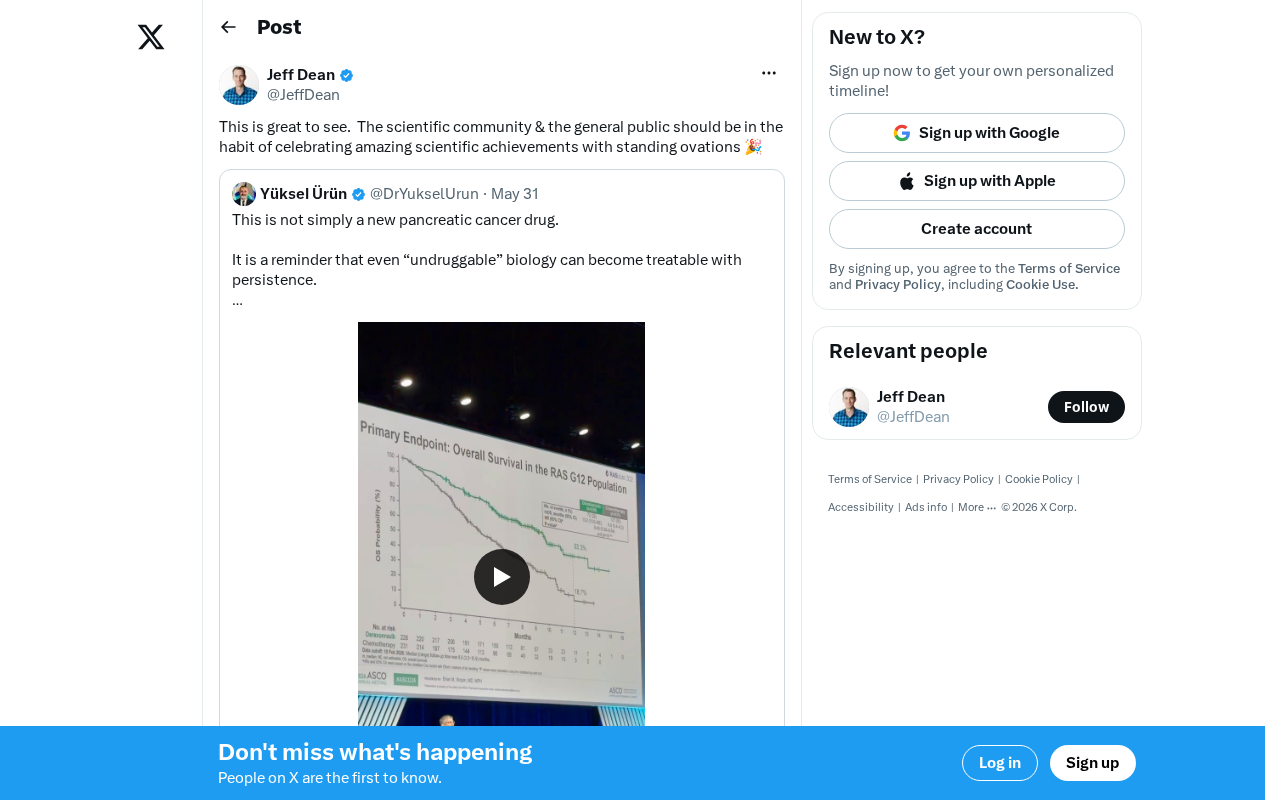
A call to celebrate scientific breakthroughs with the same enthusiasm we give entertainment and sports.
Scientific achievements receive far less public attention than entertainment and sports, despite their profound impact on civilization. This article examines the structural challenges of science communication in the attention economy, explains why celebrating breakthroughs matters for inspiring future researchers and building a rational society, and highlights how the AI field's open-source culture is pioneering a new model of participatory science celebration.
Scientific Achievements Deserve More Public Recognition
Recently, a tweet about celebrating major scientific achievements struck a chord with many. The author called for scientists and the public alike to develop the habit of giving standing ovations for outstanding scientific accomplishments.
This brief yet powerful call to action touches on a long-overlooked issue — our society pays far less attention to and celebrates scientific achievements with far less enthusiasm than it does entertainment, sports, and other domains.
The Real Challenges of Science Communication
In the age of social media, a single post from an entertainment celebrity can easily garner millions of interactions, while scientific breakthroughs that change the course of human destiny often circulate only within professional circles. This asymmetry in information dissemination reflects deep-seated issues in cultivating public scientific literacy.
This phenomenon can be understood through the framework of the "Attention Economy." Nobel laureate in economics Herbert Simon pointed out as early as 1971: "A wealth of information creates a poverty of attention." Social media recommendation algorithms naturally favor content with high emotional arousal and low cognitive barriers, while scientific achievements often require a certain knowledge base to appreciate their significance. This puts scientific content at a structural disadvantage in algorithm-driven information distribution. Science communication faces not just a problem of being "not interesting enough," but a structural challenge within the entire information ecosystem.
From breakthroughs in AI large language models to advances in quantum computing, from the maturation of gene-editing technology to milestones in space exploration, major scientific achievements have been emerging one after another in recent years. Yet the visibility of these achievements in the public eye is severely mismatched with their actual impact on human civilization.
Take AI large language models as an example. Breakthroughs in this field began with Google's 2017 Transformer architecture paper Attention Is All You Need, followed by multiple generations of evolution through GPT series, BERT, PaLM, and more. These models learned statistical patterns of language and knowledge representations through pre-training on massive text datasets. The release of ChatGPT in late 2022 marked the transition of large models from academic research to mainstream applications, underpinned by decades of continuous accumulation in natural language processing, deep learning, and computational infrastructure — yet most of the public knows very little about this long scientific journey.
The same is true for quantum computing. Quantum computing leverages the principles of superposition and entanglement from quantum mechanics, theoretically enabling computational power far beyond classical computers for certain problems. In 2019, Google announced achieving "Quantum Supremacy" — its 53-qubit Sycamore processor completed in 200 seconds a computation that would take a classical supercomputer approximately 10,000 years. Since 2023, companies like IBM and Google have continued advancing quantum error correction technology, moving toward practical quantum computing. Each of these milestones deserves the attention and celebration of society as a whole.
Advances in gene editing are even more directly relevant to the future of human health. The CRISPR-Cas9 system was developed by Jennifer Doudna and Emmanuelle Charpentier in 2012, earning them the 2020 Nobel Prize in Chemistry. This technology, hailed as "genetic scissors," has made precise DNA sequence modification unprecedentedly simple and affordable. In late 2023, the first CRISPR-based gene therapy, Casgevy, was approved in the UK and the US for treating sickle cell disease, marking gene editing's official transition from the laboratory to clinical application — a moment worthy of the medical history books, yet one that failed to generate a proportionate response among the public.
Why We Need to Celebrate Scientific Achievements
Inspiring the Next Generation of Researchers
When scientific achievements receive enthusiastic public recognition, the message it sends is clear: scientific research is valuable and respected. This is crucial for attracting young people to pursue careers in science. In the AI field, it is precisely because technological breakthroughs have frequently made headlines in recent years that a large influx of top talent has been drawn to the field.
Bridging the Knowledge Gap Between Science and the Public
Public celebration of scientific achievements is itself an efficient form of science communication. When people actively seek to understand why an achievement deserves applause, scientific knowledge is disseminated organically. This self-motivated learning drive is more effective than any lecture.
It's worth noting that Science Communication, as an independent academic discipline, has undergone an important paradigm shift — from the early "Deficit Model" to the "Dialogue Model." Early science communication assumed that public indifference toward science stemmed from a lack of knowledge, and that simply "filling" the knowledge gap would suffice. However, later research showed that public attitudes toward science are influenced by multiple factors including trust, values, and cultural background. Today, effective science communication emphasizes two-way interaction, narrative-driven approaches, and emotional resonance. The brilliance of the "applaud for science" initiative lies in the fact that it doesn't ask the public to passively receive knowledge, but rather stimulates the desire for active exploration through emotional engagement — which aligns perfectly with the core philosophy of modern science communication.
Building a Rational Society That Respects Facts
A society accustomed to applauding science is more likely to cultivate a cultural atmosphere that respects facts and values rationality. At a time when AI technology is advancing rapidly and the public needs to view technological change rationally, this cultural foundation is especially critical.
Seeds of a Science Celebration Culture in the AI Field
Encouragingly, the AI field is leading a new culture of celebrating science. Whenever a major model is released or a technological breakthrough is announced, widespread discussions erupt across social media. From the stunning debut of ChatGPT to the release of various open-source models, public enthusiasm for participation has been rising significantly.
The open-source model movement in AI has been a major driving force behind this emerging celebration culture. Meta's LLaMA series, Stability AI's Stable Diffusion, Mistral AI's open-source large models, and others have all sparked extensive public discussion and enthusiastic responses from the tech community upon release. The open-source model lowers the barrier to entry, enabling more people to personally experience and understand cutting-edge scientific achievements, naturally fostering a form of "participatory celebration" — people aren't just applauding from the sidelines, but actively using, testing, and improving these technologies. This identity shift from "spectator" to "participant" makes the celebration of science more authentic and lasting.
This trend deserves to be extended to broader scientific fields. As the tweet's author advocated, we need to make "giving standing ovations for science" a social habit, not an occasional occurrence.
Giving Scientific Achievements the Applause They Deserve
Scientific progress is the most powerful driving force of human civilization. Behind every breakthrough lies the wisdom and perseverance of countless researchers. Giving these achievements the attention and celebration they deserve is not only a tribute to scientific researchers but also an investment in our shared future.
The next time you see news of a scientific breakthrough, take a moment to pause, read it carefully, and then applaud — this small gesture may be more meaningful than you think.
Key Takeaways
Related articles
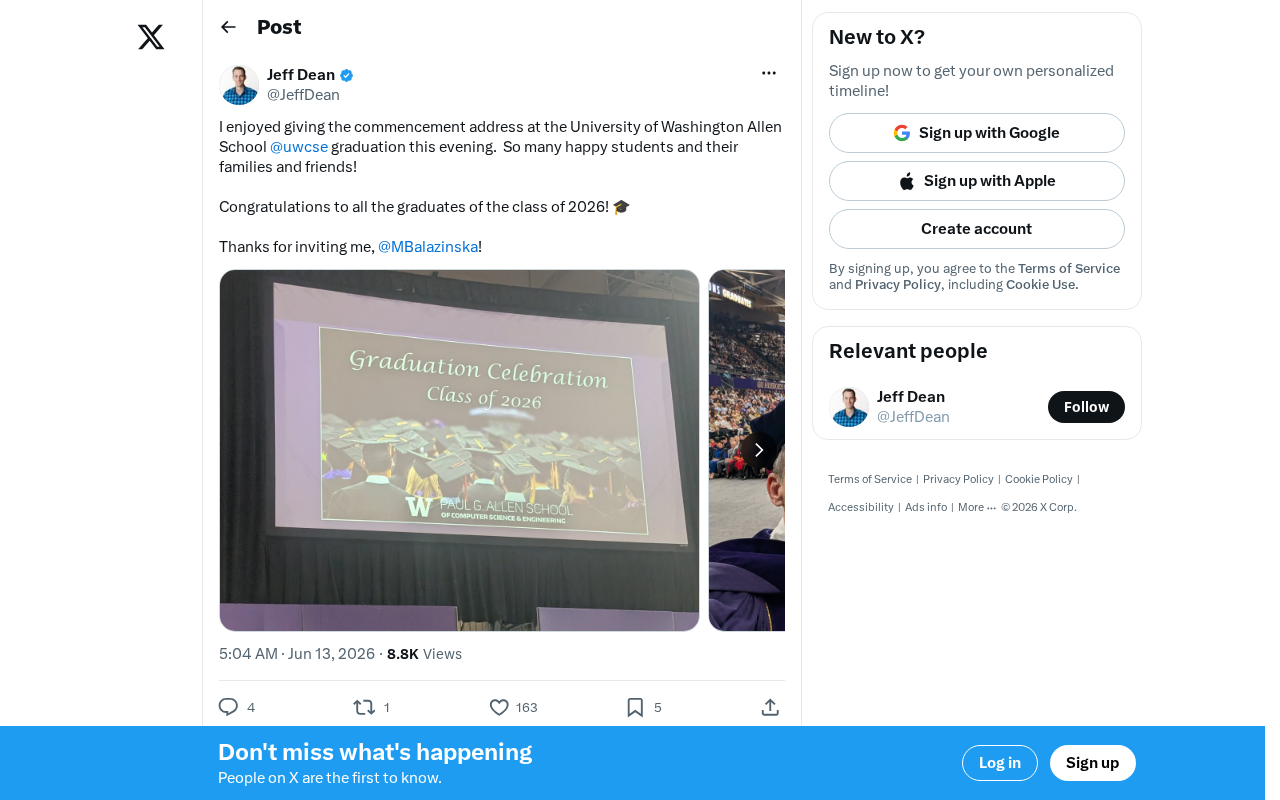
Jeff Dean's Commencement Speech at UW Allen School: A Message to the Next Generation of Engineers in the AI Era
Jeff Dean delivers commencement speech at UW Allen School of Computer Science & Engineering, sharing insights with the next generation of CS graduates in the AI era.

Codex VS Claude Code: The Token Economics Behind a 10x Price Gap
Same coding task: Codex costs $15, Claude Code costs $155. Deep dive into the real reasons behind the 10x gap — it's not pricing, it's token volume, output style, and context strategy.

Gemma 4 Open-Source Model Local Deployment Guide: Ollama Installation & Mobile Setup
Step-by-step guide to deploying Google's Gemma 4 open-source model locally with Ollama and running the lightweight version on mobile with tool calling support.