SGLang Hosts Agent Loops Office Hour, Focusing on Agentic Loop Architecture Optimization

SGLang team focuses on Agent loop architecture, exploring efficient agentic inference optimization.
The SGLang team hosted an Agent Loops-themed Office Hour to discuss technical approaches for agentic loop invocations. Agent Loops implement the ReAct paradigm's core "Reasoning → Acting → Observing" architecture, placing unique demands on inference engines including low latency, KV Cache reuse, and tool calling. SGLang's RadixAttention mechanism can reduce redundant computation by 60%-80%, while constrained decoding ensures structured output validity, positioning it competitively in the Agent inference landscape.
SGLang Focuses on Agent Loop Architecture
The SGLang team recently hosted an Office Hour event themed around "Agent Loops," diving deep into technical approaches for efficiently implementing agentic loop invocations within large language model inference frameworks.
What Are Agent Loops
Core Concepts of Agent Loops
Agent Loops are a core architectural pattern in current AI Agent development. Unlike single-pass inference, Agents need to repeatedly call LLMs within a loop to reason, execute tool calls, observe results, and then reason again until the task is complete. This "Reasoning → Acting → Observing" ReAct paradigm (Reasoning and Acting) was first systematically proposed by Google and Princeton University in their 2022 paper, and has since become the underlying logical backbone of mainstream Agent frameworks like AutoGPT, LangGraph, and CrewAI.
This pattern places unique performance demands on the underlying inference engine:
- Low-latency multi-turn conversations: Each loop iteration requires fast responses, as single-iteration latency directly determines overall task completion time
- Efficient KV Cache management: Large amounts of context within the loop need to be reused, avoiding redundant computation of attention weights for historical tokens
- Streaming tool call processing: Support for constrained decoding, parsing, and execution of function calls, ensuring the validity of structured outputs
- Long-context memory scheduling: As loop iterations increase, the context window continuously expands, posing challenges for GPU memory management
SGLang's Technical Advantages in Agent Scenarios
As a high-performance LLM inference and serving framework, SGLang offers significant advantages in Agent scenarios. Its RadixAttention mechanism is the core innovation — this technology uses a Radix Tree data structure for fine-grained KV Cache management. In traditional inference frameworks, every new request requires recomputing Key-Value pairs for all tokens, whereas RadixAttention can identify common prefixes across different requests and share computed KV Cache among multiple requests.
This is particularly critical for Agent loop scenarios: when an Agent continuously appends new tool call results across multiple iterations, the KV Cache for the historical conversation can be fully preserved, requiring only incremental computation of attention weights for newly added tokens. Theoretically, this can reduce redundant computation by 60%-80%, dramatically lowering inference latency.
Regarding tool call support, SGLang achieves Constrained Decoding capabilities by integrating grammar-guided decoding libraries like XGrammar. Function Calling in Agent loops requires LLMs to output structured content that strictly conforms to JSON Schema. Constrained decoding filters out candidate tokens that don't conform to the target format in real-time during the token generation phase, fundamentally eliminating retry overhead caused by format errors. This can significantly improve system throughput and stability in high-concurrency Agent scenarios.
Significance of the Office Hour Event
Community-Driven Technical Evolution
The SGLang team maintains close interaction with the developer community through regular Office Hour events. This format allows framework developers to directly understand the real pain points users encounter when building Agent systems — such as resource contention in multi-Agent concurrent scheduling, error handling for tool call timeouts, and GPU memory overflow under long contexts — thereby driving targeted framework optimizations. This collaborative model within the open-source community is also a key reason why SGLang can iterate rapidly and gain recognition in both academia and industry.
The Competitive Landscape of Agent Inference Infrastructure
The current LLM inference framework market features intense multi-player competition: vLLM originated with PagedAttention technology and boasts the broadest community ecosystem and plugin support; TensorRT-LLM leverages deep NVIDIA hardware optimization for hardware-level advantages in single-machine throughput; SGLang excels with programming-language-level abstractions and aggressive system optimizations, having repeatedly set new throughput records in academic benchmarks.
As code Agent products like OpenAI Codex, Anthropic Claude Code, and Google Jules successively launch, the unique characteristics of Agent inference — high-frequency short requests, long-context reuse, and intensive tool calls — are reshaping framework evaluation dimensions. SGLang's choice to make Agent Loops a dedicated discussion topic is a proactive response to this trend, reflecting the industry's strong emphasis on Agent inference optimization. Native support for Agent patterns in underlying inference engines is evolving from a nice-to-have into a critical competitive differentiator.
Future Outlook
Efficient implementation of Agent Loops is not merely a matter of inference speed — it involves coordinated optimization across multiple dimensions:
- Memory management: Supporting tens or even hundreds of concurrent Agent sessions within limited GPU memory requires more sophisticated KV Cache swap-in/swap-out strategies
- Scheduling strategies: Priority scheduling, preemptive execution, and batch merging in multi-Agent concurrent scenarios directly impact overall system throughput
- Structured output: More complex tool call schemas (such as nested JSON, streaming tool calls) place higher demands on constrained decoding engines
- Cross-node distributed inference: Inference task distribution and state synchronization for ultra-large-scale Agent clusters represent the next phase of technical challenges
SGLang's continued investment in this direction is poised to provide developers with more powerful Agent development infrastructure.
For developers building AI Agent applications, following SGLang's latest developments in Agent scenarios will help make better decisions when selecting inference frameworks — especially in production-grade Agent systems that are latency-sensitive and have high context reuse rates, where the choice of underlying framework often determines the system's performance ceiling.
Related articles
 Tech Frontiers
GitHub Agent HQ Launch: AI Coding Tools Enter the Era of Platform Competition
GitHub Universe unveils Agent HQ platform for unified coding agent management, Copilot upgrades with multi-model support. OpenAI completes restructuring, Anthropic tests new model, NVIDIA open-sources AI models.
 Tech Frontiers
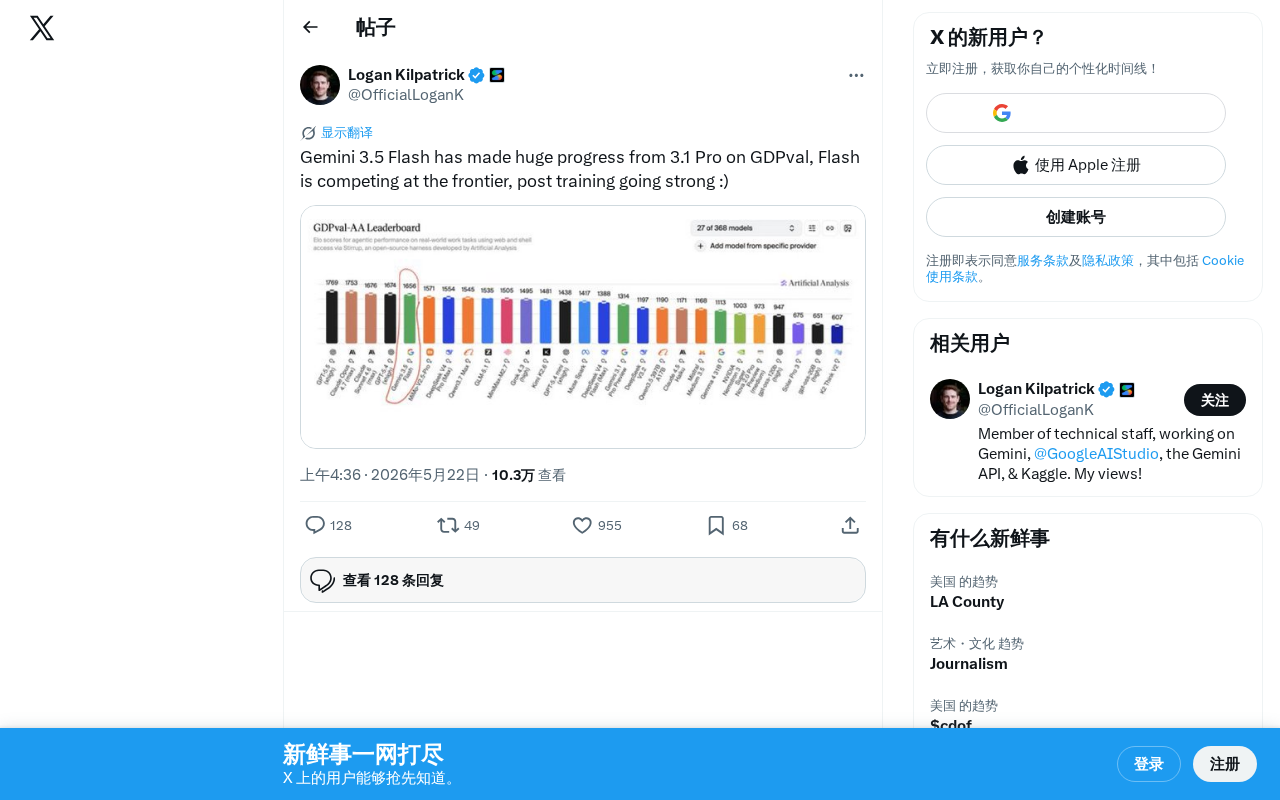
Gemini 3.5 Flash Achieves a Massive Leap on the GDPval Benchmark
Google Gemini 3.5 Flash surpasses Gemini 3.1 Pro on the GDPval benchmark. The lightweight Flash model leverages post-training techniques to approach frontier-level performance, redefining the balance between quality and cost.
 Tech Frontiers
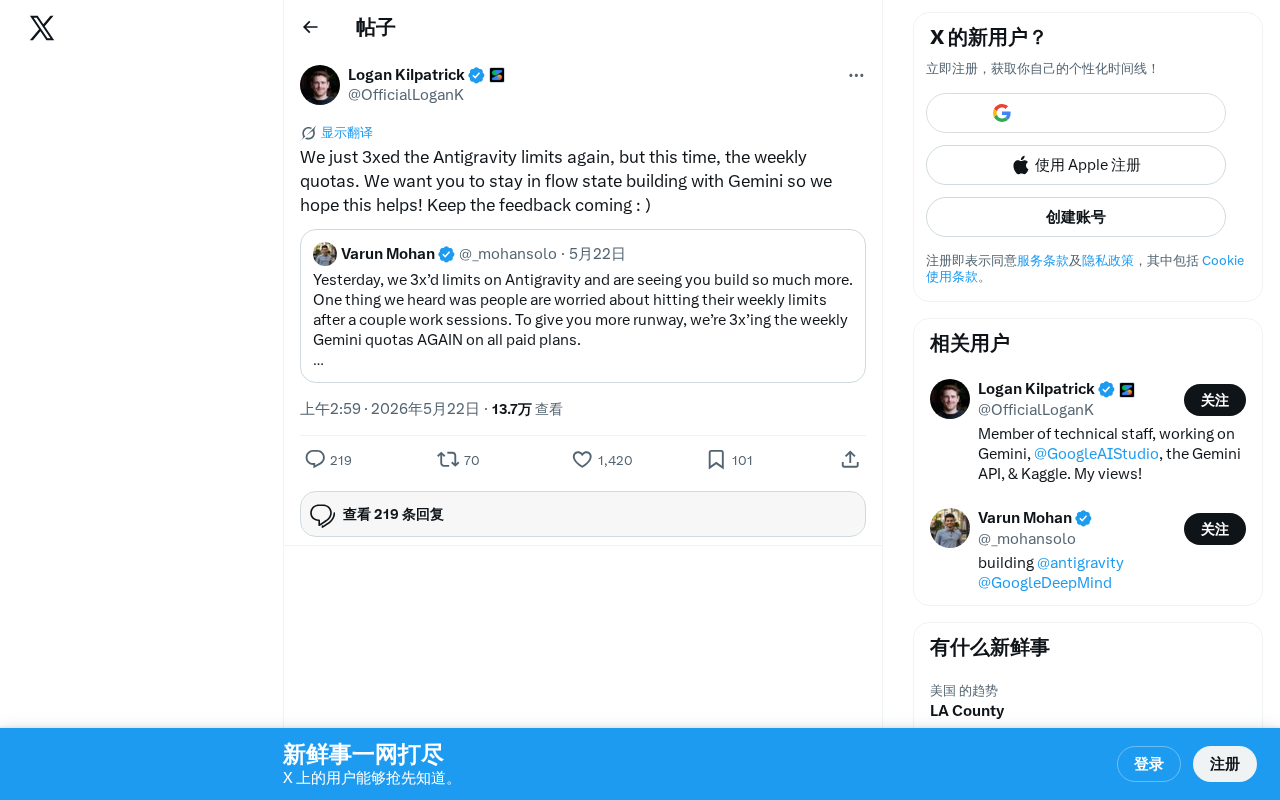
Google Gemini Antigravity Weekly Quota Tripled — AI Coding Without Limits
Google Gemini triples Antigravity weekly quotas following a prior daily quota boost. Analyzing the impact on developers and its strategic significance in AI coding.