Singer Hu Yanbin Ships an App in 45 Days Using Claude Code: A Zero-to-App-Store Vibe Coding Journey
Singer Hu Yanbin Ships an App in 45 Da…
Chinese singer ships a fan app to the App Store in 45 days using only Claude Code and zero programming skills.
Pop singer Hu Yanbin independently developed and launched a fan community app called "Yanfire" on the App Store in just 45 days, using only VS Code and Claude Code with no prior programming experience. His journey exemplifies the Vibe Coding paradigm — where natural language replaces traditional coding — and signals a broader shift making software development accessible to non-technical creators.
A Singer Writes Code: Hu Yanbin's App Is Live on the App Store
While we're still debating whether AI will replace programmers, Chinese singer Hu Yanbin has offered a far more interesting answer through action — someone with zero coding experience can independently develop a fully functional app.
Recently, Hu Yanbin revealed on social media that he built a fan-exclusive app called "Yanfire" (焰火) entirely on his own using Vibe Coding, and it's now live on Apple's App Store. The artist — known for hit songs like Moonlight and Take Everything You Want — has once again shown his unconventional side.
From Zero to App Store in 45 Days: Just VS Code and Claude Code
According to Hu Yanbin himself, he used only two tools throughout the entire process: VS Code + Claude Code. As someone with absolutely no programming background, he relied on no outsourcing team and completed the entire development independently in 45 days.
VS Code (Visual Studio Code) is a free, open-source code editor released by Microsoft in 2015. Thanks to its lightweight architecture, rich plugin ecosystem, and cross-platform support, it has become the most widely used code editor among developers worldwide — with over 73% market share according to Stack Overflow's 2024 Developer Survey. Claude Code, on the other hand, is a command-line AI coding assistant launched by Anthropic in 2025. It runs directly in the terminal or VS Code, understands the full context of a codebase, and handles everything from code generation and debugging to refactoring. Unlike traditional code completion tools, Claude Code operates in an "agentic coding" mode — developers describe their intent in natural language, and the AI autonomously plans execution steps, writes code, runs tests, and fixes errors, dramatically lowering the technical barrier to programming.
What's even more impressive is that Hu was squashing bugs while traveling between concert venues. Performing shows by day, writing code by night — this hardcore "slash career" lifestyle would surprise even seasoned developers.
Not a Demo — A Fully Functional Product
Based on screenshots that have surfaced, "Yanfire" isn't a simple proof-of-concept demo but a feature-complete application with:
- Social Feed: Fans can post and browse updates
- Show Announcements: Real-time access to Hu Yanbin's performance schedule
- Fan Chat: Community interaction and messaging
Granted, there's room for improvement in product maturity. Some fans reported finding a score-manipulation exploit right after signing up. But from another perspective, this actually confirms that Hu built "Yanfire" independently — after all, he didn't have a professional QA team. For a solo developer with no technical background, reaching this level is already remarkable.
It's worth noting that getting an app approved and listed on Apple's App Store is no simple feat in itself. Apple's App Review process is notoriously strict — developers must meet a series of technical and compliance requirements: apps must be built and signed using Xcode with properly configured developer certificates and Provisioning Profiles; they must comply with hundreds of rules in the App Store Review Guidelines covering safety, performance, design, and legal aspects; apps undergo manual review with a typical turnaround of 24-48 hours, though rejections and resubmissions can consume considerable time. Additionally, developers must handle privacy policy declarations, age ratings, app screenshots, and metadata. For someone with zero coding experience to independently navigate this entire pipeline and pass review demonstrates that AI coding tools have reached a remarkably practical level of end-to-end development capability.
What Is Vibe Coding? A New Paradigm for AI-Assisted Programming
The reason Hu Yanbin's case has attracted so much attention comes down to the Vibe Coding development approach he adopted. Coined by renowned AI researcher Andrej Karpathy, this concept represents a fundamentally new way of programming: developers describe requirements in natural language, AI coding assistants handle code generation and debugging, and humans primarily serve as "product managers" and "acceptance testers."
Karpathy is a heavyweight in the AI field — former Tesla AI Director and founding member of OpenAI — with deep influence in deep learning and computer vision. When he first introduced the Vibe Coding concept in February 2025, he described his experience on social media: "You fully give in to the vibes, embrace exponentials, and forget that the code even exists." Specifically, the core characteristics of Vibe Coding include: developers primarily advance development through natural language conversations with AI; rather than reviewing AI-generated code line by line, they validate correctness by running the output; when errors occur, they simply copy-paste error messages back to the AI. This mode fundamentally transforms programming from "writing code" to "directing AI to write code," shifting the developer's role from "engineer" to "product manager + acceptance tester."
Claude Code, Hu Yanbin's tool of choice, is one of the most prominent tools in the Vibe Coding space today. This AI coding assistant from Anthropic works directly within VS Code, helping users complete the full workflow from code writing to debugging through conversational interaction.
Here's a telling detail: Anthropic themselves recognized Hu Yanbin's efforts, inviting him to serve as a "Chief Creator" for their AI creativity competition. This signals that AI tool makers are actively working to democratize programming capabilities to a much broader audience.
What This Means for the Industry and Everyday People
While Hu Yanbin's story benefits from a celebrity halo effect, the underlying trend it reveals deserves serious attention:
First, the barrier to programming is being redefined. Skills that previously required years of professional training can now — with the help of AI coding tools — enable someone with zero programming experience to ship a working product in 45 days.
Second, the value of "ideas" is rising. When code is no longer the bottleneck, what becomes truly scarce is creativity, user insight, and product thinking. Hu Yanbin understands what his fans need better than anyone — that kind of domain knowledge is far harder to replace than coding skills.
Third, the era of solo developers is accelerating. One person plus AI tools can now accomplish what previously required a small team. This is a tangible advantage for independent developers and small startup teams.
Hu Yanbin's case arrives at a pivotal industry moment. Between 2024 and 2025, AI coding tools experienced explosive growth: GitHub Copilot's paid subscribers surpassed 1.9 million, Cursor editor's valuation exceeded $9 billion, and zero-code AI development platforms like Replit, Bolt, and Lovable emerged one after another. In Y Combinator's Winter 2025 batch, over 25% of startups had codebases where more than 95% of the code was AI-generated. These data points collectively indicate that software development productivity is undergoing a paradigm-level leap. Against this backdrop, the concepts of "one-person companies" and "indie developers" are being reinvigorated. In the past, building a complete product solo required mastering front-end, back-end, databases, deployment, and other full-stack skills — an extremely steep learning curve. Now, AI tools are "compressing" these skills into natural language expression ability and product judgment, enabling more non-technical creators to transform ideas directly into usable products.
Of course, we should remain level-headed. There's still a significant gap between an app that passes App Store review and a high-quality, sustainably operational product. Challenges at the engineering level — security, stability, maintainability — still require professional expertise to address.
Conclusion
Regardless of anything else, a singer willing to spend 45 days grinding through a completely unfamiliar domain deserves respect for that hustle alone. And the fact that AI coding tools make this kind of hustle productive and fruitful — that's the real technology trend worth paying attention to.
Vibe Coding won't put programmers out of work, but it is turning "everyone can be a developer" from a slogan into reality.
Related articles

Claude Code for Test Development in Practice: An AI Programming Workflow That Doubles Your Efficiency
A practical guide to Claude Code for test development: auto-generating test scripts, Plan Mode workflows, MCP + Playwright integration, and Subagent parallel tasks to build systematic AI-assisted workflows.

Hermes Agent Hands-On Review: An AI Efficiency Revolution for Indie Game Developers
Indie game developer reviews Hermes Agent vs OpenClaude: intelligent context compression, real-time Memory, remote control via Telegram, and practical use cases in game dev, social media, and email.
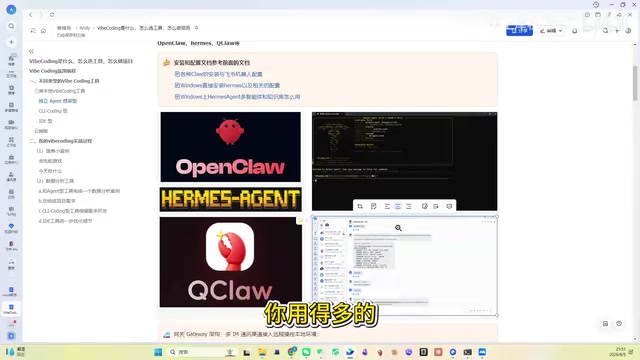
Vibe Coding Beginner's Guide: Tool Selection Across Three Categories with Practical Examples
A comprehensive guide to Vibe Coding's three tool categories: Agent frameworks, CLI Coding, and IDE tools, with practical examples including Snake game and data analysis workbench.