SiYuan Note: A Complete Analysis of the Privacy-First Open Source Knowledge Management System
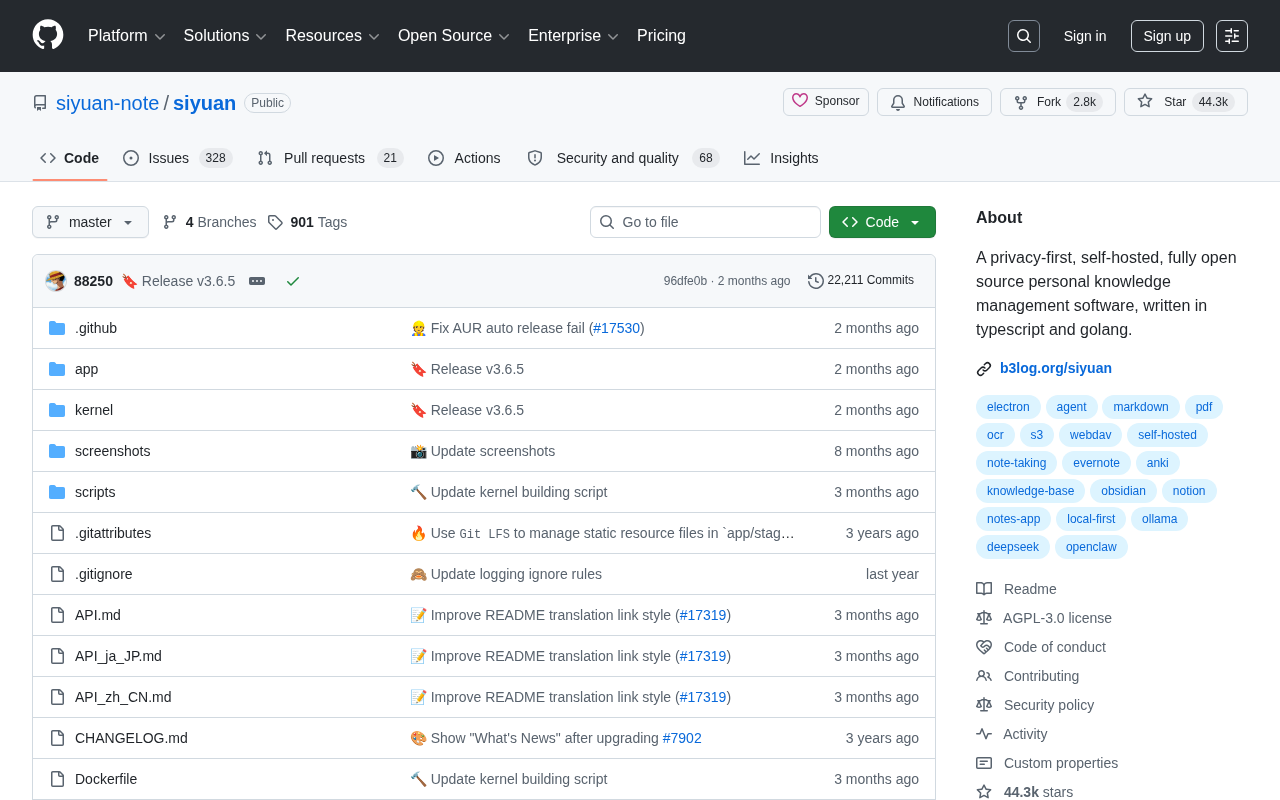
SiYuan is a privacy-first, self-hosted open source knowledge management system built with TypeScript and Golang.
SiYuan is an open source personal knowledge management tool that prioritizes privacy through local-first data storage and self-hosted deployment. Built with TypeScript and Golang, it features block-level references, bidirectional links, and WYSIWYG editing. With 44K+ GitHub stars, it competes with Obsidian and Logseq while offering unique advantages in data sovereignty and AI-era knowledge management through RAG integration potential.
Project Overview
SiYuan is a personal knowledge management software built with privacy as its core design philosophy. It supports self-hosted deployment and is fully open source. Written in TypeScript and Golang, the project has earned over 44,000 stars on GitHub and boasts an active developer community.
In an era where cloud-based note services frequently face data breaches and service shutdowns, SiYuan offers a solution that puts data control entirely in the hands of users.
Core Design Philosophy of SiYuan
Privacy-First
SiYuan's most distinctive feature is its prioritization of privacy protection. Unlike cloud-based note tools such as Notion or Yuque, SiYuan stores data locally by default—users never need to upload their personal knowledge base to third-party servers. This design fundamentally eliminates the risk of data leaks, making it particularly suitable for professionals handling sensitive information and users with high privacy requirements.
In recent years, data security incidents involving cloud note services have become increasingly common. In 2022, Evernote was exposed for allowing employees to access user note content. Notion once experienced server failures that briefly made user data unavailable. Yuque suffered a 7-hour service outage in October 2023. These incidents have driven more users toward the Local-First software design paradigm. Local-First is a software design philosophy proposed by Ink & Switch Labs in 2019, with the core principle that data should be stored primarily on users' local devices, with network synchronization being an optional add-on rather than a prerequisite. SiYuan is a quintessential practitioner of this philosophy.
Self-Hosted Architecture
Self-hosting means users can run SiYuan on their own servers, NAS devices, or local machines. This brings several significant advantages:
- Data Sovereignty: All note data belongs entirely to the user, unaffected by platform policy changes
- Offline Availability: Full functionality without requiring a network connection
- Custom Deployment: Flexible deployment environments, including Docker containerized deployment
- Multi-Device Sync: Cross-device access through self-built synchronization services
Self-Hosted is a model where application services are deployed on user-owned infrastructure, forming a stark contrast to SaaS (Software as a Service). Under the SaaS model, user data is stored in the service provider's cloud—if the provider adjusts policies, raises prices, or ceases operations, users face the risk of data migration or even loss. Docker containerized deployment is the mainstream approach for self-hosted applications today. It packages an application and all its dependencies into a standardized container image, allowing users to launch the service in any Docker-supported environment with a single docker run command. NAS (Network Attached Storage) is a common self-hosting platform in home and small office environments. NAS devices from brands like Synology and QNAP have become synonymous with personal data centers, providing an ideal runtime environment for self-hosted applications like SiYuan.
Fully Open Source
The project code is hosted on GitHub, where anyone can audit the code, submit improvements, or build upon it for secondary development. Open source transparency ensures the software contains no hidden data collection behaviors, and the community can continuously drive feature iteration.
Technical Architecture Analysis
SiYuan employs a decoupled frontend-backend tech stack:
- Frontend: Built with TypeScript, delivering a modern editing experience and interactive interface
- Backend: Developed in Golang, ensuring high performance and low resource consumption
This technology choice balances development efficiency with runtime performance.
TypeScript is a superset of JavaScript released by Microsoft in 2012. It addresses the difficulty of tracking type errors in large frontend projects by introducing a static type system. In note-taking applications, TypeScript's type inference capabilities are particularly important for handling complex document data structures (such as the AST—Abstract Syntax Tree—of block-level editors). Editors need to precisely represent and manipulate nested document nodes, and any type error could lead to data corruption.
Golang (the Go language) was released by Google in 2009 and achieves lightweight concurrency through its goroutine mechanism. A single goroutine occupies only about 2KB of stack memory—compared to traditional OS threads (which typically consume 1-8MB)—easily supporting hundreds of thousands of concurrent tasks. This allows SiYuan to maintain extremely low latency and memory usage when performing IO-intensive operations like full-text search, file indexing, and real-time synchronization. Golang's ability to compile into a single binary also simplifies deployment, eliminating the need for users to install additional runtime environments.
Core Features: Block References and Bidirectional Links
SiYuan's core competitive advantage at the feature level lies in its block reference and bidirectional linking system.
Block Reference is one of SiYuan's defining features that sets it apart from traditional note tools. Traditional notes use the page as the smallest unit of reference, while block references refine the granularity down to paragraphs, list items, or even individual sentences. Each content block has a unique identifier (similar to a primary key in a database) that can be precisely referenced and embedded from other locations. This means the same piece of knowledge can be reused across different contexts, and modifying the source block automatically syncs updates to all reference points.
Bidirectional Link as a concept traces back to the Memex vision proposed by Vannevar Bush in his 1945 paper "As We May Think," later popularized through the Zettelkasten (slip-box note method). German sociologist Niklas Luhmann used this method to manage over 90,000 cards, producing more than 70 books and 400 papers. Modern bidirectional linking tools digitize this approach—when Page A links to Page B, Page B automatically displays backlinks from A, forming an automatic weaving of the knowledge network. Users don't need to deliberately organize categories; connections between knowledge emerge naturally through use.
Community Ecosystem and Current Status
As of now, SiYuan has on GitHub:
- 44,293 Stars: Reflecting high recognition within the developer community
- 2,827 Forks: Indicating significant developer participation in contributions or custom development
These numbers place it among the top projects in the personal knowledge management space, competing with tools like Obsidian (closed source) and Logseq.
In the competitive landscape, Obsidian uses local Markdown file storage but keeps its core code closed source. It has an extremely rich plugin ecosystem (over 1,500 community plugins), with a business model relying on subscription fees for sync and publish services. Logseq is also an open source project, known for its outliner-style editing and journal-first design, making it better suited for daily logging and GTD (Getting Things Done) workflows. SiYuan's differentiated advantage lies in being one of the few open source solutions that simultaneously supports WYSIWYG editing, block references, database views, and self-hosted synchronization. Its underlying custom editor engine (Protyle)—rather than relying on general-purpose frameworks like ProseMirror or CodeMirror—provides greater customization flexibility but also increases maintenance costs. In the Chinese-speaking community, SiYuan has built stronger user loyalty than comparable international products through native Chinese typesetting support and an active Chinese-language forum.
Ideal Use Cases for SiYuan
SiYuan is particularly well-suited for the following user groups:
- Researchers: Those who need to manage large volumes of literature notes and research materials
- Developers: Those who prefer local tools and prioritize data security
- Knowledge Workers: Those building personal knowledge systems for deep thinking and writing
- Enterprise Teams: Those with strict data compliance requirements needing private deployment
Knowledge Management in the AI Era
In the AI era, personal knowledge bases are becoming increasingly valuable. With the proliferation of Large Language Models (LLMs), personal knowledge bases are transforming from passive information storage into infrastructure for AI-augmented cognition. RAG (Retrieval-Augmented Generation) technology allows personal notes to serve as an external knowledge source for LLMs, enabling AI responses to be grounded in the user's proprietary knowledge system rather than relying solely on the model's general training data.
Under this trend, note-taking tools that store data locally have a natural advantage—users can achieve knowledge retrieval and intelligent Q&A through locally deployed small models (such as open source models running on Ollama) without uploading data to third-party APIs, truly achieving both privacy and intelligence. SiYuan has begun exploring integration paths with AI, and its open API interfaces and plugin system provide a solid foundation for community developers to build RAG applications.
Conclusion
With its triple guarantee of privacy-first design, self-hosting capability, and full open source transparency, SiYuan provides users with a trustworthy knowledge management platform. Amid the dual trends of growing distrust in cloud services and AI empowering personal knowledge management, tools that return data sovereignty to users are experiencing unprecedented growth opportunities. For users who value data sovereignty, SiYuan is one of the most noteworthy open source note-taking solutions available today.
Key Takeaways
Related articles
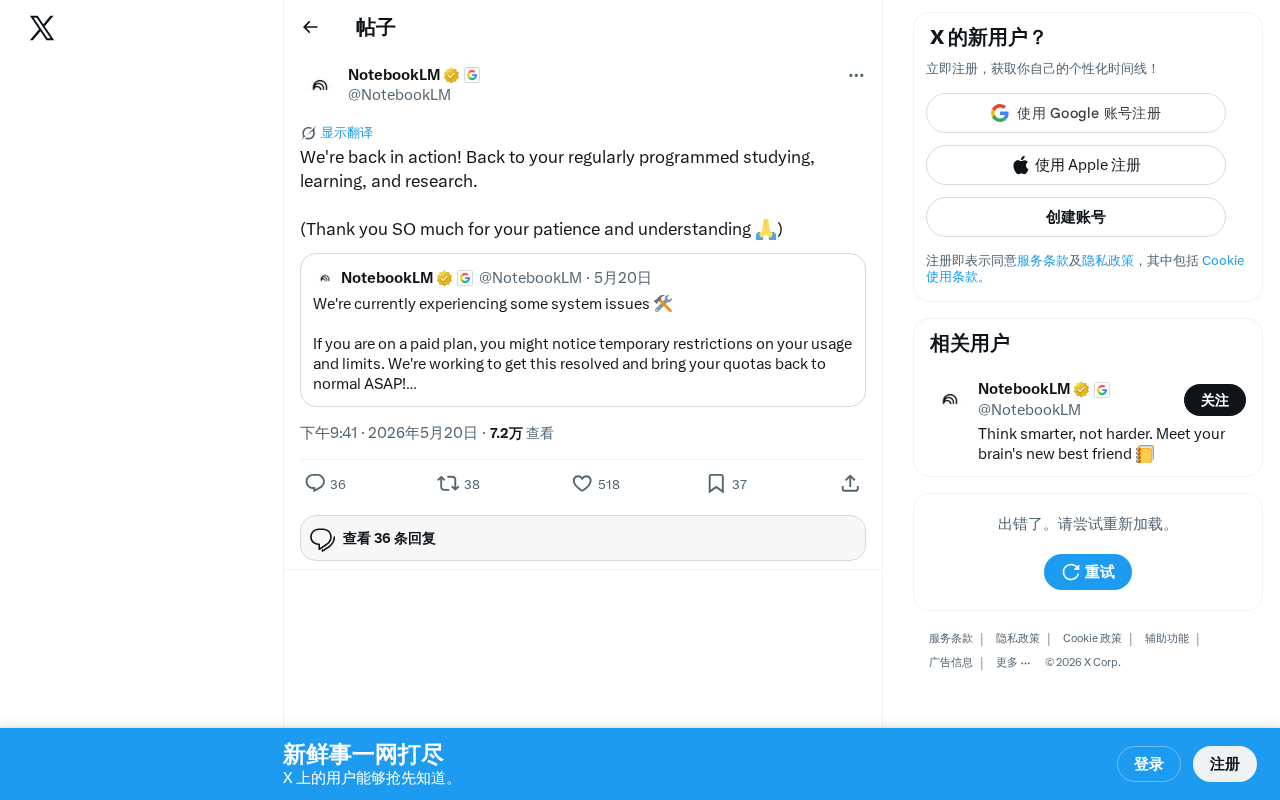
NotebookLM Service Restored: Google's AI Research Assistant Back Online
Google NotebookLM is fully back online after a service outage. Learn about the incident details, NotebookLM's core features, and backup tips for AI-dependent researchers.
Claude Code Chinese Tutorial: A 100-Page Systematic Learning Guide on Feishu Docs
A detailed look at the Claude Code Chinese learning resource on Feishu Docs, covering AI agent learning, memory systems, and task decomposition with a systematic path from beginner to advanced.
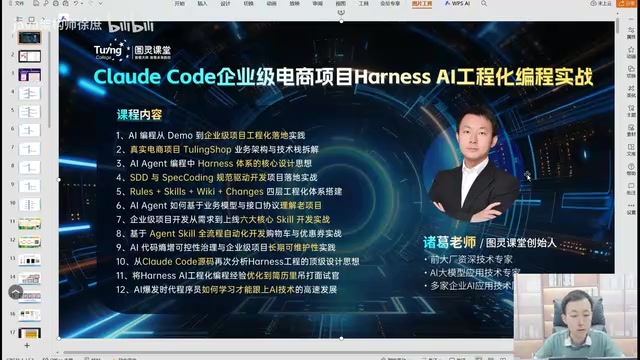
Claude Code Enterprise E-commerce in Practice: A Methodology for Taking AI Programming from Demo to Industrial-Grade
A deep dive into engineering methodology for enterprise e-commerce development with Claude Code and Harness AI, covering architecture, code quality, and CI/CD practices.