Survival Wisdom of Animals in Extreme Environments: Adaptation Strategies in Deserts and Polar Regions

How desert and polar animals survive and adapt in Earth's most extreme environments amid climate change.
From the Sahara's scorching dunes to Antarctica's frozen wastes, this article explores the remarkable survival strategies of animals in Earth's harshest environments. Based on National Geographic's Hostile Planet, it examines how Nubian ibex, brown hyenas, emperor penguins, Arctic wolves, and polar bears face escalating climate challenges — and reveals the universal survival rules of precise timing, teamwork, and occupying extreme ecological niches.
Introduction: Earth's Harshest Battlegrounds
From the scorching dunes of the Sahara Desert to the bone-chilling ice sheets of Antarctica, Earth's most extreme environments are becoming even more extreme. The National Geographic documentary Hostile Planet captures, from a breathtaking perspective, the survival struggles of desert and polar animals against the backdrop of accelerating climate change. This is not merely a nature documentary — it's an in-depth report on the resilience of life.
Based on the documentary's "Fire & Ice" collection, this article highlights the most inspiring ecological stories and explores the new challenges facing animals in extreme environments, along with their astonishing adaptation strategies.
Survival Wisdom of Desert Animals: A Life-and-Death Game Under the Sun's Rule
Cliff-Edge Life-or-Death Choices Amid Intensifying Heat Waves
The documentary opens with the Nubian ibex. These animals, living in the highest and steepest corners of the desert, face a cruel reality: heat waves have become significantly more severe over the past few decades. Mothers must lead their days-old kids down thousand-foot cliffs just to reach water.
The kids' soft hooves grip the rock face like climbing shoes, seemingly immune to vertigo. But once they leave the protection of the high cliffs, Arabian wolves await below — each weighing ten times more than a kid. The mother uses the slight advantage of uphill terrain to outmaneuver the wolf, but ultimately still loses one of her young. That precious pool of water deep in the canyon is paid for with life itself.
The Namib Desert: The Hyena's Precision Hunting Strategy
In Africa's Namib Desert, a mining town abandoned for over 60 years has become home to brown hyenas. This desert — considered the world's oldest, at least 55 million years old — is warming at three times the global average rate.
A hyena mother needs to feed three cubs, and her strategy is remarkable: precisely exploiting the rhythm of the sun. When the midday sun forces seal pup "bodyguards" to retreat into the sea, and when the scorching heat causes lost seal pups to become disoriented, the hyena seizes this fleeting window to make her kill. Timing is everything in desert survival.
Micro-Scale Survival Masters Under Extreme Temperatures
One of the documentary's most astonishing segments focuses on the desert's tiny creatures:
- Shovel-snouted lizard: Avoids being burned by scorching sand by "dancing" — alternately lifting its feet
- Spoor spider: Can withstand temperatures up to 120°F (about 49°C), making it the heat-tolerance champion among all spiders; it weaves a sand blanket to seal its burrow entrance for insulation
- Saharan silver ant: Begins foraging when sand surface temperatures reach 160°F (about 71°C); its long legs keep its body just one-fifth of an inch off the ground, yet this provides a 12-degree temperature difference; it runs so fast it actually generates a cooling breeze
These creatures' strategies reveal a profound ecological principle: In extreme environments, the ability to operate during time windows when other species cannot is itself the greatest competitive advantage.
Desert Expansion: A Global Threat to Wildlife
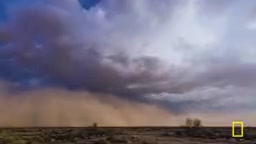
The documentary presents a staggering statistic: deserts worldwide are expanding at a rate of nearly 50,000 square miles per year. Australia, the driest inhabited continent, has suffered severe drought covering an area the combined size of California and Montana, with some regions receiving less than one inch of annual rainfall. During the worst droughts, 80% of red kangaroos may perish, their bodies rapidly mummifying in the dry desert air.
Yet the strongest individuals that survive will breed again when the rains return, allowing life to bloom once more across the wasteland. This pattern of "extreme selection followed by rapid recovery" has been the survival code of desert ecosystems for tens of millions of years.
Adaptation Strategies of Polar Animals: Miracles of Life at the Edge of Cold
Emperor Penguins: Earth's Greatest Endurance Test
When temperatures plunge to minus 120°F (about minus 84°C), virtually no plants grow, and winds reach the strongest levels found anywhere on Earth — this is just another day during Antarctic winter. Male emperor penguins stand in these conditions for 75 days, balancing their single egg on their feet.
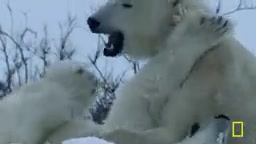
But climate change is rewriting this ancient story. The Antarctic ozone hole has disrupted atmospheric circulation, making freezing winds even more ferocious. The documentary captures a heart-wrenching scene: when both parents leave to forage, a chick instinctively follows its mother away from safety, heading toward danger. After the storm passes, surviving chicks must locate their fathers among 17,000 penguins by recognizing their unique calls.
Group cooperation is the emperor penguin's ultimate weapon against extreme environments.
Arctic Wolves and Muskoxen: A Winter Hunt Never Before Recorded
On Canada's northernmost land, a pack of eight Arctic wolves treks 50 miles daily through the long winter in search of food. The documentary captures a historic moment — a wolf pack hunting muskoxen in winter had never before been recorded on camera.
Muskoxen are true Arctic survivors. Adults weigh up to 700 pounds and are equipped with sharp, curved horns. Facing the wolf pack, they form a united defensive line, shielding their calves behind them. The wolves' strategy is to find weaknesses in the defense and try to get the herd running — because a formation in motion is far more vulnerable than one standing still.
The Polar Bear's Survival Crisis: The Chain Reaction of Melting Sea Ice
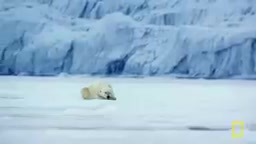
Since the 1970s, Arctic sea ice has been forming approximately three weeks later, meaning polar bears must endure three additional weeks of hunger each year. The documentary records a polar bear stranded on land during summer making a desperate attempt to hunt beluga whales.
Belugas are among the few whale species with flexible necks, allowing them to easily spot an approaching bear. Hunting in open water is nearly impossible, so the polar bear must change tactics — climbing onto rocks to wait from an elevated position. In the end, it catches only a single calf, "perhaps just enough to stave off starvation." The documentary soberly notes: If the ice-free season continues to lengthen, even this stopgap measure will not be enough.
Winners and Losers in a Warming Climate
Climate change isn't bad news for all polar species. Over the past 50 years, average temperatures in parts of Antarctica have risen by about 5°F (approximately 2.8°C), giving warmth-loving Gentoo penguins an opportunity to expand — exposed rock provides more nesting sites, and rich waters greatly increase the chances of successfully raising two chicks.
But even the "winners" face new risks: storms blow broken ice toward the coast, blocking chicks' routes back to their colonies, while 12-foot-long leopard seals lurk among the ice floes.
Universal Survival Rules of Animals in Extreme Environments
Looking across both extremes of fire and ice, several core survival rules emerge:
- Precise time management: Desert animals exploit temperature differences at various times of day with pinpoint accuracy, while polar animals organize their life rhythms around seasonal freeze-thaw cycles
- The power of teamwork: From meerkats confronting cobras and Harris's hawks hunting as a team, to emperor penguins huddling for warmth and muskoxen forming united defensive lines — cooperation is the most powerful adaptation strategy in extreme environments
- Occupying extreme ecological niches: Saharan silver ants forage in lethal heat, Arctic wolves hunt in perpetual darkness — by occupying niches where other species cannot survive, they gain a unique competitive advantage
Conclusion: Where Are the Limits of Adaptation?
The documentary closes with an open-ended question: How much more can these species — honed by millions of years of evolution and already pushed to their physiological limits — continue to adapt? With deserts expanding by 50,000 square miles annually and Arctic ice seasons continuing to shrink, the pace of these changes far outstrips the rhythm of natural evolution.
As the film states: "We don't know exactly what a warming world will bring, but whatever happens, you can be sure — desert animals will not go down without a fight." This declaration of life from Earth's harshest corners may also be the most profound reminder for humanity.
Related articles

Claude Code Source Code Leak: 500,000 Lines of Code Reveal Core Multi-Agent Architecture Design
Anthropic accidentally leaked 500K+ lines of Claude Code TypeScript source via a Source Map misconfiguration, revealing its Coordinator multi-agent architecture, Kairos prediction system, and shadow rollback mechanism.

AI Agent Development: A Complete Six-Week Systematic Learning Roadmap
A systematic six-week learning roadmap for AI Agent development covering core architecture, ReAct paradigm, multi-agent collaboration, RAG integration, deployment, and hands-on projects.

The Complete Skill Map for AI Application Engineers: A Progressive Roadmap from Fundamentals to Production
A systematic breakdown of the complete skill structure for AI application engineers, covering Python & deep learning fundamentals, small model engineering, LLM fine-tuning, Agent development, and enterprise projects.