Taste-Skill: A Deep Dive into the AI Aesthetic Prompt Project with 33K GitHub Stars
Taste-Skill: A Deep Dive into the AI A…
Taste-Skill embeds design rules into AI prompts so tools like Cursor and Claude Code generate beautiful UI.
Taste-Skill is a 33K-star open-source project on GitHub that solves a common AI coding pain point: ugly, generic UI output. By injecting structured aesthetic rules into AI prompt systems (Skills/Rules), it enables tools like Claude Code, Cursor, and Codex to generate polished, professional interfaces with proper spacing, color consistency, and visual hierarchy — no design expertise required.
Project Overview: Helping AI Break Free from Cookie-Cutter Ugly Pages
If you regularly use AI to generate frontend pages, you've almost certainly run into this problem — no matter how you describe your requirements, the AI keeps producing generic, design-less pages. This isn't because the AI lacks capability; it lacks aesthetic awareness.
During training, AI models learn from massive code samples, but the vast majority of those samples are "functionally correct but visually rough." Models tend to generate the most statistically common patterns rather than the most elegant solutions. Moreover, design aesthetics involve a wealth of tacit knowledge — things like the 8px grid system, color contrast standards, and visual hierarchy theory — scattered across design specification documents. While models have encountered this knowledge, they lack a systematic awareness of how to apply it.
An open-source project on GitHub called Taste-Skill is tackling this pain point, and it has already earned 33K Stars. The core idea is simple: embed frontend aesthetic rules into the AI's prompt system so that AI-generated code comes with built-in design taste.
User reactions have been pretty direct: "This is beautiful," "These are the most beautiful skills I've ever seen," and some even said, "Played with it on GitHub 3.1 for a while, and honestly it's ten times better than Anthropic's official version."
What Is Taste-Skill? An AI Aesthetic Skill Collection
Not a Single Skill, but a Complete Aesthetic Rule System
Taste-Skill isn't a single prompt file — it's a collection of Skills composed of multiple aesthetic rules targeting different scenarios.
To understand this, you need some technical background on the Skill mechanism: Skills (skill files) are a structured prompt injection mechanism in AI coding tools. Unlike regular conversational prompts, Skill files are stored persistently in project configurations as system-level instructions that are automatically loaded every time the AI generates code. Think of it as setting a "personality foundation" for the AI — users don't need to repeat their requirements each time, because the rules continuously influence the AI's output behavior behind the scenes. In Cursor, these are called Rules; in Claude Code, they're stored in CLAUDE.md. They're fundamentally the same mechanism: guiding the AI's generation direction through preset contextual constraints.
Here's how Taste-Skill works:
- Reads project context: Automatically analyzes the tech stack and style tendencies of your current project
- Matches design style: Determines the appropriate UI style based on project characteristics
- Generates a polished design: Automatically produces a UI design scheme that meets aesthetic standards
In short, it gives AI the ability to tailor its output — instead of applying one template to every project, it delivers a design approach that fits the specific context.
Project Positioning
Help your UI designs feel less rough and make them more visually striking.
This positioning is spot-on. Most AI-generated pages aren't "unusable" — they're just "too rough." Spacing feels off, color schemes are monotonous, and visual depth is missing.
In frontend development, this is known as the "last mile" problem: a page might have correct HTML structure and solid interaction logic, but it looks amateurish because it lacks detail polish. These details include line-height to letter-spacing ratios in typography (typically following the 1.5–1.8x line-height rule), rhythmic white space (spacing between content areas should follow a progressive relationship), color system consistency (the logic behind primary, secondary, and neutral color combinations), and restrained use of micro-interactions. Professional designers internalize these rules through years of practice, while AI needs explicit rule injection to bridge this capability gap. Taste-Skill solves precisely this last-mile problem — going from "functional" to "beautiful."
Which AI Coding Tools Does Taste-Skill Support?
Taste-Skill has quite broad compatibility, currently supporting these mainstream AI coding tools:
| Tool | Type | Support Status |
|---|---|---|
| Claude Code | Anthropic's official CLI tool | ✅ Supported |
| Codex | OpenAI coding assistant | ✅ Supported |
| Cursor | AI code editor | ✅ Supported |
| Open Code | Open-source alternative | ✅ Supported |
Installation is extremely simple — just copy the configuration content provided by the project into the corresponding Skill/Rules directory of your tool. The entire process takes less than 5 minutes. Configuration paths differ slightly between tools: Cursor requires rules to be placed in the .cursor/rules/ folder at the project root, while Claude Code uses the CLAUDE.md file. However, the core content is universal — and that's exactly why Taste-Skill can work across tools. At its core, it's a set of design rule text that's decoupled from any specific tool.
Real-World Results After Using Taste-Skill
Based on cases shared by users, pages generated with Taste-Skill show several distinct characteristics:
- Minimal but not bare: Well-balanced white space and typography
- Clear hierarchy: Obvious information levels with prominent visual focal points
- Consistent style: A unified design language with no "patchwork" feel
One blogger used Cursor with Taste-Skill to generate a personal introduction page, and the result was "minimal in just the right way" — not flashy, but every detail held up under scrutiny.
Behind this effect is Taste-Skill's ability to make designers' tacit knowledge explicit. For example, rules might include constraints like "card component border-radius should be between 8–16px," "the visual weight ratio between primary and secondary action buttons should be 3:1," or "a page should use no more than 3 font size levels." Each rule is simple on its own, but combined they form a complete visual quality assurance system.
Why Did Taste-Skill Earn 33K Stars?
It Hits a Real Pain Point in AI-Generated UI
Current AI coding tools are already quite powerful, but they're generally weak on the "aesthetics" dimension. Developers can use AI to write logic without issues, but getting AI to produce good-looking interfaces often requires extensive manual tweaking. Taste-Skill addresses this problem in a lightweight way (via Skill files) with virtually zero integration cost.
From a technical perspective, what Taste-Skill does is essentially distill best practices scattered across various design systems (like Material Design, Apple HIG, and Tailwind UI) into an instruction format that AI can understand. It doesn't teach AI "what is beautiful" — it tells AI "in this scenario, follow these specific rules and the result won't be ugly." This is an engineering-driven approach to aesthetics.
A Community-Driven AI Aesthetic Standard
33K Stars means a large number of developers are using it and providing feedback. This project is essentially using community power to establish a set of "AI aesthetic standards." This community-driven model is similar to ESLint for code conventions or Prettier for code formatting — it aims to create a shareable, iterable aesthetic baseline for AI-generated UI. Rules aren't dictated by a single designer's subjective preferences; they're validated and refined through real-world usage by thousands of developers. As contributors grow, the rules will cover more edge cases (such as dark mode adaptation, responsive breakpoint handling, and accessibility design), gradually forming an open-source aesthetic framework akin to a Design System.
Low Barrier, High Return
No design knowledge needed. No changes to code logic required. Just load a Skill file into your AI tool and see a significant improvement in output quality. Tools with this kind of exceptional "ROI" naturally spread fast.
Conclusion: AI Coding Tool Competition Shifts from Capability to Taste
Taste-Skill represents a trend worth watching: competition among AI tools is shifting from "capability" to "taste." When every AI can write functionally correct code, the one that generates more polished, professional-looking interfaces wins the user.
There's a deeper industry logic behind this trend: as large language models' code generation capabilities converge (the gap between GPT-4, Claude, and Gemini in pure functional implementation is shrinking), competitive differentiation inevitably migrates toward "non-functional qualities." Design taste, code maintainability, architectural elegance — these dimensions once considered "soft skills" are becoming hard competitive metrics for AI tools. The explosive popularity of Taste-Skill proves there's strong market demand in this direction.
For developers who use AI coding tools daily, I'd recommend heading straight to GitHub to search for the Taste-Skill project and configuring it in your preferred tools like Cursor or Claude Code following the documentation. A few minutes of setup could noticeably elevate every AI-generated page you produce going forward.
Key Takeaways
Related articles

Claude Code for Test Development in Practice: An AI Programming Workflow That Doubles Your Efficiency
A practical guide to Claude Code for test development: auto-generating test scripts, Plan Mode workflows, MCP + Playwright integration, and Subagent parallel tasks to build systematic AI-assisted workflows.

Hermes Agent Hands-On Review: An AI Efficiency Revolution for Indie Game Developers
Indie game developer reviews Hermes Agent vs OpenClaude: intelligent context compression, real-time Memory, remote control via Telegram, and practical use cases in game dev, social media, and email.
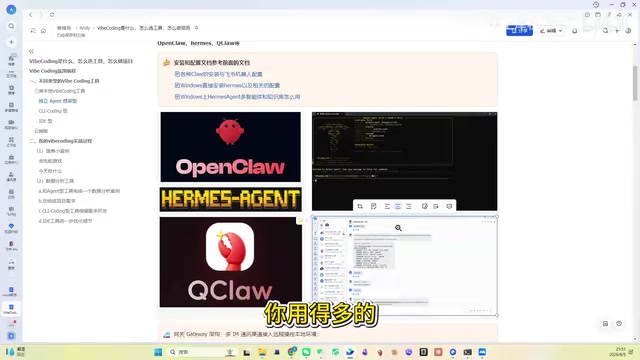
Vibe Coding Beginner's Guide: Tool Selection Across Three Categories with Practical Examples
A comprehensive guide to Vibe Coding's three tool categories: Agent frameworks, CLI Coding, and IDE tools, with practical examples including Snake game and data analysis workbench.