TechCrunch Founder Summit Boston: Early Bird Pricing Ending Soon — Save Up to $190
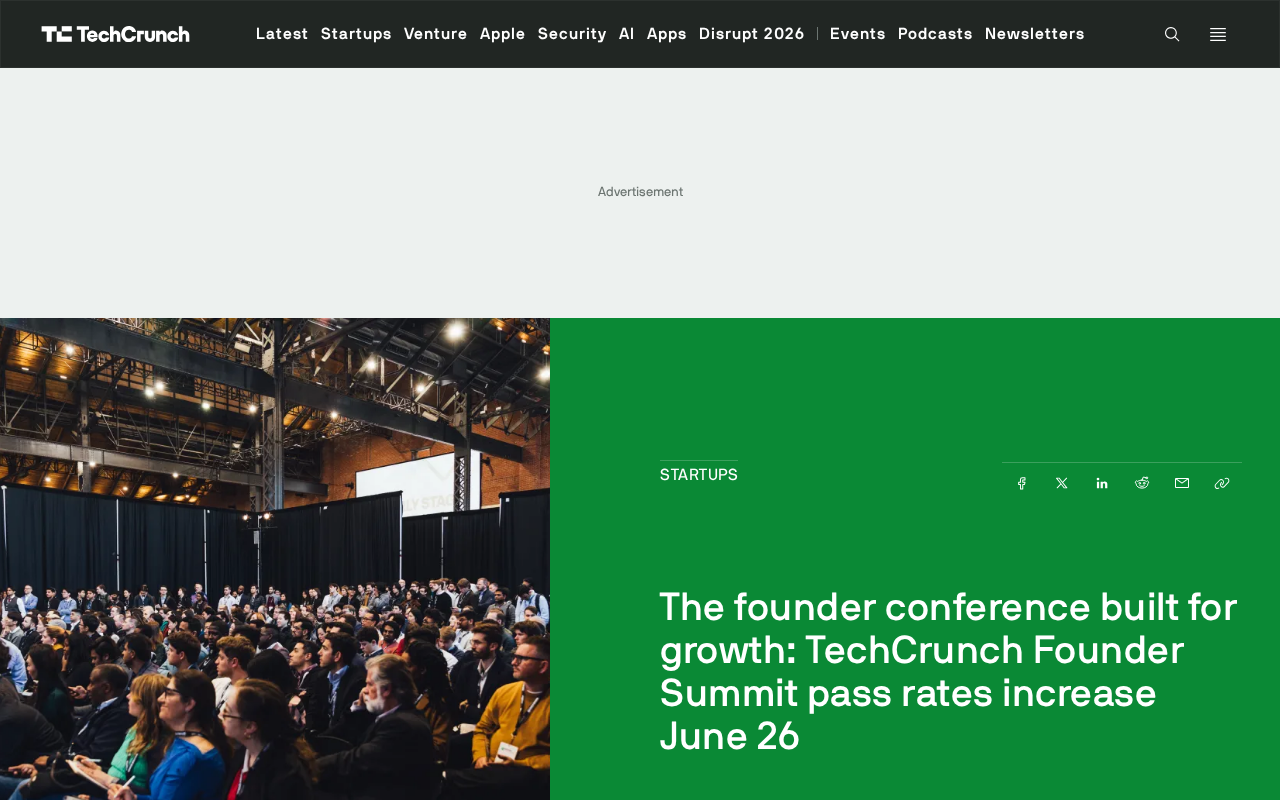
TechCrunch Founder Summit hits Boston Nov 2025; early bird tickets end June 26, saving up to $190.
TechCrunch Founder Summit will be held November 4, 2025 in Boston, targeting growth-stage startup founders. Early bird pricing ends June 26 (PT), offering up to $190 in savings. The event emphasizes a "founders first" approach with content focused on growth strategy, PMF, and scaling. Boston was chosen for its thriving deep tech ecosystem anchored by MIT and Harvard.
Event Overview
TechCrunch recently announced that its flagship founder event — TechCrunch Founder Summit — will be held on November 4, 2025, in Boston, USA. This is a premium summit designed exclusively for startup founders, focusing on growth strategy and founder community building.
Founded in 2005, TechCrunch is one of the world's most influential tech media outlets. It was acquired by AOL in 2010 and later became part of Verizon Media (now Yahoo). Its events business is a significant revenue stream and brand asset, including the annual flagship conference Disrupt (which typically attracts thousands of attendees and features the renowned Startup Battlefield competition), smaller invite-only events like StrictlyVC, and the Founder Summit described here. The Founder Summit is positioned as a more boutique, high-density networking event exclusively for founders, complementing Disrupt's larger scale and broader audience.
Early Bird Pricing and Deadline
According to the official announcement, the current early bird pricing will expire at 11:59 PM PT on June 26, after which ticket prices will increase. By registering before the deadline, founders can save up to $190. For early-stage founders with limited budgets, this is a time window not to be missed.
TechCrunch has long employed a tiered pricing strategy — the earlier you buy, the lower the price. This is a common practice among major tech industry summits. The core logic behind tiered pricing serves three purposes: first, early bird discounts lock in early cash flow and reduce the financial risk of event operations; second, it creates urgency by leveraging loss aversion psychology to push potential attendees toward faster decisions; third, it provides organizers with early demand signals to help adjust venue capacity and content planning. Tech summits typically set 3-4 price tiers, from super early bird, early bird, and regular to on-site pricing, with price differences ranging from 50%-100%. Founders interested in attending are advised to decide early to avoid missing the best price.
Event Positioning: Founders First
TechCrunch explicitly emphasizes a "Designed for founders first" positioning in its promotional materials. Unlike TechCrunch's larger-scale Disrupt conference, the Founder Summit is more focused in both content and audience.
Precisely Targeted Audience
The summit primarily targets startup founders in the growth stage, rather than general tech industry professionals. This precise positioning means higher compatibility among attendees, leading to more efficient on-site networking and deeper conversations. In startup community theory, these "high-homogeneity, aligned-goals" small-scale gatherings tend to generate more valuable connections than large expos — founders can candidly share fundraising challenges, team management difficulties, and growth bottlenecks without worrying about image management in more public settings.
Content Designed Around Growth
From the event's theme "built for growth," it's clear that summit content will revolve around the core topic of business growth, likely covering practical issues founders care most about, such as fundraising strategy, product-market fit (PMF), and scaling operations.
Product-Market Fit is a concept formally introduced by Silicon Valley investor Marc Andreessen in 2007, referring to the state where a product satisfies a real need in a sufficiently large market. Common indicators for assessing whether PMF has been achieved include: the Sean Ellis test (more than 40% of users say they would be very disappointed if the product disappeared), organic growth rate, and whether user retention curves flatten out. For founders in the growth stage, PMF is not a one-time event but a dynamic process that requires continuous validation as markets shift and products iterate. This is why growth-stage summits feature it as a core topic — founders need to repeatedly answer the fundamental question "Are we still solving the right problem?" at different stages of scale.
Why Boston?
Choosing Boston as the venue is quite deliberate. Boston is not only home to top institutions like MIT and Harvard but is also a major tech innovation hub on the U.S. East Coast. In recent years, Boston's startup ecosystem has remained highly active in cutting-edge fields such as AI, biotech, and robotics, providing a natural industry backdrop and rich talent pool for the summit.
Boston's startup ecosystem is rooted in its unique academic-to-industry translation system. MIT's Media Lab, CSAIL (Computer Science and Artificial Intelligence Laboratory), and Harvard Business School incubate numerous high-tech startups each year. Kendall Square is known as "the most innovative square mile on Earth," home to benchmark companies like Moderna and Boston Dynamics. 2023 data shows that the greater Boston area attracted over $30 billion in venture capital, with investment growth in AI drug discovery, quantum computing, and synthetic biology outpacing Silicon Valley. Additionally, tax incentives and R&D subsidies provided by government agencies like the Massachusetts Life Sciences Center further strengthen the region's appeal to entrepreneurs.
For founders typically active in the Silicon Valley ecosystem, the Boston event is also a great opportunity to expand East Coast networks and resources. Silicon Valley and Boston represent two different paradigms of American tech entrepreneurship: the former leans more toward software and platform startups, while the latter has unique advantages in deep tech and hard tech. Cross-regional exchange helps founders break out of the information bubble of a single ecosystem.
Attendance Recommendations
For tech founders seeking growth breakthroughs, the TechCrunch Founder Summit offers a premium platform for deep peer-to-peer exchange and cutting-edge industry insights. If you plan to attend, registering before June 26 is the key deadline to lock in the best ticket price.
From a strategic attendance perspective, founders are advised to prepare the following before the event: identify 1-2 core questions you want to address (such as fundraising cadence, international expansion paths, etc.), research attending speakers and other founders' backgrounds in advance for targeted networking, and prepare concise and compelling company introductions (one 30-second version and one 3-minute version). The quality of a summit experience often depends on the attendee's own level of preparation.
For more details and registration, visit the official TechCrunch website.
Key Takeaways
Related articles

The Clotilda: Underwater Archaeological Discovery of America's Last Slave Ship
The Clotilda, America's last slave ship, was discovered by underwater archaeologists in Alabama nearly 160 years after sinking. Learn about the search, key evidence, and other slave trade shipwreck discoveries.
Sakana AI in Practice: Reshaping Banking Lending Operations with AI Agents — Technology and Strategy
Deep dive into how Sakana AI applies AI Agents to banking lending operations, covering end-to-end support from information gathering to approval document generation, plus technical challenges and human-AI collaboration design.
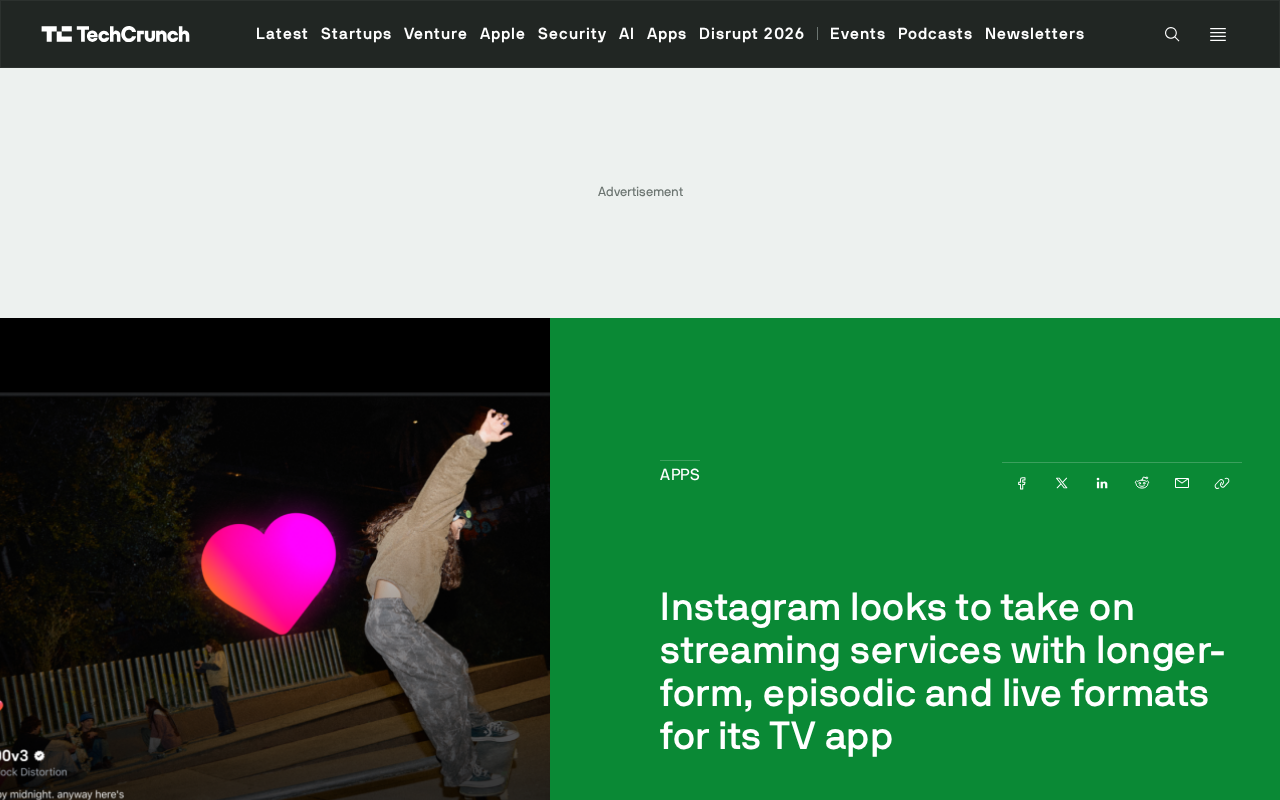
Instagram Enters the Living Room: Long-Form Video, Series, and Live Streaming Challenge Netflix
Instagram is building a TV app with long-form video, episodic series, and live streaming to challenge Netflix. Deep analysis of its living room strategy and industry impact.