The Accelerating Decline of Japanese Corporations: How China and South Korea Are Seizing Key Markets in Semiconductors, EVs, and Beyond
China and South Korea are rapidly displacing Japanese dominance across key tech sectors.
Japanese corporations are in structural decline across semiconductors, consumer electronics, and automotive markets, losing ground to aggressive Chinese and South Korean competitors. While China leverages scale, speed, and state-backed strategy — exemplified by BYD's EV dominance — South Korea's chaebols like Samsung use counter-cyclical investment to seize market leadership. Japan's path dependence, aging workforce, and conservative culture hinder adaptation, though upstream supply chain strengths remain. The outcome of this East Asian tech race will reshape the region's economic landscape.
A Seismic Shift in East Asian Tech Industry Dynamics
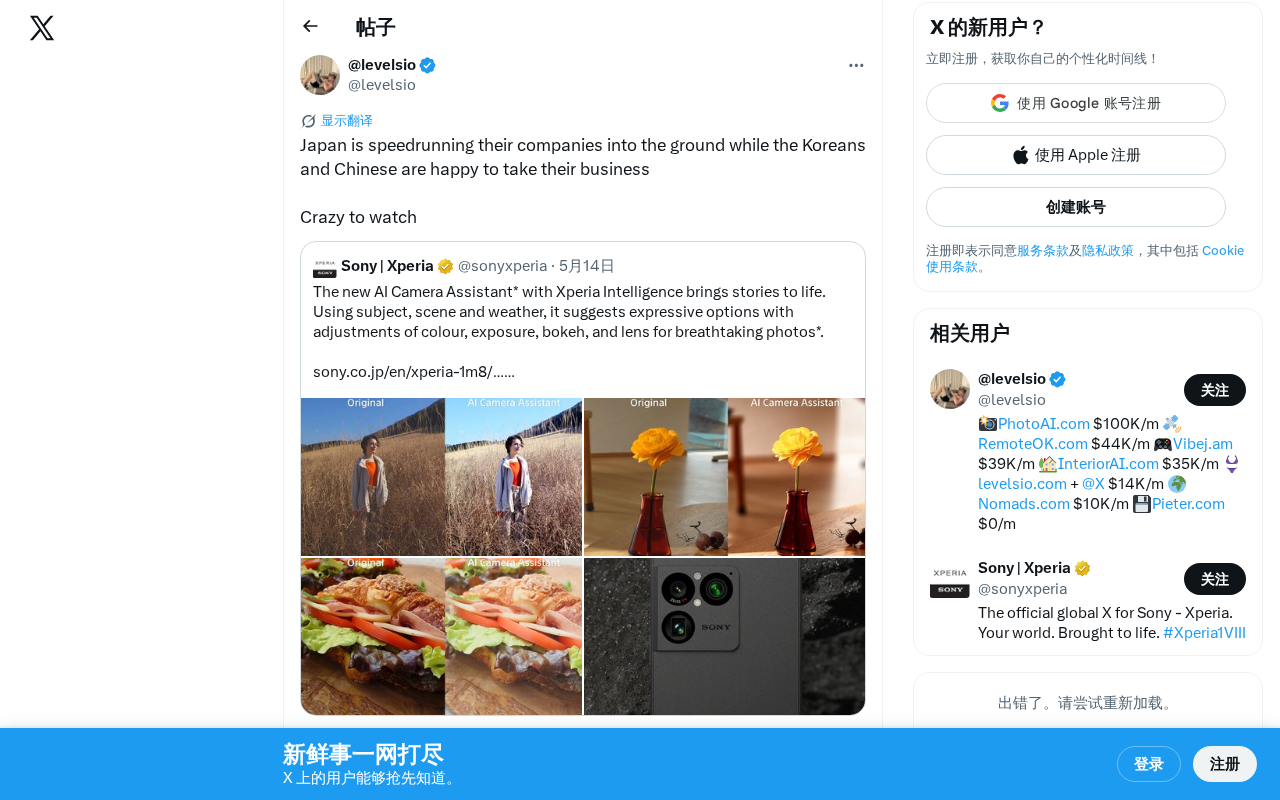
A recent Twitter post that went viral put it bluntly: Japan is "speedrunning" its own corporations into the ground, while South Korean and Chinese companies are more than happy to pick up the business.
The wording may be sharp, but the underlying shift in East Asia's tech landscape is worth taking seriously. From semiconductors to consumer electronics, from automobiles to display panels, once-dominant Japanese companies are losing ground across multiple sectors.
The Structural Challenges Facing Japanese Companies
Slow Decision-Making and Stagnant Innovation
Japanese corporations have long been known for their conservative management style. As the AI wave sweeps the globe, Japan's tech giants are visibly slower to respond compared to their Chinese and South Korean rivals. Whether it's investment in large language model R&D or deploying AI applications at scale, Japanese companies lack the urgency and boldness the moment demands.
The traditional lifetime employment system (終身雇用, shūshin koyō) and seniority-based pay structure (年功序列制度, nenkō joretsu seido) have long guaranteed workforce stability, but they've also suppressed organizational agility and innovation drive. Under lifetime employment, workers essentially stay with one company from hiring to retirement without being let go. The seniority system ties compensation and promotions primarily to tenure and age. Both systems were effective at retaining talent and accumulating institutional knowledge during Japan's high-growth era. But in an age that demands rapid transformation, they've led to critically low talent mobility, a lack of decision-making power for younger employees, and sluggish organizational responses to external change. While these norms have loosened somewhat in recent years, they remain deeply entrenched at large traditional companies.
When Chinese companies iterate products at breakneck speed and South Korean firms channel national-level resources into targeted breakthroughs, Japan's corporate decision-making chains look painfully long.
Massive Market Share Losses in Key Sectors
Looking at recent industry shifts, Japanese companies face severe challenges across multiple core sectors:
- Semiconductors: Japan's semiconductor industry once held over 50% of the global market. Today, its share has fallen below 10%. Samsung, SK hynix, and SMIC continue to eat into the market. Historically, Japan's chip industry peaked in the 1980s, when NEC, Toshiba, and Hitachi dominated global DRAM production. But the 1986 U.S.–Japan Semiconductor Agreement forced Japan to open its market and restrict exports — widely seen as a turning point. South Korea's Samsung subsequently seized DRAM market leadership through counter-cyclical investment strategies, while Japanese firms, hampered by fragmented decision-making and underinvestment, were gradually marginalized. The 2012 bankruptcy of Elpida became a symbolic milestone of this decline.
- Consumer electronics: Brands like Sony, Panasonic, and Sharp have all but retreated from smartphones, TVs, and other product categories. Samsung, LG, and Chinese brands like Huawei and Xiaomi have filled the void.
- Automotive: Japan's hesitation on the EV transition — epitomized by Toyota's hedging strategy — has given competitors like BYD and Hyundai a critical window of opportunity.
The Rise of Chinese and South Korean Companies
China: The Dual Advantage of Scale and Speed
Chinese companies have leveraged an enormous domestic market, a deep pool of engineering talent, and strong policy support to rapidly catch up — and in some cases leapfrog — competitors across multiple technology sectors. In frontier areas like AI, new energy vehicles, and 5G, Chinese firms have evolved from followers to leaders.
BYD's meteoric rise in the global EV market is a textbook example of how China's NEV industrial policy and corporate strategy work in concert. Starting in 2009, the Chinese government aggressively promoted electrification through purchase subsidies, tax exemptions, and dual-credit policies. BYD capitalized on this with its vertically integrated capabilities — developing its own batteries (Blade Battery), motors, electronic control units, and even automotive-grade chips — achieving exceptional cost efficiency. BYD stopped producing internal combustion vehicles entirely in 2022, and in 2023 sold over 3 million units, becoming the world's top-selling NEV brand. Its products are now exported to markets worldwide, posing direct competitive pressure on legacy automakers like Toyota and Volkswagen. Huawei's breakthroughs in telecom equipment and the emergence of numerous AI startups further underscore the vitality of China's tech ecosystem.
South Korea: Concentrated Force for Maximum Impact
Built around chaebol conglomerates like Samsung, SK, LG, and Hyundai, South Korea has established formidable competitive moats in memory semiconductors, OLED displays, and EV batteries. Their willingness to make bold counter-cyclical investments during technology transitions has repeatedly caught Japanese competitors off guard.
Counter-cyclical investment refers to the strategy of ramping up capital expenditure to expand capacity or develop new technologies precisely when the industry is in a downturn — when prices are falling and most competitors are cutting costs. Samsung Electronics is the classic practitioner: it invested heavily during the DRAM price crash of the 1980s and continued expanding NAND flash and OLED panel production through the 2008 financial crisis. The logic is straightforward — investment costs are lower during downturns, and when the market recovers, the company that expanded first captures massive first-mover advantages and economies of scale, while cash-strapped rivals are forced out of the market. This "be greedy when others are fearful" investment philosophy is precisely what enabled South Korean companies to overtake their Japanese counterparts across multiple sectors.
A Deeper Reflection: This Goes Beyond Corporate Management
The struggles of Japanese companies aren't an isolated phenomenon — they're deeply intertwined with broader societal challenges:
- An aging population leading to labor shortages and declining innovation vitality
- Investment conservatism shaped by decades of deflation
- Path dependence on legacy success models that proves extremely difficult to break
Path dependence is a core concept in institutional economics, systematically articulated by economists like Douglass North. It refers to the tendency for established institutions, technologies, or behavioral patterns to persist — even when superior alternatives emerge — due to high switching costs, resistance from vested interests, and organizational inertia. In Japan's case, path dependence manifests as an over-reliance on lean manufacturing and incremental improvement (改善/Kaizen). These methodologies were extraordinarily effective in the mechanical era, but in the age of digitalization and AI, disruptive innovation often creates far more value than gradual refinement.
That said, it would be a mistake to be overly pessimistic about Japanese industry. In materials science, precision instruments, and robotics, Japanese companies still maintain deep reserves of technical expertise. Even as they retreat in end-product markets, Japanese firms hold critical positions upstream in the semiconductor supply chain: Shin-Etsu Chemical and SUMCO control approximately 60% of the global silicon wafer supply; Tokyo Ohka Kogyo (TOK) and JSR dominate key segments of the photoresist market; and Japan's hydrogen fluoride and fluorinated polyimide — critical materials that were used as export control tools during the 2019 Japan–South Korea trade dispute — highlight Japan's irreplaceable role at key supply chain nodes. These "hidden champion" companies may be invisible to consumers, but their technological moats are extremely high and difficult to replicate in the short term. The critical question is whether these upstream advantages can be translated into comprehensive competitiveness for the new era.
What's Next for the East Asian Industry Race
The power shift in East Asian tech is still accelerating. For Japanese companies, the window of opportunity is narrowing. Whether they can break free from organizational inertia and embrace transformation will determine if they continue to "speedrun" their decline — or find a new growth curve. The Japanese government's recent Rapidus semiconductor initiative — aiming to mass-produce 2nm advanced-node chips by 2027 — can be seen as a bold, all-or-nothing gambit, but its success remains far from certain.
The outcome of this industrial race goes beyond corporate fortunes — it will reshape the economic map of the entire Asia-Pacific region. The continued ascent of Chinese and South Korean companies, and whether Japanese firms can successfully transform, will be one of the most important industry trends to watch in the years ahead.
Related articles

Claude Code for Test Development in Practice: An AI Programming Workflow That Doubles Your Efficiency
A practical guide to Claude Code for test development: auto-generating test scripts, Plan Mode workflows, MCP + Playwright integration, and Subagent parallel tasks to build systematic AI-assisted workflows.

Hermes Agent Hands-On Review: An AI Efficiency Revolution for Indie Game Developers
Indie game developer reviews Hermes Agent vs OpenClaude: intelligent context compression, real-time Memory, remote control via Telegram, and practical use cases in game dev, social media, and email.

Vibe Coding Beginner's Guide: Tool Selection Across Three Categories with Practical Examples
A comprehensive guide to Vibe Coding's three tool categories: Agent frameworks, CLI Coding, and IDE tools, with practical examples including Snake game and data analysis workbench.