The Complete Guide to Claude Code: Five Stages of AI Programming Tools & Practical Applications
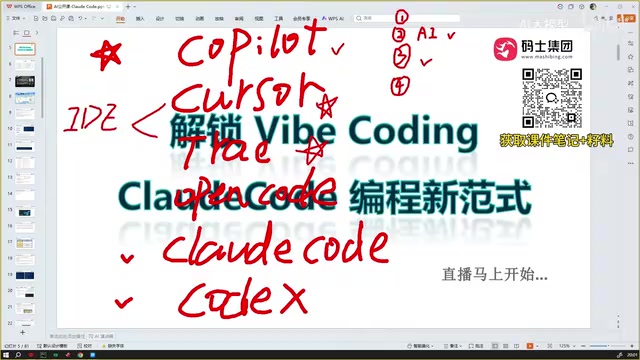
A comprehensive breakdown of Claude Code's role in the five-stage evolution of AI programming tools.
This guide traces the evolution of AI programming tools through five stages—from traditional coding to autonomous agents like Claude Code—and analyzes their strengths in 0-to-1 project creation versus 1-to-100 engineering challenges. It explores future trends like interrogative programming and argues that technical breadth is becoming more valuable than depth in the AI era.
The Evolution of AI Programming Tools
Before diving deep into Claude Code, it's worth tracing the development trajectory of AI programming tools. This not only helps us understand Claude Code's positioning but also gives us a clearer picture of where we stand in the current technological landscape.
Five Stages of Development
Stage 1: Traditional Programming. Developers write code entirely by hand with no AI assistance whatsoever.
Stage 2: Conversational Assistance. After tools like ChatGPT emerged, developers could converse with AI interfaces, obtain code snippets, then copy and paste them into their development environments for debugging. The core workflow at this stage was "copy-paste-debug."
Stage 3: IDE Plugin Assistance. Represented by GitHub Copilot, these tools integrate directly into IDEs, providing code completion, comment inference, and local modifications. GitHub Copilot is based on OpenAI's Codex model (a code-fine-tuned version of GPT-3), predicting what code developers might write next by analyzing the context of the currently edited file—including cursor position, existing code, comments, and filenames. It employs a Fill-in-the-Middle inference strategy, capable of inferring missing code snippets based on both preceding and following context. China's Tongyi Lingma is based on Alibaba's Tongyi Qianwen large model, with specialized optimization for Chinese development scenarios and commonly used domestic tech stacks. The common characteristic of these plugins is fragment-level assistance without involving the overall project—their context windows are typically limited to the current file and a small number of related files, unable to understand the entire project's architecture and inter-module dependencies.
Stage 4: Agent IDE. Smart agent IDEs represented by Cursor and Windsurf emerged, allowing developers to program through conversation. Their core innovation lies in introducing the "Agent Loop" mechanism—unlike traditional plugins that only perform single-pass inference, Agent IDEs can execute multi-step operations: read files → understand context → generate code → execute commands → observe results → self-correct. This working model draws from the ReAct (Reasoning + Acting) framework, allowing AI to alternate between reasoning and action. Cursor's Composer feature allows AI to modify multiple files simultaneously, while its indexing system builds semantic indexes across the entire codebase, enabling AI to understand code structure across files. Essentially, it's a Deep Agent capable of operating on project code for debugging and modification, but limited by context window size (even a 200K token window falls short when facing large projects). Initial context understanding was limited, often requiring multiple rounds of conversation for correction, and "forgetting" and "hallucination" problems still occur when handling very large codebases.
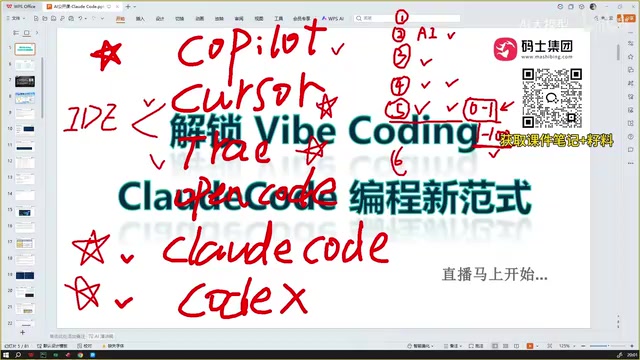
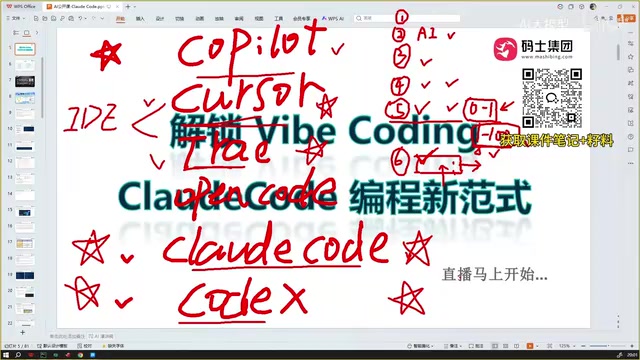
Stage 5: Autonomous Programming Agents. This is the stage currently unfolding, with Claude Code and OpenAI Codex as typical representatives. Claude Code is based on Anthropic's Claude Sonnet/Opus models, running in a terminal environment rather than a traditional IDE. Its core differentiator is having complete system-level operational capabilities: it can directly execute shell commands, read and write the file system, run test suites, and operate Git version control. OpenAI Codex takes a cloud sandbox approach, executing code operations in isolated environments. Their shared characteristic is elevating AI from "advisor" to "executor," with autonomous decision-making and self-correction capabilities—this is the core meaning of "Agent": an intelligent entity with autonomy, reactivity, and goal-orientation. They can autonomously debug and run code, commit code as requested, execute tests, and even produce correct code in a single conversation round, completing the full development loop of "write-run-debug-commit."
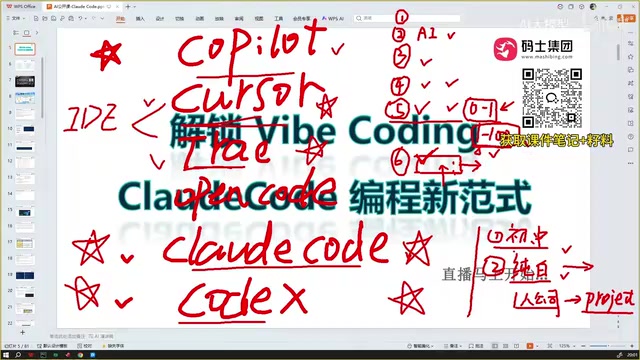
Claude Code's Core Positioning
Excellent Performance in the "0 to 1" Stage
Current-stage AI programming tools, including Claude Code, Codex, and Cursor, already perform exceptionally well in "0 to 1" project creation. Given a detailed requirements document, they can generate initial project code with complete structure and correct logic.
The "0 to 1" here refers to: starting from a clear requirement and generating a runnable project framework with core functionality. In software engineering, this corresponds to the prototyping phase, including technology selection, project scaffolding, core data model design, and main feature implementation. The code volume at this stage typically accounts for 10%-20% of the entire project but determines the project's technical direction. In this dimension, Claude Code's performance is outstanding—high code quality, reasonable architectural design, and significantly improved first-pass success rates.
Real-World Challenges in the "1 to 100" Stage
However, the "1 to 100" process still faces challenges. The "1 to 100" refers to: continuously filling in more business logic and handling more detailed scenarios within an existing technical framework. This corresponds to the engineering phase in software development, involving boundary condition handling, exception handling, performance optimization, security hardening, internationalization, accessibility, CI/CD pipeline configuration, database migration strategies, and numerous other details. There's an industry rule of thumb: getting software to "run" only requires 20% of the work, while getting it to "run in production" requires the remaining 80%. This is the fundamental reason why AI shines in the 0-to-1 stage but still faces challenges in the 1-to-100 stage.
Specifically, these challenges include:
- Code consistency in multi-person collaborative development
- Interface coordination between multiple modules
- Debugging complex business logic
- Context management as project scale grows
These problems haven't been perfectly solved yet, but the improvement trend is clear.
Future Trend: Interrogative Programming
A Proactive Guidance Programming Model
The next foreseeable development direction is "interrogative programming." In this model, AI no longer passively waits for instructions but proactively asks developers about their intentions and preferences.
Interrogative programming essentially automates the "Requirements Engineering" process in software development. In traditional software development, requirements analysts need to clarify ambiguous requirements through multiple rounds of interviews, prototype demonstrations, and user story writing. Claude Code's Plan mode already demonstrates this trend—it generates an implementation plan before execution, listing files to be modified, technical approaches to be adopted, and potential risks, waiting for developer confirmation before proceeding. During programming, it proactively asks: "What kind of implementation approach do you want?" "Which code style do you prefer?" Through multiple rounds of proactive guidance, it ensures output better matches developers' actual needs. This model draws from Chain-of-Thought prompting techniques, improving accuracy by decomposing complex tasks into reviewable steps.
Alibaba's Tongyi Lingma Coder is also moving in this direction, refining requirements through interrogative dialogue. The future direction may be AI autonomously generating PRD (Product Requirements Document)-level requirement clarification questions, fundamentally reducing rework caused by ambiguous requirements.
Technical Breadth Matters More Than Depth
In the AI programming era, a developer's technical breadth will be more critical than depth.
This viewpoint aligns closely with the "T-shaped talent" theory in software architecture, but in the AI era, it needs to evolve into "comb-shaped talent"—having some depth across multiple technical domains. If you understand Java, Python, frontend development, cloud-native, data analysis, mobile development, and other fields simultaneously, even without deep expertise in each, you can:
- Technology selection capability—Choose appropriate technical frameworks to collaborate with AI; understanding the pros and cons of different tech stacks enables you to guide AI toward the most suitable solutions
- Code review capability—Judge whether the direction of AI-generated code is correct, identifying anti-patterns, security vulnerabilities, and performance bottlenecks in AI-generated code
- Quickly locate problems when AI makes mistakes
- System integration capability—Effectively control the overall architectural direction of a project; modern applications often involve frontend, backend, databases, message queues, container orchestration, and other technical layers, and only with a full-stack perspective can you effectively coordinate AI output across layers
This also explains why full-stack engineers' value is increasing rather than decreasing in the AI era.
Practical Advice for Complete Beginners
Technical Barriers Still Exist
A common misconception is that with AI programming tools, people with no technical background can independently develop projects.
The reality is that even though Claude Code performs excellently in the "0 to 1" stage, in actual projects:
- You need to understand whether the technical approach AI chose is reasonable
- You need to judge the quality of code output
- The "1 to 100" stage requires debugging and architectural capabilities
- Complex business logic requires technical decision-making
Therefore, people with purely product backgrounds and no technical foundation still find it difficult to independently complete a full commercial-grade project. AI is a powerful assistive tool, but not an omnipotent replacement.
How Junior and Mid-Level Programmers Should Respond
The challenges facing junior and mid-level programmers are real. When AI can complete most basic coding work, the irreplaceability of junior developers who only master a single tech stack is indeed declining.
Recommended response strategy: broaden your technical horizons, transition from "executor" to "architect" and "AI collaborator," and learn to efficiently collaborate with AI programming tools to complete complex projects. Specifically, this means not only knowing how to write code but also understanding system design, the trade-offs in technology selection, code quality evaluation criteria, and how to decompose complex requirements into subtasks that AI can efficiently execute.
Summary
Claude Code represents the fifth stage of AI programming tool evolution—autonomous programming agents—and is already very mature in "0 to 1" project creation. While "1 to 100" continuous development still has room for improvement, given the recent pace of progress, future developments are worth looking forward to.
For developers, the most important thing right now is: learn to use these tools, broaden your technical breadth, and cultivate the ability to collaborate with AI. This isn't a multiple-choice question—it's a mandatory one.
Related articles

Claude Code for Test Development in Practice: An AI Programming Workflow That Doubles Your Efficiency
A practical guide to Claude Code for test development: auto-generating test scripts, Plan Mode workflows, MCP + Playwright integration, and Subagent parallel tasks to build systematic AI-assisted workflows.

Hermes Agent Hands-On Review: An AI Efficiency Revolution for Indie Game Developers
Indie game developer reviews Hermes Agent vs OpenClaude: intelligent context compression, real-time Memory, remote control via Telegram, and practical use cases in game dev, social media, and email.
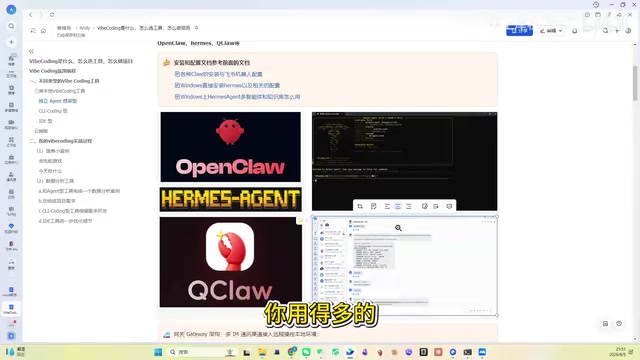
Vibe Coding Beginner's Guide: Tool Selection Across Three Categories with Practical Examples
A comprehensive guide to Vibe Coding's three tool categories: Agent frameworks, CLI Coding, and IDE tools, with practical examples including Snake game and data analysis workbench.