The Complete Vibe Coding Workflow: Ship a Product Without Writing a Single Line of Code
The Complete Vibe Coding Workflow: Shi…
A step-by-step guide to building and launching products using Vibe Coding — no code required.
Vibe Coding is a new development paradigm where natural language drives AI to handle the entire product development process. This guide walks through the complete three-step workflow: using Google Gemini to generate product requirement documents, Figma Make to create high-fidelity design mockups, and Cursor to produce working code — all without writing a single line. It's ideal for entrepreneurs, professionals, freelancers, and creators looking to rapidly build and ship products.
What Is Vibe Coding? A Completely New Development Paradigm
If you still believe that building a product requires knowing how to code, it's time to update your thinking. Vibe Coding isn't a new programming language — it's an entirely new product mindset and development paradigm that uses natural language to drive AI to handle the development work.
The concept was first coined by Andrej Karpathy, former co-founder of OpenAI, in February 2025. On social media, he described a programming style where you "fully give in to the vibes, embrace exponentials, and forget that the code even exists." The word "Vibe" here emphasizes atmosphere and feeling — developers no longer focus on code details but instead concentrate on the overall feel and direction of the product. The idea quickly sparked heated discussion across the global developer community and has been hailed as the next wave of development democratization following the low-code/no-code movement.
Traditional development is like planning an expedition to Antarctica — you first need to learn how to build a ship, navigate, and survive. Frontend, backend, databases — each layer requires mastering different programming languages and enduring long development and iteration cycles. For non-technical people, this barrier is nearly insurmountable.
The core logic of Vibe Coding is: You handle the ideas and logic; AI handles the code and execution. You communicate with AI using natural language, directing it to complete the entire process of design, development, and testing. Development becomes unprecedentedly efficient and intuitive — you don't need to write a single line of code.
In fact, the rise of Vibe Coding is not an isolated event. It's the latest stage in the long-term trend of software development democratization. Starting in the 2010s, no-code/low-code platforms like Bubble, Webflow, and Airtable began trying to lower the barrier to development. Gartner once predicted that by 2025, 70% of new applications would be developed using low-code/no-code technologies. But these platforms were limited in flexibility and customization capabilities. Vibe Coding leverages the general-purpose capabilities of large language models to break through the template constraints of traditional no-code platforms, theoretically enabling application development of any complexity.
A typical example: a designer overseas used Vibe Coding to develop a minimalist AI tool app called "Screenshot to Code" in just one afternoon. His requirements were that the color scheme should look as premium as an Apple app and the scrolling should be smooth — the product now generates thousands of dollars in monthly revenue.
Who Is Vibe Coding For? Four Types of Super Beneficiaries
Entrepreneurs Validating Ideas
Previously, entrepreneurs needed to find technical co-founders and invest heavily in development costs just to validate an idea. Now, you can build an MVP yourself in a single day, throw it directly into the market to test feedback, and dramatically reduce the cost of trial and error.
MVP (Minimum Viable Product) is a core concept in lean startup methodology, systematically articulated by Eric Ries in The Lean Startup. The core idea is to use minimal resources to build a product version with essential features, quickly launch it to the market to gather real user feedback, and then iterate based on data. Traditional MVP development typically takes 2–4 weeks or longer, while Vibe Coding compresses this cycle to hours or a single day. This means entrepreneurs can test multiple directions within the same time and budget to find true product-market fit.
Professionals Looking to Cut Costs and Boost Efficiency
Within your company, you can use Vibe Coding to quickly build automated management systems, data dashboards, and other tools that significantly improve team productivity. Mastering this skill makes you an irreplaceable, multi-disciplinary talent on your team.
Freelancers Monetizing Their Skills
Offer Vibe Coding as a service — help businesses develop applications, optimize workflows, and earn service fees. The barrier to entry is low, yet market demand is exploding.
Creators with Ideas
Even without any technical background, as long as you have unique product ideas, you can easily bring them to life. In the AI era, the most valuable asset is no longer coding ability — it's ideas and logic.
The Core Vibe Coding Workflow: Three Steps from Idea to Launch
The entire Vibe Coding workflow can be broken down into three key stages:
Step 1: Idea → Product Document (Using Gemini)
Use Google Gemini as your "world-class product manager." Have a conversation with it about your core features and target user groups. Gemini will deeply analyze your requirements and help you generate a complete PRD (Product Requirements Document).
Google Gemini is a multimodal large language model released by Google DeepMind in late 2023, capable of understanding and generating text, images, audio, video, and other types of information. It excels in long-context understanding and logical reasoning, able to process context windows exceeding 1 million tokens. This makes it particularly well-suited for complex product requirement analysis and document generation tasks. In the Vibe Coding workflow, Gemini plays a role similar to an experienced product manager, transforming vague user needs into structured technical documents.
A PRD (Product Requirements Document) is a core document in product development that defines what problem the product solves, for whom, and how. A complete PRD typically includes a product overview, user personas, functional requirements, non-functional requirements (such as performance and security), interaction flows, and acceptance criteria. In traditional development workflows, writing a PRD usually takes a product manager several days to weeks and goes through multiple rounds of review. With Gemini, the first draft can be completed in minutes.
The PRD generated by Gemini includes:
- Feature list with priority ranking
- Project roadmap
- Core value analysis
This step instantly transforms your vague idea into something transparent and structured, giving you a clear picture of everything the project needs.
Step 2: Product Document → Design Mockups (Using Figma Make)
Take the product document generated by Gemini along with your design preferences and pass them as instructions to Figma Make. It can understand natural language instructions and directly generate corresponding UI components and layouts within Figma.
Figma Make (formerly Figma AI) is an AI design feature introduced by the Figma platform during 2024–2025, integrating natural language processing capabilities into the world's most popular collaborative design tool. Figma itself has over 4 million paid users and is the industry-standard tool in UI/UX design. Figma Make can automatically generate UI components, page layouts, and design systems based on text descriptions, and the generated design elements are fully editable, allowing designers to further refine them. This means even non-design professionals can obtain high-fidelity prototypes that meet modern design standards.
You don't need any design background to get a set of stylistically consistent, professionally polished, high-fidelity prototype screens.
Step 3: Design Mockups → Working Code (Using Cursor and Other AI Development Tools)
Read the design mockups through Figma MCP and use AI development tools like Cursor to generate code. All you need to do is act as the "commander" — confirm and fine-tune at key checkpoints, without writing any code.
Cursor is an AI-native code editor built on the VS Code architecture, developed by Anysphere. Since 2024, it has rapidly become the benchmark product in the AI-assisted development space. It deeply integrates large language models like GPT-4 and Claude, supporting AI assistance across the entire workflow including code generation, refactoring, and debugging. Unlike traditional code completion tools, Cursor can understand the context of an entire project and generate complete functional modules based on natural language instructions.
MCP (Model Context Protocol) is an open standard protocol introduced by Anthropic in late 2024, designed to provide AI models with a unified interface for interacting with external tools and data sources. Through Figma MCP, AI development tools can directly read layout information, color values, font styles, and other design tokens from Figma design files, precisely converting visual designs into frontend code and dramatically reducing information loss between design and development. This solves the longstanding problem in traditional development where "the design mockup doesn't match the final product."
The essence of the entire process is: You are the project lead and creative visionary; AI is your super execution team.
A Critical Mindset Shift: Don't Wait Until You're "Ready"
Many people think learning development takes six months or longer, but in the AI era, going from zero to one only requires the practice of a single project. The core barrier has been lowered to an unprecedented level:
- If you can send a WeChat message, you can communicate with AI
- If you can articulate a pain point about a product, you already have product inspiration
- If you can clarify "what I want," you have the foundation for Vibe Coding
The biggest misconception is "waiting until you're ready before starting." In reality, as you work on your first project, you'll discover that your creativity far exceeds your imagination.
Summary and Action Steps
Vibe Coding is redefining the answer to "who can build products." It's not about putting programmers out of work — it's about enabling everyone with an idea to participate in creation. If you have an idea you've always wanted to bring to life, now is the best time — pick a specific, small need and complete the full loop of "idea → document → design → code → launch" to experience firsthand the development efficiency of the AI era.
Key Takeaways
Related articles

Claude Code for Test Development in Practice: An AI Programming Workflow That Doubles Your Efficiency
A practical guide to Claude Code for test development: auto-generating test scripts, Plan Mode workflows, MCP + Playwright integration, and Subagent parallel tasks to build systematic AI-assisted workflows.
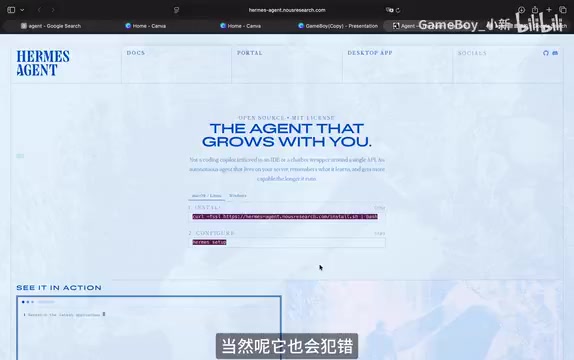
Hermes Agent Hands-On Review: An AI Efficiency Revolution for Indie Game Developers
Indie game developer reviews Hermes Agent vs OpenClaude: intelligent context compression, real-time Memory, remote control via Telegram, and practical use cases in game dev, social media, and email.
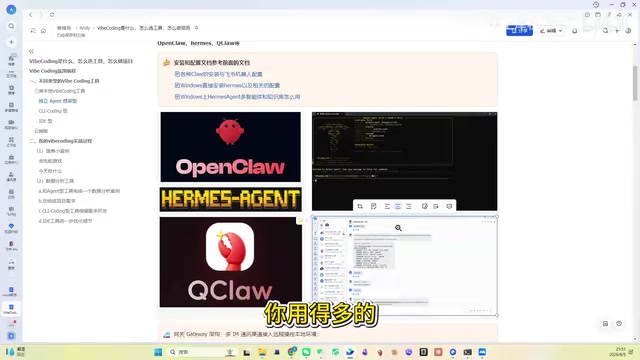
Vibe Coding Beginner's Guide: Tool Selection Across Three Categories with Practical Examples
A comprehensive guide to Vibe Coding's three tool categories: Agent frameworks, CLI Coding, and IDE tools, with practical examples including Snake game and data analysis workbench.