The Essential Difference Between Skill and MCP: A Kitchen Analogy That Makes It Crystal Clear
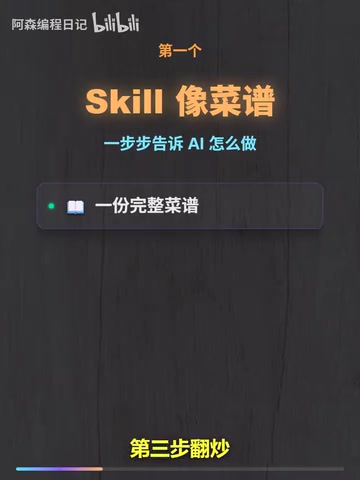
Skill is the recipe in AI's head; MCP is the hand that reaches out to execute.
Skill and MCP serve fundamentally different roles in AI Agent architecture. Skill provides methodology — the steps, logic, and workflow that tell AI what to do and how. MCP provides execution capability — connecting AI to external tools, APIs, and data sources. Like a recipe and a kitchen assistant, neither is complete without the other. Together they form a fully capable AI Agent.
In the world of AI Agent development, Skill and MCP (Model Context Protocol) are two frequently mentioned concepts that are easily confused. Many developers struggle to determine when to use a Skill versus when to connect an MCP while building AI workflows — some even treat them as the same thing. This article uses an intuitive kitchen analogy to help you thoroughly clarify the boundaries and collaborative relationship between the two.
Skill: The Recipe That Teaches AI "How to Do It"
The essence of a Skill is methodology — it's a set of predefined steps and processes that tell the AI what order and logic to follow when facing a particular task.
Think of a Skill as a detailed recipe: step one is chopping vegetables, step two is putting them in the pan, step three is stir-frying — every step is clearly written out. Once the AI has this recipe, it knows exactly what approach to take without getting flustered.
In practice, Skills typically manifest as:
- Prompt templates: Pre-configured instruction frameworks that define the AI's reasoning path
- Workflow orchestration: Execution sequences and conditional branches for multi-step tasks
- Domain knowledge encapsulation: Best practices from specific industries packaged into reusable capability modules
The concept of Skill takes different implementation forms across various AI Agent frameworks. In the Coze platform, Skills are explicitly defined as capability units of an Agent, with each Skill containing trigger conditions, execution flows, and output specifications. In LangChain/LangGraph, the equivalent concept manifests as Chain and Graph orchestration logic. In autonomous Agent frameworks like AutoGPT and MetaGPT, Skills appear as role definitions and task decomposition strategies. Regardless of the form, the essence remains the same: a methodological encapsulation that breaks complex tasks into executable steps.
In simple terms, Skill manages the AI's "brain" — it provides cognitive-level capability, letting the AI know what to do and how to do it.
MCP: The Kitchen Assistant That Helps AI "Reach for Things"
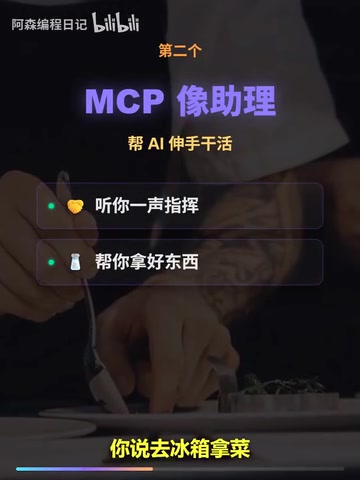
MCP (Model Context Protocol) operates on an entirely different dimension. It doesn't teach the AI how to do things — instead, it helps the AI connect to external tools and resources, enabling it to actually reach real-world data and services.
Think of MCP as a kitchen assistant: you say "pass the salt," and they hand it to you; you say "get the vegetables from the fridge," and they open the fridge and retrieve the ingredients. They're not responsible for teaching you cooking techniques — they're only responsible for helping you reach what you need.
At the technical level, MCP typically manifests as:
- API call bridging: Enabling AI to access databases, search engines, file systems, and other external services
- Tool registration and discovery: Providing AI with a standardized "toolbox" interface
- Context passing: Transmitting necessary environmental information between AI and external systems
From a technical background perspective, MCP is an open standard protocol officially released by Anthropic in late 2024, designed to solve the fragmentation problem of connecting large language models with external data sources and tools. Before MCP, every AI application needed custom integration code to interface with external services, resulting in massive duplication of effort and compatibility issues. MCP adopts a client-server architecture and defines a standardized JSON-RPC communication protocol, allowing any compliant tool to be called by AI models in a plug-and-play manner. Currently, hundreds of open-source MCP Servers cover common scenarios including database queries, file operations, web browsing, and code execution.
MCP manages the AI's "hands and feet" — it solves the execution-level capability boundary problem, transforming AI from "can only talk" to "can take action."

The Core Difference: One Manages Methods, the Other Manages Tools
When you compare the two side by side, the distinction becomes crystal clear:
| Dimension | Skill | MCP |
|---|---|---|
| Core responsibility | Teaches AI how to do it (methods) | Helps AI execute (tools) |
| Analogy | Recipe | Kitchen assistant |
| Management layer | Cognition & logic | Connection & execution |
| Consequence if missing | AI doesn't know what to do | AI has ideas but can't act on them |
One-sentence summary: Skill is the recipe in your head; MCP is the hand that reaches out.
This layered design isn't accidental — it's the inevitable result of AI Agent architecture evolution. Early AI applications relied primarily on single-turn conversations to complete tasks, with extremely limited capabilities. With the introduction of the ReAct (Reasoning + Acting) paradigm, AI gained the ability to cycle through "think-act-observe" — the model first reasons about what to do next, then executes the corresponding action, and finally observes the result to determine subsequent steps. Function Calling allowed models to call external functions in a structured way. The current Skill+MCP layered architecture essentially achieves a clean decoupling of the Agent's cognitive planning layer from its execution capability layer. This decoupling enables both layers to iterate and optimize independently, making Agent systems easier to maintain and extend.
Why the Two Must Work Together
Once you understand their respective roles, the most critical insight is: using either one alone is incomplete.

Skill without MCP — The AI knows what to do, but can't reach any tools or data. It's like a chef who has memorized the recipe standing in an empty kitchen — you can't cook without ingredients. For example, the AI knows the process of "query the database first, then generate a report," but without MCP to connect it to the database, it's all just talk.
MCP without Skill — The AI can connect to various tools and services, but doesn't know what order or logic to use when calling them. It's like a kitchen assistant standing there waiting for instructions, but nobody has told them what dish to make today. No matter how many tools you have, without orchestration logic they're just a scattered mess.
Combining both creates a complete AI Agent — Skill provides the methodology; MCP provides the hands and feet. Skill plans out the flow of "search for information → analyze data → generate report," while MCP handles calling the search engine, connecting to data analysis tools, and writing to the document system at each step. This is what an AI that can truly "cook" looks like.
Practical Recommendations
If you're building an AI Agent or automation workflow, here's the recommended design approach:
-
Define Skills first: Clarify what tasks your AI needs to accomplish and map out the steps and logic clearly. The core of this step is task decomposition — breaking a complex goal into atomic steps and defining the dependencies and conditional branches between them. Good Skill design should include fault tolerance mechanisms, meaning the AI knows how to fall back or adopt alternative approaches when a step fails.
-
Then connect MCP: Based on the external capabilities needed at each step, select or develop the corresponding MCP tools. The community already offers numerous open-source MCP Servers for direct use, such as the filesystem server for file read/write, the fetch server for web content retrieval, and various DB servers for database operations. If existing tools don't meet your needs, MCP's open specification keeps the barrier to custom development relatively low.
-
Iterate and optimize: Observe the AI's execution results in practice and fine-tune both the Skill's logic orchestration and MCP's tool configuration separately. Common optimization directions include: adjusting step granularity and adding exception handling branches at the Skill level; optimizing tool descriptions to improve model call accuracy and adjusting timeout and retry strategies at the MCP level.
Remember this formula: Complete AI capability = Skill (methods) + MCP (tools). Once you grasp this, you'll never confuse the two again when building AI applications, and you'll be able to precisely identify whether a problem lies in the "brain" or the "hands and feet."
Related articles
AI Programming Learning Roadmap: A Complete Six-Stage Guide from Beginner to Expert
A systematic breakdown of the six-stage AI programming learning roadmap, from zero-code start to mastering Cursor and professional tools, methodology frameworks, advanced patterns, and project practice.

Deep Dive into Devin's Background Agent Architecture: Behind the 80% AI-Committed Code
Deep analysis of Devin's background agent architecture: brain-sandbox separation, environment setup, MCP integration, memory systems, and multi-agent collaboration challenges.

Claude Code in Practice: An In-Depth Efficiency Comparison Between Claude and DeepSeek for Programming
A hands-on comparison of Claude vs DeepSeek V4 for AI programming: code quality, development efficiency, and cost differences. DeepSeek costs 1/6 to 1/10 of Claude but requires 1-2x more time.