The Hidden Cost of Pet Snakes: Hundreds of Millions of Rodents Factory-Farmed Every Year
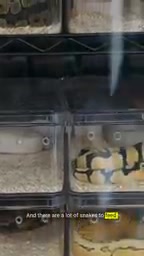
Hundreds of millions of rodents are factory-farmed yearly to feed pet snakes, creating a hidden animal welfare crisis.
The pet snake industry has driven explosive growth in rodent factory farming, with an estimated 200 to 650 million mice and rats bred annually as snake food. These animals endure cramped conditions and painful slaughter methods, yet remain invisible due to species bias, regulatory gaps, and cultural stigma. Scientific research confirms rodents are sentient beings capable of empathy and complex cognition, raising urgent ethical questions about this overlooked industry.
An Overlooked Animal Welfare Issue
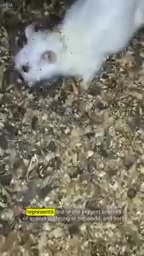
Have you ever heard of a "mouse factory farm"? Probably not. But here's a shocking fact: globally, the number of mice and rats factory-farmed to feed pet snakes and zoo reptiles may actually exceed the number of cattle raised for slaughter. This massive industry has remained almost entirely invisible to the public, yet it represents one of the world's largest sources of animal suffering.
Factory farming, also known as Concentrated Animal Feeding Operations (CAFO), is a production model that emerged in the mid-20th century to meet large-scale food demand. Its defining feature is raising the maximum number of animals in the minimum amount of space to reduce per-unit costs. Originally applied to poultry and pigs, the model later expanded to cattle and aquaculture. The animal welfare controversies surrounding factory farming have persisted for decades, but public discourse has focused almost exclusively on animals raised for human consumption. The factory farming of rodents as "feeder animals" has remained in a near-total blind spot — both in terms of regulation and public awareness.
Recently, a video published by Vox revealed the little-known truth about rodent farming behind the pet snake industry, sparking a deeper conversation about the boundaries of animal welfare.
The Explosive Growth of the Pet Snake Market
Data shows that from 2018 to 2024, the number of U.S. households owning pet snakes jumped from 800,000 to 1.3 million — an increase of over 60%. This trend has directly fueled the rapid expansion of the feeder rodent farming industry.
The explosive growth of the pet snake market is driven by multiple factors. The popularity of reptile content on social media — especially TikTok and YouTube — has significantly boosted interest in snakes among younger demographics. Additionally, compared to cats and dogs, snakes don't need daily walks, won't bark and disturb neighbors, and don't shed fur, making them perceived as "low-maintenance" pets suited for small apartments and busy lifestyles. Breeds like the Ball Python have been selectively bred to produce hundreds of color and pattern variations (known as "morphs"), with some rare varieties fetching tens of thousands of dollars, creating a thriving collector and breeding market.
Pet snakes require live or frozen rodents as food, meaning that behind every pet snake, dozens or even hundreds of mice are paying the price. When 1.3 million households are simultaneously keeping snakes, the number of feeder rodents required reaches staggering proportions.
The Cruel Reality of Rodent Factory Farming
Extremely Compressed Living Space
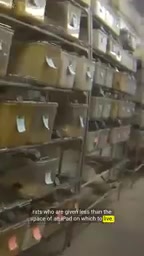
Rodent farms operate in a manner strikingly similar to chicken and pig factory farms: row upon row of densely packed cages, with each mouse allocated less space than an iPad. From birth to death, they live their entire lives in this cramped space, their sole "purpose" being to become snake food.
Disturbing Slaughter Methods
The slaughter methods used on these rodents are equally harrowing. The most common approaches include freezing to death and carbon dioxide asphyxiation.
Carbon dioxide (CO₂) asphyxiation is one of the most widely used slaughter methods in rodent farms and is also commonly employed for euthanasia of laboratory animals. The process involves placing animals in an environment with gradually increasing CO₂ concentration, causing them to lose consciousness before dying. However, guidelines from the American Veterinary Medical Association (AVMA) note that CO₂ irritates the respiratory mucosa before reaching lethal concentrations, causing visible distress and panic in the animals. Research shows that rats exposed to CO₂ exhibit intense struggling and escape behaviors, indicating that the process is far from "painless." Despite this, it remains industry standard practice due to its low cost and operational simplicity.
Undercover investigations by animal protection organization PETA have revealed even worse conditions: filthy living environments and workers performing so-called "euthanasia" by slamming animals against walls and tabletops.
A Scale Beyond Imagination
While exact figures are difficult to pin down, a global estimate indicates that at least 200 million and up to 650 million mice and rats are farmed annually to feed pet snakes and zoo reptiles. This number alone constitutes a major animal welfare issue.
Why Has Rodent Farming Been Overlooked for So Long?
Deep-Rooted Species Bias
Mice and rats have long been viewed by humans as "pests," and this deep-rooted bias has left the public lacking empathy for their suffering. When we discuss animal welfare, people are far more likely to focus on cats, dogs, or even pigs and chickens — yet very few speak up for rodents.
This phenomenon is known in philosophy as "speciesism," a concept systematically articulated by philosopher Peter Singer in his 1975 book Animal Liberation. It refers to the human tendency to allocate moral concern based on species identity rather than actual capacity for sentience. Under this framework, people feel outraged by a dog's pain, uneasy about a pig's suffering, yet remain indifferent to a mouse's agony — not because these animals differ in their ability to experience pain, but because of culturally constructed emotional proximity. In Western culture, rodents have long been associated with plague, filth, and destruction (such as the historical memory of the medieval Black Death), and this cultural coding profoundly shapes people's moral intuitions.

Systemic Gaps in Regulation
Species bias exists not only at the level of public perception — it has been institutionally embedded in legal systems. At the U.S. federal level, the Animal Welfare Act (1966) explicitly excludes rats, mice, and birds used in research from its protections — an exclusion formally written into law in 2002. This means these animals enjoy no legally mandated minimum welfare protections at the federal level. Rodents farmed as "feeder animals" occupy an even more marginal position: they are protected neither by the Animal Welfare Act nor by the Humane Slaughter Act, which applies only to food livestock such as cattle, pigs, and sheep. This regulatory vacuum allows rodent farms to operate with virtually no external oversight.
Scientifically Confirmed Sentience
Yet scientific research tells us that rodents possess distinct personalities and can learn complex tasks. In experiments, they demonstrate prosocial behavior — helping companions even when there is no benefit to themselves. Here's a telling detail: researchers have discovered that rats emit ultrasonic vocalizations resembling "laughter" when tickled. These findings indicate that the cognitive and emotional capacities of rodents far exceed our stereotypes.
Neuroscience research on rodent cognition has made breakthrough advances over the past two decades. A landmark 2011 experiment at the University of Chicago found that rats would actively free trapped companions, even when it meant giving up a chocolate reward — considered strong evidence of "empathy-driven prosocial behavior." In 2016, a research team at Humboldt University in Berlin discovered that rats emit 50kHz ultrasonic vocalizations (inaudible to the human ear) when tickled and display "joy jumps," with neural mechanisms highly similar to the brain activation patterns associated with human laughter. Furthermore, rats can learn to use tools, understand cause-and-effect relationships, and even show preliminary signs of self-awareness in modified mirror test experiments. These scientific findings fundamentally challenge the traditional perception that "mice are just lowly pests."
Possible Paths to Improving Rodent Farming Conditions
Some actions are already underway to address this issue:
- Legislative restrictions: Some U.S. cities have banned pet stores from selling pet snakes, and more cities may follow suit
- Demand reduction: Lowering the popularity of pet snake ownership through public education
- Exploring alternatives: Developing synthetic feed to replace live feeding (though the technology remains immature)
- Raising farming standards: Establishing minimum animal welfare standards for existing rodent farms
It's worth noting that the search for alternatives faces unique biological challenges. Snakes are obligate carnivores whose digestive systems have evolved over tens of millions of years to process the specific nutritional composition of whole prey. Simple ground meat or nutritional powders cannot meet snakes' requirements for specific amino acid ratios, calcium-to-phosphorus ratios, and trace elements. Some companies are currently experimenting with cultured meat technology or 3D printing to create simulated whole-prey "artificial mice," but commercial viability remains a considerable distance away.
Reflection: Where Are the Boundaries of Animal Welfare?
The core question of this issue is: Should our moral concern extend to all sentient beings? When an industry causes suffering to hundreds of millions of animals every year, can it be ignored simply because the victims are "mice"?
The prosperity of the pet snake industry is not inherently wrong, but the large-scale rodent factory farming it has spawned does constitute an ethical issue worthy of serious consideration. At the very least, this topic deserves to be seen and discussed, rather than continuing to remain hidden from public view.
As the video urges: if we can set aside our biases against rodents, we will clearly see that factory farming of rodents has become a massive animal welfare problem — one that deserves our attention and action.
Key Takeaways
Related articles

Claude Code Skills and MCP Resources: A Complete Guide from Beginner to Expert
A comprehensive guide to Claude Code Skills and MCP resources, covering international platforms like Skills.mp and Smithery plus Chinese alternatives, with a quick selection guide to boost AI coding productivity.

AI Code Output Up 10x — How Do You Keep Code Review from Collapsing?
When AI code generation outpaces human review, Code Review becomes the biggest bottleneck. Learn guardrail systems, architecture constraint tests, and TDD-driven Agent development strategies.

A Giant Shot: An AI Screenshot Tool with Built-in MCP That Lets AI Directly Control Your Computer
A Giant Shot is a desktop screenshot tool with a built-in MCP Server, offering 11 annotation tools, smart OCR, AI chat, and desktop automation for Cursor and Claude Desktop.