The macOS Naming Dilemma: California Landmarks Are Running Out — What's Apple's Next Move?
Apple's California landmark names for macOS are running out — here are three possible paths forward.
After 13 years of naming macOS releases after California landmarks — from Mavericks to Sequoia — Apple faces a naming resource crisis as recognizable, brand-appropriate options dwindle. This article examines the constraints of the current system and explores three possible solutions: mining deeper into California geography, expanding to global landmarks, or abandoning the naming convention entirely in favor of version numbers or abstract concepts suited to the AI era.
From Wild Cats to Landmarks: 13 Years of macOS Naming
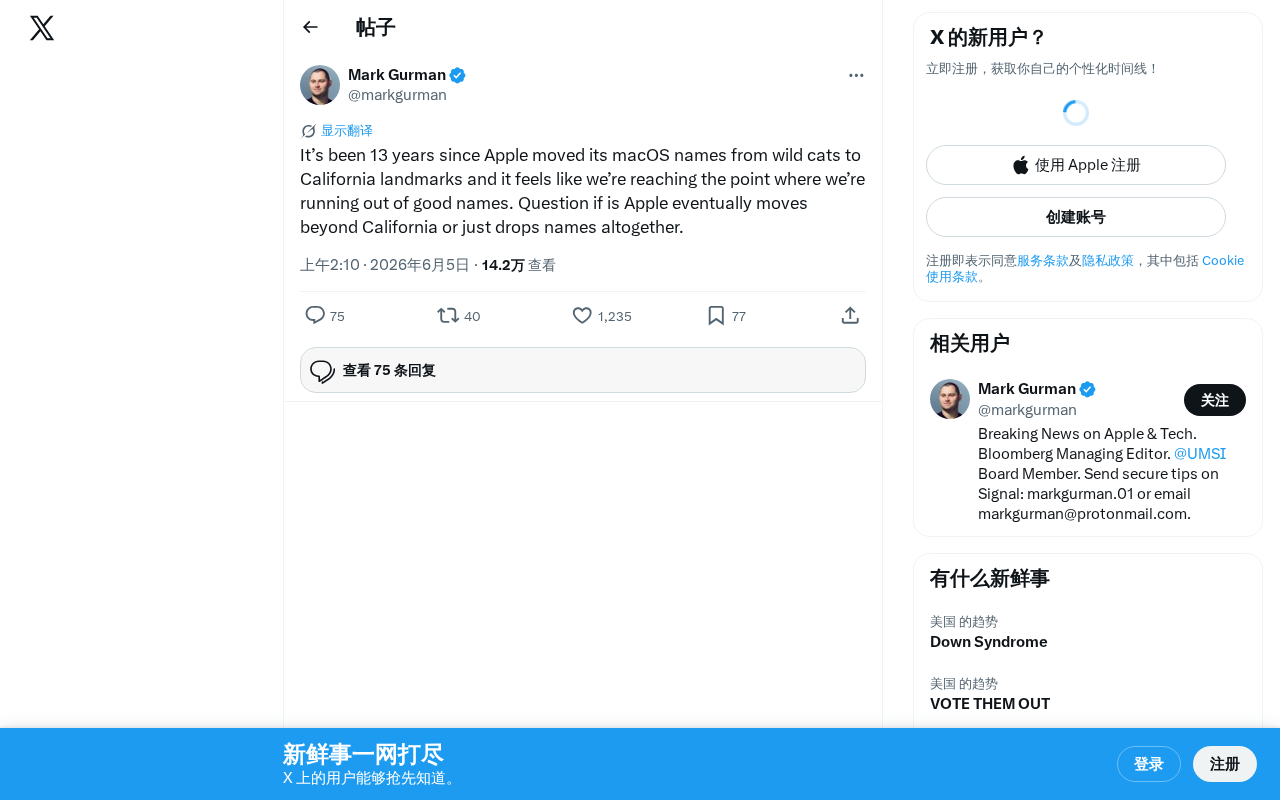
In 2012, Apple made a seemingly minor yet far-reaching branding decision — switching macOS's naming convention from wild cats (Cheetah, Leopard, Lion, etc.) to California landmarks. Starting with Mavericks, we've since seen Yosemite, El Capitan, Sierra, Mojave, Catalina, Big Sur, Monterey, Ventura, Sonoma, and the latest, Sequoia.
Thirteen years later, this naming system faces an unavoidable problem: California's well-known landmarks are running out.
The Complete Arc of macOS Naming History
The history of macOS naming actually dates back to the first release of Mac OS X in 2001. The original wild cat naming scheme began with Mac OS X 10.0 Cheetah, progressing through Puma, Jaguar, Panther, Tiger, Leopard, Snow Leopard, Lion, and Mountain Lion — nine generations in total. These feline names were distinctive in the tech industry at the time, standing in stark contrast to Windows' use of years or abstract concepts. Notably, when Apple switched naming conventions in 2012, it coincided with the brand repositioning period following Tim Cook's assumption of the CEO role. The change was widely interpreted as Apple's desire to reinforce its California roots and natural aesthetic brand identity.
The Exhaustion Crisis of macOS Naming Resources
Although California is vast and geographically diverse, landmarks truly suitable as operating system names need to meet several criteria:
- Simple pronunciation: As a global product, the name can't be too difficult to say
- High recognition: Ideally an internationally known landmark
- Brand tone alignment: Should convey elegance, power, or innovation
- No negative associations: Avoid connections to disasters, controversies, etc.
- Cross-language compatibility: Must not produce negative homophones or cultural conflicts in major world languages
Naming a global product involves complex cross-language considerations. Apple needs to ensure names don't produce negative homophones or cultural conflicts in English, Chinese, Japanese, Arabic, and other major markets. For example, El Capitan means "the captain/chief" in Spanish, carrying positive associations in Latin American markets; while Sequoia, as one of the largest living organisms on Earth, symbolizes grandeur and endurance in most cultures. This requirement for cross-cultural adaptability further narrows the range of usable landmark names. Linguists call this phenomenon "namespace compression" — as constraints multiply, the number of viable solutions decreases exponentially.
Looking at the names already used, Apple has covered national parks (Yosemite, Sequoia), coastlines (Big Sur, Catalina), deserts (Mojave), mountain ranges (Sierra, El Capitan), and other major geographic categories. The remaining high-quality options are indeed shrinking rapidly.
The Brand Value of California Geography
The choice of California as a naming source was no accident. California is the heartland of the global tech industry, home to Silicon Valley, and possesses extraordinarily diverse natural landscapes — from the Pacific coastline to the Sierra Nevada, from the Mojave Desert to the redwood forests. This geographic diversity allows each generation of macOS to convey a unique aesthetic atmosphere through wallpapers and visual design. For example, Mojave introduced Dark Mode, and its desert-themed dynamic wallpaper perfectly echoed the "day to night" interface switching concept; Big Sur's rounded design language visually mirrored the soft curves of California's central coastline. This deep integration of naming and product design is something purely numerical naming cannot achieve.
Apple's Three Possible Paths Forward
Option One: Keep Mining California Landmarks
California still has Tahoe, Shasta, Napa, Alcatraz, Muir Woods, and other candidates. But the problem is that these names vary widely in international recognition and brand suitability. Alcatraz (the infamous prison island) is clearly inappropriate, and Napa is more readily associated with wine than technology.
Option Two: Expand Beyond California
Apple could extend its naming scope to natural landmarks across the entire United States or even the world. Imagine macOS Rainier, macOS Everest, or macOS Fuji — these names carry similar power and recognition. But this would mean abandoning the narrative coherence of "a California company using California names."
Option Three: Abandon the Landmark Naming System Entirely
The most radical option is to return to pure version numbers, just like iOS does — simple and direct. macOS 26, macOS 27... This approach loses the romance but is actually more efficient in practical communication. After all, how many average users can accurately recall whether Ventura or Sonoma came first?
An Industry Perspective on OS Naming
Operating system naming is a classic brand strategy topic in the tech industry. Microsoft has used years (Windows 95/98), abstract concepts (Vista meaning "view/prospect"), and even skipped version numbers (jumping from Windows 8 directly to Windows 10, reportedly to avoid code compatibility confusion with the Windows 9x series). Google's Android system long used dessert names (Cupcake, Donut, Eclair through Pie), but abandoned this tradition with Android 10, switching to pure numerical naming. Ubuntu Linux uses "adjective + animal" combinations (like Jammy Jellyfish), which can theoretically continue indefinitely. These cases demonstrate that the sustainability of naming systems is a long-term planning issue all tech companies must face.
The Brand Philosophy Behind OS Naming
Operating system naming has never been just about a name. The wild cat era conveyed "speed and power," while California landmarks convey "rooted in place, natural beauty." Regardless of which path Apple ultimately chooses, the core question is: What brand story should the next naming system tell?
In the AI era, perhaps Apple needs an entirely new naming philosophy — one that reflects a technological vision without facing the resource exhaustion problem that landmarks do. With the launch of Apple Intelligence, Apple is deeply integrating AI into its operating system. This strategic shift may provide an opportunity for naming system innovation. Historically, major technological paradigm shifts have often been accompanied by brand language reinvention — just as the leap from Mac OS 9 to Mac OS X marked the technical revolution from Classic to a Unix kernel. If Apple chose abstract concepts (such as constellations, elements, or physical phenomena) as new naming sources, it would gain a nearly infinite namespace while conveying a forward-looking technological vision. However, such a transition would require an extremely careful brand transition strategy to avoid disrupting user cognition.
Conclusion
This seemingly trivial naming question actually reflects a universal dilemma tech companies face in long-term brand maintenance: any naming system drawn from a finite set will eventually encounter sustainability challenges. How Apple strikes a balance between maintaining brand consistency and seeking breakthroughs is worth our continued attention.
Related articles

CodeGraph: Give Your Coding Agent a Code Map, Save 47% Tokens
CodeGraph is an open-source project with ~40K GitHub stars that uses Tree-sitter to build a local queryable code map, helping Claude Code and Cursor reduce 47% token usage and 58% tool calls.

AI Finishes Writing Code, Automatically Strikes a Gong to Alert You: Open-Source Physical Feedback Tool DAgent
A developer built a physical feedback device with chopsticks and a small gong that auto-strikes when AI finishes coding. Now open-sourced as DAgent, it also simulates IPO bell-ringing when creating new files.

Level Up Claude Code: Building an Enhanced Plan Mode with Grill Me
Learn how to install and use the Grill Me Skill for Claude Code, replacing AI guesswork with structured questioning to clarify requirements before generating execution plans.