The Real Level of AI Game Development: A Complete Record of Cursor+Unity in a Commercial Project
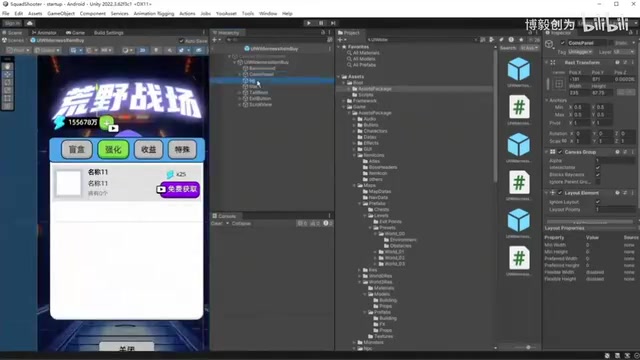
Revealing the real workflow of AI-assisted game development: architectural thinking and engineering methods required
Using a live Search-Combat-Extract game developed with Cursor+Unity as an example, this article debunks the misconception that "AI can generate games with just a few sentences" and demonstrates the real AI programming workflow. The core conclusion is that AI programming requires developers to have clear architectural thinking, precise prompt description skills, and a step-by-step iterative engineering approach — it's far from a simple conversation.
Introduction: Breaking the Filter on AI Game Development
Recently, social media has been flooded with demo videos claiming "AI can generate amazing games with just a few sentences," seriously misleading many developers. What does AI-assisted game development actually look like in practice? This article uses a live commercial project as an example to fully demonstrate the real workflow, prompt-writing techniques, and actual results of AI programming with Cursor + Unity.
Conclusion first: AI programming is not about "saying a few words and getting it done." It requires developers to have clear architectural thinking, precise prompt description skills, and an engineering approach based on step-by-step iteration.
Project Background and Tool Selection
Technology Stack
The technology stack used in this demonstration:
- Game Engine: Unity (mainstream commercial engine; Cocos/Laya follow the same principles)
- AI Programming Tool: Cursor (currently one of the most advanced AI programming tools in the world)
About Cursor's Technical Principles: Cursor is a deeply customized AI programming IDE built on VSCode. Its core competitive advantage lies in the deep integration of Large Language Models (LLMs) with the code editor. Unlike plugin-based solutions such as GitHub Copilot, Cursor adopts a "Codebase-aware" architecture — it uses a vector database to perform semantic indexing of the entire project, enabling the AI to understand cross-file dependencies and context when generating code. Its underlying models incorporate multiple top-tier models including Claude 3.5 Sonnet and GPT-4o, with specialized fine-tuning for code tasks. Cursor's "Composer" feature supports simultaneous multi-file editing, while the "@ symbol reference" mechanism allows developers to precisely specify reference files, functions, or documentation — this is the technical foundation for the "specifying reference code locations" prompt technique discussed later in this article.
Project Introduction
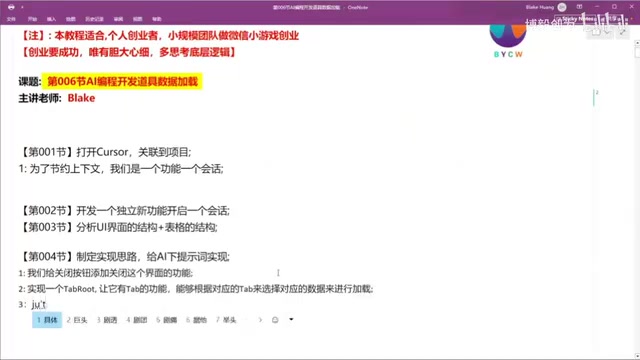
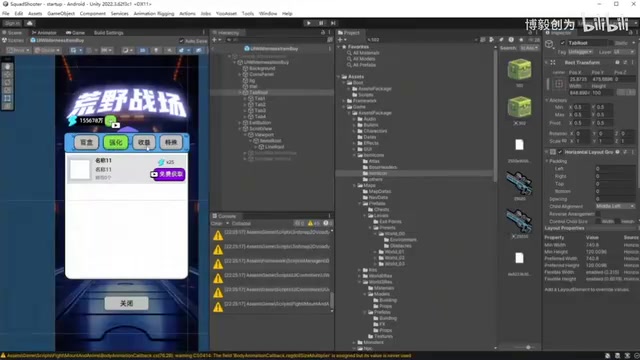
This is a live "Search, Combat, Extract" (搜打撤) gameplay game. "Search, Combat, Extract" is a gameplay paradigm that has emerged in recent years, with Escape from Tarkov as its representative title, later widely adopted by domestic products such as Arena Breakout. Its core design tension lies in the dynamic game theory of "risk vs. reward": players enter dangerous maps with limited equipment, collect resources while fighting AI or other players, and ultimately must decide between "continuing to take risks for more rewards" and "extracting immediately to keep what they've gained." Players depart from a base, teleport to a map, search for equipment, shoot and eliminate enemies, and after completion can extract back to base or proceed to the next level.
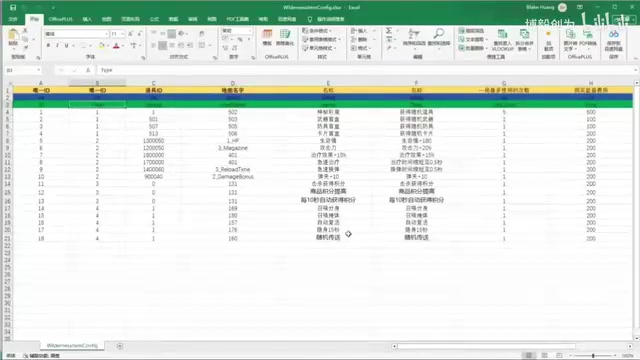
This type of gameplay places high demands on the UI system, requiring support for complex equipment management, categorized item display, and real-time data synchronization. The current requirement is: **to add a new "Wilderness World Map" feature to the live project.
Related articles
 Tutorials
Cursor + Codex Dual-IDE Collaboration: A Practical Methodology for Open-Source Project Customization
A complete methodology for open-source project customization based on real-world experience, detailing the Cursor+Codex dual-IDE workflow, seven-stage process, MVP validation, and AI source code reading techniques.
 Tutorials
Cursor Multi-Agent in Practice: Building a Full-Stack Next.js Blog in 50 Minutes
Build a full-stack blog in 50 minutes using Cursor IDE's multi-Agent mode with Next.js, Clerk auth, and Supabase. Learn the 4-phase AI Agent workflow and key integration pitfalls.
 Tutorials
Building an AI Software Factory from Scratch: A Cursor Engineer's Hands-On Experience with Multi-Agent Collaboration
Cursor engineer Eric shares practical insights on building an AI software factory: automation levels, guardrail design, parallel Agent management, and scaling to 1000+ Agents for 24/7 development.