v0 New Feature: One-Click AI Auto-Resolution of PR Merge Conflicts
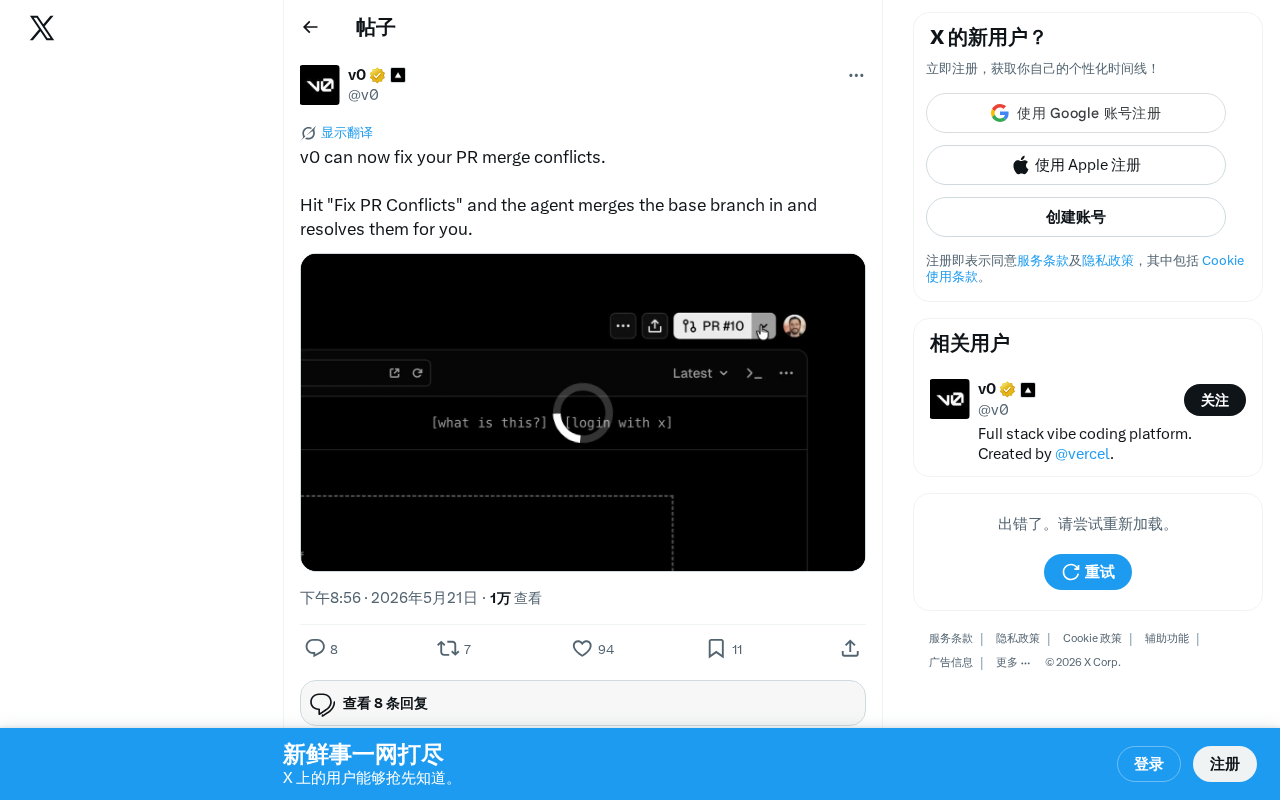
v0 adds one-click AI-powered automatic PR merge conflict resolution for developers.
Vercel's AI coding tool v0 has introduced an automatic PR merge conflict resolution feature. Developers simply click the "Fix PR Conflicts" button, and the AI Agent merges the base branch and intelligently resolves all conflicts without manual intervention. This marks a shift from code generation to development workflow automation, significantly boosting team collaboration efficiency.
v0 Launches Auto-Resolution for PR Merge Conflicts
Vercel's AI coding tool v0 has recently introduced a practical new feature — automatic PR (Pull Request) merge conflict resolution. Developers simply click the "Fix PR Conflicts" button, and the AI Agent automatically merges the base branch in and intelligently resolves all conflicts.
Why Merge Conflicts Are a Developer Headache
In collaborative software development projects, merge conflicts are among the most common and frustrating issues. When multiple developers modify the same region of the same file simultaneously, Git cannot automatically determine which version of the code to keep, resulting in a conflict.
The traditional approach requires developers to manually review each conflict, understand the intent behind both sides of the code, and then decide one by one whether to keep, merge, or rewrite. For large projects, a single PR might involve dozens or even hundreds of conflicts, making resolution both time-consuming and error-prone.
How v0 Automatically Resolves PR Conflicts
v0's new feature fully automates the conflict resolution process with a streamlined workflow:
- When a PR has merge conflicts, the interface displays a "Fix PR Conflicts" button
- After clicking the button, the AI Agent automatically pulls the latest code from the base branch
- The Agent analyzes the conflict context and intelligently determines how to merge
- It automatically completes the conflict resolution and commits the changes
The entire process requires no manual intervention from developers, significantly saving time on code review and merging.
AI Coding Tools Move from Code Generation to Workflow Automation
The launch of this feature marks a shift in AI coding tools from "code generation" toward "development workflow automation." Previously, AI coding assistants primarily focused on tasks like code completion, generation, and explanation, while v0 now directly intervenes in a critical part of the Git workflow.
From a technical perspective, resolving merge conflicts requires not only understanding code syntax but also understanding code semantics and business logic. The AI Agent needs to determine the modification intent of each branch and then make reasonable merge decisions. This places high demands on the model's code comprehension capabilities.
Practical Value for Development Teams
For teams using v0 for project development, the value of this feature is primarily reflected in:
- Efficiency gains: Eliminates time spent manually resolving conflicts, accelerating the PR merge process
- Lower barrier to entry: Junior developers no longer need deep understanding of Git conflict resolution mechanisms
- Fewer errors: Avoids bugs that might be introduced during manual conflict resolution
Of course, for complex business logic conflicts, developers still need to review whether the AI's solution meets expectations. But for most common conflict scenarios, this feature undoubtedly delivers a significant improvement to the development experience.
Related articles
AI Agent Development: A Complete 6-Week Systematic Learning Roadmap
A 6-week systematic learning roadmap for AI Agent development, covering core architecture, ReAct principles, multi-agent collaboration, RAG integration, and deployment.
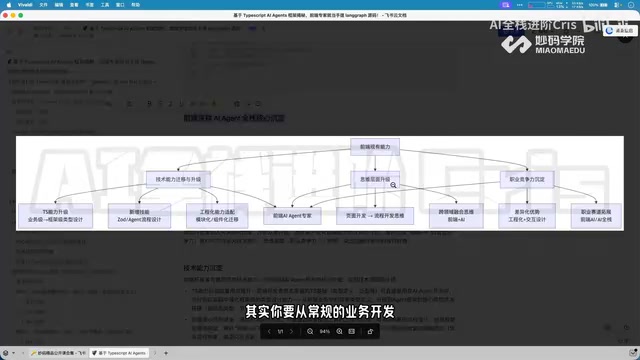
Four Core Advantages Frontend Developers Have When Transitioning to AI Agent Development
Frontend developers have key advantages for AI Agent development: TypeScript ecosystem fit, low-barrier full-stack bridging, and state management isomorphism. Learn the transition path here.
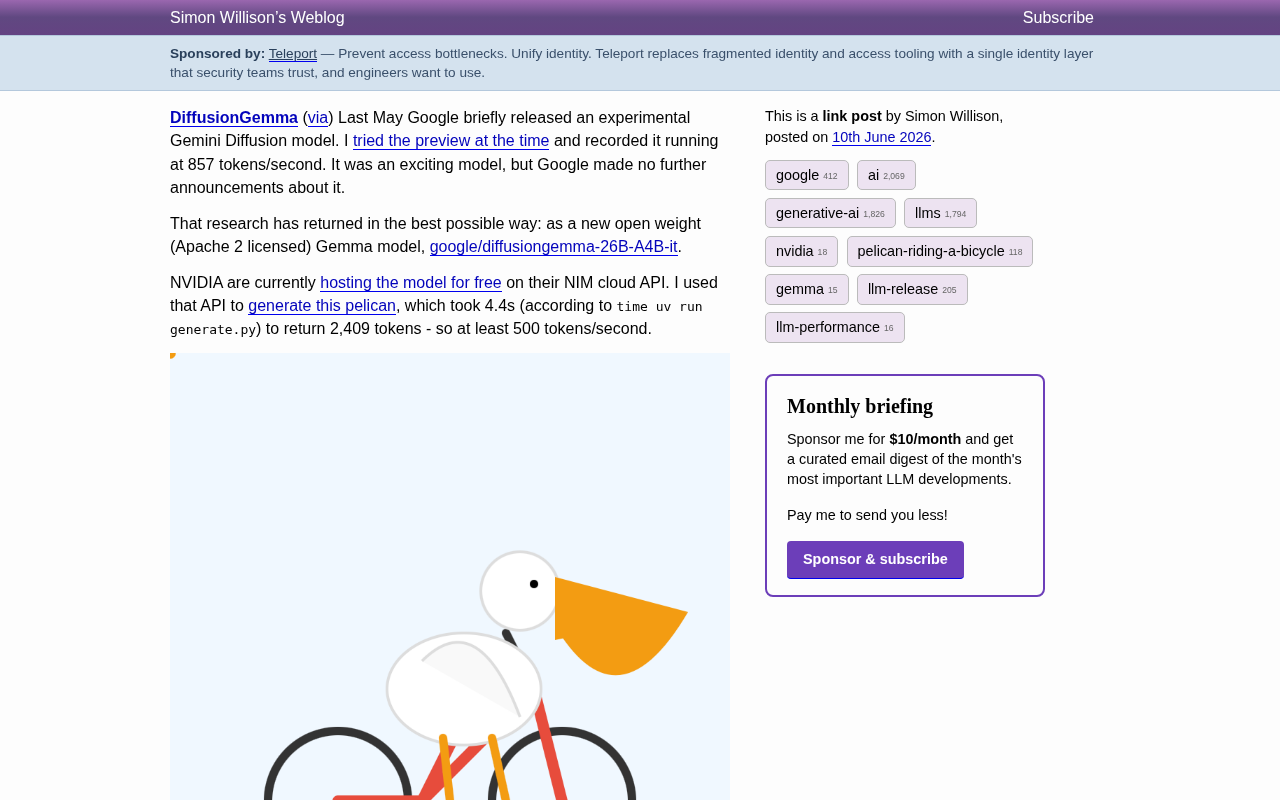
DiffusionGemma: Google's Open-Source Diffusion Language Model Exceeding 500 Tokens/s
Google releases DiffusionGemma, an open-source diffusion language model with Apache 2.0 license. The 26B-parameter MoE model achieves over 500 tokens/s in real-world tests.