v0 Platform Adds Claude Opus 4.7 Fast Mode, Significantly Boosting Frontend Development Efficiency
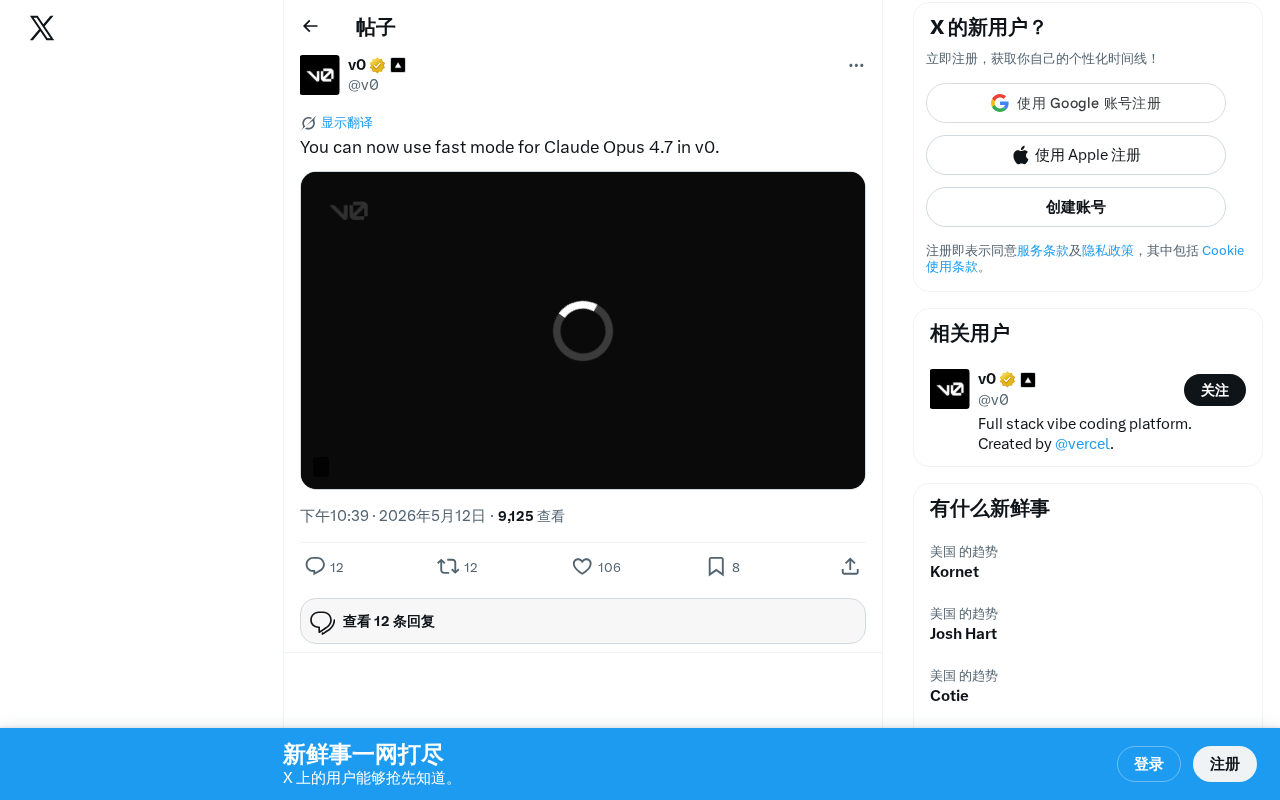
Vercel's v0 adds Claude Opus 4.7 fast mode for quicker frontend code generation.
Vercel's AI code generation platform v0 now supports Claude Opus 4.7's fast mode, giving frontend developers significantly faster response times for code generation. The fast mode is ideal for rapid prototyping, iterative development, and real-time collaboration, while standard mode remains better suited for complex architectural tasks requiring deep reasoning.
v0 Adds Claude Opus 4.7 Fast Mode Support
Vercel's AI code generation platform v0 recently announced that users can now use Claude Opus 4.7's fast mode within v0. This update delivers a more efficient experience for developers using v0 for frontend development and prototyping.
What the Integration of Claude Opus 4.7 and v0 Means
Faster Code Generation
Claude Opus 4 is Anthropic's flagship large language model, renowned for its powerful coding and reasoning capabilities. The introduction of "fast mode" means that on the v0 platform, users can enjoy significantly faster response times while maintaining high code quality. For frontend developers who need to frequently iterate on UI components and page layouts, this improvement directly boosts productivity.
v0's Model Strategy
As Vercel's AI-powered frontend development tool, v0 has been actively integrating industry-leading large language models. v0 already supported multiple model options, and the addition of Claude Opus 4.7's fast mode further expands the choices available to users. Fast mode typically strikes an optimized balance between reasoning depth and response speed, making it ideal for development scenarios that demand high responsiveness.
Practical Impact on Developers
Ideal Use Cases for Fast Mode
Fast mode is particularly well-suited for the following development scenarios:
- Rapid prototype validation: Quickly generating multiple UI concepts for comparison during the ideation phase
- Iterative development: Frequently tweaking prompts to fine-tune component styling and functionality
- Real-time collaboration: Team members needing to see AI-generated code results instantly
Recommendations for Choosing Modes
For complex architectural design or code generation tasks requiring deep reasoning, standard mode may still be the better choice. For everyday component development and rapid iteration, however, fast mode can significantly reduce wait times while maintaining acceptable quality.
Industry Trend Observations
This update reflects two important trends in the AI coding tools space:
First, flexibility in model selection is becoming a standard feature of AI development tools. Users are no longer locked into a single model — instead, they can choose the most suitable model and mode based on their task requirements.
Second, balancing speed and quality is a core focus of current AI tool optimization. By offering different operating modes, platforms can meet the diverse needs of users across different scenarios — an approach that delivers more practical value than simply pushing for greater model capabilities.
As model providers like Anthropic and OpenAI continue to release more powerful models, and AI coding tools like v0 and Cursor iterate rapidly, the AI-assisted programming experience available to developers is improving at an unprecedented pace.
Related articles

AITS Hands-On Review: API + Web + App Automated Testing All in One Platform
In-depth review of AITS: an AI testing platform covering API automation, Web automation, App real-device cloud testing, and performance testing end-to-end.
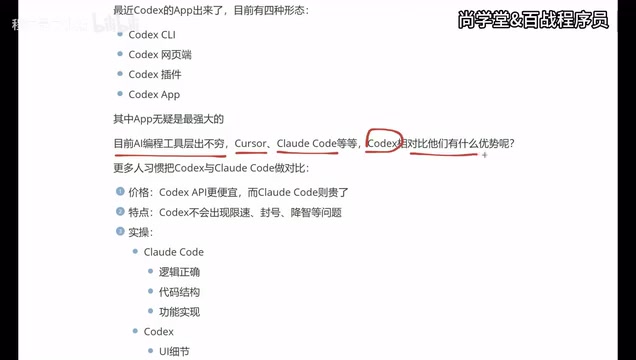
Codex vs Claude Code vs Cursor: How to Choose the Right AI Coding Tool
In-depth comparison of Codex, Claude Code, and Cursor: pricing, stability, and capabilities. Codex excels at frontend UI, Claude Code at backend logic, Cursor remains a stable veteran. Find your best AI coding tool.
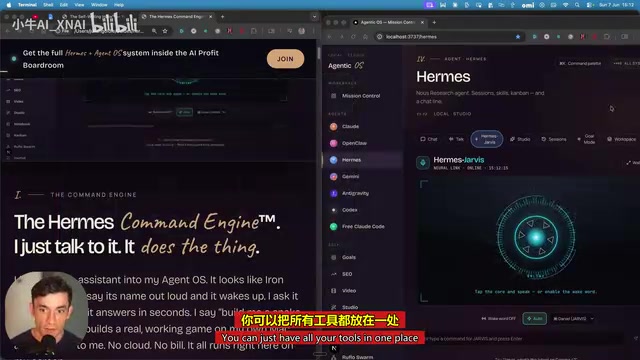
Hermes Jarvis Deep Dive: The Voice-Driven All-in-One AI Assistant
Deep dive into Hermes Jarvis voice AI assistant: its core features, five-layer architecture, multi-model integration, system-level control, and the future of voice-driven AI development.