Vibe Coding Beginner's Guide: A Complete Roadmap to Building Software with AI — No Coding Experience Required
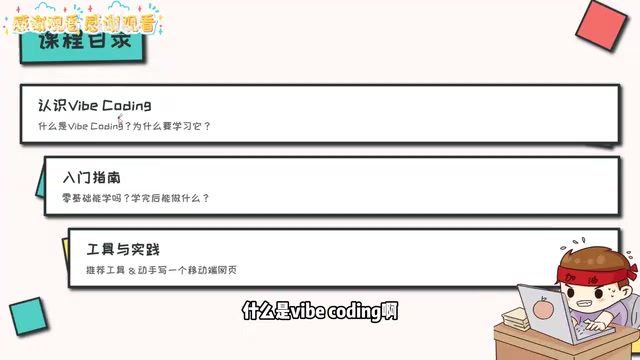
A complete beginner's guide to building software with AI using natural language — no coding required.
Vibe Coding is a new development paradigm where you describe what you want in plain language and AI generates the code. Coined by Andrej Karpathy in 2025, it lowers the barrier to software creation dramatically. This guide covers core concepts, use cases from personal sites to MVP prototypes, recommended tools like Cursor, Bolt, and Windsurf, and practical tips on prompt engineering to get the best results from AI.
What Is Vibe Coding?
If you haven't heard of Vibe Coding yet, now is the perfect time to learn about it. In short, Vibe Coding is a completely new approach to software development — you don't need to write a single line of code. Just tell the AI what you want in plain language, and it builds it for you.
The term was first coined by Andrej Karpathy — former Tesla AI Director and OpenAI co-founder — in February 2025. He shared his experience using AI to code on social media: fully immersed in the "vibe," relying on intuition and real-time AI feedback to move projects forward, rather than reviewing code line by line like traditional development. The concept quickly went viral in the tech community because it perfectly captured the fundamental shift in human-AI collaborative programming made possible by the leap in large language model capabilities.
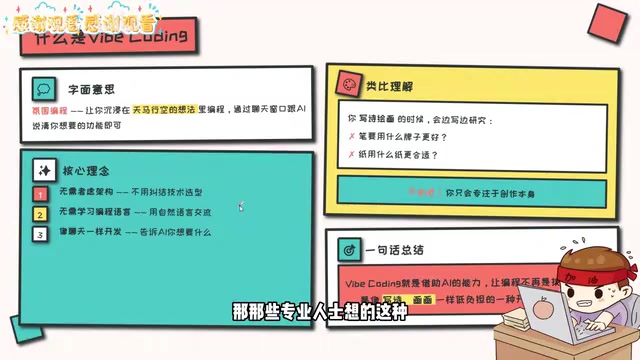
The core philosophy of Vibe Coding can be summarized in three points:
- No need to worry about architecture: You don't have to agonize over software architecture or technology choices like a trained engineer
- Communicate in natural language: If you can talk or type, you're good — it's like having a conversation
- Focus on creation itself: Put your energy into "what I want to build," not "how to implement it"
Vibe Coding is made possible by breakthrough advances in code generation by Large Language Models (LLMs). AI models like GPT-4, Claude, and Gemini, trained on massive open-source code repositories, can now understand natural language descriptions and generate structurally complete, logically sound code. These models have mastered the syntax of hundreds of programming languages and learned common software design patterns and best practices, enabling them to automatically select appropriate technical solutions based on high-level functional descriptions — this is the technological foundation that makes "you describe it, AI codes it" a reality.
A Precise Analogy: Programming Like Writing Poetry
If the explanation above still feels abstract, think of it this way:
Imagine you're writing a poem or painting a picture. Do you stop mid-stroke to research what brand of pen you're using? Do you pause mid-line to debate whether the paper texture is suitable? Of course not. You just focus on the creation itself.
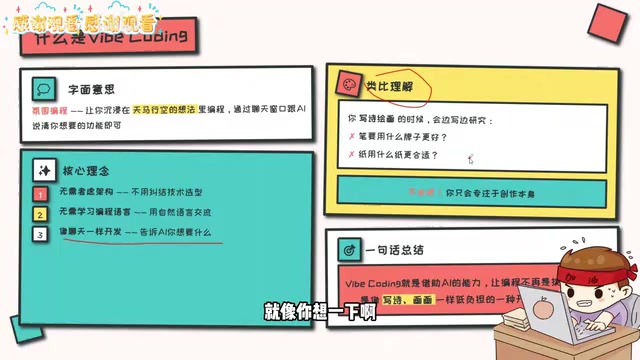
That's exactly how Vibe Coding works. By leveraging AI capabilities, it transforms programming from a "technical skill" into a low-friction creative process — like writing poetry or painting. You bring the ideas; AI handles the implementation.
This shift isn't without precedent in software development history. From machine language to assembly, from assembly to C, from C to Python — every evolution in programming languages has done the same thing: raised the abstraction level, moving developers further from the machine and closer to human thinking. Vibe Coding is the latest step on this evolutionary path — directly using the most natural form of human expression (natural language) to drive software development, completely eliminating the translation cost between "human thought" and "machine instructions."
Can You Learn Vibe Coding with Zero Technical Background?
The answer is: Absolutely yes.
This is the biggest difference between Vibe Coding and traditional programming. Traditional programming requires learning syntax, frameworks, and data structures — environment setup alone scares off countless people. Vibe Coding's barrier to entry is incredibly low — you only need two abilities:
- The ability to clearly describe what you want (in your native language)
- The ability to use a chat interface (no harder than sending a text message)
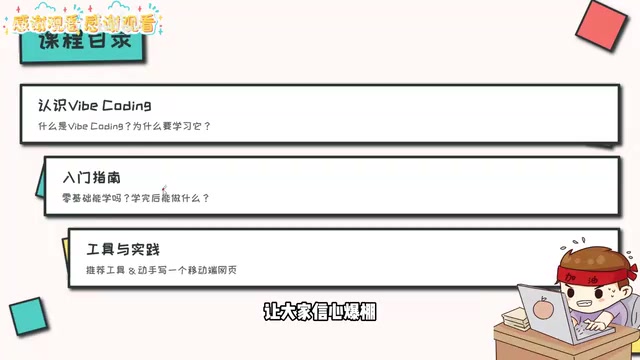
At its core, Vibe Coding tests not your programming ability, but your ability to articulate requirements and your product thinking. Can you break down a vague idea into specific descriptions that AI can understand? That's what really matters.
The "product thinking" mentioned here refers to the ability to approach problems from the end user's perspective: Whose problem does this feature solve? What's the first thing a user does after opening the app? Which features are essential, and which are nice-to-have? People with this mindset — even those who know absolutely nothing about code — can efficiently turn ideas into reality through Vibe Coding. Conversely, someone who can only write code but lacks product intuition may actually be at a disadvantage in the Vibe Coding era.
What Can Vibe Coding Do? An Overview of Use Cases
Many people's first reaction is: "Isn't this just a toy? Can it build anything real?"
In reality, Vibe Coding can already cover a wide range of development scenarios:
- Personal websites/portfolios: Quickly build a showcase page
- Mobile web applications: Lightweight apps that work directly on phones
- Small tools/automation scripts: Automate repetitive daily tasks
- MVP product prototypes: Rapidly validate a business idea
The MVP (Minimum Viable Product) use case deserves special attention. MVP is a core concept in lean startup methodology — the idea is to use minimal cost and time to build a product version containing only core features, release it to the market for real user feedback, and then iterate quickly. In the past, building an MVP might require weeks of development time and thousands of dollars in outsourcing costs. Now, with Vibe Coding tools, a non-technical entrepreneur can potentially build an interactive product prototype in just a few hours, dramatically reducing the cost of startup experimentation.
Of course, there are boundaries. Large complex systems, high-concurrency backend services, and financial transaction systems with extreme security requirements — these aren't Vibe Coding's primary battlefield yet. AI-generated code still needs professional engineers for maintainability, performance optimization, and security auditing. But for individual developers and non-technical entrepreneurs, it's already powerful enough.
Practical Advice: Start with a Small Project
If you're ready to try Vibe Coding, follow these steps:
Step 1: Choose the Right Vibe Coding Tool
The main tools suitable for Vibe Coding today include Cursor, Bolt, and Windsurf. Each has its own strengths — beginners should start with the most user-friendly option to lower the learning curve.
Specifically, Cursor is currently the most popular AI coding IDE, deeply customized from VS Code with powerful built-in code generation and editing capabilities — ideal for users with some technical background or willingness to learn. Bolt (by StackBlitz) is a fully browser-based AI full-stack development tool where users can generate complete web applications through conversation without installing any software — extremely beginner-friendly. Windsurf (by the Codeium team) emphasizes an immersive "AI Flow" programming experience, focusing on deep understanding of developer intent and proactive collaboration. If you're a complete beginner, start with Bolt — just open your browser and go, with virtually zero setup required.
Step 2: Start with a Small Project
Don't jump straight to building an "industry-disrupting app." Start with a simple mobile web page — like a personal resume page, expense tracker, or to-do list. The confidence gained from completing one small project is far more valuable than daydreaming about a big one.
Step 3: Learn to Communicate with AI — Master Prompt Engineering
The most critical skill in Vibe Coding is actually Prompt Engineering. For the same requirement, different ways of describing it lead to vastly different results from the AI.
Prompt Engineering isn't simply about "saying things clearly" — it's a systematic methodology with several key techniques: role assignment (e.g., telling the AI "you are a senior frontend engineer"), context provision (providing project background, technical constraints, and target users), step-by-step instructions (breaking complex requirements into ordered steps rather than dumping everything at once), and example-driven guidance (providing expected output samples to help AI understand your intent).
For a concrete example, instead of saying "build me an expense tracking app," try this: "Please create a mobile expense tracking web application. Features include: 1) A homepage displaying total expenses and income for the current month; 2) A plus button to add a new entry, requiring amount, category, and notes; 3) A list at the bottom showing recent entries; 4) Overall style should be clean and modern, using a light theme." The latter description is well-structured and layered, allowing AI to generate results much closer to expectations on the first try, significantly reducing back-and-forth revisions.
Final Thoughts
Vibe Coding won't put traditional programmers out of work, but it is redefining the answer to "who can build software." In the past, building software was a privilege of the few; now, anyone with an idea can turn their vision into a working product.
From a broader perspective, Vibe Coding represents a "democratization of development" movement. Just as smartphones turned everyone into potential photographers and content creators, Vibe Coding is making it possible for everyone to become a software creator. This will not only spawn a wave of new indie developers and products but will also fundamentally change how teams collaborate within organizations — business stakeholders can directly transform requirements into working prototypes without waiting in long development queues.
The barrier to programming is disappearing. Creativity is the real moat.
If you've always had a small tool or website you wanted to build, now is the best time to give it a try. No courses to enroll in, no textbooks to grind through — just open a Vibe Coding tool, tell it what you want in your own words, and that's it.
Related articles
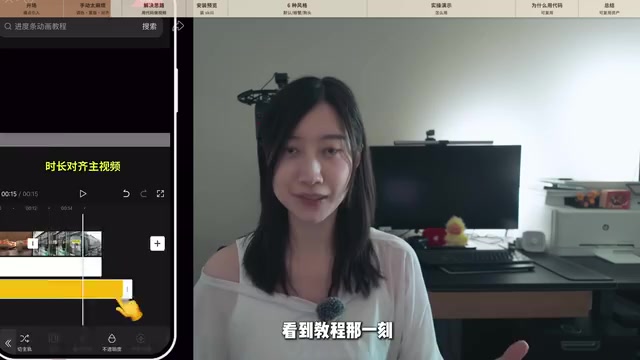
Tutorial: Using Claude Code to Auto-Generate Video Chapter Progress Bar Animations
Use Claude Code's Skill mechanism and Remotion to auto-generate video chapter progress bar animations from subtitle files. Six built-in styles, custom stickers, and one-click rendering.
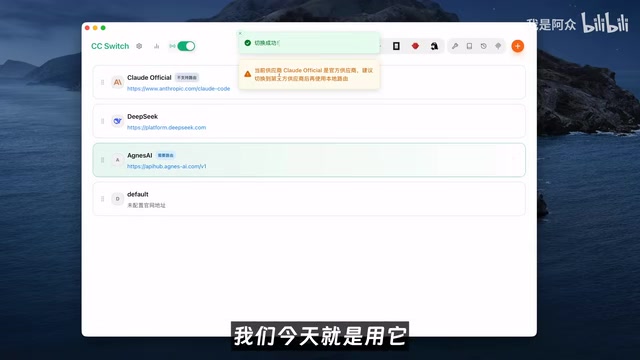
How to Use Claude Code for Free Without Limits: A Zero-Cost Full Multimodal AI Solution
Use Claude Code for free with Agnes AI's free models and the CC Switch open-source tool. Full setup guide for zero-cost AI coding, image, and video generation.
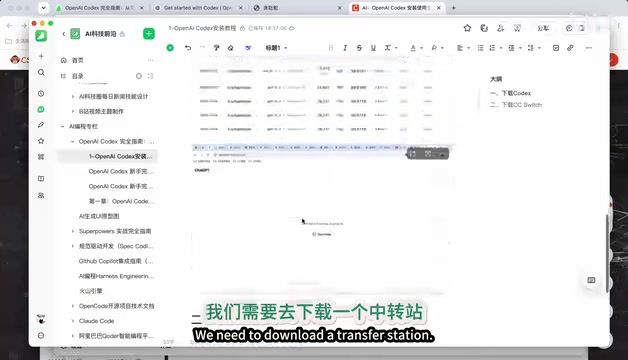
Connecting OpenAI Codex to Chinese AI Models: A Zero-Barrier AI Programming Guide
Learn how to connect OpenAI Codex to Chinese AI models like DeepSeek and Volcano Engine via CC Switch, with a step-by-step guide and a 2048 game demo.