VLC Creator Founds Kyber: Reimagining Robot Remote Control Infrastructure with Streaming Technology
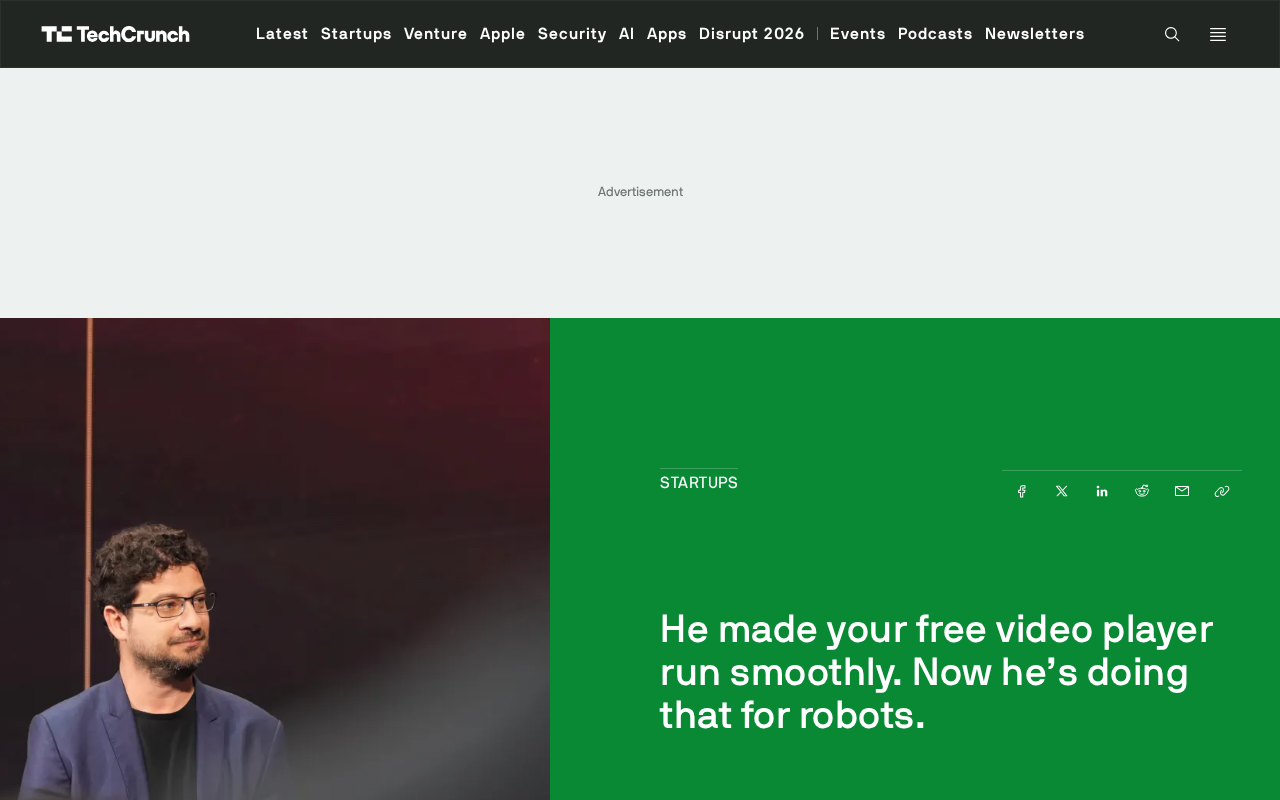
VLC creator Kempf founds Kyber to bring streaming tech expertise to real-time robot remote control infrastructure.
Jean-Baptiste Kempf, the legendary developer behind VLC media player, has founded Kyber — an infrastructure layer for real-time remote robot control. Leveraging over two decades of streaming technology expertise in codec optimization, adaptive bitrate control, and packet loss recovery, Kyber aims to become the standardized communication backbone for teleoperation in the booming embodied AI era.
From Open-Source Video Player to Robot Infrastructure
If you've ever used the VLC media player, you've indirectly benefited from Jean-Baptiste Kempf's work. This French serial entrepreneur and open-source legend has now set his sights on an entirely new domain — real-time remote control infrastructure for robots.
Kempf is building a project called Kyber — an infrastructure layer purpose-built for real-time control of remote devices. From enabling hundreds of millions of users worldwide to play videos seamlessly for free, to enabling precise robot control in remote environments, Kempf's technical trajectory reveals an important trend: the foundational capabilities of streaming technology are migrating into the robotics domain.
The Technical Philosophy Behind VLC
A Continuation of the Open-Source Spirit
Jean-Baptiste Kempf is best known as the core developer and champion of the VLC media player. VLC (VideoLAN Client) originated in 1996 as a student project at École Centrale Paris, initially designed to stream video across the campus network. Over more than two decades of development, VLC has become an open-source media player with over 3.5 billion downloads worldwide, earning widespread trust through its reputation for playing virtually any format and its commitment to being completely free and ad-free. VLC supports nearly every known audio and video codec format, including MPEG-2, H.264, H.265/HEVC, VP9, AV1, and more. Its core architecture is based on a modular design that uses a plugin system to flexibly support different codecs, container formats, and transport protocols — an architectural philosophy that itself embodies a deep understanding of complex data stream processing.
Behind all of this is Kempf's unwavering belief in the open-source ethos — that technology should be universal infrastructure, not a walled-off commercial moat. Notably, Kempf has publicly declined proposals to commercialize VLC or insert ads on multiple occasions, a commitment to open-source principles that has earned him immense respect in the global developer community.
From Video Streams to Robot Data Streams
The core technical challenge of VLC lies in achieving low-latency, highly reliable transmission and decoding of video data across diverse network conditions and hardware environments. This bears a striking resemblance to the challenges of remote robot control — both require efficient real-time data stream transmission over unstable networks.
However, remote robot control imposes far more stringent latency requirements than video playback. Video playback can typically tolerate buffering delays of hundreds of milliseconds or even several seconds, but end-to-end latency for remote robot control generally needs to stay under 50 milliseconds — and for precision operations like remote surgery, under 20 milliseconds. More importantly, robot control data streams are bidirectional — not only must operational commands be transmitted from the operator to the robot, but the robot's visual, force, pose, and other multimodal sensor data must be streamed back to the operator in real time, forming a closed-loop feedback system. This involves deep optimization of modern real-time communication protocols like WebRTC and QUIC, as well as the integrated application of forward error correction (FEC), predictive coding, edge computing, and other techniques.
Kempf clearly recognized this structural similarity and decided to apply over two decades of streaming expertise to the field of remote robot control.
Kyber: A Real-Time Control Layer Built for Robots
What Problem Does Kyber Solve?
The robotics industry currently faces a critical bottleneck: a severe lack of infrastructure for real-time remote control. Whether it's industrial robots, drones, autonomous vehicles, or remote surgical robots, all require bidirectional synchronization of command transmission, status feedback, and environmental perception data within millisecond-level latency. Existing communication solutions are typically proprietary, built in-house with inconsistent standards, and lack a universal, high-performance infrastructure layer.
Kyber was created to fill this gap. Positioned as an infrastructure layer, it focuses on real-time control communication for remote devices, providing upper-layer applications with unified, low-latency data transmission capabilities. Think of it as the "Twilio" or "Stripe" of robotics — abstracting complex underlying communication capabilities into clean APIs and SDKs, so robot developers don't need to build a communication stack from scratch and can instead focus on developing application-level logic.
Why Migrating Streaming Technology to Robot Control Makes Sense
The leap from VLC to Kyber isn't as far-fetched as it might seem. The core capabilities accumulated in video streaming technology — codec optimization, adaptive bitrate control, network jitter compensation, and packet loss recovery — are precisely the foundational technologies most needed for remote robot control.
Specifically, Adaptive Bitrate (ABR) control is one of the core technologies in streaming, dynamically adjusting data transmission quality based on real-time network bandwidth. In video, this means lowering resolution during poor network conditions to maintain smooth playback; in robot control, similar technology can intelligently degrade sensor data precision during network fluctuations while ensuring priority transmission of critical control commands. Jitter buffer compensation smooths out network latency variations through buffering and reordering mechanisms, while packet loss recovery techniques (such as ARQ — Automatic Repeat Request — and FEC — Forward Error Correction) ensure that critical data isn't lost due to network packet drops.
Kempf's team's deep experience in handling real-time data streams gives them a unique technical advantage in this new arena. In a sense, VLC's two-plus decades of battle-testing across extreme network environments and hardware platforms worldwide has provided Kyber with a massively validated technical foundation.
Industry Trends and Market Outlook
The Market Opportunity in Robot Teleoperation
With the rise of Embodied AI and the rapid development of humanoid robots and industrial collaborative robots, teleoperation is becoming an industry imperative. Embodied AI refers to embedding AI systems into physically embodied robots, enabling them to perceive, understand, and interact with the physical world. Since 2024, with the rapid advancement of humanoid robot projects like Figure, 1X Technologies, and Tesla Optimus, along with the evolution of large language models toward multimodal and physical-world understanding, embodied AI has become one of the hottest tracks in the AI space.
On one hand, AI cannot yet fully autonomously handle all scenarios, making human-robot collaborative teleoperation a critical transitional solution. On the other hand, teleoperation itself is a key method for collecting robot training data. Teleoperation plays a dual role in this wave: as a practical human-robot collaboration solution where humans remotely operate robots to complete complex tasks when AI capabilities are still incomplete; and as a data collection method, generating high-quality demonstration data through human operation of robots to train autonomous behavior policies. Stanford's ALOHA project and Google DeepMind's RT-series models both rely heavily on teleoperation data for training, further validating the strategic value of high-quality teleoperation infrastructure.
This means the market Kyber is targeting is on the verge of explosive growth. A standardized, high-performance real-time control infrastructure could become a critical foundational component of the robotics ecosystem — just as VLC became the de facto standard for video playback.
The Strategic Value of Open-Source DNA
Kempf's open-source background could become a significant differentiator for Kyber. In the robotics space, developer community trust and ecosystem openness are crucial. If Kyber can advance in an open-source or semi-open-source manner, it could rapidly build a developer ecosystem and create network effects.
In the software industry, infrastructure-layer products typically follow an "Open Core" commercialization model. Similar success stories include companies like Redis, MongoDB, and Elastic, which built developer ecosystems and market awareness through open-source core products, then monetized through managed services, enterprise features, and technical support. For Kyber, if it adopts a similar strategy, its open-source real-time control protocol stack could become an industry standard, while managed low-latency edge networks, enterprise-grade SLA guarantees, and security compliance certifications could serve as paid services. This model maintains the vitality and trust of the open-source community while building a sustainable business model.
Conclusion
From making a free video player run smoothly to enabling seamless remote control of robots, Jean-Baptiste Kempf's entrepreneurial trajectory embodies a profound technical insight: truly valuable infrastructure capabilities are transferable across domains. VLC spent over two decades proving that open-source infrastructure can become a global standard. Whether Kyber can replicate that success in the robotics era and become the infrastructure standard for real-time control is well worth watching. As the embodied AI wave surges forward, a robot communication infrastructure built by a streaming veteran may be exactly the missing piece this industry needs.
Related articles
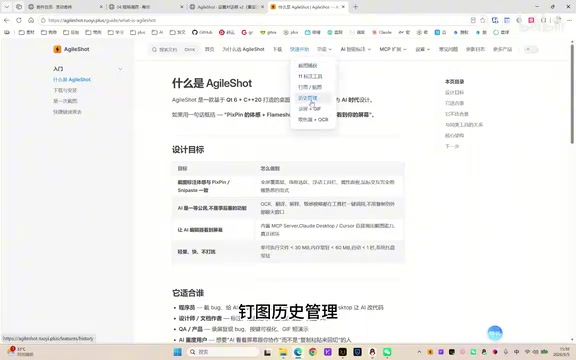
A Giant Shot: An AI Screenshot Tool with Built-in MCP That Lets AI Directly Control Your Computer
A Giant Shot is a desktop screenshot tool with a built-in MCP Server, offering 11 annotation tools, smart OCR, AI chat, and desktop automation for Cursor and Claude Desktop.
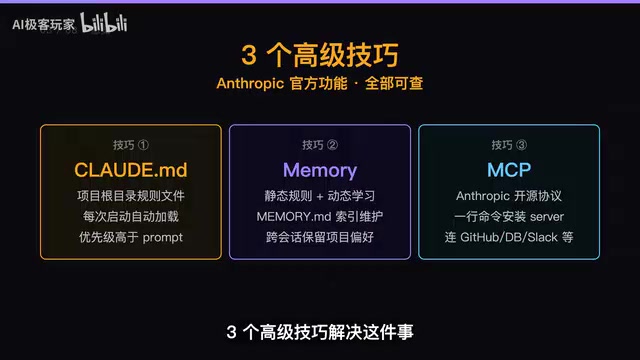
Three Essential Claude Code Configuration Techniques: A Practical Guide to CLAUDE.md, Memory & MCP
Master three Claude Code configuration techniques: use CLAUDE.md for project rules, Memory for auto-learning preferences, and MCP for connecting GitHub and external tools.
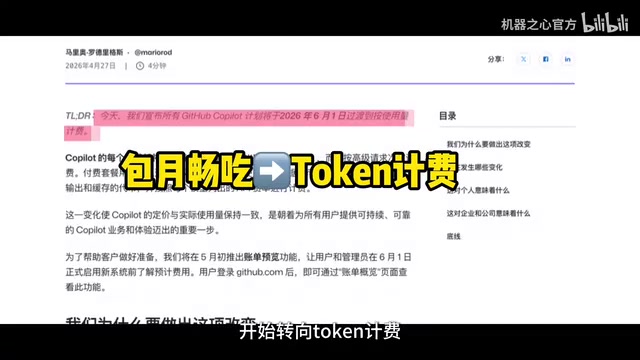
Token Doomsday: The Industry Truth Behind AI Coding's Spiraling Costs
GitHub Copilot shifts from flat-rate to per-token billing, sending dev costs from $29/mo to $1,000+. Uber burns its annual AI budget in months. A deep dive into Token Doomsday.