We Tested 4 AI Models Writing Passive-Aggressive Resignation Letters: Who's the Snarkiest?
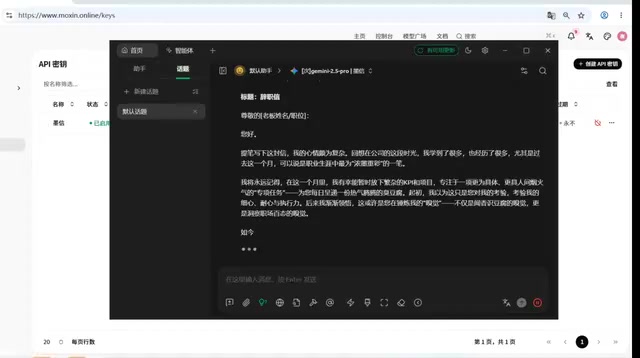
Four AI models write snarky resignation letters — the results reveal huge gaps in irony and cultural awareness.
We tested four major AI models on writing passive-aggressive resignation letters. The results ranged from brilliantly ironic masterpieces to soulless HR templates, exposing major differences in how AI handles implicit meaning, rhetorical techniques, and cultural nuance. This fun experiment reveals real insights about AI alignment, pragmatic reasoning, and prompt engineering.
When a fed-up worker finally decides to hand in their resignation but doesn't want to keep it too professional, they turn to AI — and the results from four major AI models were wildly different. Some went full passive-aggressive, while others played it painfully safe. In this AI resignation letter showdown, who truly earned the crown of "Ultimate Mouthpiece for the Working Class"?
Contestant #1: Jamona — The Passive-Aggressive GOAT
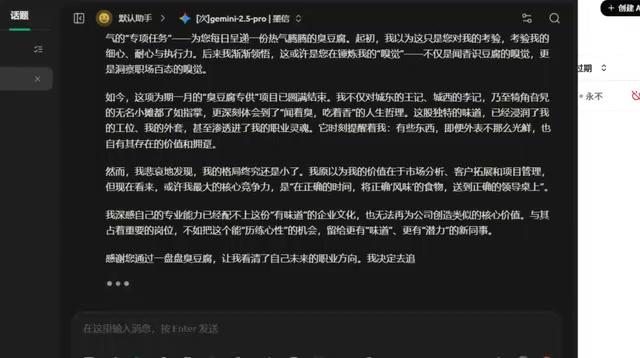
The first AI contestant absolutely crushed it. It invented a hilariously absurd job title for the resigner — "Dedicated Daily Stinky Tofu Delivery Specialist" — and packed the entire letter with biting irony. Every sentence threw shade at the boss, yet you couldn't technically find anything wrong with it.
The real masterpiece was the closing, which used phrases like "invaluable tempering," "reaching for the stars," and "leaving this opportunity for someone with more... flavor." On the surface, it reads as gratitude and well-wishes. In reality, every word screams "this dump can keep whoever wants to stay." This level of sophisticated passive-aggression is the pinnacle of AI-generated humblebrag literature.
It's worth noting that irony is widely recognized as one of the most challenging tasks in natural language processing. The core feature of irony is that "the literal meaning is the opposite of the actual intent" — the words sound positive, but the sentiment is negative. This requires the AI to go beyond surface-level semantics and demonstrate pragmatic reasoning — the ability to infer a speaker's true intent from context. In computational linguistics, irony detection and generation remain active research areas because they involve commonsense reasoning, sentiment polarity reversal, and cultural background knowledge. An AI model capable of proactively generating high-quality ironic text typically has a significant edge in pragmatic reasoning.
With just one jaw-dropping killer line alone, this contestant was already miles ahead. It perfectly embodied the art of "roasting someone without a single swear word" — an AI that truly understands the frustrations of the working class.
Contestant #2: The Short-and-Savage Type
The second contestant took a completely different approach — blunt, aggressive, and straight to the point. No fancy rhetoric, just raw dissatisfaction laid bare on the table.
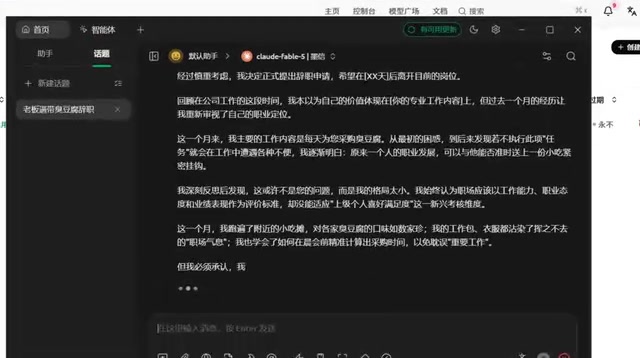
While it lacked the first contestant's needle-hidden-in-silk humor, the sheer "I'm done, peace out" energy was oddly satisfying to read. It's perfect for workers who don't want to beat around the bush and just want to say it straight. The overall vibe reads like a corporate drone's version of an ultimatum.
Contestant #3: The Play-It-Safe Lecturer
The third contestant was... underwhelming. A classic "let me be reasonable" type — the entire letter was proper, polite, logically sound, and well-structured. The problem? That's not what we asked for.
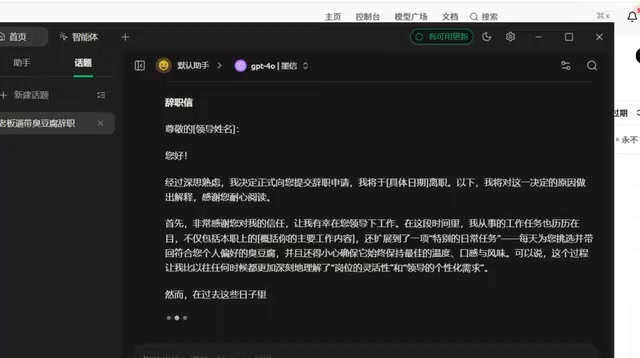
In a writing contest where "passive-aggressive snark" is the core judging criterion, being too serious is the biggest penalty of all. The output read more like a standard resignation template straight from an HR handbook — completely soulless. Eliminated immediately, no contest.
This contestant's "failure" actually reveals the impact of AI alignment strategies. The reason different AI models perform so differently on the same task comes down to differences in their training data composition, alignment strategies, and decoding methods. Large language models absorb massive text corpora during pre-training, but each vendor takes a very different approach during subsequent instruction tuning and Reinforcement Learning from Human Feedback (RLHF). Some models are tuned to be more "safe" and "formal," actively avoiding content with sarcastic or passively aggressive undertones. Others retain greater creative freedom and can interpret users' implicit intentions to generate stylized content. This explains why some AIs can craft subtly barbed passive-aggression while others can only produce boilerplate HR documents.
Contestant #4: The Grand Finale Flop
The final contestant was supposed to be the showstopper — instead, it delivered the biggest upset. The output quality completely fell apart, nowhere near expectations. Coming in as the grand finale only to turn in the worst performance? Genuinely disappointing.
The Real Gap in AI Writing Capabilities
This seemingly lighthearted resignation letter contest actually exposed a critical issue: the gap between different AI models in understanding implicit meaning and emotional expression is enormous.
Writing a passive-aggressive resignation letter tests more than just language skills — it demands mastery across several dimensions:
- Contextual understanding: Can the AI recognize that the user doesn't want a formal document, but an emotional outlet?
- Rhetorical sophistication: Can it employ advanced techniques like irony, double entendre, and innuendo?
- Chinese cultural awareness: Can it tap into Chinese internet meme culture and workplace venting styles?
The point about Chinese cultural awareness deserves elaboration. The Chinese internet has a unique and rapidly evolving meme culture ecosystem — from "Versailles literature" (humble-bragging) to "going-crazy literature" (unhinged rants), from "worker's quotes" to various workplace complaint formats. These subcultural expressions form a complex set of implicit linguistic rules. For an AI model to master this kind of stylized writing, it needs not only sufficient Chinese social media training data (from platforms like Weibo, Xiaohongshu, Douban, etc.) but also an understanding of the social emotions and cultural consensus behind these expressions. For example, a phrase like "this dump can keep whoever wants to stay" carries the collective emotional identity of an entire generation of workers. Whether an AI can capture and reproduce this emotional resonance directly determines whether its output has "soul."
Based on the test results, the top-ranked contestant excelled across all three dimensions, while the others either managed just one or completely missed the point. This demonstrates that AI writing quality depends not just on the base model's parameter count, but on its precision in capturing nuanced context and emotion.
Additionally, the performance differences in this test aren't solely about model capability — they're also closely tied to prompt design. Prompt Engineering has become a critical skill for using AI tools effectively. Research shows that the same model can produce outputs that vary dramatically in quality depending on the prompt. For instance, simply saying "write a resignation letter" versus "write a passive-aggressive resignation letter that sounds polite on the surface but subtly roasts the boss" will trigger completely different generation paths. More advanced techniques include providing few-shot examples, specifying role-playing scenarios, and setting tone parameters — all of which can significantly improve AI performance on stylized writing tasks.
Final Thoughts
This AI resignation letter showdown was fun and entertaining, but it serves as an important reminder: when choosing an AI writing tool, don't just look at baseline capabilities — evaluate its actual performance in specific scenarios. The same prompt can yield wildly different results across different AI models. Next time you want AI to be your mouthpiece, make sure you pick the right tool first — after all, a great passive-aggressive resignation letter is all about hitting that perfect tone.
From a broader perspective, fun tests like these are actually "stress tests" for AI language capabilities. When we ask AI to convey not just information but emotions, attitudes, and cultural identity, that's when we truly test the "intelligence" of large language models. As multimodal training data grows richer and alignment techniques advance, we have every reason to expect AI to keep evolving in "soft skill" dimensions like stylized writing and emotional expression. When that day comes, every overworked employee will finally have an AI mouthpiece that truly gets them.
Related articles

Stop Writing Prompts by Hand: Let AI Agents Prompt Themselves
Deep dive into the AI coding paradigm shift: from hand-crafted prompts to self-prompting agent loops. Learn how agent self-review and proactive context fetching enable scalable, high-quality AI coding.

Behind SpaceX's Acquisition of Cursor: Musk's True $60 Billion Ambition
SpaceX acquires Cursor parent Anysphere in a $60B all-stock deal. Musk's real play: an AI-driven software production line and invaluable real workflow data.
Cursor in Action: Building a Library Management System in 15 Minutes — Full Walkthrough
Full walkthrough of building a FastAPI + Vue3 library management system in 15 minutes with Cursor AI, covering structured prompts, Plan & Build strategy, and bug fixes.