What Are the Risks of Cracked Windsurf? Security Threats Behind "Unlimited Free Refills"

Cracked Windsurf tools pose serious security risks including code theft, malware, and legal liability.
This article analyzes the technical methods and security risks behind cracked Windsurf versions and "seamless refill" tools circulating on Chinese social platforms. It covers stolen API keys, MITM proxies, account pool rotation, and client-side patching, along with associated dangers like code leakage, malware injection, and legal consequences. Safe alternatives including official free tiers, open-source tools, student discounts, and local model deployment are recommended.
Recently, platforms like Bilibili have seen a flood of promotional content about Windsurf "seamless refills" and "premium cracked versions," claiming free access to advanced models like Claude 4.5, Opus, and Gemini. This article analyzes the potential risks of these cracking tools from technical and security perspectives to help developers make informed decisions.
What Is Windsurf? Differences Between Official and Cracked Versions
Windsurf is an AI programming IDE developed by Codeium, built on VS Code's architecture and integrating multiple large language models for code assistance. Codeium was founded in 2022, headquartered in Silicon Valley, and has raised over $150 million in funding, making it a significant player in the AI coding tools space. Being "based on VS Code's architecture" means Windsurf uses Microsoft's open-source VS Code editor framework (Electron + Monaco Editor) as its foundation, with deep AI integration on top. This approach allows developers to seamlessly migrate their VS Code plugin ecosystem and usage habits, reducing switching costs.
The AI programming IDE market is highly competitive, with major players including GitHub Copilot (Microsoft), Cursor (Anysphere), Windsurf (Codeium), and various open-source solutions. These tools' core capabilities all rely on large language models (LLMs) such as OpenAI's GPT series, Anthropic's Claude series, and Google's Gemini series. They work by sending developers' current code and project context to cloud-based models for inference, returning code completions, refactoring suggestions, bug fixes, and more. Advanced models (like Claude Opus, GPT-4o) have significantly higher API costs due to their larger parameter sizes and stronger reasoning capabilities—this is the business logic behind paid tiers.
The official version offers both free and paid plans, with the paid version providing access to more advanced models and features. Because the paid version is relatively expensive (Pro costs approximately $15-25/month), various "cracked" and "refill" versions have appeared on the market, claiming to bypass restrictions and provide free access to all premium features.
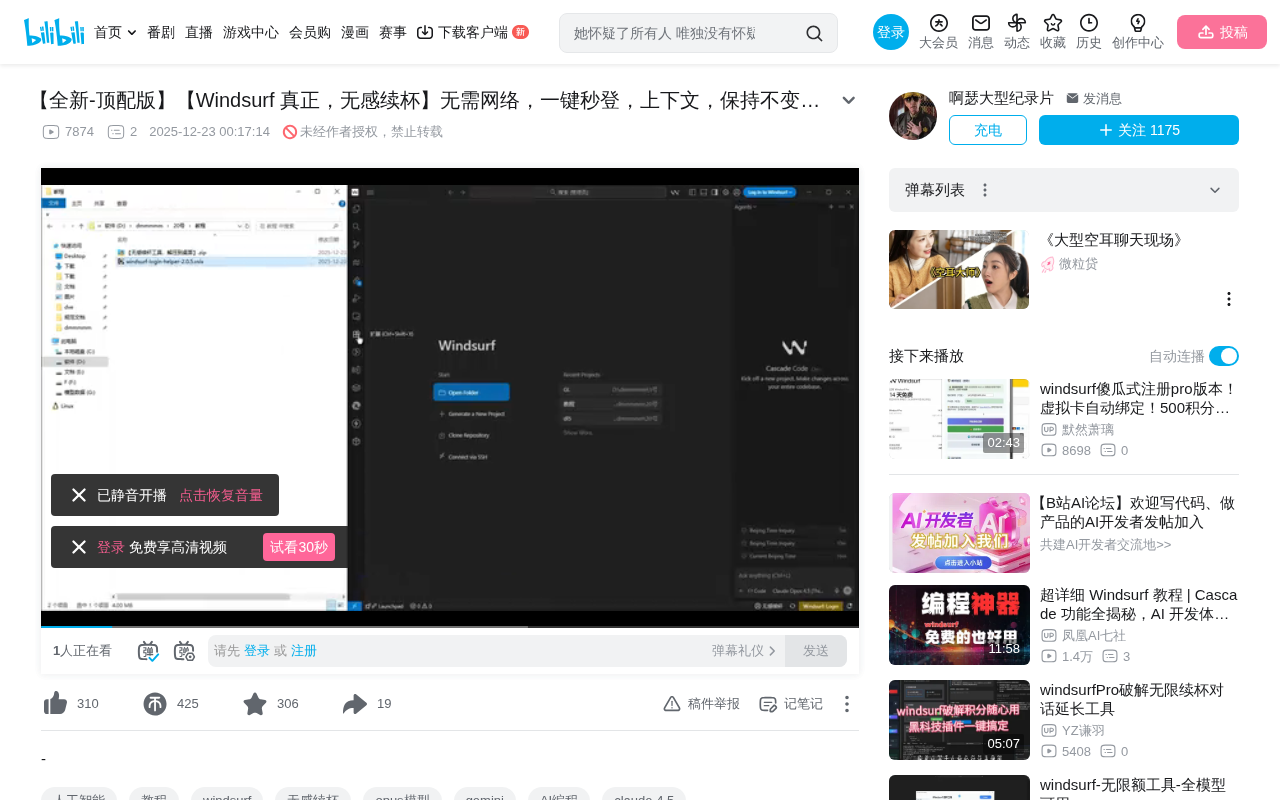
Technical Principles and Risks Behind Windsurf "Seamless Refills"
Possible Implementation Methods of Cracked Versions
These cracking tools typically employ the following technical approaches:
-
Stolen API Keys: Using leaked or stolen API keys from others, which become invalid once discovered. API Keys are identity credentials assigned by cloud service providers to paying users—essentially "digital keys." On code hosting platforms like GitHub, countless developers accidentally commit API keys to public repositories every day. Bad actors use automated crawlers to scan for these leaked keys in bulk, packaging them for use in cracking tools. Victims of key theft face not only hefty bills but potentially greater losses from abuse of key-associated permissions. Companies like Anthropic and OpenAI have deployed anomalous usage detection systems that immediately revoke keys upon detecting unusual calling patterns.
-
Man-in-the-Middle Proxy (MITM Proxy): All code requests pass through third-party servers, posing serious code leakage risks. The technical principle involves inserting a proxy server between the user's client and official API servers. The cracking tool modifies Windsurf's network request configuration, redirecting requests originally destined for Codeium's official servers to servers controlled by the cracker. This proxy server uses its own legitimate API keys to forward requests to official servers, then returns results to users. Throughout this process, the proxy server can fully record, analyze, and even tamper with all passing data—including your source code and AI responses.
-
Account Pool Rotation: Bulk-registered accounts used in rotation, subject to banning at any time. This method uses automated scripts to mass-register free trial accounts, obtaining phone verification codes through SMS platforms, then centrally managing authentication tokens from these accounts. When one account's free quota is exhausted or banned, it automatically switches to the next. This approach is extremely unstable, as service providers identify and mass-ban these accounts through device fingerprinting, IP analysis, and usage pattern detection.
-
Client-Side Patching: Modifying client-side verification logic, potentially embedding malicious code. Since Windsurf is built on the Electron framework, its core logic is written in JavaScript/TypeScript and packaged in asar files, which can theoretically be unpacked and modified. Crackers may modify license verification functions, bypass usage counting logic, or forge server responses. However, this modification process provides excellent cover for malicious code injection—hiding a few lines of malicious logic among thousands of modified lines is virtually impossible for ordinary users to detect.
Core Security Risks of Using Cracked Windsurf
Code Leakage Risk: When using AI programming tools, your code is sent to servers for analysis. This isn't simply sending the single line you're currently editing—modern AI programming tools collect extensive context information for accurate suggestions, including complete file contents, code snippets from related project files, directory structures, and even Git commit history. With models like Claude having context windows of 100K-200K tokens, each request may contain tens of thousands of lines of code. Unofficial channels mean your code could be intercepted, stored, or even sold by third parties. For projects involving trade secrets or sensitive information, this is fatal. More concerning is that code frequently contains database connection strings, internal API addresses, and business logic—once leaked, these could compromise an entire system's security perimeter.
Malware Injection: Behind the convenience of "one-click installation" may lurk trojans, crypto miners, or backdoors. In security terminology, this is called a "Supply Chain Attack," which has become one of the most significant cybersecurity threats in recent years. The 2020 SolarWinds incident and 2021 Codecov incident are classic examples—attackers compromised software distribution channels to infect users at scale. In the cracked Windsurf scenario, malicious code can take many forms: cryptocurrency miners silently consuming your CPU/GPU resources; keyloggers capturing all passwords and sensitive information you type; Remote Access Trojans (RATs) giving attackers complete control of your computer; clipboard hijackers silently replacing cryptocurrency addresses when you copy them. These malicious programs are typically carefully obfuscated and packed to evade most antivirus detection.
Legal Risk: Using cracked software may violate the "Regulations on Computer Software Protection," and API theft could trigger more serious legal provisions. Under Articles 285 and 286 of China's Criminal Law, unauthorized intrusion into computer information systems and illegal acquisition of computer system data may constitute criminal offenses. Additionally, if cracking tools use stolen API keys, users may be considered as "knowingly using proceeds of crime," facing accomplice prosecution risks. Using cracked software in enterprise environments may also expose companies to intellectual property lawsuits and compliance audit issues.
Why Is Cracked Windsurf Content Flooding Social Platforms?
Look closely at the pattern in these videos: demonstrate features → emphasize it's free → request likes/follows/shares → DM to receive. This is a classic traffic-to-monetization model, where publishers may profit through:
- Charging fees for the "cracked version"
- Collecting user information for secondary marketing
- Profiting through embedded malware
- Simply farming followers and engagement metrics
This proliferation is closely tied to the market hype around AI programming tools. As ChatGPT ignited the AI boom, AI coding tools became one of the most watched categories among developers. Recommendation algorithms on platforms like Bilibili and Douyin push high-engagement content to more users, and keywords like "free" and "cracked" naturally attract high click-through rates, creating a positive feedback loop. Publishers are well-versed in traffic operations, profiting through information asymmetry—most viewers lack the technical ability to assess cracking tool safety and are easily tempted by "free access to top-tier models."
Safer Alternatives to Cracked Windsurf
If you're on a budget but want to experience AI programming, here are some legitimate and safe options:
-
Official Free Tiers: Tools like Windsurf and Cursor offer free quotas sufficient for personal learning. For example, Cursor's free version provides a certain number of monthly advanced model calls, and Windsurf's free version includes basic AI assistance features. For learning and personal projects, these free quotas are usually sufficient.
-
Open-Source Alternatives: Open-source AI coding plugins like Continue and Cody can be used with your own API keys. Continue is an open-source VS Code/JetBrains plugin that supports connecting to nearly all major LLM provider APIs; Sourcegraph Cody also offers free AI coding assistance. With these tools, you can choose your trusted API provider and maintain full control over data flow.
-
Student Discounts: GitHub Copilot is free for students, and Cursor offers educational discounts. Through GitHub Education Pack, enrolled students can use GitHub Copilot for free—one of the highest market-share AI coding tools. The application process only requires student identity verification (typically through an .edu email or student ID), and you can start using it for free once approved.
-
Local Deployment: Use Ollama to locally deploy open-source models—completely free with full data security. Ollama is an open-source local LLM runtime framework that supports one-click download and running of various open-source models like Meta's Llama 3.1, Mistral's Codestral, and DeepSeek Coder. These models run entirely on your local machine, so your code never leaves your computer, fundamentally eliminating data leakage risks. Combined with plugins like Continue, you can get a Copilot-like experience in VS Code. Note that local deployment has hardware requirements—running a 7B parameter model requires at least 8GB of GPU VRAM, with larger models needing higher specs. However, even smaller specialized coding models can provide quite good results for code completion tasks.
Conclusion: The Cost of Cracked Versions Far Exceeds Legitimate Pricing
There's no free lunch. When a tool claims to offer "free access to all premium features" and "unlimited refills," you need to ask: who's bearing the cost? The answer is often you—paying with code security, personal information, or even legal risk.
From an economics perspective, this is a classic "hidden cost" problem. A monthly Windsurf Pro subscription costs roughly the same as a casual dinner out, while a single code leak incident could destroy months or years of work; a single malware infection could empty crypto wallets or compromise bank accounts; and legal fees and damages from a single dispute can exceed software subscription costs by hundreds of times.
For developers, code is a core asset, and security should be the top priority when choosing tools. Rather than risking unknown cracked Windsurf versions, invest time understanding official free plans or pay for legitimate tools to protect your work. In today's rapidly evolving AI programming tool landscape, building correct tool usage habits has far more long-term value than obtaining temporary free access.
Related articles
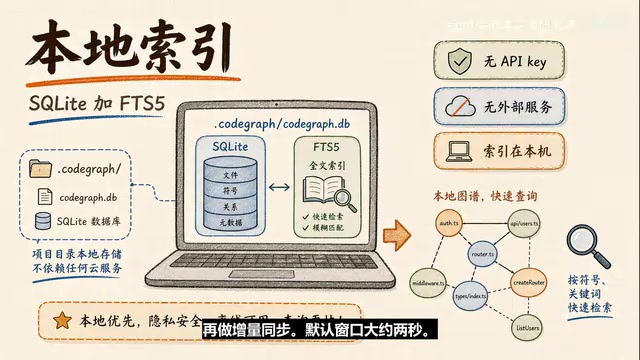
CodeGraph: Give Your Coding Agent a Code Map, Save 47% Tokens
CodeGraph is an open-source project with ~40K GitHub stars that uses Tree-sitter to build a local queryable code map, helping Claude Code and Cursor reduce 47% token usage and 58% tool calls.
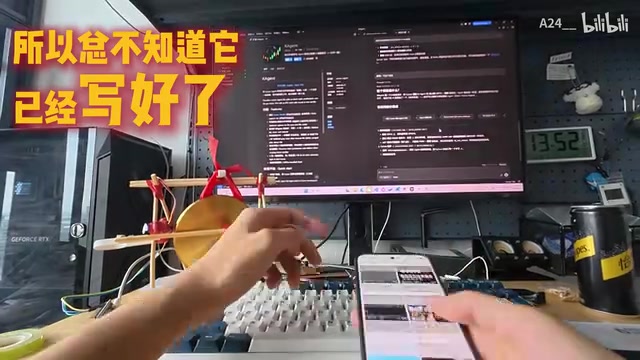
AI Finishes Writing Code, Automatically Strikes a Gong to Alert You: Open-Source Physical Feedback Tool DAgent
A developer built a physical feedback device with chopsticks and a small gong that auto-strikes when AI finishes coding. Now open-sourced as DAgent, it also simulates IPO bell-ringing when creating new files.

Level Up Claude Code: Building an Enhanced Plan Mode with Grill Me
Learn how to install and use the Grill Me Skill for Claude Code, replacing AI guesswork with structured questioning to clarify requirements before generating execution plans.