What Is Dify? Core Features and Getting Started Guide for the Open-Source AI Application Platform
Dify is an open-source platform that lets anyone build enterprise-grade AI applications without coding from scratch.
Dify is a fully open-source AI application development platform that enables individuals and enterprises to build LLM-powered applications through visual interfaces. With support for private deployment, workflow orchestration, RAG knowledge bases, and Agents, it offers strong enterprise-grade capabilities. This guide covers Dify's core advantages, how it compares to Coze, typical use cases, and a structured learning path from beginner to production deployment.
What Is Dify? An Open-Source AI Application Development Platform for Enterprises
Dify is one of the most talked-about open-source AI application development platforms today. Its core mission is clear — enabling individuals and businesses to rapidly build AI applications. Whether you want to boost personal productivity or solve real business pain points, Dify has you covered.
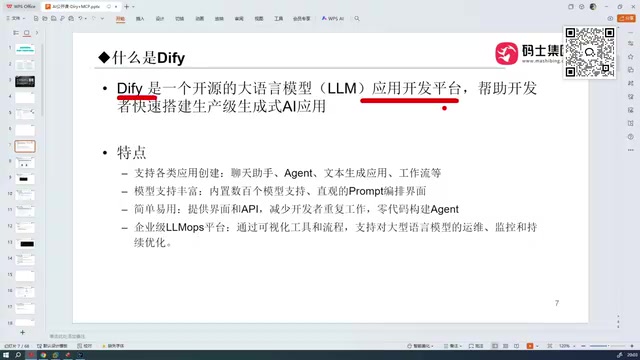
In simple terms, Dify is a platform that lets you create various AI applications powered by Large Language Models (LLMs) without writing code from scratch. A Large Language Model (LLM) is a deep learning model built on the Transformer architecture and trained on massive text datasets. LLMs are capable of text generation, comprehension, reasoning, translation, and many other natural language processing tasks. Notable examples include OpenAI's GPT series, Meta's LLaMA series, Google's Gemini, and Chinese models like Tongyi Qianwen and ERNIE Bot. As an application development platform, Dify doesn't train models itself. Instead, it connects to various LLMs through API interfaces, allowing developers to flexibly choose their underlying models while focusing on application-layer logic design. This approach dramatically lowers the barrier to AI application development, enabling even non-technical users to participate in building AI applications.
Dify's Core Advantages: Open-Source Flexibility and Enterprise-Grade Capabilities
The Flexibility of Being Fully Open Source
One of Dify's most prominent features is that it is fully open source. Having the source code publicly available means:
- Enterprises can deploy it privately, keeping all data under their own control
- Developers can customize and extend the platform to meet specific business needs
- Community-driven iteration is fast, with frequent feature updates
- No need to worry about vendor lock-in
For enterprises that prioritize data security and system control, open-source solutions are often the preferred choice. In enterprise AI application scenarios, private deployment means all data — including user inputs, model inference results, and knowledge base content — flows entirely within the enterprise's own servers or private cloud environment, never passing through third-party platforms. This is critical for industries with strict data compliance requirements, such as finance, healthcare, and government. Additionally, Dify uses the Apache 2.0 open-source license, which allows enterprises to freely modify and distribute the code as long as they comply with the license terms. This eliminates technical dependency on a single commercial vendor — a risk known in the industry as "Vendor Lock-in." By addressing this core need, Dify has secured an important position in the enterprise AI application market.
Dify vs. Coze: How to Choose?
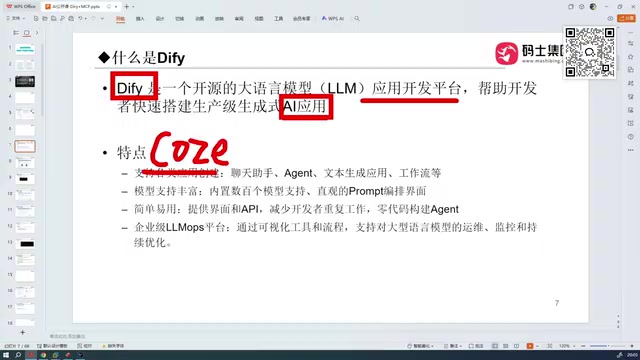
Many beginners compare Dify with ByteDance's Coze. While both are AI application building platforms, they have distinctly different positioning:
| Comparison | Dify | Coze |
|---|---|---|
| Target Users | Enterprises, large teams | Individuals, small teams |
| Deployment | Supports private deployment | Primarily SaaS |
| Open Source | Fully open source | Not open source |
| Customization | Highly customizable | Relatively limited |
It's important to understand the fundamental difference between these two deployment models: SaaS (Software as a Service) is a cloud delivery model where users access vendor-hosted software directly through a browser without maintaining their own servers or infrastructure. Its advantages include out-of-the-box usability and low operational costs. Private deployment, on the other hand, involves installing the software on the enterprise's own server environment, giving the organization full data sovereignty and system control — but at the cost of handling deployment, operations, and upgrades. In the AI application space, because large volumes of sensitive business data and user privacy information are involved, many enterprises (especially those in regulated industries) prefer private deployment.
For medium and large enterprises, the adoption rate of Dify is significantly higher, primarily due to its private deployment capabilities and enterprise-grade security and compliance guarantees. For individual developers or small teams looking for a quick start and out-of-the-box experience, Coze is also a solid choice.
Typical Use Cases for Dify
Personal Productivity Scenarios
For individual users, Dify can help you build:
- Personal Knowledge Base Q&A System: Build a personalized knowledge assistant using RAG technology. RAG (Retrieval-Augmented Generation) is the mainstream technical paradigm for building knowledge base Q&A systems today. The core idea is: before the LLM generates an answer, it first retrieves the most relevant document fragments from an external knowledge base, then feeds those fragments as contextual information into the model. This enables the model to provide more accurate, evidence-based answers grounded in domain-specific knowledge. A typical RAG pipeline includes: Document Chunking → Vector Embedding → Storage in a Vector Database → Semantic Retrieval at query time → Concatenating retrieved results with the question and sending them to the LLM for answer generation. This approach effectively mitigates the LLM's "hallucination" problem (where the model fabricates non-existent information) while avoiding the high cost of fine-tuning models for each specific scenario.
- Automated Document Processing Tools: Batch processing, summarization, translation, and more
- Intelligent Writing Assistant: Assist with content creation and copywriting optimization
- Data Analysis Support Tools: Quickly extract insights from data
Enterprise Business Empowerment Scenarios
In enterprise settings, Dify's applications are even broader:
- Intelligent Customer Service Q&A System: 24/7 automated response to customer inquiries
- Internal Knowledge Management Platform: Consolidate enterprise knowledge assets and improve information retrieval efficiency
- Business Process Automation: Implement complex business logic through workflow orchestration
- Intelligent Report Generation: Automatically generate analytical reports and business briefings
- Multi-Turn Conversation Applications: Build interactive applications with contextual understanding capabilities
Dify Learning Path: From Beginner to Enterprise-Level Practice
Five Stages of Systematic Learning
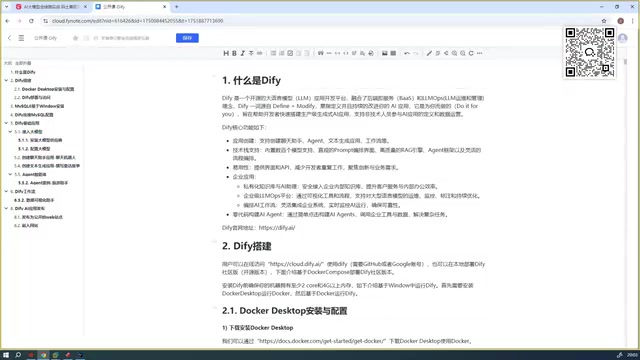
For developers who want to systematically master Dify, the following progressive learning path is recommended:
- Understanding Core Concepts: Learn about Dify's architecture design and core components, including Workflows, Agents, and Knowledge Bases. A Workflow is a core feature in Dify for orchestrating complex business logic. Developers can use a visual drag-and-drop interface to connect multiple processing nodes (such as LLM calls, conditional logic, code execution, HTTP requests, etc.) into a complete automated processing pipeline. This approach is particularly well-suited for business scenarios requiring multi-step collaboration — for example, first retrieving from a knowledge base, then calling a model to generate an answer, and finally formatting the output. An Agent is a more advanced form of AI application that gives the LLM autonomous decision-making and tool-calling capabilities. An Agent can automatically select the appropriate tools (such as search engines, calculators, database queries, etc.) based on user intent to complete tasks, rather than following a predetermined fixed process. The theoretical foundation of Agents comes from the ReAct (Reasoning + Acting) framework, which allows the model to alternate between reasoning and action iteratively until the goal is achieved.
- Environment Setup and Deployment: Learn to deploy Dify locally using Docker and become familiar with the configuration process. Docker is a containerization technology that packages an application along with all its dependencies (runtime environment, system libraries, configuration files, etc.) into a standardized "container," ensuring the application runs consistently in any environment. Dify recommends deployment using Docker Compose, a multi-container orchestration tool for Docker that can simultaneously start all of Dify's required service components (such as the web service, API service, database, Redis cache, vector database, etc.) through a single YAML configuration file. For developers, deploying Dify with Docker typically requires just a few commands, greatly simplifying the complexity of environment configuration.
- Creating Basic Applications: Start with a simple chatbot and gradually become familiar with the visual interface
- Exploring Advanced Features: Dive deep into workflow orchestration, RAG knowledge base retrieval, external tool integration, and other advanced capabilities
- Enterprise-Level Project Practice: Combine real business scenarios to complete full projects from requirements analysis to production deployment
DSL Files: A Powerful Tool for Quickly Reproducing Applications
In Dify, a DSL (Domain Specific Language) file is the configuration description file for an application. A DSL is a specialized language designed for a specific application domain. Unlike general-purpose programming languages (such as Python or Java), a DSL focuses only on the expression needs of a particular domain. In Dify, DSL files use YAML format and fully describe all configuration information for an AI application, including model selection, prompt design, workflow node orchestration, variable definitions, knowledge base associations, and more. This "application as configuration" design philosophy enables AI applications to be version-controlled, collaboratively developed, and migrated across environments just like code, greatly improving development efficiency and reproducibility.
By importing DSL files, you can quickly reproduce applications created by others, which is extremely valuable for learning and team collaboration. Beginners are encouraged to collect and study excellent DSL templates, starting with imitation to gradually master the art of application design. The Dify community and GitHub host a wealth of open-source DSL templates for reference.
Conclusion: Why Dify Is Worth Learning
As an open-source, enterprise-grade AI application development platform, Dify is becoming the go-to tool for an increasing number of teams building AI applications. Its fully open-source nature, enterprise-grade private deployment capabilities, and rich feature components (Workflows, Agents, RAG Knowledge Bases, etc.) give it a unique competitive edge in the AI application development space.
Whether you want to boost your personal productivity or build intelligent solutions for your enterprise, Dify is well worth investing time to learn and practice. Start by building your first chatbot, and gradually explore the full potential of this powerful platform.
Related articles
Non-Technical Founders Built a $50K/Month SaaS Product Using AI Tools
Two non-coders built Shipper to $50K MRR in 6 months using AI tools. Learn their reverse-engineering, zero-free-tier, and viral growth playbook for indie developers.
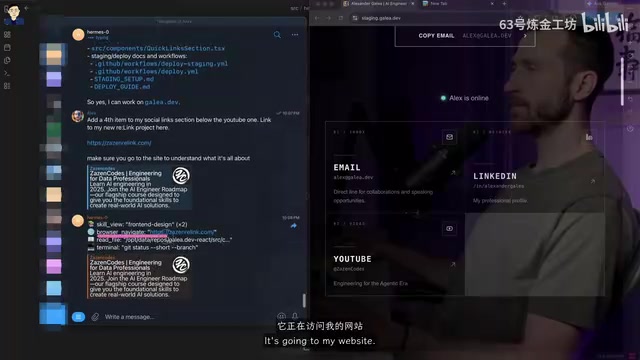
Hermes Agent Deployment Guide: Building a Mobile AI Coding Workflow with Telegram
Learn how to deploy Hermes Agent on a VPS with Telegram Bot integration for mobile AI coding. Covers Docker setup, GitHub integration, auto-deployment, and comparison with OpenClaw.
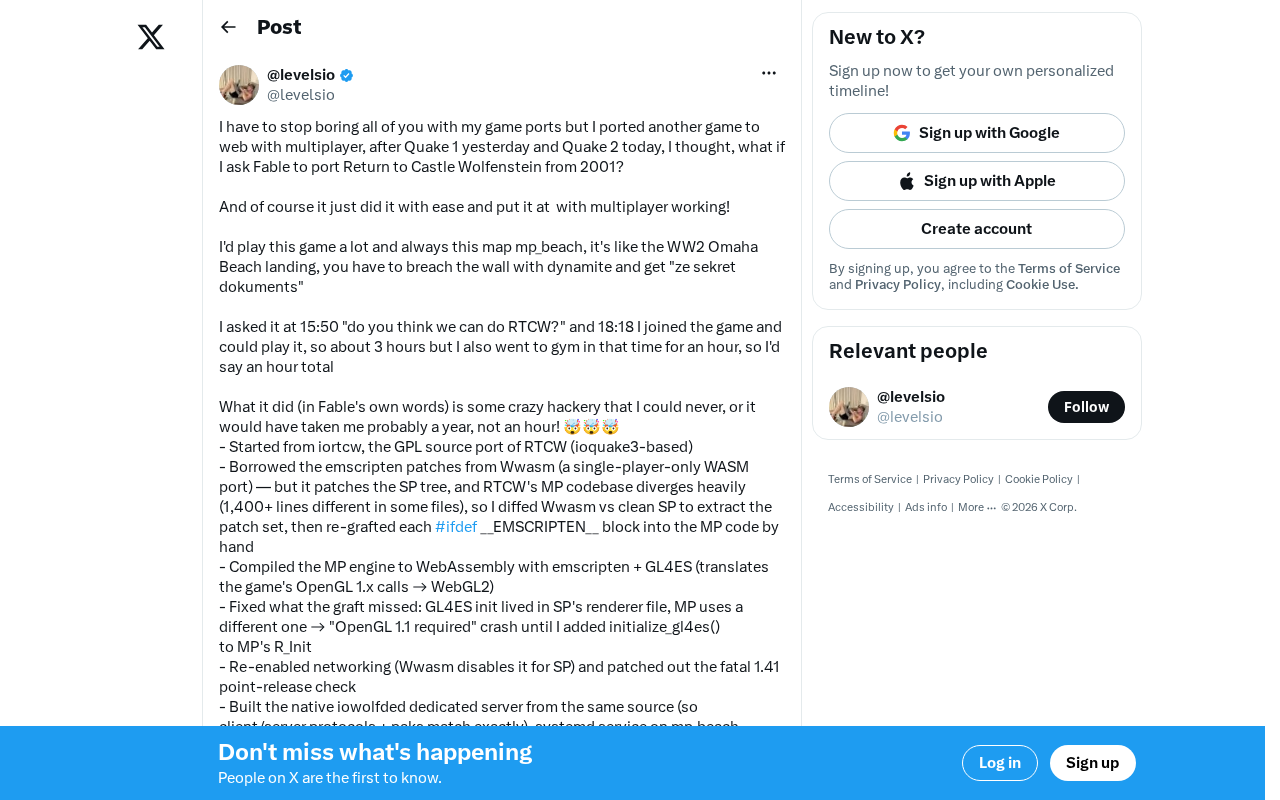
AI Tool Fable Ports Classic FPS to Browser in Two Hours — With Full Multiplayer
A developer used AI coding tool Fable to port Return to Castle Wolfenstein to the web browser in just two hours with full multiplayer, revealing AI's power in system-level engineering.