What Signal Did Former Apple AI Chief Giannandrea Send by Appearing at WWDC?
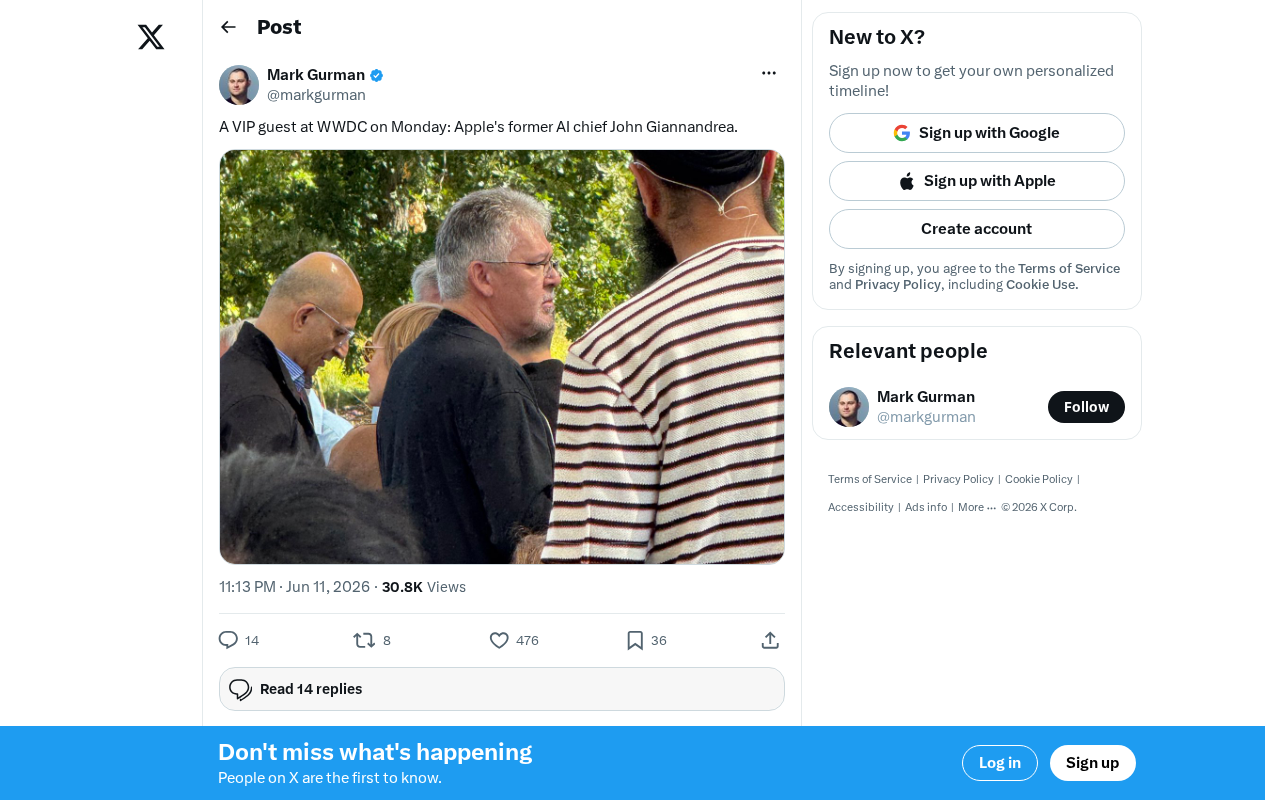
Former Apple AI chief Giannandrea's VIP appearance at WWDC signals strategic continuity in Apple's AI direction.
Former Apple AI chief John Giannandrea attended WWDC 2025 as a VIP guest, sparking industry speculation about Apple's AI strategy. As the architect of Apple's on-device AI approach and Siri's modernization, his presence suggests strategic continuity, internal recognition, and possible ongoing collaboration — signaling that Apple's AI foundation remains solid amid fierce competition.
Event Overview
According to media reports, former Apple AI chief John Giannandrea attended this Monday's WWDC (Apple Worldwide Developers Conference) as a VIP guest. While seemingly low-key, his appearance has sparked considerable attention and discussion in the tech world.
WWDC (Worldwide Developers Conference) is an annual global developer conference that Apple has hosted since 1987, typically held in June at Apple Park in Cupertino, California. The event serves as Apple's premier stage for unveiling new operating systems (iOS, macOS, watchOS, visionOS, etc.) and developer tools, and a critical window for communicating its technology roadmap to tens of millions of developers worldwide. In recent years, WWDC's influence has extended far beyond the developer community, becoming Apple's signature annual event for showcasing its strategic direction. The VIP guest list is typically carefully curated, with attendees often including industry leaders, key partners, and individuals with profound influence on the Apple ecosystem — making Giannandrea's VIP presence inherently significant.
As the former helmsman of Apple's AI strategy, Giannandrea's appearance was more than a simple reunion of old friends — it may hint at Apple's strategic direction in AI.
Who Is John Giannandrea: An AI Veteran from Google to Apple
Professional Background
John Giannandrea is one of the most influential executives in the AI field. He previously served as head of Google's Search and AI division, leading the critical period when Google Search transitioned to machine learning-driven technology. The most iconic achievement of this transformation was the RankBrain system, launched in 2015 — Google's first large-scale application of deep neural networks to search ranking algorithms, enabling the search engine to understand the semantic intent behind user queries rather than merely matching literal keywords. Google subsequently introduced the Transformer-based BERT model for search comprehension, and this series of technological innovations fundamentally changed the paradigm of information retrieval. Giannandrea was the core driver of this transformation, and the large-scale AI systems engineering experience he accumulated at Google was a key reason Apple spared no expense to recruit him.
In 2018, Apple poached him from Google and appointed him Senior Vice President of Machine Learning and AI Strategy, reporting directly to CEO Tim Cook.
During his tenure at Apple, Giannandrea was responsible for driving Siri's intelligence upgrades and building on-device AI capabilities for Apple products. Since its debut with the iPhone 4S in 2011, Siri has undergone several major technical iterations. Early versions of Siri relied primarily on rule engines and limited natural language processing capabilities, often criticized by users as a "dumb assistant." After Giannandrea joined, he pushed for a comprehensive overhaul of Siri's underlying architecture, introducing on-device speech recognition (starting with iOS 15, Siri's voice processing defaults to on-device), more advanced natural language understanding models, and Transformer-based conversational systems. His arrival was widely seen as a landmark moment in Apple's effort to catch up in the AI race.
What "Former AI Chief" Implies
The use of "former AI chief" in reports indicates that Giannandrea's role has changed — he may have stepped down from direct leadership of AI operations or undergone a responsibility shift within Apple. Nevertheless, the fact that he was still invited to attend WWDC as a VIP suggests he continues to hold significant standing in the Apple ecosystem.
Why Giannandrea's WWDC Appearance Matters
The AI-Themed Backdrop of WWDC
This year's WWDC is widely regarded as a pivotal moment for Apple to "show its hand" in AI. Since launching Apple Intelligence, Apple has been accelerating its deployment of on-device AI and generative AI capabilities.
Apple Intelligence is the personal intelligence system officially unveiled at WWDC 2024, representing a major shift in Apple's AI strategy from scattered features to a unified platform. Its technical architecture employs a distinctive "layered processing" design: simple tasks are handled directly by a small on-device language model; moderately complex tasks are processed in the cloud through Apple's proprietary Private Cloud Compute system, which uses dedicated servers powered by Apple-designed chips and promises that data will not be stored or used for training; the most complex tasks can optionally call third-party models like ChatGPT. This three-tier architecture strikes an elegant balance between performance and privacy. Apple also developed dedicated Foundation Models for Apple Intelligence, including an approximately 3-billion-parameter on-device model and a larger cloud model, both deeply optimized for Apple hardware.
On-device AI refers to executing AI model inference computations directly on user devices (such as iPhone, iPad, Mac) locally, rather than uploading data to cloud servers for processing. The core advantages of this approach include privacy protection (user data never leaves the device), low latency (avoiding network transmission overhead), and offline availability. Apple specifically designed the Neural Engine chip for this purpose, integrating it into every generation of Apple Silicon starting with the A11 Bionic. The latest M4 and A18 Pro chips' Neural Engines can achieve tens of trillions of operations per second (TOPS). Apple also introduced the Core ML framework, enabling developers to easily deploy trained machine learning models on Apple devices. This deeply integrated hardware-software on-device AI strategy was precisely the direction Giannandrea championed during his tenure.
As an early architect of this strategy, his attendance may signal:
- Strategic continuity: Apple's current AI roadmap continues along the technical direction established during Giannandrea's era
- Internal recognition: Even with a role change, Apple's leadership continues to highly value his contributions
- Potential collaboration: The possibility that Giannandrea continues to participate in Apple AI projects in an advisory or other capacity cannot be ruled out
Reading the Industry Signals
In the current white-hot AI competition, personnel movements at major tech giants often serve as strategic weathervanes. The global AI race has entered an "arms race" phase: OpenAI holds a first-mover advantage with its GPT series models and ChatGPT products, with a valuation exceeding $300 billion; Google is mounting a full counterattack with its Gemini series models, deeply integrating AI capabilities across Search, Gmail, Google Docs, and its entire product line; Meta has open-sourced the Llama series of large models, attempting to establish industry standards through an open-source ecosystem; and Microsoft, through its massive investment in OpenAI and its Copilot product line, is embedding AI into Office, Windows, and Azure cloud services.
Within this landscape, Apple's differentiated positioning is particularly distinctive — it doesn't pursue training the largest models or publishing the strongest benchmark scores. Instead, it focuses on how to make AI serve users in the most natural and secure way across billions of Apple devices. This "experience-first" rather than "capability-first" strategy is highly consistent with Giannandrea's long-held belief that "AI should be invisible."
Giannandrea's appearance conveys at least one message: Apple's AI team's inner circle maintains close connections and communication, which is crucial for maintaining strategic consistency.
Apple's AI Strategy: Current State and Outlook
Apple has consistently adopted a relatively conservative yet pragmatic approach to AI — emphasizing privacy protection, on-device computing, and seamless integration with user experience. Unlike OpenAI, Google, and other companies that have made high-profile launches of large language models, Apple prefers to deeply embed AI capabilities into its operating systems and hardware ecosystem.
From Apple Intelligence to Siri's comprehensive upgrade, to the integration of ChatGPT through its partnership with OpenAI, Apple is building a unique AI ecosystem. In Siri's latest evolution, Apple has deeply integrated it with Apple Intelligence, granting it cross-app operation capabilities (through the App Intents framework), contextual awareness, and personalized understanding. The new Siri can understand on-screen content, invoke multiple apps to complete complex tasks, and provide highly personalized responses based on users' personal data (such as emails, calendars, and messages) — marking a fundamental transformation of Siri from a "command executor" to a "personal intelligent agent."
As one of the key architects of this ecosystem, Giannandrea's presence at WWDC may be Apple's way of projecting confidence to the outside world — that the foundation of its AI strategy is solid and its direction is clear.
Takeaway
A "former" executive's VIP attendance may seem like a brief piece of trivia, but in the context of the tech industry, every detail can carry deeper meaning. Giannandrea's appearance reminds us that Apple's AI story is far from over, and those who wrote its opening chapters are still watching how the story unfolds.
Key Takeaways
Related articles

Codex VS Claude Code: The Token Economics Behind a 10x Price Gap
Same coding task: Codex costs $15, Claude Code costs $155. Deep dive into the real reasons behind the 10x gap — it's not pricing, it's token volume, output style, and context strategy.
Gemma 4 Open-Source Model Local Deployment Guide: Ollama Installation & Mobile Setup
Step-by-step guide to deploying Google's Gemma 4 open-source model locally with Ollama and running the lightweight version on mobile with tool calling support.
The Decline of Tokenmaxxing: Why Selling Outcomes Matters More Than Selling Tokens
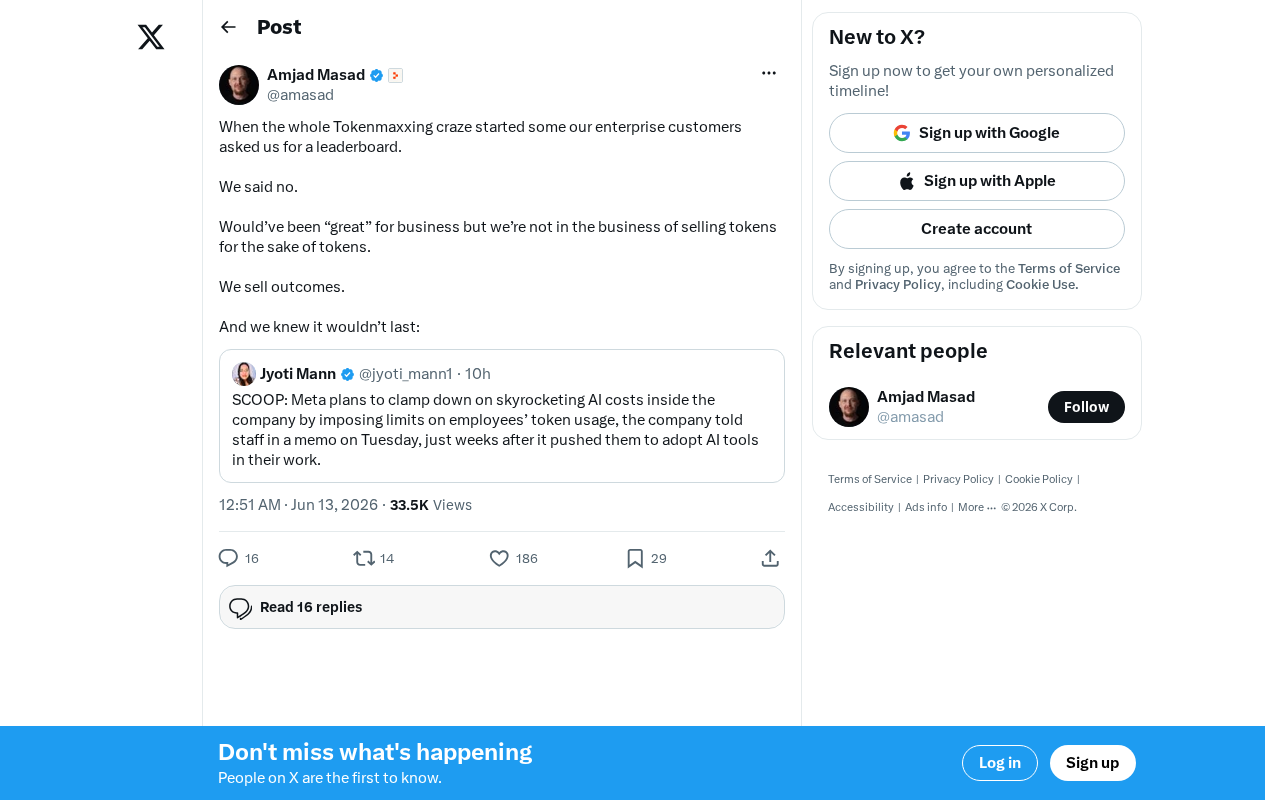
The Tokenmaxxing craze is fading as enterprise AI procurement shifts from chasing Token counts to focusing on actual business outcomes. Learn why outcome-based AI evaluation is the right approach.