Whatever Your Hand Finds to Do, Do It with All Your Might: Modern Lessons from Ecclesiastes' Philosophy of Action

Ecclesiastes 9:10's ancient wisdom on going all-in remains the best antidote to modern overthinking.
A viral tweet sharing Ecclesiastes 9:10 sparks reflection on the timeless philosophy of action. The passage's core message — do whatever is at hand with full effort — combats overthinking and over-planning. Connected to Stoicism, Deep Work, and Agile methodology, this ancient proverb offers a practical framework for navigating uncertainty in modern professional life.
A Modern Lesson from an Ancient Proverb
Recently, a short tweet resonated widely across social media. The poster shared a passage from Ecclesiastes 9:10, calling it their spiritual anchor during difficult days:
"Whatever your hand finds to do, do it with all your might, for in the realm of the dead, where you are going, there is neither working nor planning nor knowledge nor wisdom."
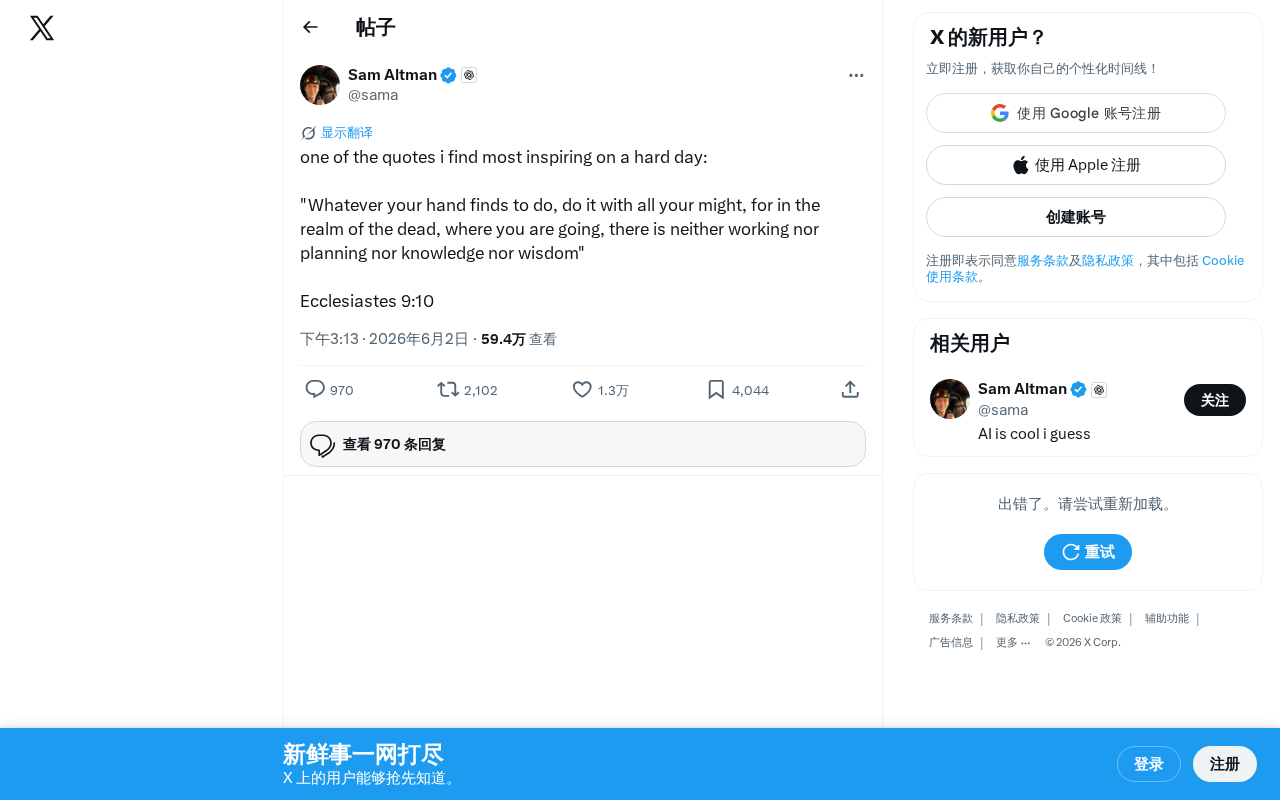
A single sentence, spanning thousands of years, still strikes at the heart of modern life. Its power lies not in its religious context, but in its remarkably simple core — time is limited, so give it everything you've got.
Ecclesiastes is one of the most philosophical books in the Hebrew Bible, traditionally attributed to King Solomon and written around the third century BCE. What makes it unique is that, unlike other religious texts that promise an afterlife, Ecclesiastes examines life from a near-existentialist perspective — acknowledging the brevity and vanity of existence, yet deriving from it the positive conclusion to "live in the present and do your best." This gives it enduring appeal even among secular readers.
Going All In: Not Just Motivational Fluff, but a Philosophy of Action
The core of this passage isn't religious preaching — it's an extreme philosophy of action.
This "action-first" mindset has deep roots in the history of philosophy. From the ancient Greek Stoics' emphasis on "focusing on what you can control," to existentialist philosopher Sartre's proposition that "existence precedes essence" — meaning people define themselves through action, not through thinking or planning. In modern management theory, this idea manifests as the core of "execution culture": LinkedIn founder Reid Hoffman once said, "If you're not embarrassed by the first version of your product, you've launched too late." This is entirely in the spirit of Ecclesiastes.
For professionals in fast-changing industries, this mindset is especially critical. When we face anxiety over technological disruption, project pressure, or uncertainty about the future, the most effective antidote is often not overthinking, but doing the task at hand to the absolute best of our ability.
Why does this proverb remain effective across time? Because it directly addresses the two most common traps in human nature:
- Anxiety about the future — worrying about things that haven't happened yet drains energy from the present.
- Over-planning — substituting "preparation" for "action" is essentially a sophisticated form of procrastination.
Ecclesiastes' answer is blunt: stop overthinking. Whatever is in front of you — do it with everything you have.
How to Apply This Proverb to Daily Work
Maximizing Output Within Limited Time
Whether you're training a model, debugging code, or writing documentation, the "do it with all your might" philosophy reminds us: focusing on the task at hand is more valuable than worrying about the future.
This aligns perfectly with Cal Newport's concept of Deep Work — during an uninterrupted block of time, fully concentrating on a cognitively demanding task produces quality and efficiency far beyond scattered multitasking.
Newport, a computer science professor at Georgetown University, demonstrated in his 2016 book Deep Work through extensive research that the average knowledge worker is interrupted every 11 minutes, and it takes approximately 25 minutes to regain a state of focus. This means that in a fragmented work pattern, we almost never reach the upper limits of our cognitive capacity. Newport's solutions include time blocking, digital minimalism, and deliberate practice of focus. These methodologies are essentially modern operating manuals for the Ecclesiastes proverb — providing concrete execution frameworks for "doing it with all your might."
Action Over Calculation
The phrase "there is neither planning" may seem pessimistic, but it's actually a reminder: over-planning itself can be a form of procrastination. In rapidly changing fields, fast iteration and learning by doing are often more effective than pursuing the perfect plan.
This has a well-known counterpart in software engineering — Agile Development. Compared to the traditional waterfall model that requires exhaustive requirements documents and architecture designs before any work begins, Agile methodology advocates for two-to-four-week iteration cycles, rapidly delivering a minimum viable product, then continuously adjusting based on feedback. One of its core manifesto principles states: "Working software over comprehensive documentation." This forms a thousand-year intellectual echo with Ecclesiastes' "whatever your hand finds to do, do it with all your might."
Much of the time, we don't lack direction — we lack the courage to take the first step. The wisdom of Ecclesiastes is this: rather than waiting until everything is perfectly in place, reach for what's in front of you and give it your all.
Takeaway
A seemingly simple tweet reveals a plain yet powerful truth: In the limited time we have, do the work in front of us with everything we've got.
You don't need to wait until you've figured out every question. You don't need to wait for the perfect moment. Whatever your hand finds to do, do it with all your might — this may be the most practical mindset for facing any difficult moment.
Key Points
Related articles

Six AI Coding Tools Compared: Claude Code and Cursor Lead the Pack
In-depth comparison of six AI coding tools in 2026: Claude Code, Cursor, Codex, Trae, Qoder, CodeBuddy. Analyzed across Agent capabilities, IDE experience, and team collaboration with scenario-based recommendations.

Roo Code Deep Dive: A Guide to the Multi-Model AI Coding Assistant for VS Code
Deep dive into Roo Code (formerly Roo Cline) VS Code extension: multi-AI backend switching, auto-diff code review, terminal command execution, and Architect Mode explained with practical tips.
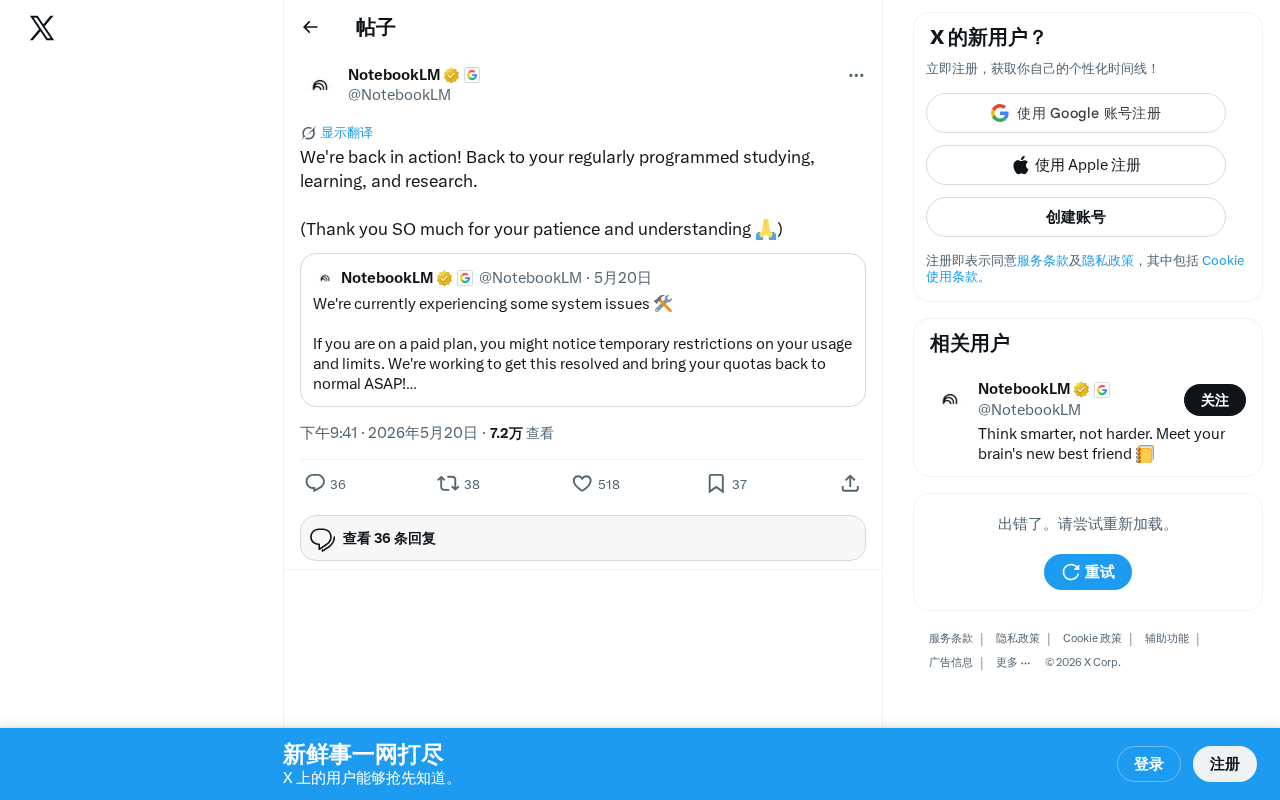
NotebookLM Service Restored: Google's AI Research Assistant Back Online
Google NotebookLM is fully back online after a service outage. Learn about the incident details, NotebookLM's core features, and backup tips for AI-dependent researchers.