Why the Mayor of Los Angeles Has No Real Power: A City Designed to Be the Anti-New York
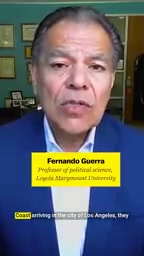
LA's weak-mayor system was designed a century ago to prevent corruption, but now hampers crisis response.
Los Angeles's mayor lacks real power not due to personal failings, but because of an extreme decentralization system designed over a century ago by Progressive reformers determined to prevent Tammany Hall-style corruption. Independent commissions control water, airports, schools, and more — leaving the mayor as a coordinator, not a commander. The 2025 wildfire crisis exposed the costs of this fragmented governance, contrasting sharply with New York's strong-mayor model.
A City Designed to Be the Anti-New York
Los Angeles's political system was built with a strong rebellious streak from the very beginning. When we see the LA mayor appearing powerless in the face of major crises like wildfires, this isn't a matter of personal competence — it's the inevitable result of institutional design.
From the late 19th to the early 20th century, waves of migrants from the American East Coast flooded into Los Angeles. These newcomers carried vivid memories of political corruption in eastern cities and made their stance clear: they had no intention of replicating the government models of New York, Chicago, or Philadelphia on the West Coast. This period coincided with the tail end of America's Gilded Age (1870s–1900s) — an era of rapid economic growth and urban expansion on the surface, but rampant plutocratic monopolies, extreme wealth inequality, and political corruption underneath. For the middle-class families who chose to head west, Los Angeles represented an entirely new possibility: a city that could be built from scratch, free from the entrenched political ailments of the old world.
The Shadow of Corrupt Political Machines: Tammany Hall and Boss Tweed
To understand Los Angeles's institutional choices, we must return to the political landscape of that era. Eastern American cities were controlled by corrupt politicians, and the most notorious of all was New York's "Boss" William Tweed and his Tammany Hall. This political machine controlled every aspect of city government, forming a vast network of patronage and graft.
Tammany Hall's history dates back to 1789, when it started as an ordinary Democratic political club. By the mid-19th century, however, it had evolved into a "shadow government" controlling New York City's municipal affairs. Its operations were remarkably sophisticated: at the grassroots level, Tammany's ward bosses provided Irish, Italian, and other new immigrants with job opportunities, housing assistance, and even Thanksgiving turkeys — in exchange for their loyal votes on Election Day. At the top, Tweed and his "Tweed Ring" amassed enormous wealth through inflated public works contracts and falsified accounts. The most famous example was the construction of the New York County Courthouse — a project originally budgeted at $250,000 that ultimately cost over $13 million (equivalent to hundreds of millions of dollars today), with the vast majority flowing into the Tweed Ring's pockets. It's estimated that the Tweed Ring stole approximately $25 to $45 million in public funds during its peak (equivalent to billions in today's purchasing power). Ultimately, political cartoonist Thomas Nast published a series of biting satirical cartoons in Harper's Weekly — depicting Tweed as a greedy vulture — that greatly awakened public awareness and helped bring about Tweed's downfall and imprisonment in 1871. Tweed's story became a classic lesson in American political history that "concentrated power inevitably leads to corruption," profoundly shaping the direction of urban governance reform for decades to come.

It was precisely this kind of centralized corruption that gave rise to the famous Progressive Movement in American history — a wave of social reform triggered by rapid industrialization, urbanization, and corrupt political machines.
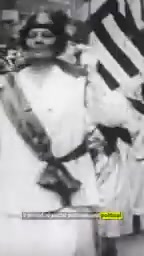
The Progressive Movement emerged around the 1890s and lasted through the 1920s, making it one of the most important periods of social reform in American history. Participants included journalists, social workers, academics, and politicians, all united by a common goal: replacing corrupt party machine politics with scientific management and democratic participation. At the federal level, Progressivism produced antitrust enforcement (such as the actual implementation of the Sherman Antitrust Act of 1890), food and drug safety regulation (the Pure Food and Drug Act of 1906), and the Seventeenth Amendment to the Constitution (1913, mandating direct election of U.S. senators by voters rather than state legislatures). At the municipal level, Progressives pushed a series of structural reforms: introducing the Council-Manager Government model, where professional administrators rather than elected politicians handled day-to-day administration; implementing non-partisan elections, where candidates ran without party affiliation to weaken machine control over elections; and establishing independent municipal commissions to manage specific public service areas. President Theodore Roosevelt (in office 1901–1909) was the most prominent national champion of this movement, while Los Angeles became the most thoroughgoing laboratory for Progressive urban governance ideals.
Los Angeles's Extreme Decentralization by Design
Progressives designed an entirely new governance system for Los Angeles, built around a single core principle: decentralization of power. The goal was to ensure that no single individual could ever become a "city boss" like Tweed.

Specific measures included:
- Establishing independent commissions: Government departments were run by independent commissions rather than falling under the mayor's direct control
- Separating basic government functions: The education system operated independently from city government
- Airports managed by a dedicated commission, water services by another
- Every critical area had its own independent governing body, each serving as a check on the others
The specific workings of this system are worth examining in detail. Take the Los Angeles Department of Water and Power (LADWP) as an example — it's the largest municipal utility in the United States, serving approximately 4 million residents, and is overseen by a five-member Board of Commissioners. These commissioners are nominated by the mayor and confirmed by the city council, but once appointed they serve fixed terms (typically five years), and the mayor cannot remove them at will. This means that even if the mayor and the commission have serious policy disagreements, the mayor cannot simply make personnel changes to impose their will. Similar structures exist across nearly every critical area in Los Angeles, including the port, airports (Los Angeles World Airports), and urban planning. Even more independent is the Los Angeles Unified School District (LAUSD) — the second-largest school district in the nation, serving over 600,000 students — which has its own independently elected school board, completely outside the jurisdiction of the mayor or city council, with independent taxing and budgetary authority. The result of this institutional design is that while the LA mayor is the city's most recognizable political figure, the administrative resources under their direct control represent only a small fraction of the city's total public service apparatus.
This means the Los Angeles mayor is nominally the city's chief executive, but in practice has extremely limited resources and power to deploy directly. Key areas like education, water, airports, and ports all fall outside the mayor's direct jurisdiction. In the academic taxonomy of American urban governance, this model is called the "Weak-Mayor System," in contrast to the "Strong-Mayor System" used in cities like New York and Chicago. Under a strong-mayor system, the mayor holds broad powers of administrative appointment, budget formulation, and policy veto, enabling them to direct municipal operations much like a corporate CEO.
The Price of Reform Taken to Extremes
As one classic summary puts it: L.A. is a prime case of reform taken to extremes.
This institutional design has indeed been effective at preventing corruption — Los Angeles has never produced a political oligarch like Tweed. But the costs are equally apparent: when the city faces emergencies requiring rapid, unified decision-making (such as wildfires or infrastructure crises), excessive fragmentation of power leads to coordination difficulties and sluggish responses.
The January 2025 Los Angeles wildfire crisis laid bare this institutional flaw in stark terms. When the Palisades Fire and the Eaton Fire erupted almost simultaneously in multiple directions across the city, the emergency response involved the Los Angeles City Fire Department, the Los Angeles County Fire Department, the California Department of Forestry and Fire Protection (CAL FIRE), the Los Angeles Department of Water and Power (responsible for fire hydrant water supply), and numerous other independent agencies. Insufficient fire hydrant water pressure became a focal point of public outrage — and this was precisely an issue involving the LADWP, an independent agency the mayor cannot directly command. Mayor Karen Bass had to simultaneously coordinate with county government, state government, the federal government, and multiple independent commissions within the city, making her role more akin to a "convener" than a "commander." This stood in sharp contrast to the ability of New York's mayor to rapidly mobilize citywide resources in the aftermath of 9/11.
Compared to the broad executive powers held by New York's mayor — who can directly command police, fire, education, and virtually all municipal departments — the Los Angeles mayor functions more as a mediator navigating among countless independent commissions, rather than a true decision-maker. The power of New York's mayor is nearly unmatched among American cities: the mayor directly appoints deputy mayors, agency heads, and dozens of other senior officials, controls an annual budget exceeding $100 billion, and can issue executive orders to mobilize citywide resources during emergencies. Former New York Mayor Rudy Giuliani's rapid response after the September 11, 2001 terrorist attacks — unified command of fire, police, and medical departments — is a textbook example of the strong-mayor system's efficiency advantage in times of crisis. When the Los Angeles mayor faces a crisis of comparable scale, the first step isn't issuing orders — it's making phone calls: to the LADWP, to the school district, to county government, to each independent commission — requesting coordination and cooperation.
Lessons for Contemporary Urban Governance
The Los Angeles case reminds us that institutional design is always a balancing act between efficiency and checks on power. Excessive centralization breeds corruption, but excessive decentralization can lead to governance paralysis. The reformers of over a century ago could hardly have foreseen that the system they designed to prevent corruption would become a structural obstacle to addressing complex challenges in the 21st century.
This dilemma is not unique to Los Angeles — it reflects a deeper theoretical tension in the field of public governance. Political scientist Francis Fukuyama, in his book Political Order and Political Decay, identifies a core problem in the American political system: "vetocracy" — where too many checks and balances allow any major decision to be blocked at some point in the process, leading to governmental paralysis. Los Angeles's commission system is precisely a city-level microcosm of this vetocracy. Notably, reform efforts have been attempted in recent years: in 2020, Los Angeles voters passed a charter amendment granting the mayor greater oversight authority over LADWP; in 2024, another reform expanded the city council to improve representativeness. But whether these incremental adjustments can fundamentally resolve the structural problems left by institutional design choices made over a century ago remains an open question. For regions around the world undergoing rapid urbanization, Los Angeles's experience offers a valuable cautionary tale: institutional design must not only respond to present-day problems but also preserve enough flexibility to handle the unknown challenges of the future.
Related articles

Andrew Ng's Advanced AI Prompting Guide: Core Methods for Going from Beginner to Expert
Based on Andrew Ng's latest AI prompting tutorial, learn the core gaps between beginners and experts: providing context, overcoming sycophancy, iterative workflows, and four key principles.

AI Batch Rename Tool: One-Click File Name Standardization with LLM Semantic Understanding
Explore the AI Batch Rename Tool Pro v5.0: use LLM semantic understanding to intelligently standardize file names, with multi-engine API support and dual-model collaboration.

AI Engineering in Practice: The Progression Path from Vibe Coding to Enterprise-Level Development
Deep dive into AI engineering methodology, comparing Vibe Coding vs enterprise development, covering Claude Code, Codex tool selection, SuperPower plugin practices, and the path from prototype to production.