Will AI Coding Replace Programmers? A Deep Dive into Manufacturing vs. Internet Industry Differences
Will AI Coding Replace Programmers? A …
AI coding won't replace all programmers equally—industry choice determines your career resilience.
As AI coding agents like Claude Code and Codex transform software development, this article analyzes why programmers in manufacturing face far lower replacement risk than those in pure internet companies. Physical testing, cross-domain expertise, and human accountability create natural moats. The key takeaway: focus on requirement analysis, domain knowledge, and embracing AI as a tool rather than fearing it as a threat.
Introduction: An Ordinary Programmer's Reflections on AI-Assisted Coding
With the emergence of Claude Code, Codex, and other AI coding agents, the debate over whether programmers will be replaced has once again reached a fever pitch. A Bilibili content creator named "Kekezi," who survived five layoffs before finding stability in a manufacturing software role, shared his deep reflections on programmers' career prospects under AI disruption, drawing from eight months of hands-on experience.
His core takeaway is surprising: Programmers won't be replaced that easily—but programmers in different industries face vastly different situations.
How Powerful Are AI Coding Tools, Really?
Kekezi admits that since adopting Claude Code, his workflow has fundamentally changed. Previously, he'd chat with DeepSeek's web interface and manually copy-paste code into his editor. Now, Claude Code can directly understand the entire project's context, automatically modify code, generate files, and even run tests.
To appreciate the revolutionary nature of this shift, it helps to understand the evolution of AI coding tools. Claude Code is a command-line AI coding agent released by Anthropic in 2025 that can understand an entire code repository's structure directly from the terminal, autonomously handling code writing, debugging, refactoring, and testing. OpenAI's Codex is a cloud-based coding agent built on its large language models, capable of processing multiple development tasks in parallel. These tools are fundamentally different from early GitHub Copilot—Copilot primarily handled line-level code completion, while Claude Code and Codex are "Agentic AI" systems that understand project context, autonomously plan execution steps, and invoke tool chains to complete end-to-end development tasks. This leap from "assisted completion" to "autonomous execution" is the core reason behind programmer career anxiety.
"Since I started this job, I basically haven't handwritten any code. At most, I just review it."
This experience initially triggered intense anxiety—if AI coding tools can do all of this, what's the point of learning to code? Where does a programmer's value lie?
But after deeper reflection and real-world validation, he arrived at a more rational assessment.
Internet vs. Manufacturing: Drastically Different Replacement Risks
Internet Industry: Higher Replacement Risk
Kekezi believes that programmers in the internet industry face genuinely high replacement risk. The reason is straightforward: the internet industry produces software—digital products that run directly on computers. AI coding tools happen to excel at this exact pipeline—from development to testing to deployment, AI can handle the entire process end-to-end.
He specifically called out several high-risk roles:
- Traditional ERP/CRM system developers: Business logic is relatively standardized, and AI is fully capable of handling it
- Low-code platform developers: They're already working to lower development barriers, and AI goes even further than low-code
- Pure CRUD (Create, Read, Update, Delete) developers: Highly repetitive, most easily automated away
In fact, the software industry has long been working to automate CRUD-type work. CRUD represents the four basic database operations—Create, Read, Update, and Delete—which form the core pattern of most business system development. From early code generators and ORM frameworks to later low-code/no-code platforms (like OutSystems and Mendix), the industry has continuously tried to reduce the human cost of repetitive development. AI coding tools are the latest evolution of this trend—low-code platforms lower the barrier through visual drag-and-drop interfaces but still require humans to operate within preset frameworks, while AI coding agents directly understand natural language requirements and generate code, achieving a qualitative leap in flexibility. This explains why the article argues that AI is "more thorough" than low-code.
Manufacturing Software Development: The Irreplaceable "Last Mile"
By contrast, software professionals in manufacturing have a natural moat. Kekezi summarized several key reasons from his own experience:
First, on-machine testing cannot be replaced by AI. Manufacturing involves extensive physical equipment, and software must undergo on-machine debugging after development. These machines might be industrial robots, CNC machines, or automated production lines—if safety issues arise, the consequences are unthinkable. AI cannot bear responsibility in the physical world; someone must be present on-site to complete debugging.
Second, job responsibilities extend far beyond "writing code." In manufacturing, software engineers need to communicate requirements with clients, coordinate solutions with sales teams, and work with production line operators during commissioning—these tasks involve extensive interpersonal interaction and accountability that AI cannot take over.
Third, deep domain knowledge barriers exist. Manufacturing software development requires thorough understanding of process workflows, equipment characteristics, and safety regulations—experiential knowledge that AI cannot replicate in the short term.
To understand this point, you need to grasp a concept rarely encountered in the internet industry—the convergence of OT (Operational Technology) and IT (Information Technology). OT refers to hardware and software systems that directly control physical equipment and industrial processes, including PLCs (Programmable Logic Controllers), SCADA (Supervisory Control and Data Acquisition) systems, and DCS (Distributed Control Systems). Manufacturing software engineers often work across both IT and OT domains: writing upper-layer application software while understanding underlying device communication protocols (such as Modbus and OPC UA), real-time control logic, and safety interlock mechanisms. This cross-domain knowledge requirement creates natural barriers and imposes extremely high reliability and real-time performance demands on industrial software—a single bug could cause equipment damage or even human casualties. This is precisely why "on-machine testing" cannot be skipped and why AI cannot replace human engineers.
Technology Isn't Everything, But It's Still a Necessary Entry Requirement
Kekezi raises a highly pragmatic point: You need to at least know "what to do" before you can let AI figure out "how to do it."
This view is backed by well-established software engineering theory. There's a classic observation in software engineering: the biggest cause of project failure isn't coding errors—it's requirement errors. Requirements Engineering is one of the most challenging phases in the software development lifecycle, encompassing four core activities: elicitation, analysis, specification, and validation. Real-world requirements are often vague, contradictory, or things the client hasn't fully thought through themselves. A skilled software engineer must make implicit requirements explicit through iterative communication, translating business language into technical language. No matter how powerful AI coding tools become, their output quality is still constrained by input prompt quality—and the ability to write high-quality prompts is essentially the ability to analyze requirements and decompose problems.
This means:
-
Requirement comprehension is a core competitive advantage. If you can't clearly articulate requirements, no AI coding tool can help you. You must be able to clearly describe problems, break down tasks, and design solutions.
-
Experience determines the quality ceiling. AI's solutions aren't always optimal. If you have sufficient industry experience, your solutions may be better than AI's—that's where your irreplaceability lies.
-
Technical skills are the entry barrier; experience is the long-term moat. Technical knowledge gets you into the industry, but what truly keeps you grounded is your understanding of entire business processes and years of accumulated hands-on experience.
"It's not like anyone can do this job—there's still a difference."
AI Is a Tool, Not an Enemy
Kekezi's personal journey is itself the best case study of "AI empowering programmers." As an ordinary graduate from a second-tier university's computer science program, he survived five layoffs and ultimately leveraged AI—from resume optimization to daily development—to establish himself in a manufacturing software role.
He mentions that many of his colleagues hold only associate degrees or even high school diplomas, yet they thrive in manufacturing software. This demonstrates:
- The barrier to entry for manufacturing software isn't as high as imagined
- AI has significantly lowered the difficulty of getting started with technology
- Academic credentials aren't decisive factors at SMEs and in manufacturing
Practical Advice for Aspiring Programmers
Based on Kekezi's insights, here are several points worth considering for anyone thinking about entering the tech field:
-
Don't abandon the field because of AI. AI is a productivity tool that eliminates repetitive labor, not entire professions.
-
Choosing the right industry matters more than choosing the right technology. Software roles in manufacturing, healthcare, energy, and other industries deeply tied to the physical world are far more resistant to replacement than pure internet industry roles.
-
Learn to harness AI rather than fight it. Treat AI as your coding assistant and focus on improving your requirement comprehension, solution design, and business communication skills.
-
Stay the course—don't over-panic. The fundamentals still need to be learned, and resumes still need to be sent out. AI changes how we work, not whether work exists.
Conclusion
Will programmers be replaced? The answer depends on what industry you're in, what type of work you do, and whether you're willing to embrace change. In the era of AI-assisted coding, the real danger isn't AI itself—it's people who refuse to use AI. As Kekezi puts it: "You absolutely must embrace it the right way."
For ordinary professionals, instead of worrying about whether AI will steal your job, think about how to make AI the sharpest tool in your arsenal. After all, an average programmer who knows how to use AI may be more competitive than a senior programmer who doesn't—and that's the biggest variable of our era.
Related articles

Claude Code for Test Development in Practice: An AI Programming Workflow That Doubles Your Efficiency
A practical guide to Claude Code for test development: auto-generating test scripts, Plan Mode workflows, MCP + Playwright integration, and Subagent parallel tasks to build systematic AI-assisted workflows.
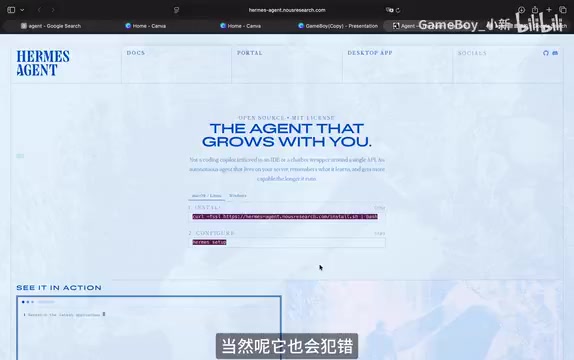
Hermes Agent Hands-On Review: An AI Efficiency Revolution for Indie Game Developers
Indie game developer reviews Hermes Agent vs OpenClaude: intelligent context compression, real-time Memory, remote control via Telegram, and practical use cases in game dev, social media, and email.
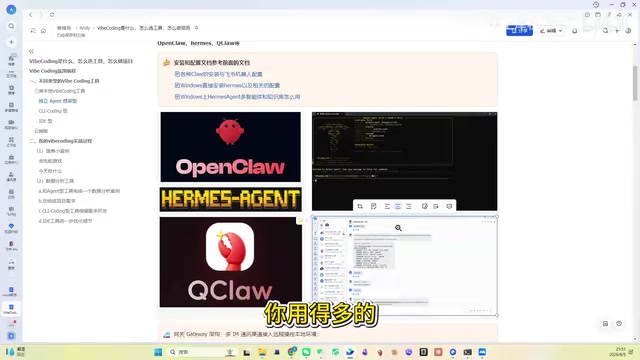
Vibe Coding Beginner's Guide: Tool Selection Across Three Categories with Practical Examples
A comprehensive guide to Vibe Coding's three tool categories: Agent frameworks, CLI Coding, and IDE tools, with practical examples including Snake game and data analysis workbench.