X API Sudden 403 Errors: A Troubleshooting Guide for Vanishing Free Credits and Subscriptions
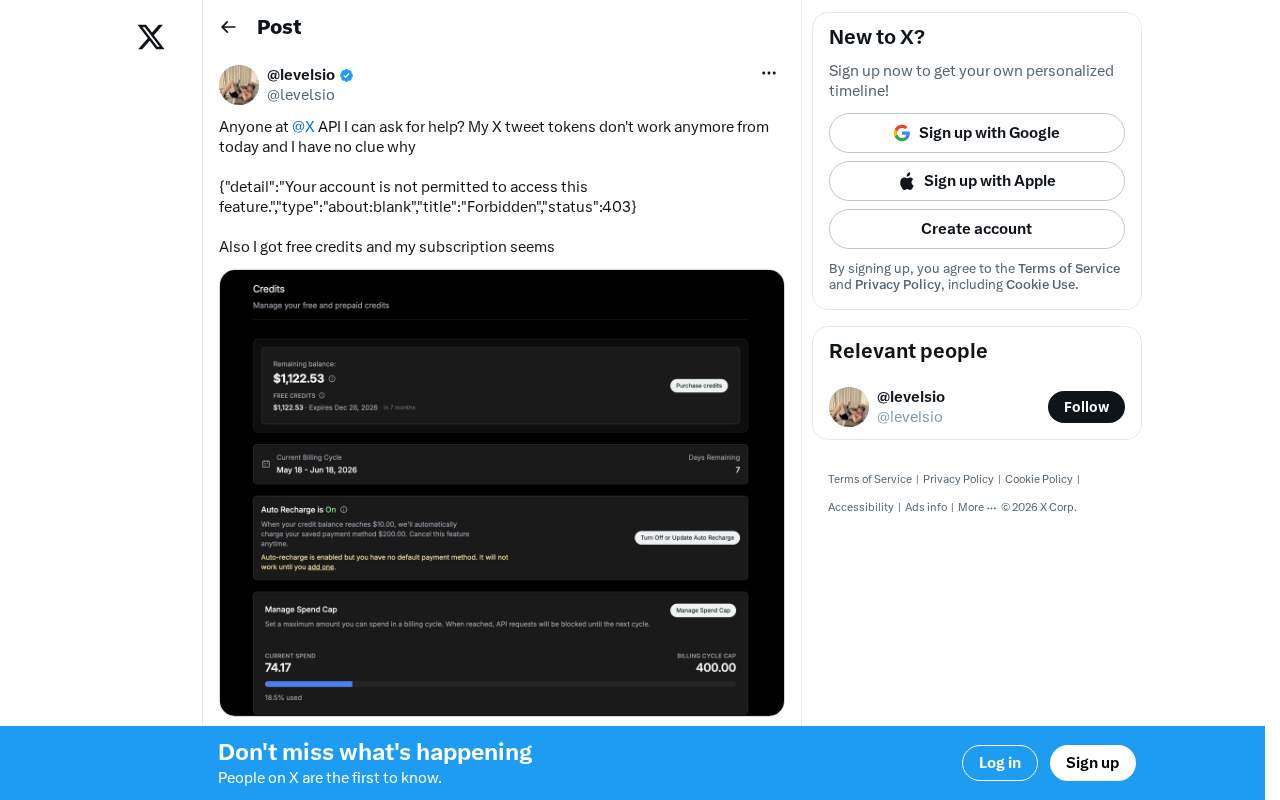
Guide to diagnosing and recovering from sudden X API 403 errors caused by vanishing subscriptions and credits.
Developers are reporting sudden 403 Forbidden errors from the X API, with free credits and subscriptions disappearing without notice. This guide explains the technical meaning behind 403 errors, examines X's ongoing API trust crisis since the Twitter acquisition, provides step-by-step troubleshooting advice, and outlines long-term strategies including multi-platform diversification and graceful degradation patterns.
Incident Overview
Recently, a developer publicly sought help on social media, reporting that their X (formerly Twitter) API tweet tokens had suddenly stopped working, returning 403 Forbidden errors, with their account subscription status mysteriously disappearing. This incident has once again sparked widespread discussion in the developer community about the stability and reliability of the X API.
The specific error message the developer received was:
{"detail":"Your account is not permitted to access this feature.","type":"about:blank","title":"Forbidden","status":403}
What made things even more confusing was that the developer claimed to have previously had free credits, but their subscription status appeared to have vanished simultaneously — all without any prior notice or explanation.
What a 403 Error Really Means
The Technical Perspective
An HTTP 403 status code means the server understood the request but refused to authorize it. Unlike the more common 401 Unauthorized status code, a 403 indicates that the server has successfully identified the requester (i.e., authentication has passed) but determined that the identity lacks permission to access the target resource — this is the critical distinction between Authentication and Authorization. In the context of the X API, the error message "Your account is not permitted to access this feature" typically points to several possible causes:
- API access tier changes: The account's API subscription plan was downgraded or canceled, making previously available endpoints inaccessible
- Permission policy adjustments: X unilaterally modified API access policies, restricting certain features
- Token invalidation: OAuth tokens were forcibly invalidated due to backend changes and need to be regenerated
- Account status anomalies: The account may have been flagged by some automated review mechanism
In the X API's technical architecture, developers obtain Access Tokens through the OAuth 2.0 protocol, which carry the application's identity information and permission scope. OAuth 2.0 is the most widely used authorization framework in internet applications today, allowing third-party applications to obtain limited resource access without exposing user passwords. However, when the platform adjusts permission policies on the backend, even if the token itself hasn't expired, its associated permission scope can be unilaterally narrowed or revoked server-side, causing previously working API calls to suddenly return 403 errors. This kind of server-side unilateral permission change is virtually impossible for developers to prevent, since a token's validity is ultimately determined by the platform's authorization server.
Real-World Impact on Developers
For developers who rely on the X API to build applications or services, this type of sudden permission disruption can have severe consequences. This is especially true for teams that have built automated workflows, data analytics tools, or social media management applications on top of the API — service interruptions directly translate to business downtime and user churn. In an era where microservices architecture is increasingly prevalent, many applications use the X API as a critical node in their data pipeline. A single endpoint failure can trigger cascading failures that affect the stability of the entire service chain.
X API's Trust Crisis
From Twitter to X: Dramatic API Policy Shifts
Since Elon Musk completed his $44 billion acquisition of Twitter in October 2022 and rebranded it as X, API policies have undergone multiple major overhauls. Before the acquisition, the Twitter API offered a relatively comprehensive multi-tier access system, including Standard, Elevated, and Academic Research levels. Academic researchers could even access large volumes of historical tweet data for free for social science research. This ecosystem underwent a fundamental transformation after the acquisition. The most notable changes include:
- Drastic reduction of free API access: The previously generous free API quotas were severely cut. The basic free plan now only allows 1,500 tweets per month and extremely limited read requests — practically useless for most application scenarios
- Pricing restructure: API access costs skyrocketed. The Basic paid plan starts at $100/month, the Pro plan at $5,000/month, and the Enterprise plan reportedly starts at $42,000/month. By comparison, most developers before the acquisition could get far more API access for free than what current paid plans offer
- Frequent policy changes: Developers widely report a lack of policy stability, with rule changes often made without adequate advance notice. This unpredictability makes it difficult for developers to make long-term technical plans and business decisions
This aggressive pricing strategy directly forced a massive number of third-party applications and academic research projects to shut down or migrate. According to multiple sources, tens of thousands of Twitter bots, research tools, and third-party clients ceased operations after the policy changes.
The Absence of Developer Support
A noteworthy detail in this incident is that the developer had to resort to seeking help on public social media, asking "Anyone at @X API I can ask for help?" This reflects a serious deficiency in X API's developer support channels — when developers encounter critical issues, there's no effective official technical support pathway available.
Compared to other major API platforms (such as OpenAI, Google Cloud, AWS, etc.), which typically provide comprehensive developer documentation, ticketing systems, community forums, and even dedicated technical support managers, the gap is stark. Take AWS as an example: even its most basic developer support plan offers a ticket response mechanism, and higher-tier enterprise support promises 15-minute response times for critical incidents. OpenAI similarly provides detailed error code documentation and community forum support for API users. X's shortcomings in developer support infrastructure are glaringly obvious. This deficiency not only hampers developers' problem-solving efficiency but fundamentally erodes developer trust in the platform.
The Deeper Risk of Platform Lock-in
This incident also exposes the deeper industry issue of Platform Lock-in. Once developers deeply integrate a platform's API, the cost of migrating to alternatives becomes prohibitively high due to code adaptation, data format dependencies, and user habits. The X/Twitter API ecosystem was once one of the most active social media developer ecosystems in the world. At its peak, over hundreds of thousands of third-party applications relied on its API, spanning social media management tools (like Hootsuite and Buffer), data analytics platforms, academic research tools, and news aggregation services. When the platform drastically changes its API policies, these tightly coupled applications face not just technical adaptation challenges but fundamental threats to their business models — a concentrated manifestation of the power asymmetry inherent in platform economics.
How Developers Should Respond
Short-Term Troubleshooting Steps
If you've encountered a similar X API 403 error, follow these steps to troubleshoot systematically:
- Check the Developer Portal: Log in to the X Developer Portal and verify that your application status and subscription plan are displaying correctly
- Regenerate tokens: Try revoking and regenerating your API keys and Access Tokens. Note that in OAuth 2.0, tokens are divided into Access Tokens (short-lived, used for actual API calls) and Refresh Tokens (long-lived, used to obtain new Access Tokens) — both may need to be regenerated
- Verify billing status: Confirm that your linked payment method is valid and check for any failed charges. Expired credit cards or insufficient balances are common causes of subscriptions silently lapsing
- Check the official status page: Monitor the X API's official status page to confirm whether there's a platform-level service outage
Long-Term Risk Management Strategies
From a longer-term perspective, developers need to reassess their level of dependency on the X API and develop systematic risk mitigation plans:
- Diversify across multiple platforms: Don't tie your core business entirely to a single social media API. Consider integrating with multiple platforms simultaneously. Design a unified social media interface through an Abstraction Layer so the underlying platform can be flexibly swapped
- Build degradation mechanisms: Design Graceful Degradation into your application architecture so it can transition smoothly when an API becomes unavailable. For example, use the Circuit Breaker Pattern to automatically detect API failures and switch to fallback logic, preventing cascading failures
- Data backup strategy: Regularly back up critical data obtained through APIs to prevent data loss from sudden outages. Consider persisting retrieved data to your own database rather than relying solely on real-time API calls
- Explore alternatives: Evaluate APIs from open platforms like Bluesky and Mastodon as backup options to reduce single-point dependency risk. Bluesky is built on the AT Protocol (Authenticated Transfer Protocol), a decentralized social networking protocol that allows users to migrate accounts and data between different service providers, with an API design philosophy emphasizing openness and portability. Mastodon is based on the ActivityPub protocol, a W3C-standardized decentralized social networking protocol that allows anyone to set up their own Mastodon instance and interoperate with the entire Fediverse. The common characteristic of both platforms is protocol-level openness — even if a particular service node shuts down or changes its policies, developers can still connect to other nodes based on the open protocol, fundamentally reducing platform lock-in risk
Conclusion
While this X API outage incident may seem like an isolated case, the problems it reflects are universal: in the platform economy era, developer dependency on third-party APIs is fundamentally a fragile trust relationship. When a platform can unilaterally change the rules of the game without warning, every application built on top of it faces systemic risk.
For developers, the most pragmatic approach is to maintain architectural flexibility and portability while benefiting from platform advantages. Planning multi-platform strategies and degradation mechanisms in advance is the only way to minimize losses when similar incidents occur. From a broader perspective, this incident serves as a wake-up call for the entire industry: open protocols and decentralized architectures may be the long-term answer to building sustainable developer ecosystems. When control over core infrastructure is concentrated in the hands of a single commercial entity, the health of the entire ecosystem depends on that entity's goodwill — and goodwill has never been a reliable engineering dependency.
Related articles

Tutorial: Using Claude Code to Auto-Generate Video Chapter Progress Bar Animations
Use Claude Code's Skill mechanism and Remotion to auto-generate video chapter progress bar animations from subtitle files. Six built-in styles, custom stickers, and one-click rendering.
How to Use Claude Code for Free Without Limits: A Zero-Cost Full Multimodal AI Solution
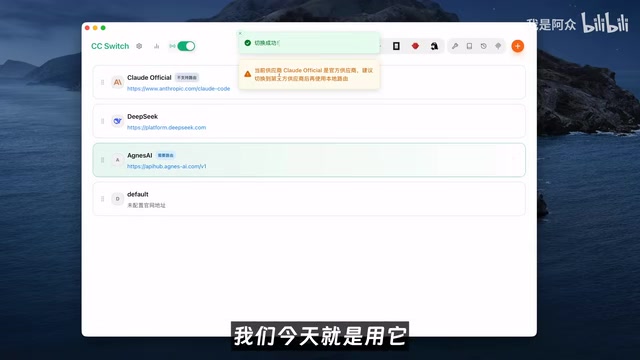
Use Claude Code for free with Agnes AI's free models and the CC Switch open-source tool. Full setup guide for zero-cost AI coding, image, and video generation.
Connecting OpenAI Codex to Chinese AI Models: A Zero-Barrier AI Programming Guide
Learn how to connect OpenAI Codex to Chinese AI models like DeepSeek and Volcano Engine via CC Switch, with a step-by-step guide and a 2048 game demo.