Zero-Code AI Game Streaming Software Development: A Complete Workflow Breakdown from Concept to Product
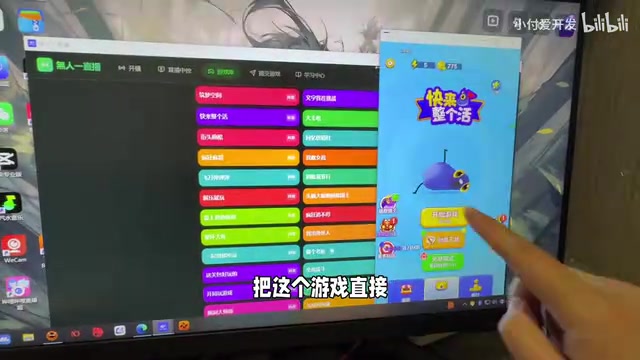
Non-programmer builds automated game streaming software entirely with AI coding tools—zero manual code written.
A Bilibili creator developed a complete mini-game live streaming automation tool using only AI programming assistants, writing zero code manually. The software features automated gameplay, AI voice cloning for natural-sounding commentary, real-time information broadcasting, and intelligent viewer interaction. This case demonstrates how AI coding tools are enabling non-programmers to build functional products through clear requirement descriptions alone.
Introduction: AI Enables Non-Programmers to Develop Software
A Bilibili content creator shared their complete experience of developing a mini-game live streaming assistant software from scratch using AI tools. Throughout the entire process, not a single line of code was written manually, yet the software achieved multiple features including automated game operation, AI voice narration, and intelligent chat interaction. This case once again proves that AI programming tools are dramatically lowering the barrier to software development, enabling ordinary people to turn ideas into usable products.
Current mainstream AI programming tools (such as Cursor, GitHub Copilot, Claude, etc.) are based on Large Language Models (LLMs) trained on massive code repositories and technical documentation. They can transform users' natural language requirement descriptions into executable code, involving the coordination of multiple AI capabilities including natural language understanding, code generation, and contextual reasoning. More advanced AI programming environments also support multi-turn conversational development, where users can progressively refine requirements, debug errors, and add new features, forming a new paradigm of "conversational programming." This is exactly the development approach adopted by this content creator.
Core Software Features Analysis
Automated Game Operation & Live Stream Capture
The software's first core feature is adding mini-game visuals directly to the live stream. Users simply select a game from the built-in game library, click to start, and the game screen is captured and pushed to the streaming window. More importantly, the software supports automated game operation—after enabling the "auto" switch, the game runs on its own without manual intervention.
From a technical perspective, live stream capture typically relies on screen recording APIs provided by the operating system, such as Windows' Desktop Duplication API or DirectX Hook technology. These technologies can obtain real-time frames from specified windows or screen regions with minimal performance overhead. Streaming requires encoding the captured frames into video formats like H.264 and pushing them to the live streaming platform server via RTMP protocol. Automated game operation involves automation scripting technologies such as simulating mouse clicks, keyboard inputs, or implementing AI-controlled gameplay through internal game logic—all of which can be achieved through natural language descriptions with AI programming tool assistance.
According to the creator, the game library currently contains hundreds of mini-games with quite broad coverage. If a desired game isn't in the library, users can submit requests and have them added within one to three days. This rapid iteration capability itself benefits from the efficiency of AI-assisted development.
AI Voice Script System: Simulating Real-Person Commentary
Automated game operation solves the "visual" problem, but live streaming also needs "audio." The software includes a complete AI voice script system with four major script modules:
- Welcome scripts: For greeting new viewers entering the stream
- Interaction scripts: Responding to viewer comments and engagement
- Guidance scripts: Directing viewers to click the mini-game joystick and other operations
- Game commentary scripts: Providing real-time narration of gameplay
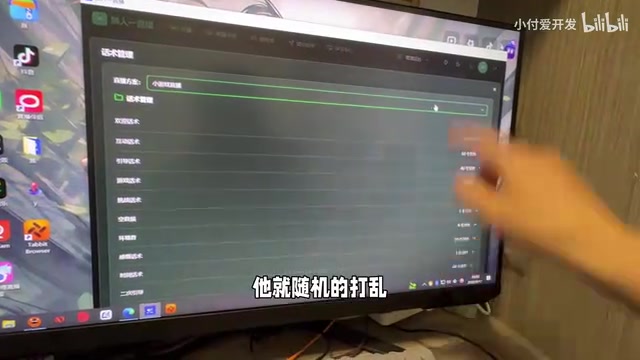
The most ingenious design of this system is that all scripts can be converted to voice versions in the user's own voice with one click (i.e., AI voice cloning), and once generated, the system randomly shuffles the playback order. Viewers hear the streamer's own voice continuously narrating the game, making it very difficult to tell that AI is doing the automated broadcasting. The creator stated that "everyone thinks you're sitting at the computer narrating the whole time," truly achieving unattended live streaming.
AI Voice Cloning is a major breakthrough in speech synthesis in recent years. Traditional TTS (Text-to-Speech) systems require recording hours of voice data to train speaker-specific models, while modern zero-shot or few-shot voice cloning technologies (such as Microsoft's VALL-E, OpenAI's Voice Engine, and China's GPT-SoVITS) need only seconds to minutes of reference audio to generate highly realistic target speaker voices. These systems are based on large-scale pre-trained neural networks that can extract speaker timbre characteristics, intonation habits, and rhythm patterns from minimal samples, then apply these features to speech synthesis of arbitrary text. It's the maturation of this technology that has made "one-click voice cloning" a standard feature in ordinary software.
Real-Time Information Broadcasting & Intelligent Interaction
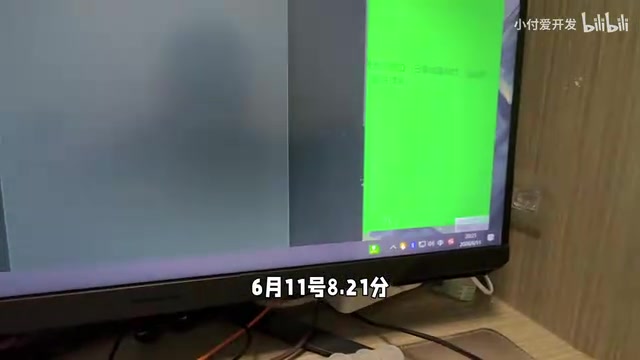
The software also features some creative real-time interaction capabilities. For example, when guidance scripts mention time-related content, the system automatically retrieves the current time and broadcasts it in the streamer's voice—such as "Hey everyone, it's 8:21 now." This integration of real-time information makes AI broadcasting more natural and credible, making it harder for viewers to detect.
Another highlight is the "auto-popup joystick" feature. When the AI voice says guidance phrases like "click the joystick below to play directly, no download needed," the stream simultaneously displays the mini-game interactive joystick component, achieving synchronized audio-visual coordination that's far more effective than traditional static pop-ups. This multimodal collaborative design—where voice content triggers visual element changes—demonstrates a precise understanding of user psychology: when viewers simultaneously hear guidance and see the corresponding action entry point, conversion rates increase significantly.
Marketing Chat Messages & Scheduled Features
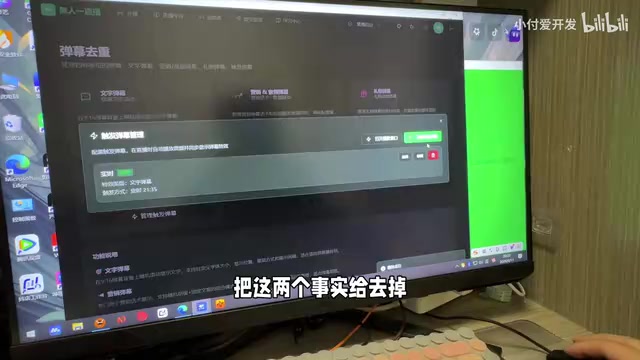
The software also integrates a marketing chat message system where users can customize various message content, including promotional images and marketing copy, with scheduled sending support. These features combined essentially constitute a complete automated solution for mini-game live streaming.
It's worth noting that live streaming automation is a rapidly emerging niche in the past two years, especially in mini-game promotion. Platforms like Douyin and Kuaishou have launched mini-game promotion programs where creators earn promotional revenue by guiding users to try mini-games through their streams. This has generated massive demand for automated streaming tools—creators want to maintain continuous stream operations with minimal human effort. Traditional approaches typically require streamers to be online for extended periods, while automation tools make "AFK streaming" possible. The core pain point in this market is how to make automated streaming look natural enough to avoid being detected as bot behavior by platforms, which could result in traffic throttling or bans. This explains why this software places such emphasis on "humanization" design—random playback order, real-time time broadcasting, voice cloning, and other features are all designed to enhance naturalness.
From a Development Perspective: The Actual Capability Boundaries of AI Programming
What makes this case noteworthy isn't just the software itself, but the development approach behind it. The creator emphasized "AI was used throughout, not a single line of code was written," meaning AI tools handled all coding work from requirement description to feature implementation.
From a feature complexity standpoint, this software involves the following technical domains:
- Window capture and stream pushing: Requires calling system-level APIs
- Game automation control: Involves automation script logic
- Voice cloning and TTS: Requires integration with AI speech synthesis services
- Real-time information retrieval: System time reading and dynamic voice generation
- UI development: A complete graphical user interface
Each of these features isn't extremely complex individually, but combining them into a usable product is still a significant engineering effort for a non-programmer. The creator's core methodology was: "As long as you clearly express the functionality you want to achieve, AI can build it." This actually highlights the key to current AI programming—the clarity of requirement descriptions determines output quality.
This involves an important concept in AI: Prompt Engineering. In AI programming scenarios, users need to transform vague product ideas into structured feature descriptions, including input/output definitions, interaction flows, and exception handling. Excellent requirement descriptions should contain specific use cases, expected behaviors, and boundary conditions. While this ability doesn't require programming knowledge, it demands clear logical thinking and product thinking. In a sense, AI programming transforms the developer's core skill from "writing code" to "describing problems"—you don't need to know Python syntax or JavaScript frameworks, but you need to be able to precisely describe "when a user clicks this button, what operation should the system perform, and how should it handle failure." This is a fundamental paradigm shift and the root reason why an increasing number of people without technical backgrounds can complete software development with AI assistance.
Opportunities and Boundaries of AI-Assisted Development
This case demonstrates the powerful capabilities of AI programming tools in specific scenarios, but a rational perspective is also needed:
Regarding opportunities, AI programming truly shortens the path from "idea to product" dramatically. Projects that previously required assembling development teams and spending weeks or even months can now potentially be prototyped by individual users with AI assistance in just days. This is a tremendous empowerment for creators who have clear needs but lack programming ability. The efficiency advantages of AI programming are most apparent in tool-type software, automation scripts, and data processing, because these scenarios have abundant mature code patterns for AI to reference and combine.
Regarding boundaries, AI-generated code still has uncertainties in stability, security, and maintainability. AI models may generate code that appears correct but contains hidden bugs, especially in areas requiring deep engineering experience such as concurrency handling, memory management, and security protection. For personal use or small-scale scenarios, these issues may not be prominent; but for distribution as commercial products, more testing and optimization are needed. Additionally, as project scale grows beyond a certain point, systematic engineering concerns like code architecture design, module decoupling, and performance optimization still require professional expertise to manage.
Overall, this creator's practice provides us with a vivid AI programming application case: find real needs, implement quickly with AI, and iterate continuously through use. This is perhaps the optimal path for ordinary people to develop software with AI assistance.
Key Takeaways
Related articles
Beginner's Guide to Agent Skills: Structure Breakdown & Custom AI Skill Development
A deep dive into Agent Skill's core concepts and internal structure, covering skill.md, references, scripts, and assets with a restaurant poster Skill example.
Complete Guide to Commercial AI Agent Development: From Requirements Analysis to Production Deployment
Complete guide to commercial AI agent development from scratch, covering requirements analysis, architecture design (ReAct framework, deep search, intent recognition), hands-on Coze platform implementation, workflow creation, and production deployment.
Hermes AI Kanban: A Five-Layer Autonomous Architecture for Fully Automated Delivery from Idea to Finished Product
Deep dive into Hermes Kanban 2.0's five-layer autonomous architecture covering intelligent planning, human approval gates, multi-agent execution, and Obsidian integration for fully automated delivery.