Grok Bot Hands-On: Can an AI Agent with Its Own Cloud PC Replace Manual Operation?

Grok Bot uses an independent cloud PC to simulate human operations, automating legacy systems without APIs.
Grok Bot is an AI agent product from SpaceX AI that entered early testing in August. Its core design is to allocate an independent cloud PC to each Bot, operating applications by simulating human clicks, typing, and logins, thereby covering legacy portals and vendor dashboards that lack open APIs. Its control mechanism has three layers: manual login (the Bot never touches passwords), approval prompts (external changes require confirmation), and saving routine tasks (stable flows run automatically). Early testing carries connector failure risks—a single hung connector can cause tool discovery to fail for the entire account—so it is recommended to start with a single connector and a single task and verify step by step. The product showcases a new approach to AI agent automation, but its maturity remains to be seen.
Grok Bot Hands-On: Can an AI Agent with Its Own Cloud PC Replace Manual Operation?
Imagine an AI agent that doesn't rely on APIs, but instead clicks, types, and logs in to your business systems just like a real person. This isn't science fiction—Grok Bot from SpaceX AI is attempting to redefine automation by giving every Bot its own cloud PC.
What Is Grok Bot?
According to an analysis of Grok Bot on a YouTube channel, this is an AI agent product launched by SpaceX AI that entered early testing in August. Its core design: each Bot is allocated an independent cloud computer, and the Bot uses applications by simulating human actions like clicking and typing, without relying on APIs.
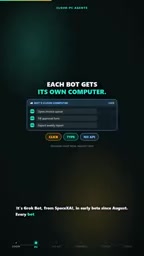
This means that as long as a human can log in, Grok Bot can operate legacy systems and vendor dashboards that don't expose APIs. For the many enterprises that still rely on traditional portals, this undoubtedly opens a new door.
Cloud PC refers to a virtual desktop environment running in a cloud data center, accessed remotely by users through a browser or thin client, with computing and storage resources provided by the cloud. Unlike traditional local virtual machines, cloud PCs typically feature persistent state, dedicated IPs, and isolated runtime environments, and each instance can be regarded as a "disposable" or "reusable" remote workstation. In AI agent scenarios, allocating an independent cloud PC to each Bot means the Bot has its own browser session, cookies, file system, and login state, with no interference between them; at the same time, the isolation of the cloud PC also reduces the impact of malicious or erroneous operations on the host system. This model lets AI agents "sit in front of a computer" and operate graphical interfaces like human employees, without requiring the target system to provide APIs.
Three-Layer Control Mechanism: A Balance Between Security and Controllability
Grok Bot has designed three layers of control, attempting to find a balance between automation and security:
- Manual login: The Bot never enters your password. When it encounters a login screen, it stops and hands you the keyboard. Only after you complete the login does the Bot continue operating.

-
Approval prompts: When a task involves changing an external system, the Bot pops up an approval prompt and waits for your confirmation. This layer prevents unintended external operations.
-
Saving routine tasks: Once a task flow stabilizes, you can save it as a "routine task" for automatic execution later.
This layered design keeps users in control of sensitive operations at all times, making it especially suitable for business scenarios with high security requirements.
Approval Prompt is a human-machine collaboration safety mechanism commonly found in automation agents and RPA (Robotic Process Automation) products. When an agent is about to perform an operation with external side effects (such as submitting a form, sending an email, modifying an order, or calling a payment interface), the system pauses execution and displays a confirmation interface, where the human user reviews the operation and decides whether to proceed. This mechanism is an implementation of "Human-in-the-Loop" design, aimed at balancing automation efficiency and operational risk. Compared with fully automatic execution, approval prompts can prevent the agent from making irreversible external changes due to misunderstandings or environmental changes; compared with fully manual operation, they retain the agent's ability to automatically complete repetitive work. Grok Bot uses this as the second of its three control layers, mainly targeting cross-system write operations with external impact.
Use Cases: Legacy Systems Without APIs
The unique value of Grok Bot lies in covering the "blind spots" without APIs. The legacy portals and vendor dashboards that many enterprises still use often lack modern API interfaces. According to the video analysis, these systems are exactly where Grok Bot comes into play.
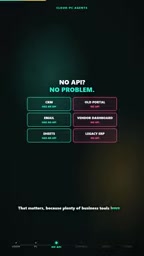
As long as a human can access and log in through a browser, the Bot can work the same way. This expands the boundaries of automation and opens up new possibilities for processes that were difficult to automate in the past.
Risks of Early Testing: Connector Failures and Recommendations
Grok Bot is still in early testing and has obvious instability issues. According to a third-party guide, a single hung connector can cause tool discovery to fail for the entire account. This means that if multiple connectors are added and one of them has a problem, it may affect everything.

To address this risk, a gradual strategy is recommended:
- Add only one connector at a time to make it easier to pinpoint problems.
- Start small: one Bot, one task, one approval rule.
- Verify stability step by step before scaling up.
This "small steps, fast iterations" approach is especially suitable for early-stage testing products.
Connector in AI agents and automation platforms usually refers to a configuration unit that establishes integration between the agent and an external system (such as a SaaS application, database, or enterprise internal portal). A connector generally includes the target system's address, authentication credentials, permission scope, and a list of available tools/operations. Before starting a task, the agent first enumerates the available operations provided by all connectors through a "tool discovery" process. If a connector hangs due to network timeout, expired credentials, or server-side exceptions, the tool discovery process may be blocked or time out, which in turn prevents the agent from recognizing the capabilities of other normal connectors, manifesting as tool discovery failure for the entire account. This single point of failure risk is relatively common in early-stage testing products, so it is recommended to add connectors one by one and verify them, avoiding configuring multiple connectors at once, which makes problems difficult to locate.
Conclusion: Potential and Uncertainty Coexist
Grok Bot demonstrates a new approach to AI agents—not relying on APIs, but simulating human operations through cloud PCs. Its three-layer security control design is commendable, and its use cases hit on the pain points of many enterprises. But the stability issues of early testing cannot be ignored, especially since connector failures may affect the entire account. For teams willing to try something new, it is recommended to start with a single task and verify step by step.
According to analysis from a single source, Grok Bot's maturity remains to be seen, but its direction offers valuable exploration for AI automation.
One-line Summary
Grok Bot uses an independent cloud PC to simulate human operations, automating legacy systems without APIs.
Related articles

Will GitHub Die? Open Source Maintainer Burnout and the Collaboration Crisis in the AI Era
Lex Fridman podcast discussion on open source maintainer burnout and GitHub's predicament: massive pull requests overwhelm core maintainers, and AI worsens code bloat. Using math journal peer review and Poincaré conjecture verification as analogies, the article analyzes why verification in knowledge production must be deliberately slow, and how open source communities can avoid the failure mode of maintainers exiting.

Stop Building Cookie-Cutter AI Websites: 3 Tools That Transform Your Coding Agent
Three tools that boost AI coding agents: FFmpeg skill for local video editing in Claude Code and Cursor, Hallmark's 50 design themes to fix cookie-cutter AI sites, and Jailbreaks' 25+ model prompts.

How America's Gerontocracy Squeezes the Younger Generation
Americans over 55 hold nearly three-quarters of national wealth, alongside an 80-year-old president and elderly congressional leaders. The Atlantic's Idrees Kahloon explains how gerontocracy drives up housing costs, squeezes opportunities for the young, and explores zoning reform and child poverty reduction as practical fixes.