Prefixwise v0.10.0: Cross-Platform Diagnosis of LLM Prompt Cache Misses with Zero Text Storage
Open-source tool Prefixwise v0.10.0 focuses on diagnosing and fixing LLM prompt cache misses across multiple platforms.
Prefixwise v0.10.0 is an MIT-licensed open-source tool designed to identify, fix, and prevent cross-platform LLM prompt cache misses, supporting mainstream inference frameworks and APIs such as vLLM, SGLang, LMCache, Claude, and OpenAI. The article notes that cache misses significantly increase inference costs and latency yet are hard to pinpoint. Prefixwise offers a three-stage "diagnose-fix-prevent" workflow and emphasizes zero prompt text storage to reduce privacy risks. The tool suits both self-hosted inference and commercial API scenarios, but current information comes only from a Reddit community share; actual effectiveness, platform support, and the specific meaning of zero storage still need verification.
Why Prompt Cache Misses Matter
In the cost structure of LLM applications, the prompt cache hit rate directly affects inference overhead and response latency. When the same or similar prefixes are reused, cache hits avoid redundant computation and significantly reduce costs. However, cache misses are often hard to pinpoint—developers typically only see rising bills or latency jitter without knowing which part broke the cache.
According to a Reddit community share, the open-source tool Prefixwise v0.10.0 (MIT license) is designed precisely for this pain point. It can identify, fix, and prevent cross-platform LLM prompt cache misses, covering mainstream inference frameworks and API services such as vLLM, SGLang, LMCache, Claude, and OpenAI.
Prompt cache is an optimization mechanism in LLM inference: when multiple requests share the same prefix (such as system prompts, few-shot examples, or the historical portion of multi-turn conversations), the inference engine can reuse the already-computed key-value cache (KV cache), avoiding repeated self-attention computation over the same token sequence. Take vLLM's PagedAttention and automatic prefix caching (APC) as an example: the system hash-indexes the KV cache by block, and a hit only occurs when the prefix is fully identical and block-aligned. Once dynamic content (such as timestamps or random IDs) is inserted into the prefix or the message order is changed, the cache for all subsequent tokens is invalidated, multiplying computation and latency. For commercial APIs, OpenAI and Claude also provide similar automatic caching mechanisms, but with different billing rules: input tokens that hit the cache usually enjoy a discount (for example, OpenAI's cache-hit price is roughly 10%–50% of a miss), so the hit rate directly determines cost.
Core Features: Diagnose, Fix, and Prevent
Prefixwise is positioned not as a simple monitoring dashboard but as a workflow built around cache misses. According to the project description, its capabilities can be summarized at three levels:
- Identify: Analyze request patterns to find prompt structures or call orders that cause cache invalidation.
- Fix: Provide adjustment suggestions or automatic corrections for discovered issues.
- Prevent: Establish safeguards during development to avoid introducing changes that break the cache later.
This "diagnose-fix-prevent" loop is especially important for applications that frequently iterate on prompts or use multi-turn conversations, because cache misses often stem from subtle prompt changes—such as reordered system messages, inserted dynamic timestamps, or format changes in tool-call results.
Cross-Platform Coverage: From Self-Hosted to Commercial APIs
Prefixwise claims support for vLLM, SGLang, LMCache, Claude, and OpenAI. This means it targets two types of scenarios:
- Self-hosted inference: vLLM and SGLang are popular open-source inference engines, while LMCache focuses on KV cache management. In these environments, caching mechanisms are usually tied to specific configurations and versions, and Prefixwise can help developers understand cache behavior and optimize hit rates.
- Commercial APIs: The prompt caching features of Claude and OpenAI are managed by the providers and are invisible to developers at the底层 level. Prefixwise can analyze from the caller side which requests may miss the cache, allowing prompt design adjustments.
Cross-platform support reduces tool fragmentation for teams in hybrid deployment environments, but actual results may vary by platform characteristics.
vLLM is a high-throughput open-source LLM inference and serving engine whose core innovations include PagedAttention (paging KV cache to reduce memory fragmentation) and continuous batching. It has built-in automatic prefix caching, but it may not be enabled by default or may require configuration via enable_prefix_caching=True. SGLang is another open-source framework for structured generation and efficient inference; its RadixAttention uses a radix tree to manage KV cache, supporting cross-request prefix sharing and more fine-grained cache reuse. LMCache, meanwhile, focuses on offloading KV cache from GPU memory to CPU memory or external storage, and supports sharing cache across instances, commonly used in long-context and multi-turn conversation scenarios. The cache implementations and configuration options of the three differ, which is why a cross-platform diagnostic tool needs to adapt to each separately.
Privacy by Design: Zero Prompt Text Stored
The project title specifically emphasizes "zero prompt text stored." In LLM application development, prompt content may contain sensitive information or business logic, and uploading full prompts to third-party tools carries compliance risks. Prefixwise claims not to store prompt text, which helps it gain traction in scenarios with high data privacy requirements.
However, the specific implementation (for example, whether it stores hashes, metadata, or statistics) is not detailed in the source material, and developers should consult the project documentation to confirm data flows before use.
Use Cases and Limitations
Prefixwise is suitable for the following teams:
- Engineering teams using self-hosted inference services such as vLLM or SGLang that want to optimize cache hit rates.
- Developers building applications via OpenAI or Claude APIs who need to control prompt caching costs.
- Organizations sensitive about prompt privacy that are unwilling to hand full prompt content to external tools.
It should be noted that the original information comes only from a Reddit community share and has not been independently verified. The tool's actual effectiveness, its degree of support for each platform, and the specific meaning of "zero storage" all require further investigation. In addition, the root causes of cache misses may involve cache policy adjustments on the provider side, and whether Prefixwise can fully cover these cases remains unclear.
Summary
Prefixwise v0.10.0 is open-sourced under the MIT license and targets a specific but often overlooked part of LLM inference cost optimization—prompt cache misses. Its cross-platform coverage and zero-text-storage design are appealing, but as a newly shared community tool, developers are advised to evaluate it cautiously and test it against their own tech stack.
Related articles

Codex and AI Coding Agents in Practice: A Complete Guide from Prompts to MCP
A Codex-centered guide to agentic coding: Task-Context-Output prompts, AGENTS.md project memory, plan mode, skills, characterization vs. spec tests, permissions and config.toml, MCP tool calls, plus secrets safety and context management.

GPT-6 Security Model and the AI Attack-Defense Escalation: This Week in AI
This week in AI: OpenAI's GPT-6 Saber found 948 Linux kernel root-escalation paths; Cursor deploys full apps from one sentence; Binance details a social engineering attack; C++26 fails ISO vote.
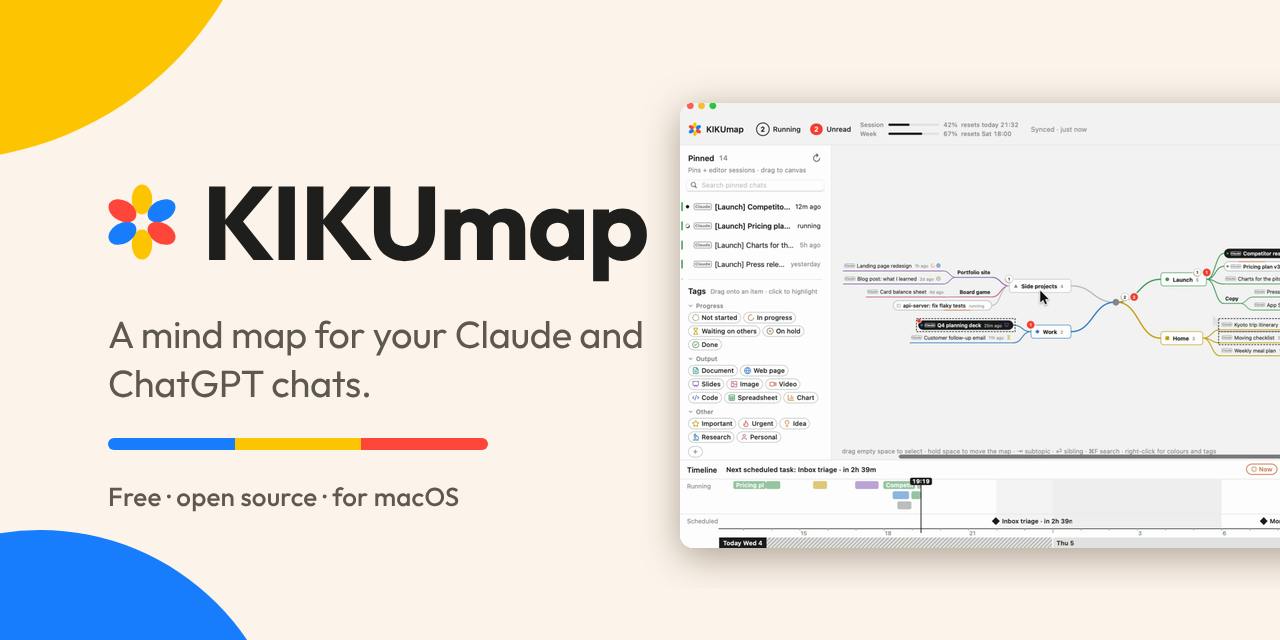
KIKUmap: Manage Your Claude and ChatGPT Conversations with Mind Maps
KIKUmap is a macOS menu bar app that visualizes Claude and ChatGPT conversations as mind maps with real-time status. Free and open source.