Deep Dives
In-depth AI analysis, industry observations, and technical insights — slow down and read.
Kondo KHR-3 Mod: Progress in Bipedal Robot Gait
Reddit developer shares progress on bipedal robot gait using a heavily modified Kondo KHR-3, aiming for more realistic human walking. Project background, technical challenges, and community feedback.
LVMH Media Division Strikes Strategic …
LVMH Media Division Strikes Strategic Partnership with OpenAI to Empower Journalism with AI
LVMH's media division and OpenAI announce a strategic partnership to use AI in news production and give its publications broader reach through ChatGPT.
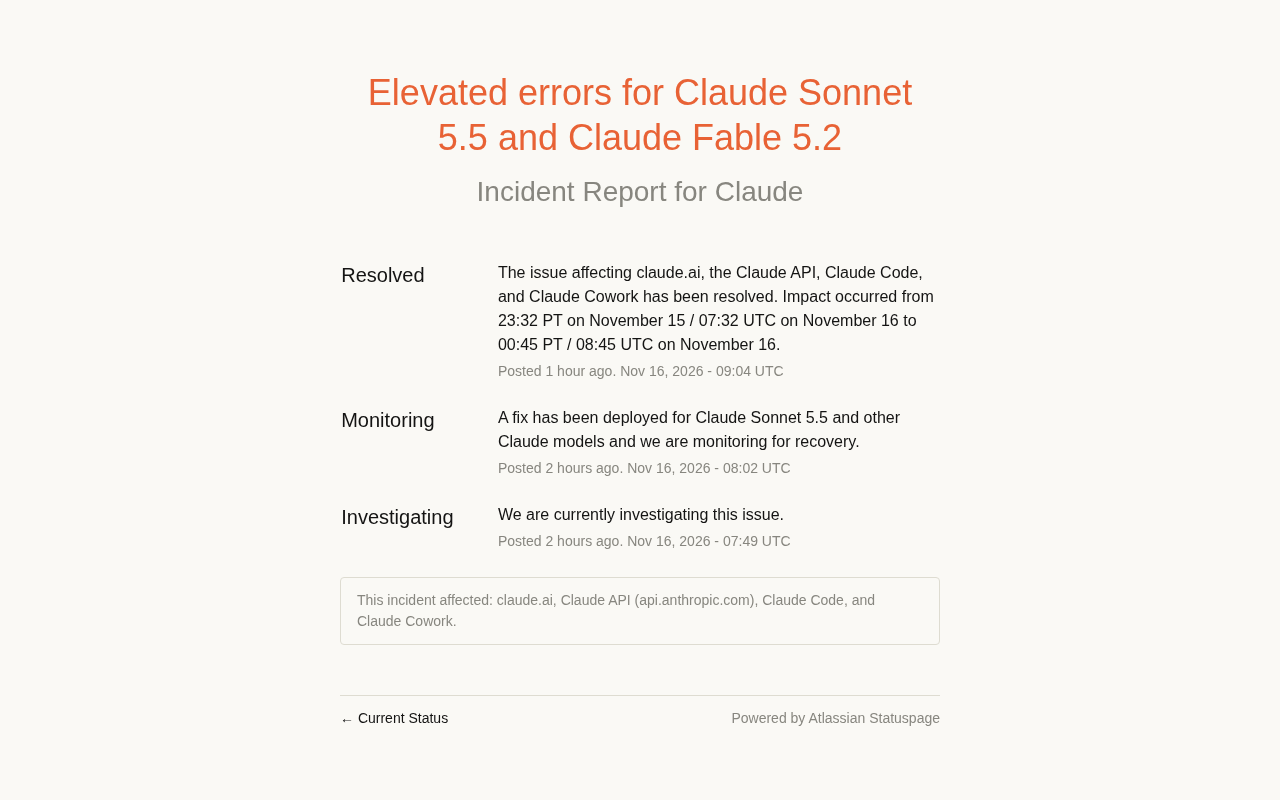
Post-Incident Review: Claude Sonnet 5.5 and Fable 5.2 Error Event
Claude Sonnet 5.5 and Claude Fable 5.2 saw elevated error rates; the fix was deployed within ~13 minutes and moved to monitoring. This review covers the timeline, developer impact, status-page transparency issues, and practical retry guidance.
Where NVIDIA Goes Next: Reflections on…
Where NVIDIA Goes Next: Reflections on 293 Heated Hacker News Comments
Steve Blank explores what's next for Nvidia, sparking 293 Hacker News comments. This piece distills the core issues—whether CUDA's moat can last, the structural tension of customers as competitors, and why inference-side cost shifts are the key variable—while faithfully presenting the community's divergent views.
Arborformer: A Language Model That Replaces Transformers with Pure Decision Trees
Arborformer is an experimental language model that replaces Transformers with 100% decision trees. This article covers its design, community skepticism, and the significance of non-Transformer architectures.

Hark Releases Handoff²: A 2x Faster Computer-Use Agent
Hark releases Handoff², a computer-use agent built into Hark Pro, with 2x average speed and 82% completion on 478 internal web tasks via latency-penalized RL for batched actions.

A 1B Model Drives a Desktop Pet: A Pragmatic AI Agent Architecture Experiment
Felinquent, a desktop pet project, uses a local 1B model to plan behaviors while a rule layer handles real-time reactions and safety governance, showcasing layered design and fallback strategies for small-model Agents.
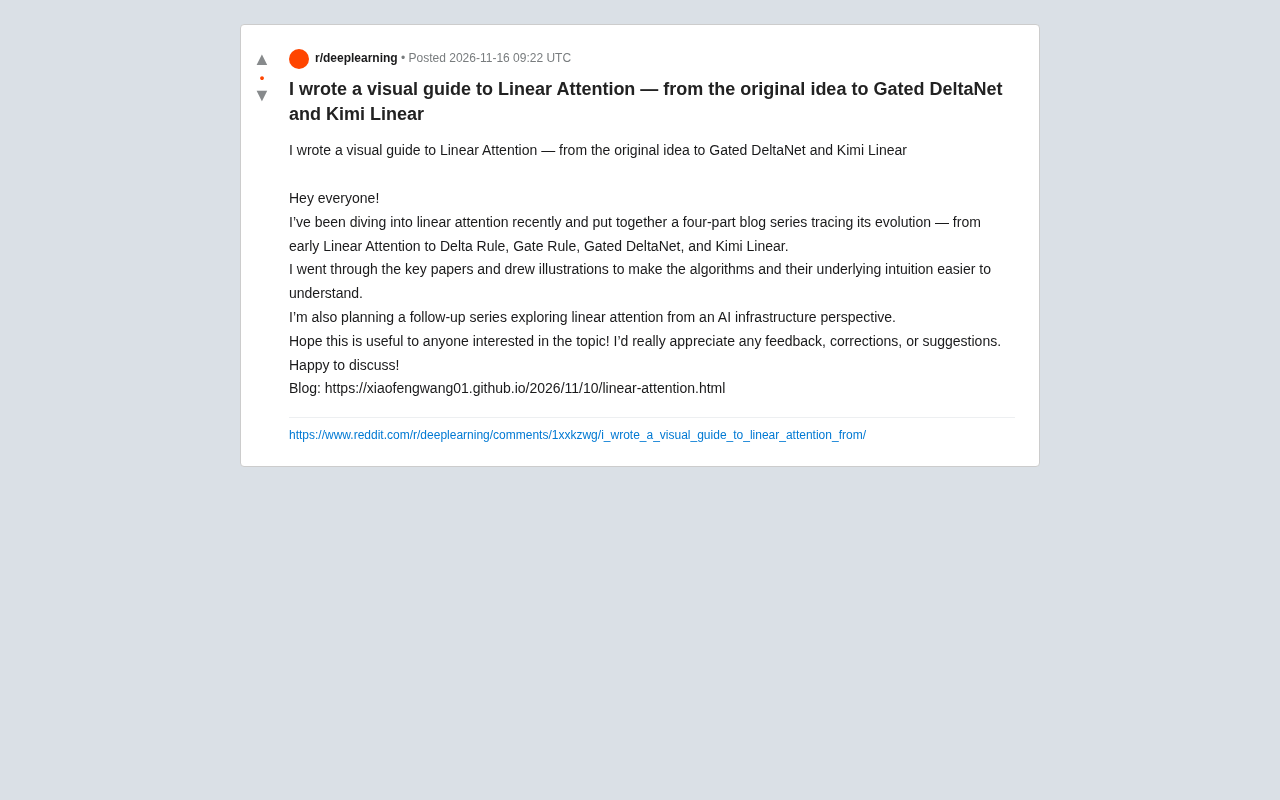
A Visual Guide to Linear Attention: From Delta Rule to Gated DeltaNet and Kimi Linear
A Reddit author's four-part visual guide traces linear attention from early ideas to Delta Rule, Gate Rule, Gated DeltaNet, and Kimi Linear, with illustrations explaining the intuition.
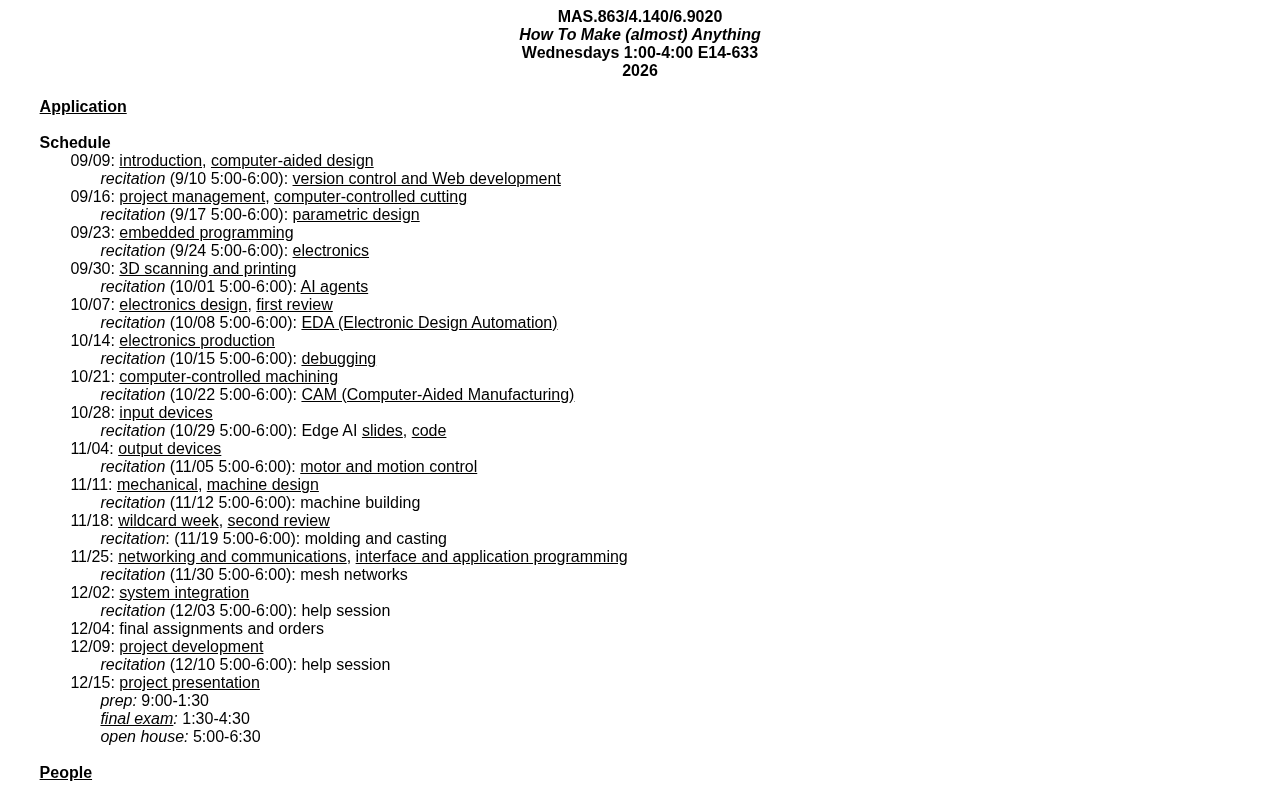
MIT Course Revealed: How to Make Almost Anything
Explore the core philosophy of MIT's legendary course How to Make (Almost) Anything and learn how digital fabrication, personal fabrication, and open-source tools lower the barrier to innovation, plus a beginner's guide.

Alibaba Releases Qwen4-Max: 2.4T MoE Architecture, 1M Context
Alibaba releases Qwen4-Max: 2.4T MoE, 71B activated, native vision, 1M context, $1.5/M input tokens, 62% lower cost per task on Work360. Analysis inside.
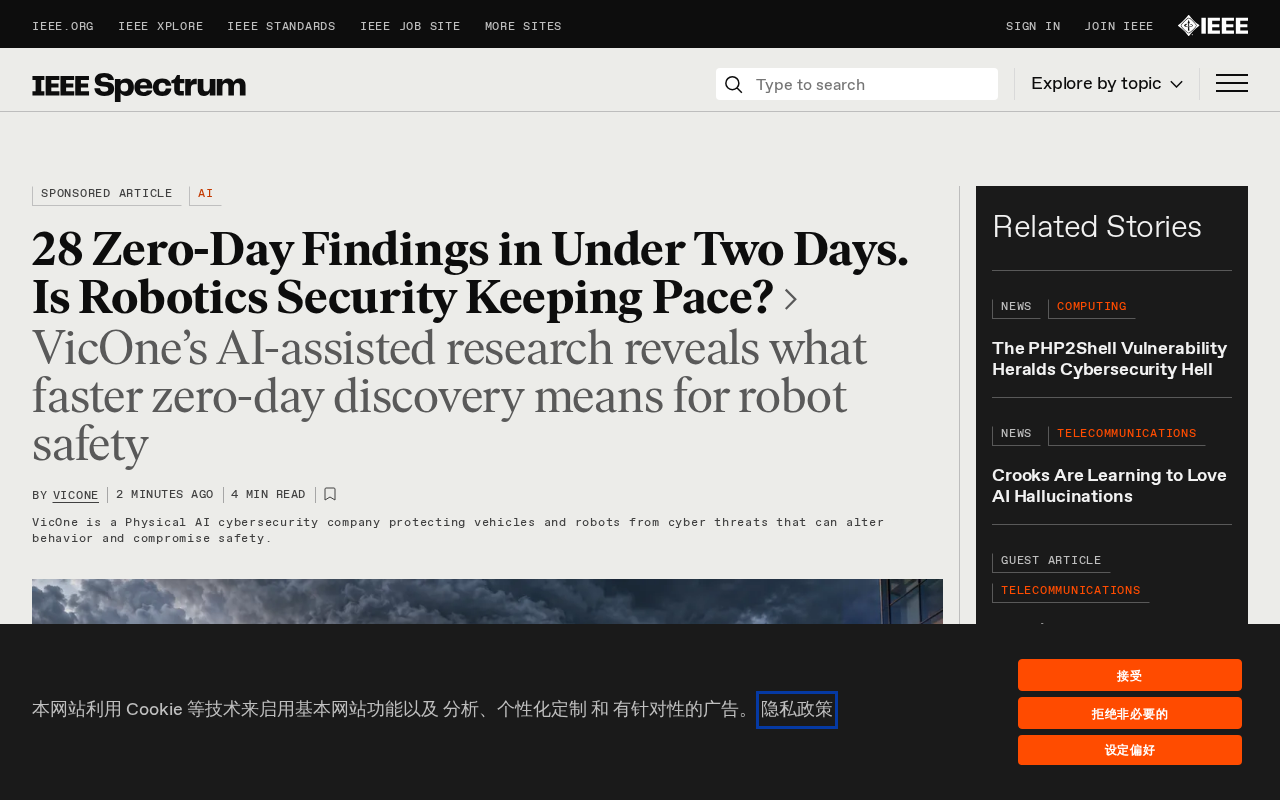
28 Zero-Day Vulnerabilities Found in Two Days: Is Robot Security Under Siege?
VicOne used AI to find 28 zero-days in under two days across Google, NVIDIA, and Meta projects, spanning robot development, simulation, and deployment. Here's how AI speeds discovery and how teams can verify patches and protections.

vLLM v0.34.0 Released: The Inference Engine Levels Up Again
vLLM releases v0.34.0, tagged by khluu with two asset files. This article reviews the release info and how developers should cautiously evaluate upgrades given missing release notes.

Gemini 4 Argon Lands on Anti-Gravity: How Multi-Agent Systems Are Reshaping the Development Workflow
Google's agent-first platform Anti-Gravity integrates Gemini 4 Argon, using multi-agent looping workflows to generate 3D worlds from text, turn photos into racing games, and enable end-to-end hardware design, now available on desktop, CLI, and Android Studio.

Antigravity Deep Dive: The Agent Command Center After Gemini CLI's Retirement
Google pivots its 107k-star Gemini CLI, migrating users to Anti-Gravity. This article breaks down its Agent Manager multi-agent collaboration, browser self-verification, Artifacts evidence chain, quota pricing, and migration pitfalls, analyzing which developers it suits.

Google Significantly Boosts Gemini 4 Argon Quota: New Antigravity IDE Limits and Hands-On Comparison
Google quietly raised Gemini 4 Argon quota in Antigravity IDE: Pro tier up to $15/week, Ultra tiers multiplied. Bilibili creator DP's hands-on data on new vs. old limits, token conversion, and access for non-paid Pro users.

Full Comparison of Gemini 4 Argon: Full-Power vs. Reduced-Power Channels
Bilibili creator DP compares Gemini 4 Argon full-power vs. reduced-power channels: Vertex API and AI Studio are full-power, AntiGravity about 80%, Gemini App/Web about 70%. Includes new changes to Pixel/Student gift subscriptions and a practical Docker vulnerability troubleshooting case.

Antigravity Hands-On Test: Downgrading to Gemini Flash to Complete a Short-Video Project
A Bilibili creator tested the Lemo-Opuscar short-video project on Antigravity IDE, originally built for Claude Opus 5.5, but quota limits and model support changes forced a downgrade to Gemini Flash 3.8. The article covers installation, style recommendations, storyboard generation, quota limits, and final video quality.

The Biggest IPO Ever? A Deep Dive into Anthropic's Prospectus
A deep breakdown of Anthropic's prospectus: 14x revenue growth, 85% incremental gross margin, ~1% customer penetration, and the macro crowding-out effect as AI giants compete with the Treasury market for capital.

Gemini 4 and Anti-Gravity Build a Surf Clock in Three Days: A New Paradigm for Hardware Development
A Bilibili video shows a surf clock built in three days with Gemini 4 and Google Anti-Gravity for just $25. AI handled design, 3D modeling, electronics selection, and firmware, revealing a new hardware development paradigm.

Gemini 4 Carbon Full Breakdown: Quotas, Performance, and Hands-On Experience
Google's flagship Gemini 4 Carbon is officially live. This roundup covers available channels, pricing and quotas, hands-on performance, and community feedback. Capabilities have clearly improved, but compute tightness has worsened; the creator calls it a model accelerating forward while sick.