Deep Dives
In-depth AI analysis, industry observations, and technical insights — slow down and read.
Dynamic Rank Allocation for LoRA: A New Optimization Direction for Lightweight Fine-Tuning
Exploring dynamic rank allocation for LoRA fine-tuning: why fixed rank may not be optimal, core mechanisms, potential gains, engineering challenges, and how to get involved.
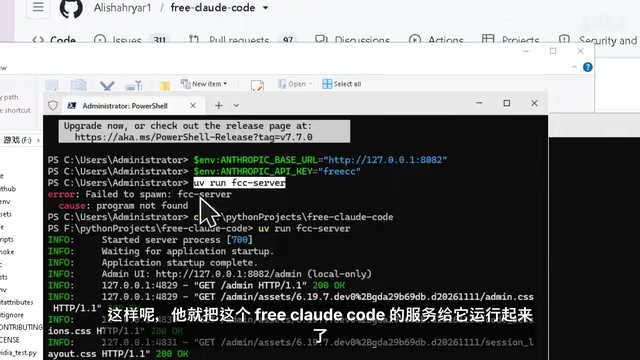
Free Claude Code Hands-On: Zero-Barrier Access to DeepSeek, Full Walkthrough
Free Claude Code hands-on: replace Claude Code's model with DeepSeek via a local service while keeping the terminal agent experience. Full setup, config, and cost analysis.

Claude Code, Codex, Antigravity, or Cursor? Assigning AI Coding Tools by Task
A developer using Claude Code, Codex, Antigravity, and Cursor shares his selection logic: assign by task type, not vendor ranking. Complex architecture goes to Claude Code, batch tasks to Codex, UI debugging to Antigravity, manual coding to Cursor, plus a cross-tool project description file tip.

Stop Using Purple Gradients! This Free Skill Instantly Makes AI-Built Sites Look Professionally Designed
Hallmark skill uses 50 real themes and hard design bans to fix the formulaic purple-gradient look of AI-built sites, spawning a $400 design rescue monetization model. This article breaks down its mechanics, business logic, and the design constraint trend.

AI Automation Reshapes Ripgrep Documentation: A MkDocs Practice Analysis
Analyzing how Ripgrep leverages AI automation and MkDocs to rebuild its documentation system, exploring content generation, consistency validation, and structure optimization as three entry points for a replicable, low-cost open-source documentation maintenance approach.
Claude Context Window and Prompt Caching: A Practical Guide to Cost Optimization
A deep dive into Claude's context window and prompt caching costs: cache breakpoints, invalidation, TTL choices, context editing vs. compaction, skill progressive disclosure, and a real case where caching cost more than no caching, plus an architectural decision framework.
Building an AI Agent Is Cheap — But Have You Calculated the Cost of Running It 10,000 Times?
AI agents are cheap to build but costly to run at scale. This analysis of SimplAI, Agentforce, Copilot Studio, and CrewAI pricing reveals three dimensions for evaluating true agent costs.

Rejecting AI Slop: A "No AI Slop" Manifesto
AIE speakers jointly propose a "No AI Slop Manifesto," calling for resistance against the flood of low-quality AI-generated content. This article explains what AI slop is, the sources of industry anxiety, and what it means for content creators.

English Version of 'Thank You for Your Love' Gains Traction on Bilibili: A Cross-Cultural Rendition of a Classic Love Song
The English version of 'Thank You for Your Love,' titled 'I'll give you all my love,' trends on Bilibili with rewritten lyrics about giving all your love. This article analyzes its emotional expression, cross-cultural adaptation strategy, and differences from the Chinese original.
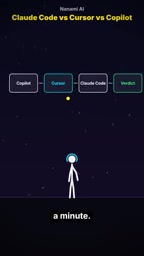
Claude Code vs Cursor vs GitHub Copilot: How to Choose Among the Three Major AI Coding Tools
A clear explanation of Claude Code, Cursor, and GitHub Copilot through the lens of 'degree of delegation': Copilot embeds in your editor for autocomplete, Cursor is an AI-first full editor with multi-file batch editing, and Claude Code executes tasks end-to-end in the terminal. Includes selection advice.

Behind the Viral Dynamic Comic Commentary: Deconstructing the Narrative of Family Finance and Emotional Conflict
Deconstructing a Bilibili dynamic comic episode on family financial conflict: how dense dialogue and emotional hooks retain viewers, and where AI script generation falls short in narrative coherence.
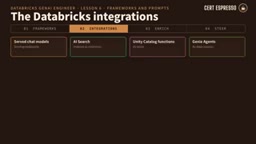
Databricks Generative AI Engineer Lesson 6: Frameworks and Prompt Engineering in Practice
Databricks Generative AI Engineer Lesson 6: how to choose LangChain, LangGraph, LlamaIndex, or DSPy based on the task, connect to the Databricks platform via AI Bridge packages, and enrich prompts with key fields and intent from the question to iteratively improve response quality.

Hands-On Test: 5 Habits That Cut Claude Code Token Usage by 85%
Controlled experiments reveal how Claude Code usage limits work and how five habits cut token consumption by 85% on the same coding task, including streamlining claude.md, switching models, and optimizing prompts.
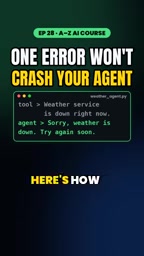
AI Agent Tool Call Failing? Three Moves to Avoid a Crash
Learn how to handle AI Agent tool call failures: set timeouts to avoid freezing, catch expected errors and return clear messages, and use SDK generic error handling to keep your Agent stable.
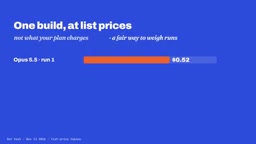
Claude Sonnet 5.5 Cost Test: Only a Quarter of Opus 5.5?
Real-world to-do app test of Claude Sonnet 5.5 vs Opus 5.5 token costs: Sonnet costs just 11 cents, about a quarter of default; switching models beats plugins, and new sessions double costs.

Connecting Claude Code to AWS MCP: A Complete Guide to Read-Only Permissions
A step-by-step guide to configuring Claude Code with four AWS MCP servers: read-only IAM roles, user vs. project scopes, allow list tiers, plus real cost and CloudWatch queries.

Tested: The Claude Code Money-Saving Trick That Backfires
Testing a viral Claude Code money-saving tip revealed it doubled costs from $0.66 to $1.22. Token consumption, not code style, drives cost—and low effort mode hides visual defects.
REA Reverse Engineering Toolkit: Helping AI Agents Understand Software Internal Logic
REA is an MIT-licensed open-source reverse engineering toolkit that connects to Claude Code, Codex, and Cursor via MCP to analyze JavaScript, Electron, .NET, and native binaries. This article covers its real-world test performance, environment requirements, paid dependencies, and compliance risks.

AI Has No Memory: Understanding the Core Logic of Token Costs and Context Management
AI has no memory—every conversation re-sends the full context. This article explains the Token cost formula: cost ≈ steps × information package size, and shows how to check context usage in Cursor and Claude Code to reduce AI costs and improve answer accuracy.

What Exactly Is a Token? A Full Breakdown of AI Billing, Input/Output, and Caching
What is a token? This article uses a coin model to explain AI billing logic: token definition, input vs. output token pricing differences, why input often dominates the bill, and how caching re-reads identical prefix text at a discount.