Deep Dives
In-depth AI analysis, industry observations, and technical insights — slow down and read.

English Version of 'Thank You for Your Love' Gains Traction on Bilibili: A Cross-Cultural Rendition of a Classic Love Song
The English version of 'Thank You for Your Love,' titled 'I'll give you all my love,' trends on Bilibili with rewritten lyrics about giving all your love. This article analyzes its emotional expression, cross-cultural adaptation strategy, and differences from the Chinese original.

Claude Code vs Cursor vs GitHub Copilot: How to Choose Among the Three Major AI Coding Tools
A clear explanation of Claude Code, Cursor, and GitHub Copilot through the lens of 'degree of delegation': Copilot embeds in your editor for autocomplete, Cursor is an AI-first full editor with multi-file batch editing, and Claude Code executes tasks end-to-end in the terminal. Includes selection advice.

Behind the Viral Dynamic Comic Commentary: Deconstructing the Narrative of Family Finance and Emotional Conflict
Deconstructing a Bilibili dynamic comic episode on family financial conflict: how dense dialogue and emotional hooks retain viewers, and where AI script generation falls short in narrative coherence.

Databricks Generative AI Engineer Lesson 6: Frameworks and Prompt Engineering in Practice
Databricks Generative AI Engineer Lesson 6: how to choose LangChain, LangGraph, LlamaIndex, or DSPy based on the task, connect to the Databricks platform via AI Bridge packages, and enrich prompts with key fields and intent from the question to iteratively improve response quality.

Hands-On Test: 5 Habits That Cut Claude Code Token Usage by 85%
Controlled experiments reveal how Claude Code usage limits work and how five habits cut token consumption by 85% on the same coding task, including streamlining claude.md, switching models, and optimizing prompts.

AI Agent Tool Call Failing? Three Moves to Avoid a Crash
Learn how to handle AI Agent tool call failures: set timeouts to avoid freezing, catch expected errors and return clear messages, and use SDK generic error handling to keep your Agent stable.
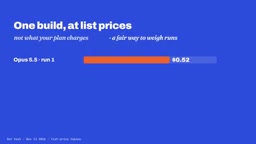
Claude Sonnet 5.5 Cost Test: Only a Quarter of Opus 5.5?
Real-world to-do app test of Claude Sonnet 5.5 vs Opus 5.5 token costs: Sonnet costs just 11 cents, about a quarter of default; switching models beats plugins, and new sessions double costs.

Connecting Claude Code to AWS MCP: A Complete Guide to Read-Only Permissions
A step-by-step guide to configuring Claude Code with four AWS MCP servers: read-only IAM roles, user vs. project scopes, allow list tiers, plus real cost and CloudWatch queries.

Tested: The Claude Code Money-Saving Trick That Backfires
Testing a viral Claude Code money-saving tip revealed it doubled costs from $0.66 to $1.22. Token consumption, not code style, drives cost—and low effort mode hides visual defects.
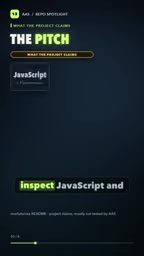
REA Reverse Engineering Toolkit: Helping AI Agents Understand Software Internal Logic
REA is an MIT-licensed open-source reverse engineering toolkit that connects to Claude Code, Codex, and Cursor via MCP to analyze JavaScript, Electron, .NET, and native binaries. This article covers its real-world test performance, environment requirements, paid dependencies, and compliance risks.

AI Has No Memory: Understanding the Core Logic of Token Costs and Context Management
AI has no memory—every conversation re-sends the full context. This article explains the Token cost formula: cost ≈ steps × information package size, and shows how to check context usage in Cursor and Claude Code to reduce AI costs and improve answer accuracy.

What Exactly Is a Token? A Full Breakdown of AI Billing, Input/Output, and Caching
What is a token? This article uses a coin model to explain AI billing logic: token definition, input vs. output token pricing differences, why input often dominates the bill, and how caching re-reads identical prefix text at a discount.

Three AI Productivity Tools Beyond ChatGPT: Perplexity, n8n, and Cursor
A Spanish creator recommends three AI productivity tools beyond ChatGPT: Perplexity for deep research with real sources, n8n for automating customer communication via email and social, and Cursor for building apps with natural language.

Is AI Ruining Your Website? Google's New Tool Modern Web Guidance Comes to the Rescue for Free
AI website builders output bloated JS and outdated legacy code? Google, with Chrome, Firefox, and Edge teams, launches Modern Web Guidance—free—to help AI generate more modern sites with view transitions, scroll-driven animations, container queries, and more. Install with one command.

3 AI Tools That Generate Code As You Type: Copilot, Cursor, and Winsurf
Compare three AI coding tools that generate code as you type: GitHub Copilot, Cursor, and Winsurf. Copilot offers 2,000 free completions per month, Cursor is an AI-native editor, and Winsurf offers a free daily quota. Get selection advice based on usage scenarios.

Four Habits to Boost Efficiency with Cursor AI: Tab Completion, Cmd-K, Context, and Rules Files
Four Cursor AI habits for efficiency: accept only the right part of Tab completions, make local edits with Cmd-K, use @ to give context, and codify rules in a rules file.

Making AI Coding Assistants Obey: A Practical Guide to agents.md Rule Files
Create an agents.md rule file in your repo root with tech stack, build/test commands, and recurring rules—readable by Codex, Cursor, and Copilot. Claude Code imports it via one line in claude.md. Commit it so your team and AI agents share one set of conventions, and keep it under 200 lines.

Cursor Gets a Visual Mode: PenFile Plugin Turns AI Coding into a Design Tool
Cursor gains a visual mode through the PenFile plugin, enabling in-editor visual design. This article covers installation, the built-in custom editor, cross-app capabilities, and the impact on AI coding workflows.
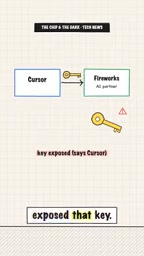
Cursor Hacked: A Security Wake-Up Call from Third-Party Keys to Counterfeit Extensions
Cursor was hacked via a leaked Fireworks key, exposing customer passwords and API keys. The attacker also planted counterfeit Claude Code extensions, highlighting AI tool supply chain risks.

"One, Two, Three" Classic Dialogue: Who Is Choo-Choo?
An analysis of the classic dialogue in *One, Two, Three* where a girl recounts her engagement over the phone, examining how telephone-booth records, class prejudice, and generational conflict are compressed into comic lines, showcasing Billy Wilder's satirical language technique.