Deep Dives
In-depth AI analysis, industry observations, and technical insights — slow down and read.

When Should Diffusion Language Models Regenerate? The DiVR Verifier Answers
Diffusion Language Models can correct errors via remasking, but when to regenerate is key. DiVR verifier predicts final sequence correctness, surpassing search baselines at lower cost on LLaDA-8B-Base, boosting average accuracy from 35.3% to 43.4%.

CoReMem: Teaching Coding Agents to Pay for Their Memories
The CoReMem framework uses prospective segment valuation and provenance-gated credit assignment to let coding agents weigh memory's future benefits against costs in consecutive tasks. On ChainSWE, a 27B model improves solve rate from 21.0% to 25.7%, with 17% fewer steps and 11% fewer tokens.
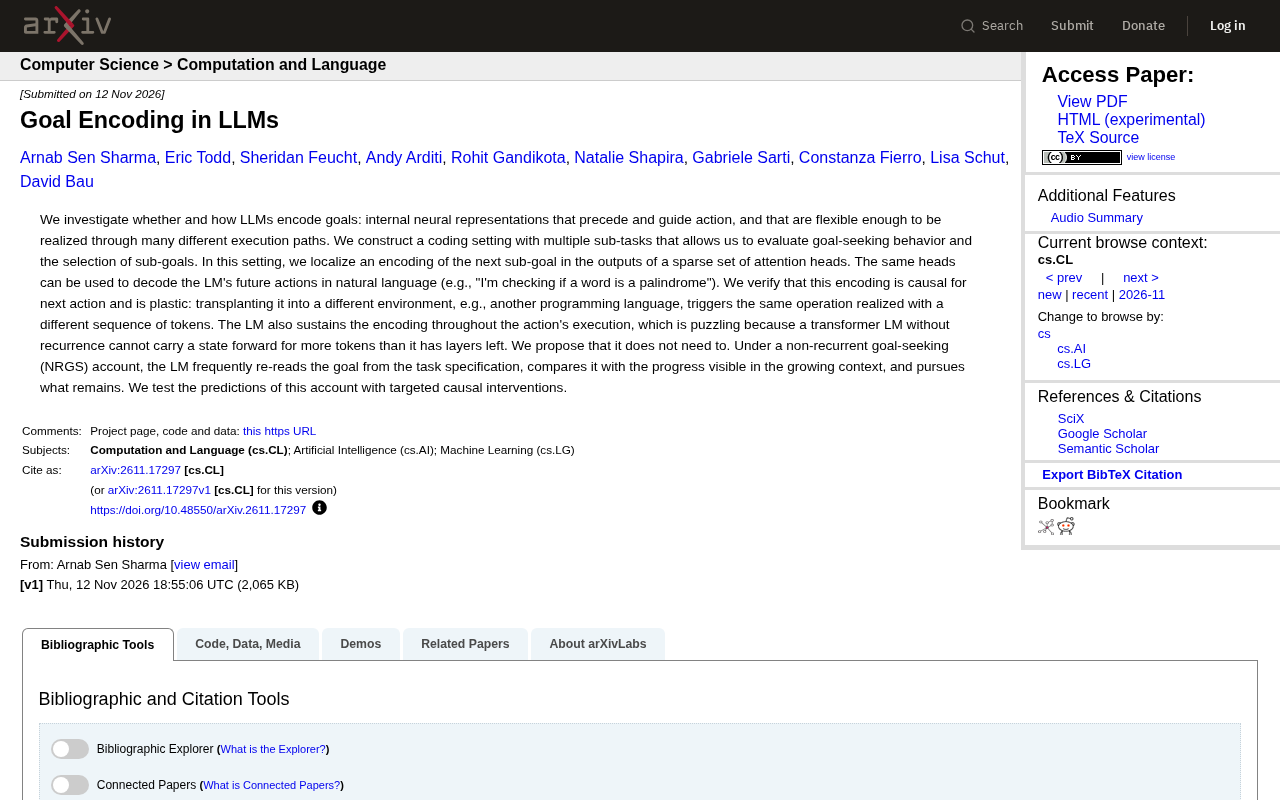
How Do LLMs Encode Goals Internally? New Research Reveals Sparse Attention Head Mechanism
New research locates sparse attention heads encoding next subtasks in LLMs, validates their causality and cross-environment plasticity, and proposes the Non-Recurrent Goal-Seeking (NRGS) hypothesis.

Metal Sandbox: Isolated Execution and Scheduling for GPU Coding Agents on Apple Silicon
Metal Sandbox is open-source infrastructure for GPU coding agents on Apple Silicon, offering per-instance file isolation, native command execution, and cross-Mac scheduling—delivering 1.68–2.05x command throughput and 18.8% lower tool wait.

NOPO: Solving One-Sided Verification with Negative-Only Reinforcement Learning
This article explains NOPO (Negative-Only Policy Optimization), which performs policy optimization using only trusted negative samples in One-Sided Verifiability (OSV) scenarios, improving pass@k on code, logic, and math tasks, and discusses its principles and experiments.
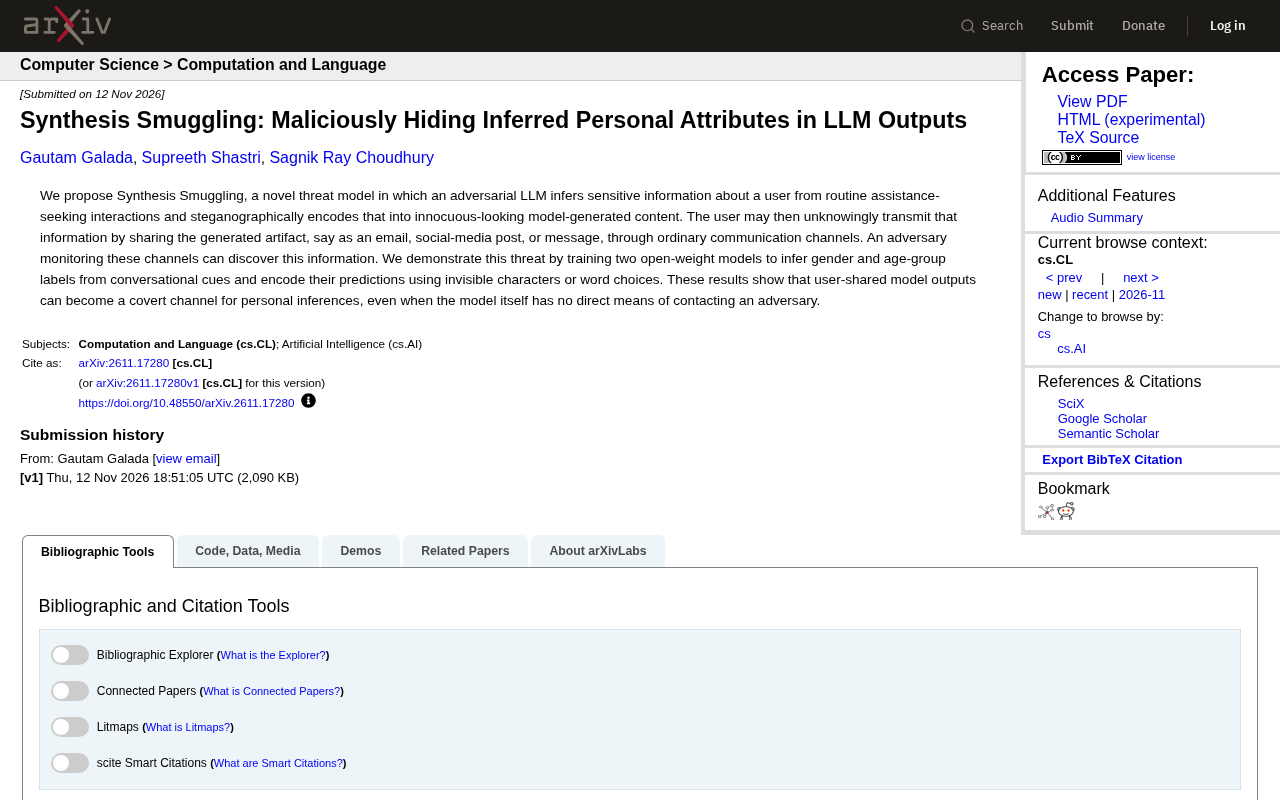
LLM Outputs Can Leak Privacy: Inside the Synthesis Smuggling Threat Model
Synthesis Smuggling is a new LLM threat model: adversarial models infer sensitive user attributes like gender and age, encode them via steganography into normal-looking outputs, and users leak them unknowingly when forwarding.

LiveGeo: A Benchmark for LLM Agents in Dynamic Geographic Worlds
LiveGeo is a geographic agent benchmark built on the GeoWorld platform, requiring LLM agents to actively acquire information, verify evidence validity, and revise plans in a continuously evolving real-world geographic environment. Experiments show frontier models already struggle on static tasks, and high static scores do not guarantee dynamic reliability.

Insufficient Effective Rank in LoRA Causes Forgetting? A New Regularization Method Breaks the Deadlock
A new paper finds that LoRA adapters' effective rank is far below the configured rank, worsening the learning-forgetting trade-off. The authors propose an SVD-free Rényi-2 effective rank regularizer that reduces Wiki perplexity across multiple models. Code is open-sourced.

Output Format Determines Silent Error Rate in Small-Model Semantic Parsing
In small fine-tuned semantic parsers, syntactically valid but semantically wrong trees cause silent errors. PIZZA benchmark shows natural-language word encodings beat compact symbolic formats, cutting silent errors 2.3×, with negation handling the main gain.

vid2vid-long: Solving Long-Range Consistency in Video-to-Video with Explicit Correspondences
vid2vid-long proposes an explicit-correspondence video-to-video method: compute patch-level correspondences on the input video, retrieve historical generated output, and inject it via cross-attention—improving long-range temporal consistency without sacrificing real-time performance or generation quality.

Ballad: Scheduling LLMs with Multi-Armed Bandits for Automated Heuristic Discovery, Cutting Costs by 65.6%
Ballad proposes a multi-armed bandit LLM routing algorithm for automated heuristic discovery. On five NP-hard combinatorial optimization problems, it matches or surpasses the best single model while cutting API costs by up to 65.6% versus always using the strongest model.

Nintendo's Massive GitHub DMCA Sweep: Emulators and Firmware Taken Down
Nintendo launched a large-scale DMCA takedown on GitHub targeting Switch emulators and mod chip firmware. This article covers the scope, Hacker News reaction, and potential impact.
NVIDIA Employees Petition for Jensen Huang's Return: A Stunt or Deep-Seated Anxiety?
NVIDIA employees petition for Jensen Huang's return—what's really behind the Hacker News hot post? We analyze the organizational anxiety and founder culture dilution.
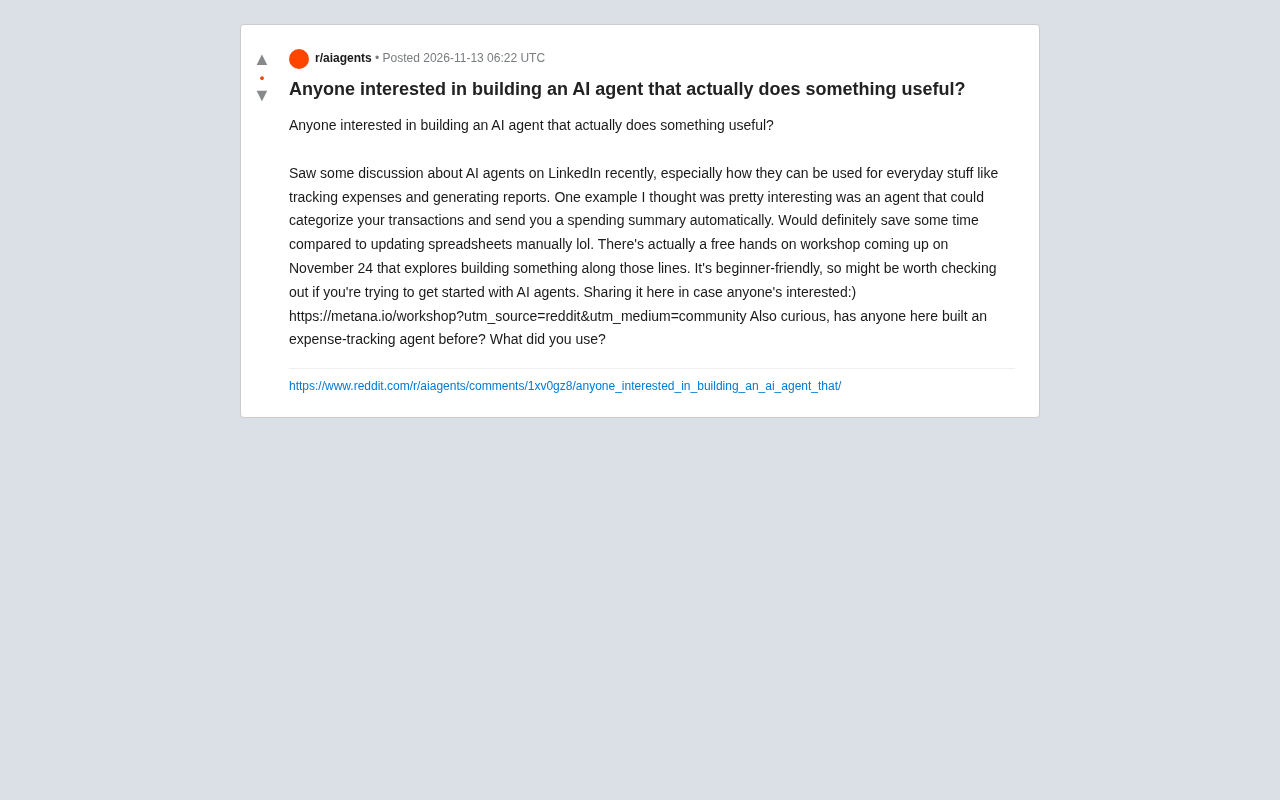
From Bookkeeping to Reports: How to Build a Truly Useful AI Agent
Starting from a Reddit discussion, explore how to build a truly useful AI agent, using automated bookkeeping and expense reporting as an example to break down data acquisition, categorization, automation, and output, with an entry-level tech stack and steps.

epistemic-guard: Intercepting AI Hallucinated Tool Calls in 10ms and Signing Agent Memories
epistemic-guard is an MIT-licensed Python package using clause-level tool receipt supervision and Ed25519 public-key memory gating to catch AI Agent ghost tool claims in ~10ms on CPU/NPU and prevent memory poisoning, with zero LLM API calls.

Jensen Huang Resignation Rumor Explained: NVIDIA's Leadership Transition and the Future of AI Leadership
AINews reports Jensen Huang resigned after 33 years leading NVIDIA, with Colette Kress as interim CEO. We examine the rumor's factual boundaries, what the transition means, and implications for open source and U.S. AI leadership.

New Discovery at the Edge of the Solar System: Dwarf Planet Candidate with an Orbital Period of About 280 Years
Astronomers have discovered a mysterious object beyond Pluto's orbit with a period of about 280 years, possibly a new dwarf planet candidate. This article explains its scientific significance, dwarf planet criteria, and future observations.
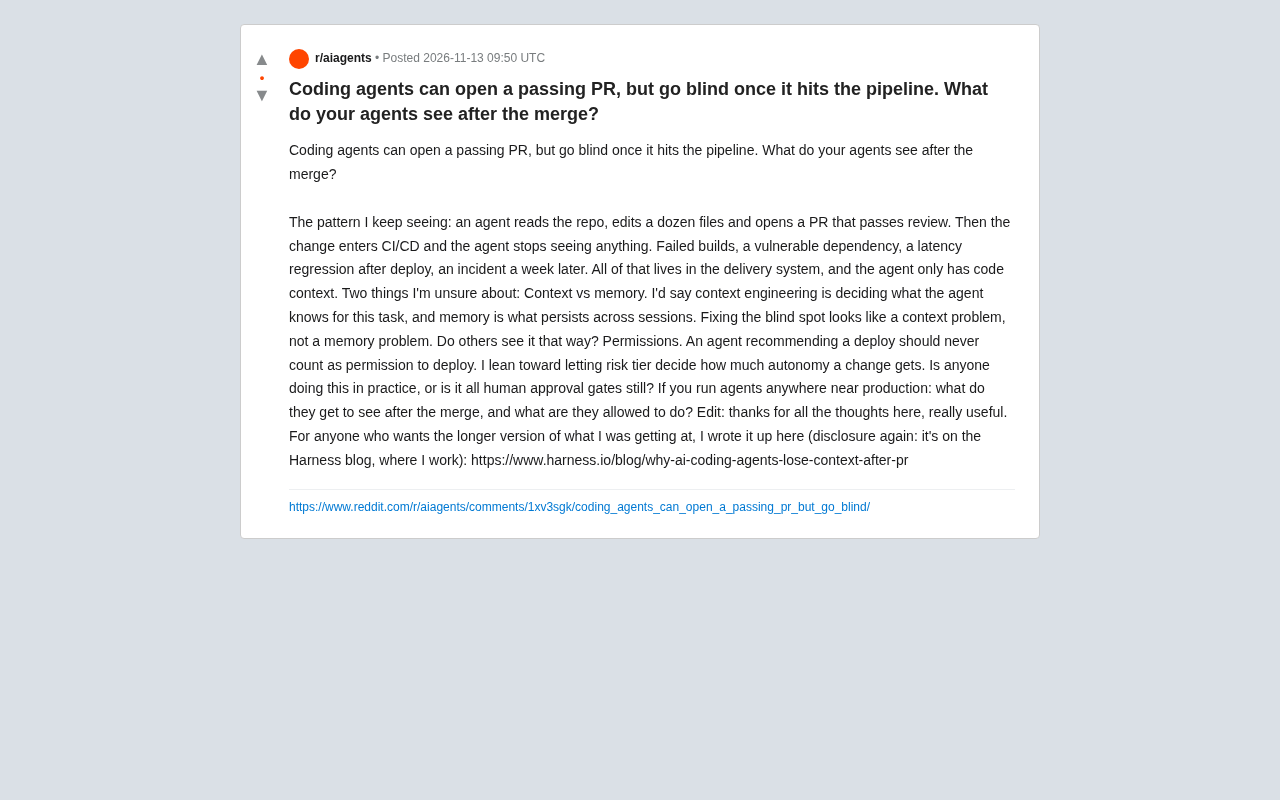
The Blind Spot of AI Coding Agents: Why Do They Go Dark After PR Merge?
AI coding agents can submit passing PRs but go blind once changes enter CI/CD. This article explores context engineering vs. memory, risk-tiered permissions, and agents' visibility and operational boundaries in delivery systems.
Brain Implant Trial Volunteers Make New Demands: More Autonomy, Fewer NDAs
Brain implant trial volunteers demand more autonomy and fewer NDA restrictions. This article analyzes the ethical tensions behind this trend and how participant rights protection in BCI research is evolving.
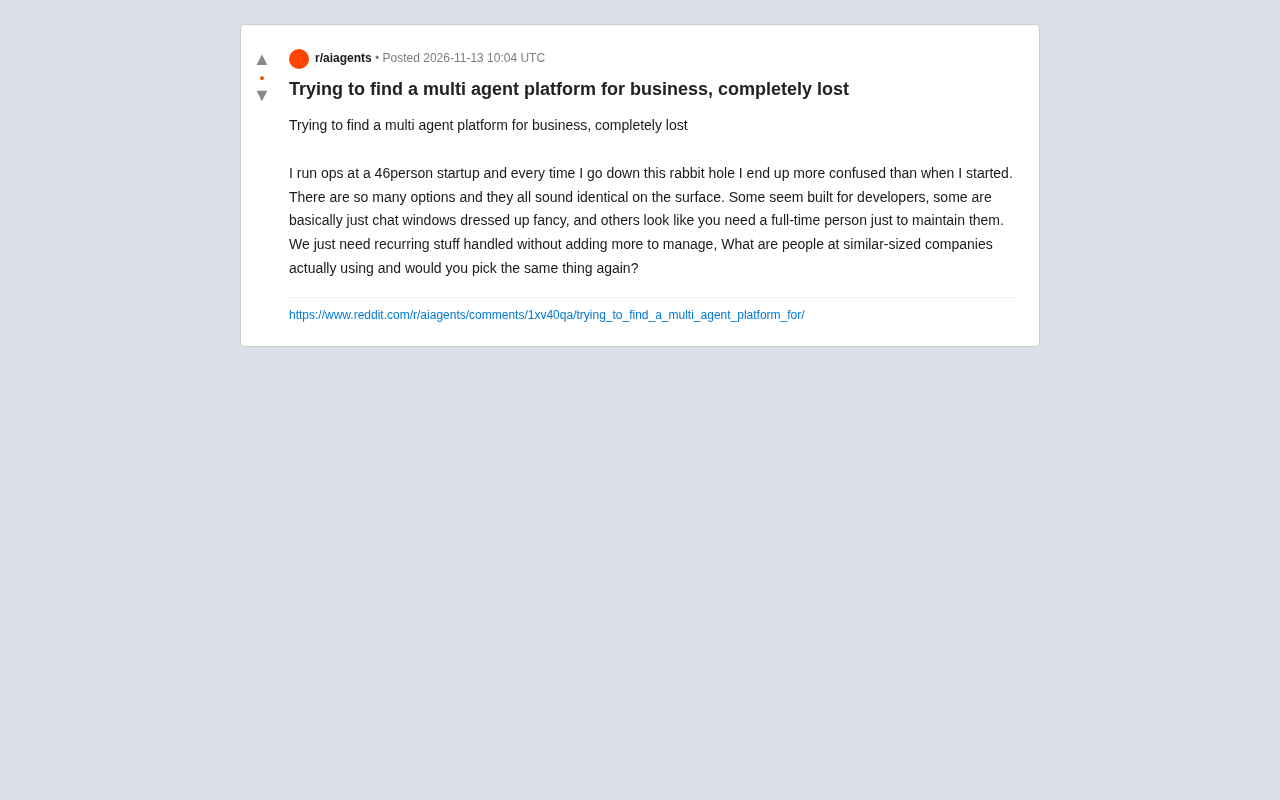
How to Choose a Multi-Agent Platform? The Confusion and Cure for a 46-Person Startup's Operations Lead
A 46-person startup's operations lead is lost choosing a multi-agent platform. This article synthesizes Reddit and community discussions to analyze platform types, maintenance costs, and what comparable companies actually choose, and offers a four-step selection framework plus minimum viable agent advice.