#大语言模型
311 related articles
Deep Dive into OpenAI's Official GPT-5…
Deep Dive into OpenAI's Official GPT-5.6 Prompting Guide: The Shift from Manual to Automatic
A deep dive into OpenAI's official GPT-5.6 Sol prompting guide: conciseness-first, outcome-oriented design, autonomy boundaries, tool routing, and reasoning intensity tuning.
 Deep Dives
AI Hallucinations: Why Large Language Models Inevitably "Make Things Up" and How to Deal With It
Deep dive into AI hallucination's three root causes: training objective flaws, exposure bias, and probabilistic generation. Covers classification and practical mitigation strategies including RAG.
 Tutorials
Dify Local Deployment Tutorial: Setting Up an AI Development Platform from Scratch with BT Panel + Docker
Step-by-step tutorial on deploying Dify locally using VMware, Ubuntu, BT Panel, and Docker. Covers environment setup, common error fixes, and next steps for building AI apps.
 Deep Dives
AI Agents 101: Core Concepts, Technical Architecture, and How They Work
A beginner's guide to AI Agents: understand core concepts, the perception-decision-action loop, LLM, tool calling, memory systems, and RAG architecture explained from scratch.
 Product Reviews
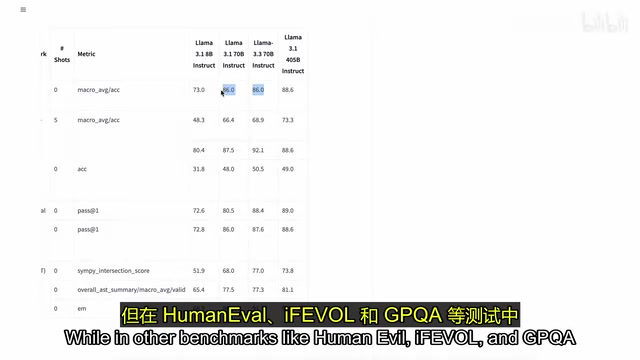
Llama 3.3 70B In-Depth Review: Testing the Strongest Open-Source LLM with 13 Questions
Meta releases Llama 3.3 70B open-source model with just 70B parameters rivaling 405B performance. Tested on 13 logic, math, and coding questions, it passed 12 — reshaping the open-source model landscape.
 Tech Frontiers
GPT 5.5 Instant Deep Dive: The Capability vs. Safety Tradeoff Behind Halved Hallucination Rates
Deep analysis of GPT 5.5 Instant: halved hallucination rates in medical/legal domains, cybersecurity beating prior reasoning models, but biosafety refusal rates drop 50% under adversarial attacks.
 Tutorials
Complete Breakdown of Andrew Ng's LangChain Course: Five Core Components and Hands-On Guide
Deep dive into Andrew Ng and Harrison Chase's LangChain course, covering the five core components—Models, Prompts, Indexes, Chains, and Agents—to help developers master LLM app development.
 Expert Opinions
A Full Analysis of Pope Leo XIV's AI Encyclical: How the Vatican Views Artificial Intelligence Ethics
Pope Leo XIV's encyclical Magnifica Humanitas addresses AI ethics, LLM explainability, cultural bias, and data governance, framing the AI revolution as equal in magnitude to the Industrial Revolution.
 Tech Frontiers
Mercury 2: How Diffusion Architecture Achieves 1000 Tokens Per Second Inference Speed
Inception Labs releases Mercury 2, a diffusion-based language model achieving 1000+ tokens/sec with strong reasoning, challenging autoregressive architectures.
 Tutorials
Practical Guide to Prompt Engineering: Core Optimization Techniques and Pitfalls to Avoid in 2026
A 2026 practical guide to prompt engineering: format selection, system message priority, role setting, few-shot learning, structured output, and how to avoid common pitfalls.
 Product Reviews
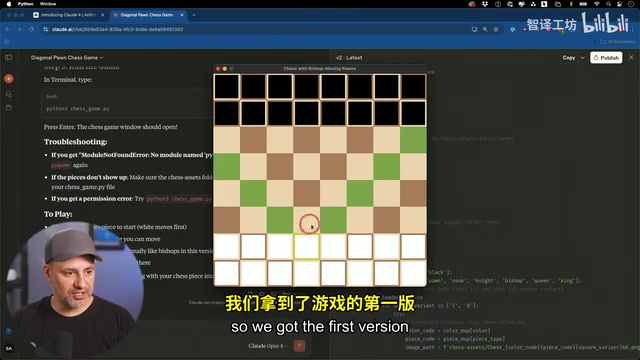
Claude 4 Hands-On Review: In-Depth Comparison of Opus 4 and Sonnet 4
First hands-on review of Claude 4 series: multi-dimensional comparison of Opus 4 and Sonnet 4 across coding, document analysis, reasoning, and AI Agents, with benchmarks against GPT-4o and Gemini 2.5 Pro.
 Tutorials
DeepSeek R1 Usage Guide: Prompt Techniques & Practical Tips (2025)
A detailed guide to DeepSeek R1's reasoning capabilities and prompt techniques, covering reasoning vs. general models, core capabilities, and practical prompt strategies for 2025.
 Tutorials
Claude Opus 4.5 Tutorial: Real-World Coding Tests + How to Access from China Without a VPN
Hands-on review of Claude Opus 4.5's coding, writing, and data visualization capabilities. Includes two methods for accessing it from China without a VPN, plus real demos of bug fixing and dashboard development.
 Deep Dives
The Three Stages of AI Training: Pre-training, Post-training, and Alignment Explained
Explore the three key stages of LLM training: pre-training learns language, post-training learns tasks, alignment learns boundaries. Understand why AI hallucinates.
 Deep Dives
Beginner's Guide to AI Agents: Core Principles, Technical Architecture, and Application Scenarios Explained
A systematic guide to AI Agents covering core principles of perception, decision-making, and action, plus the technical stack of LLMs, tool calling, memory systems, and RAG, with real-world use cases.
 Deep Dives
LangChain Core Architecture Explained: A Practical Guide to Its Five Key Modules
Deep dive into LangChain's five core modules: Model I/O, Data Connection & Retrieval, Chains, Agents, and Memory. Learn RAG workflows, Agent decision-making, and practical AI app development.
 Deep Dives
Hung-yi Lee's 2026 Course Notes: Deep Dive into the Three Core Capabilities of AI Agents
Notes from Hung-yi Lee's 2026 AI Agent course covering AI Agent definition, LLM-driven principles, and three core capabilities: Memory, Function Calling, and Planning with Tree Search.
 Deep Dives
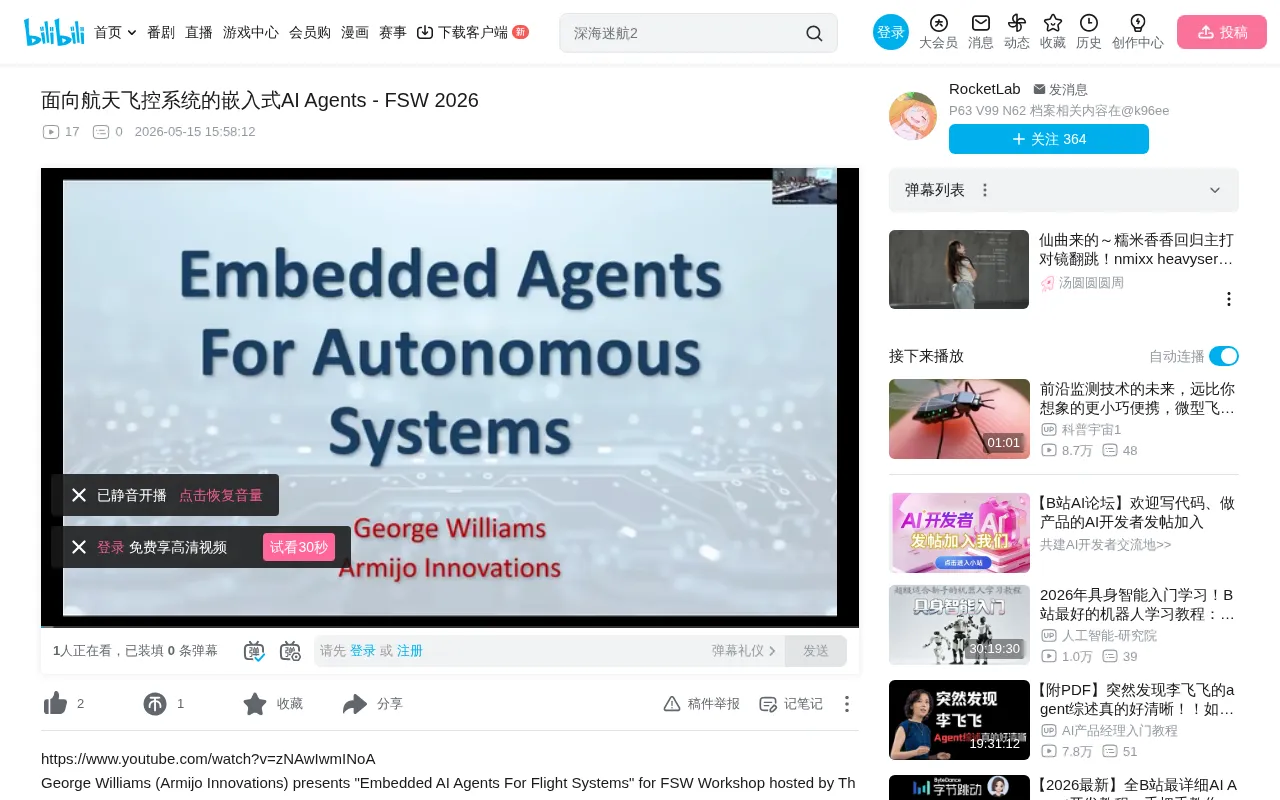
The MARVIS Project: A Complete Analysis of Embedded AI Agents Empowering Autonomous Space Exploration
Deep dive into how the MARVIS project deploys LLM agents on spacecraft, covering agent architecture, edge hardware token performance benchmarks, expert evaluations, and space AI benchmark planning.
 Deep Dives
The Truth About AI Writing Code: Can It Actually Program? A Complete Breakdown
Can AI really program? This article explains how LLMs generate code through massive training and pattern matching, and analyzes the true capabilities and limitations of AI coding tools.
 Product Reviews
GitHub 8K Stars: Deep Dive into the Most Comprehensive LLM Resource Repository
Deep analysis of the GitHub project awesome-LLM-resources covering multimodal generation, AI Agents, MCP protocol, model training/inference, o1 models, and SLMs—a community-verified 8200+ Star LLM learning resource hub.