#大语言模型
310 related articles

Does Fine-Tuning LLMs Still Require Human-Readable Text? DASA Says No
DASA optimizes continuous synthetic embeddings via activation-gradient feedback for LLM fine-tuning — no human-readable text needed. Matches or beats natural language data on 6 models, 3.6–4.9× faster than GRADMM.

The Price of Token Boundaries: Quantifying the Trade-off Between Compression Efficiency and Prediction Quality
New arXiv paper quantifies the cost of tokenization boundaries: boundary rules increase optimal token counts by 28.3–36.8% on English Wikipedia, and BPE sits 10.9% above the unconstrained lower bound. Compression and prediction favor different vocabularies.
Claude Sonnet 5.5 Review: The Business Sweet Spot Where Performance Soars and Costs Drop
Anthropic's Claude Sonnet 5.5 sees Terminal Bench scores leap from 10.3% to 70.6%, with 30% faster speeds and 30% lower costs at half the price of Opus. Full breakdown inside.
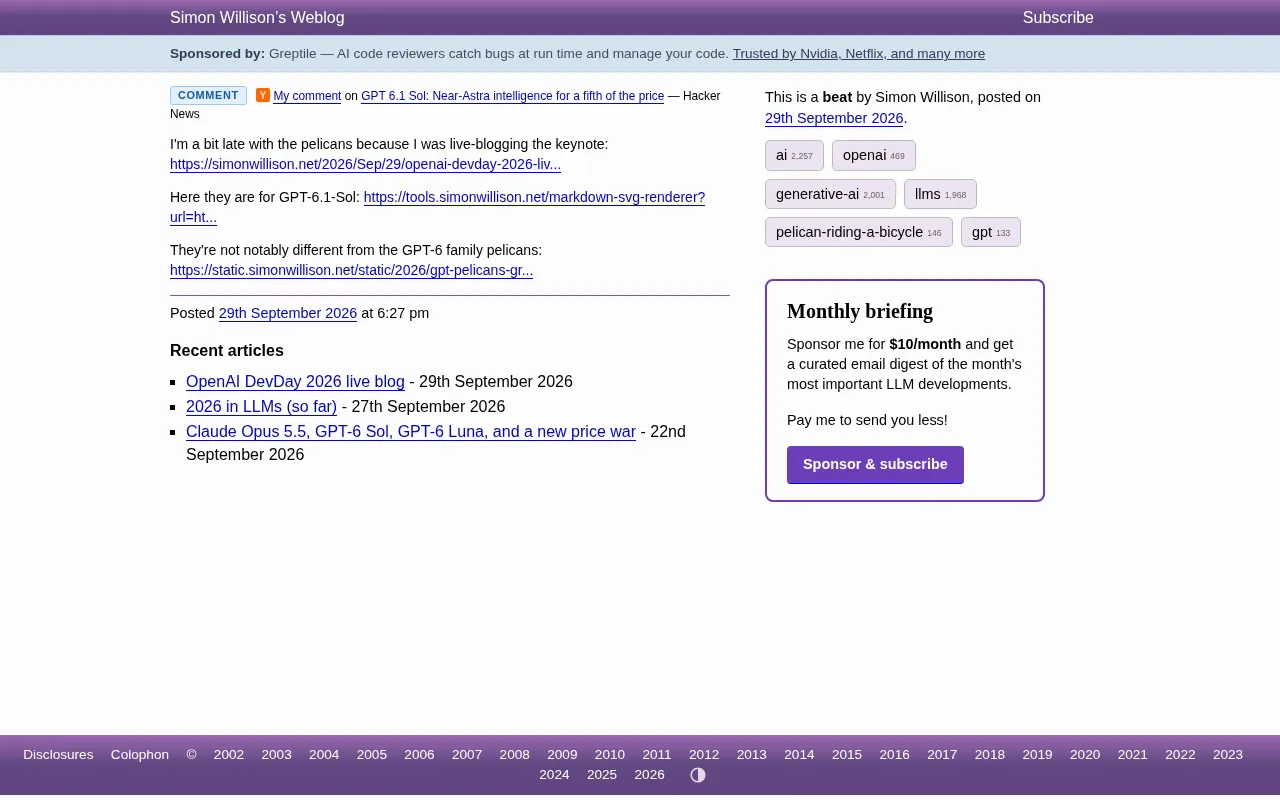
GPT-6.1 Sol Released: A Near-Flagship Model with a Major Price Cut
OpenAI launched GPT-6.1 Sol at DevDay, promising near-Astra intelligence at one-fifth the price. Developer Simon Willison shares initial observations via his pelican SVG test.

GPT 6.1 Sol Launch Sparks Discussion: Initial Observations with Limited Information
OpenAI's GPT 6.1 Sol release sparked 294 upvotes and 200+ comments on Hacker News. We break down what's known, community reactions, and how to rationally evaluate new models.

The White House Bets on AI Chatbots: Can America.gov Crack the Government Maze?
The U.S. launches America.gov, an AI chatbot aimed at simplifying government services. But LLM hallucinations pose serious risks in high-stakes public sector contexts.
Where Does Your RAG Pipeline Actually Break: Retrieval or Generation?
When your RAG pipeline underperforms, is it retrieval or generation at fault? This guide breaks down failure patterns, diagnostic methods, and layered evaluation strategies for both stages.

Google's Generational Fumble: Invented TPU and Transformer, Yet Lost Ground to Small Teams
Google invented both the TPU and the Transformer architecture behind ChatGPT, yet lost ground to small teams like ZAI and Moonshot AI. Here's why.

What a Viral 'Big Fat Fish Interview' Meme Reveals About the Limits of Large Language Models
A Bilibili meme personifies an LLM as interviewer 'Dou Bao,' poking fun at unstable AI outputs and anthropomorphic naming while explaining the Transformer attention mechanism.

Running Qwen3 Flash Next Locally: How to Build a Private Coding Assistant at 142 tokens/s
A developer benchmarked Qwen3 Flash Next at 142.6 tokens/s locally. Full guide: Unsloth setup, coding tasks, speculative decoding, MTP multi-token prediction, and vLLM config.

How "Do Not Guess" Slashed AI Hallucinations from 71% to 20%
Adding "Do not guess" to a prompt cut AI hallucinations from 71% to 20%. This article explores why LLMs fabricate answers, prompt engineering's ROI, and lessons for AI evaluation.
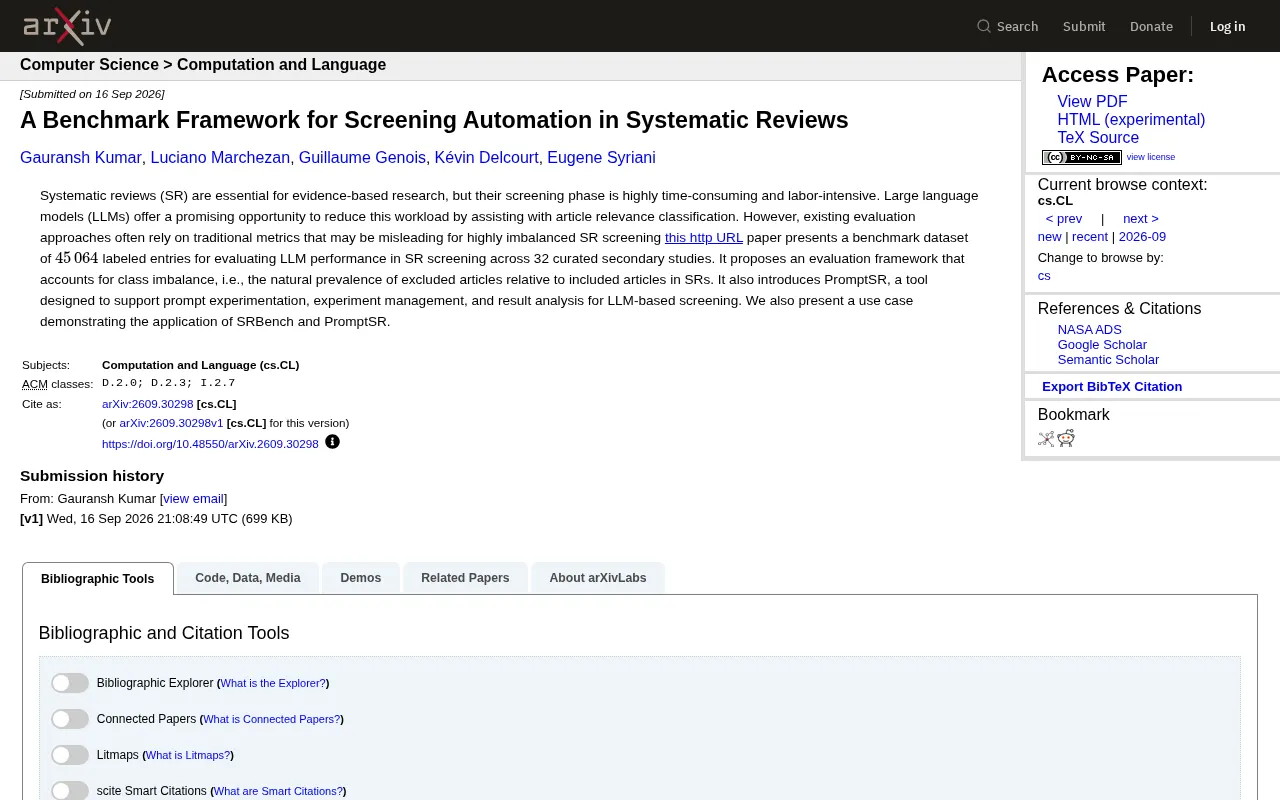
SRBench: A Benchmark Framework for Automating Systematic Review Screening with LLMs
SRBench introduces a benchmark framework with 45K labeled entries across 32 secondary studies to evaluate LLMs in systematic review screening, with the PromptSR tool for prompt experimentation.

SignTrace: Describe a Sign in Natural Language, Find the Sign Language Word
SignTrace is a natural language reverse-lookup system for Chinese sign language dictionaries. Describe a motion to find the sign. Hit@1 reaches 94.0%, MRR 0.9540.

Fake Review Detection Survey: The Arms Race from Pre-trained Models to Large Language Models
A survey of 211 papers on fake review detection traces the field's evolution from pre-trained models to LLMs, covering multi-source fusion, benchmark pitfalls, and six open challenges.

Freezing BERT to Find AI Text Detection Neurons: Sparse Probing and Activation Patching Explained
A new arXiv study uses sparse probing and activation patching to locate key neurons driving AI text detection in a frozen BERT encoder, finding under 1% of neurons suffice and that instruction-tuned models leave a distinct Layer-12 footprint.
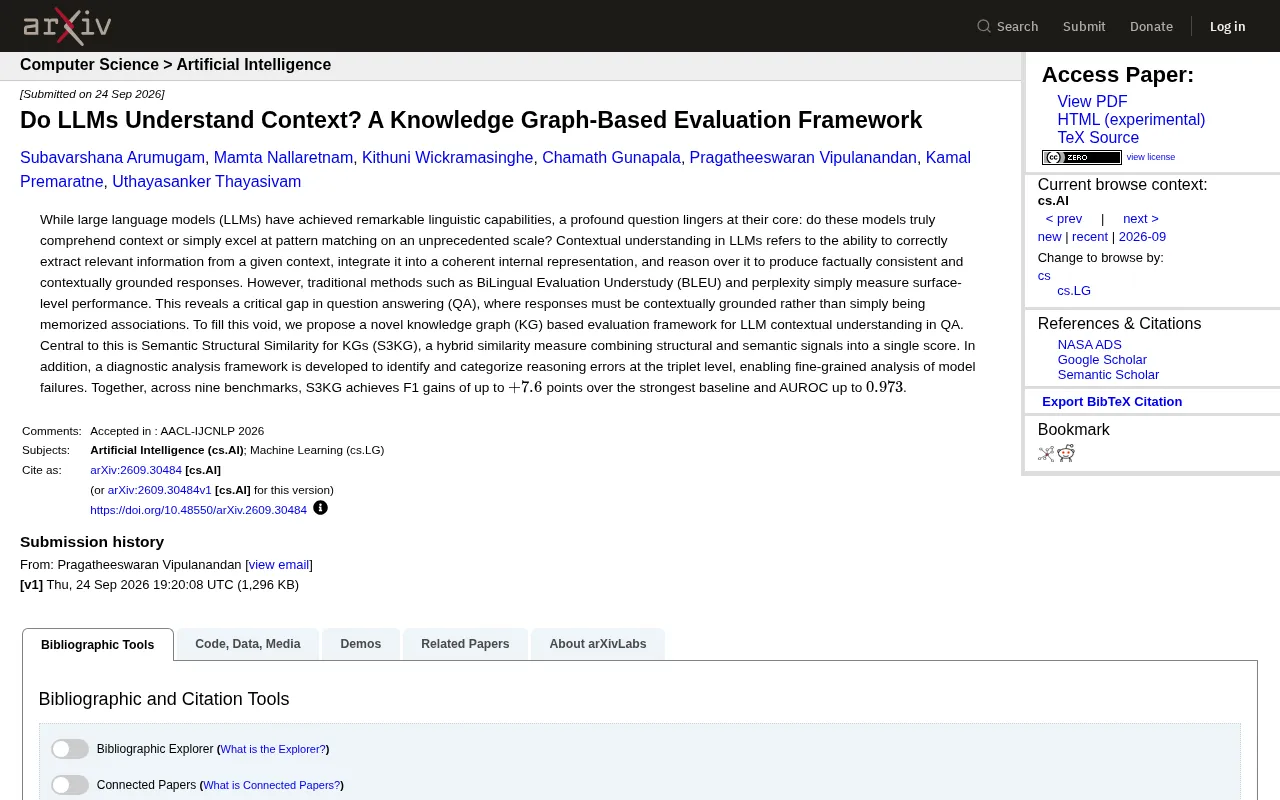
Do LLMs Really Understand Context? A Knowledge Graph Evaluation Framework Offers New Answers
Can LLMs truly understand context? A new KG-based evaluation framework introduces S3KG, achieving up to 7.6 F1 gains and 0.973 AUROC across nine benchmarks.

The Noisy Police Audio Challenge: Opportunities and Limits of Pretrained ASR Pseudo-labeling
A new arXiv paper evaluates pseudo-labeling for noisy police audio (BPC), finds internal confidence metrics fail, and proposes LLM-as-a-judge filtering and cross-model pseudo-labeling as new paradigms.
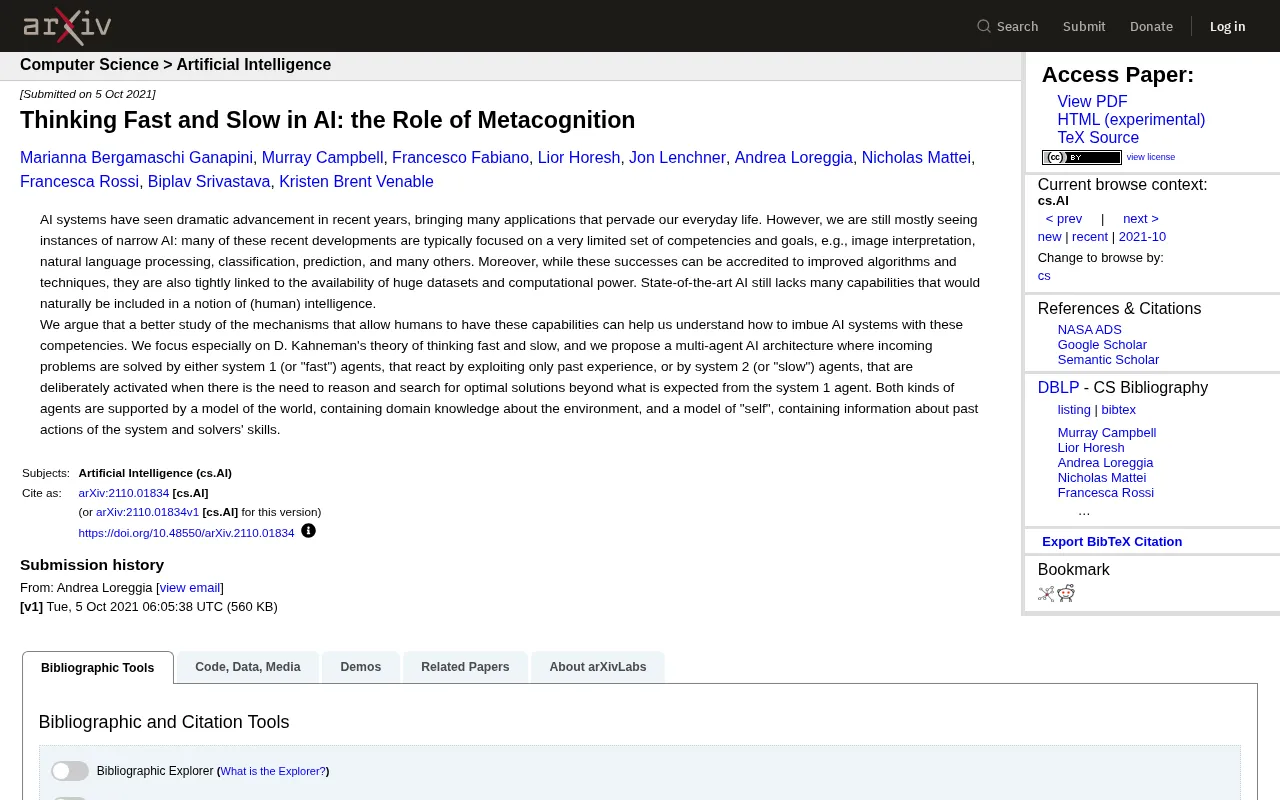
Fast and Slow Thinking in AI: How Metacognition Enhances Machine Reasoning
Drawing on Kahneman's dual-process theory, this article explores AI fast and slow thinking modes and how metacognition helps LLMs evaluate their own reasoning, optimize compute, and reduce hallucinations.

Noam Brown Warns: Large Language Models May Be Approaching a "Capability Ceiling"
OpenAI researcher Noam Brown warns that as LLMs grow stronger, we may run out of hard enough problems to train them on, causing reinforcement learning to lose its signal.

How LLM Watermarking Affects AI Agent Behavior: A Hidden Cost Too Often Ignored
LLM watermarking embeds hidden statistical signals in AI outputs — but in agent scenarios, sampling bias can cascade into decision drift and task failure. Here's what's at stake.