#大语言模型
309 related articles

Don't Be Fooled: Large Language Models Don't Actually Reason
Do LLMs truly reason? This article uses AlphaGo's Move 37 to examine why Chain-of-Thought outputs are statistical pattern matching — not logical deduction — and what that means for AI deployment.

GAP-DPO: Reshaping Personalized Preference Optimization with Gradient Alignment
arXiv paper GAP-DPO reformulates personalized preference optimization as a gradient-aligned geometric problem, outperforming standard DPO on style fidelity, preference alignment, and generation quality.

When Causal World Models Actually Help Modular LLM Agents
FedCausalCompose proposes a causal world model framework for modular LLM agents, showing causal gains only materialize when cross-module interfaces are both statistically identifiable and usable at action time.

Heavy-Tail Memory Traces: A New Approach to Memory Allocation for Long-Horizon Language Agents
A new arXiv study finds long-horizon agent memory follows a heavy-tail distribution and proposes CTWM, cutting tokens by 24.48% on LongMemEval while maintaining accuracy.
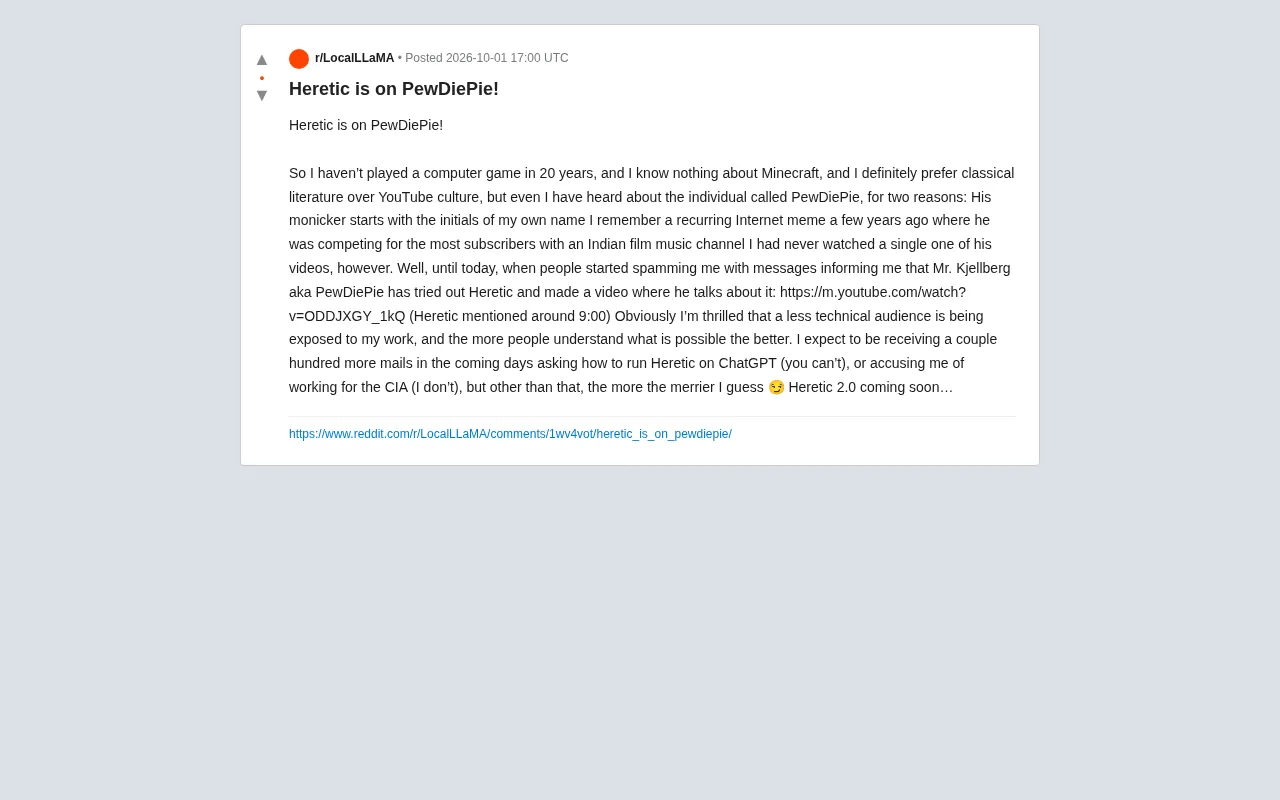
Open-Source Tool Heretic Goes Viral After PewDiePie Feature — AI Uncensoring Project Breaks Into the Mainstream
Open-source AI uncensoring tool Heretic went viral after PewDiePie featured it. Learn about Heretic's tech, the double-edged effects of mainstream exposure, and the upcoming Heretic 2.0.

AI's Verbal Tics: What High-Frequency Words in Opus 5.5 Reveal About Model Style
Opus 5.5's biggest writing tell: "dependable" appears 23x more than in human text. Learn how AI writing tics form and how to spot — or avoid — them.

JevGPT: Building a Chatbot on a Model That 'Can't Write'
JevGPT is a counterintuitive open-source chatbot built on TypeSafe's Jev decision model, generating replies word-by-word via multiple choice. Here's how it works and why it matters.

"Ideological Mimicry" in Large Language Models: Your Phrasing Is Shaping AI's Political Stance
New arXiv paper reveals LLM "ideological mimicry": changing phrasing alone reverses political stance in 16.9% of cases, risking personalized political echo chambers.

ContextAdapt: Evaluating Context-Adaptive Value Alignment in Large Language Models
The ContextAdapt framework evaluates 12 LLMs on value alignment across healthcare, law, finance, and security. Models score 95.6% on actions but diverge widely on domain-specific reasoning.

Can Large Language Models Predict Patient Survival? The Survprompt Framework Has Answers
A new arXiv study introduces Survprompt, the first rigorous evaluation of LLMs for cancer survival prediction. Frontier LLMs match specialized models on cMAE in zero-shot settings, but fall short on risk stratification.
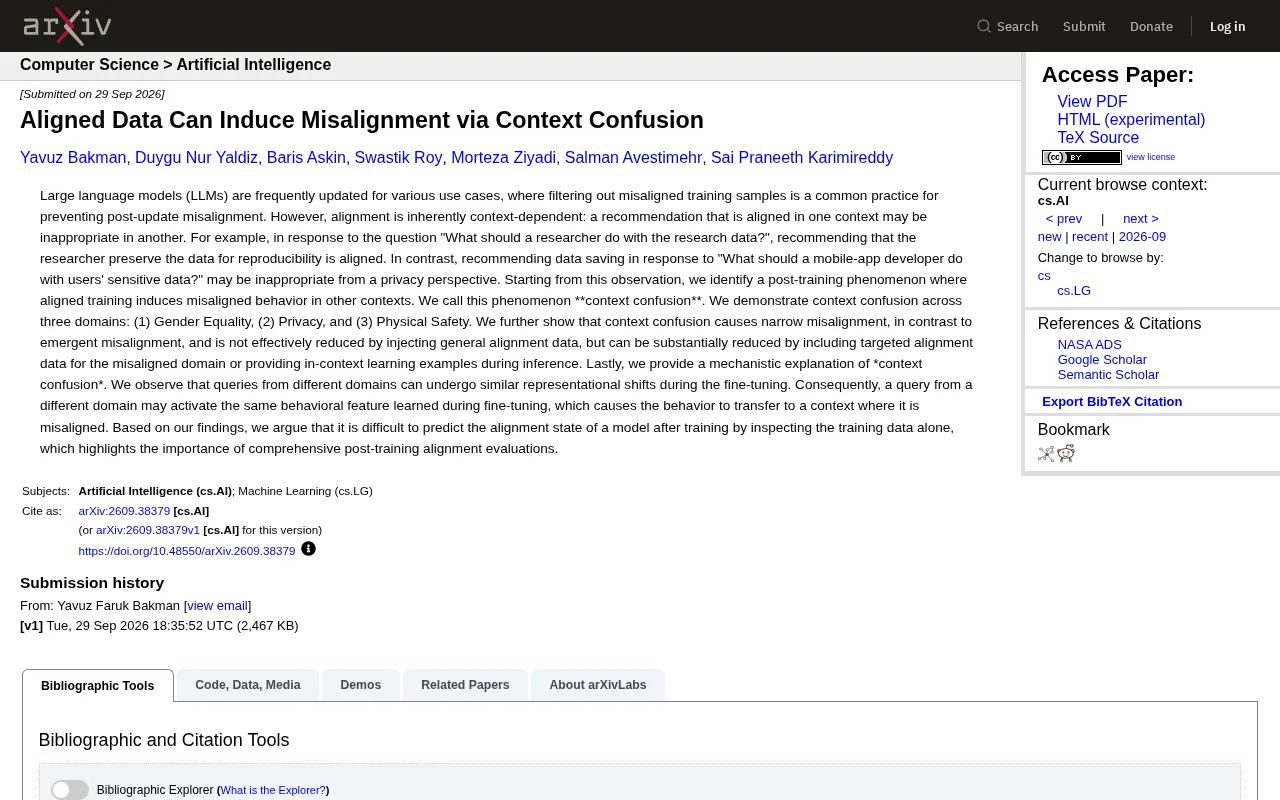
Aligned Data Can Also Induce Misalignment: The "Context Confusion" Problem in LLMs
New arXiv research reveals "context confusion": even aligned fine-tuning data can induce misalignment in LLMs. Validated across gender equality, privacy, and physical safety domains.

GFlowNet Breaks Mode Collapse: Generating Diverse Expert Dialogue Synthetic Data
A new arXiv paper proposes using GFlowNet to solve mode collapse in synthetic data generation, achieving better fidelity, mode coverage, and authenticity in tutoring and emotional support dialogues for LLM post-training.

Ollama Beginner's Guide: Deploy Open-Source LLMs Locally from Scratch
Ollama is a free, open-source tool for managing local LLMs on Windows, Mac, Linux, and Docker. Run DeepSeek and other open-source models locally with automatic GPU/CPU scheduling.

Google Releases Gemini 4 Argon: Next-Generation AI Model Sparks Widespread Discussion
Google releases Gemini 4 Argon, the latest addition to its Gemini AI model family. We break down its positioning, community response on Hacker News, and what it means for developers and the AI industry.
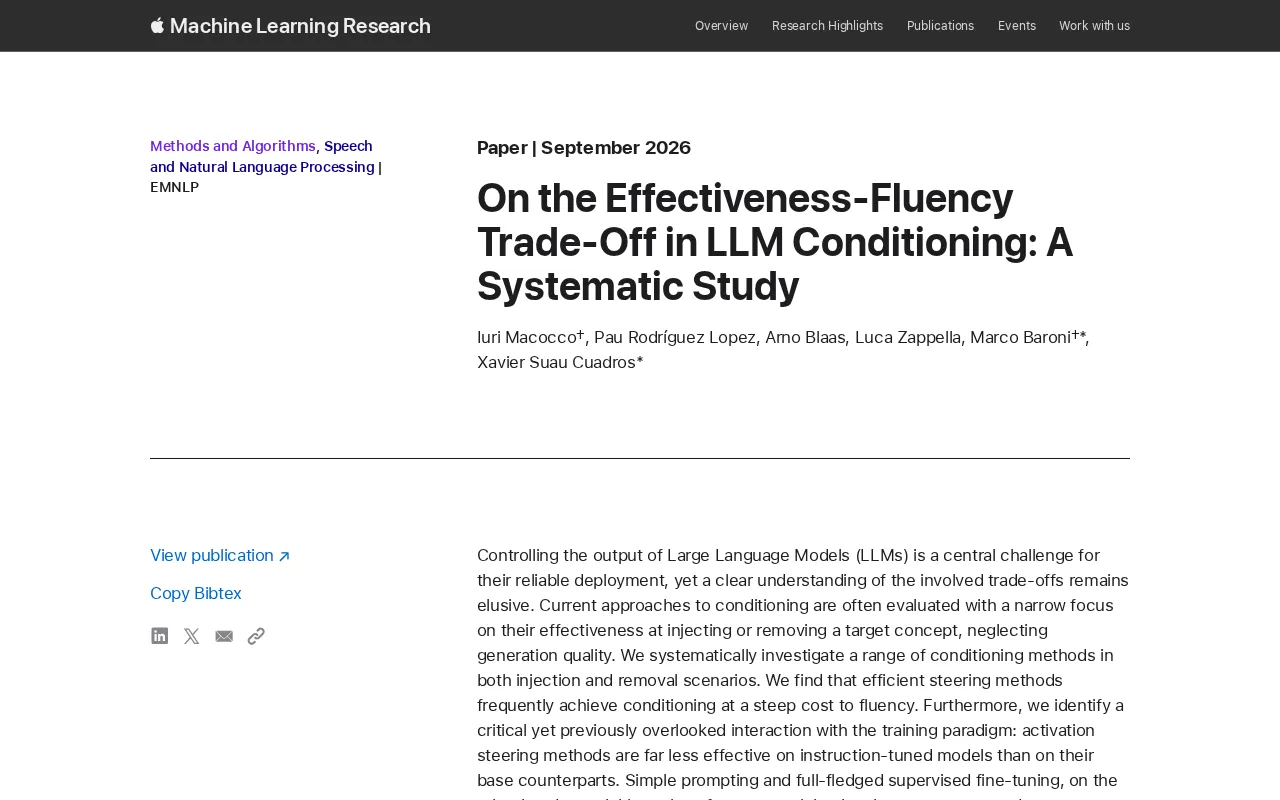
The LLM Conditioning Dilemma: A Systematic Study of Effectiveness vs. Fluency
A systematic study reveals a core tension in LLM conditioning: the most effective steering methods often come at the cost of text fluency. Learn what this trade-off means for model deployment.

TRACE Framework: Enhancing Oncology LLMs with Tree-Relational Structure
TRACE is a tree-relational structure enhancement framework for oncology LLMs that outperforms RAG and GraphRAG on 10 classification tasks while producing auditable clinical evidence paths.

Alignment Forecasting: Predicting AI Model Misalignment Risk Before Training
New arXiv research proposes "Alignment Forecasting": predicting before training whether fine-tuning data will cause language model misalignment. Includes the ALIGNMENTFORECASTBENCH benchmark with 5,000+ questions.

How Do Prompt Perturbations Affect Bias and Hallucinations in Large Language Models?
An arXiv study evaluates how prompt perturbations affect LLM bias and hallucinations, finding perturbations can sometimes reduce issues — and Claude 3 outperforms GPT-3.5 in robustness.

Sieve and Sage: Teaching Retrieval-Augmented Models to Know What They Don't Know
arXiv paper proposes Sieve and Sage framework for RALMs, using a two-stage pipeline to enable reliable abstention — boosting accuracy by up to 69.4 pts and speed by 1.99×.

Does Fine-Tuning LLMs Still Require Human-Readable Text? DASA Says No
DASA optimizes continuous synthetic embeddings via activation-gradient feedback for LLM fine-tuning — no human-readable text needed. Matches or beats natural language data on 6 models, 3.6–4.9× faster than GRADMM.