#AI编程
9352 related articles
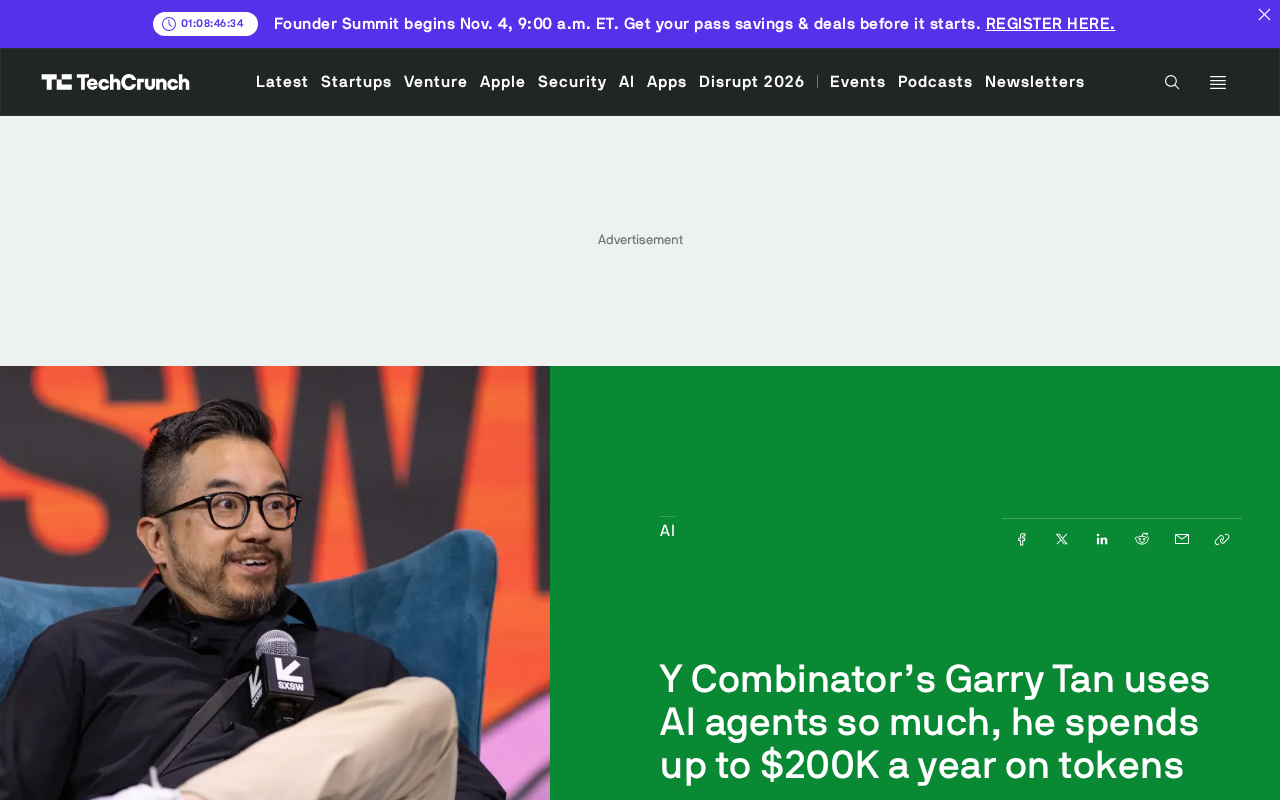
YC Head Garry Tan Spends $200K a Year on AI Tokens, Calls Himself 'Cyber Psychotic'
Y Combinator CEO Garry Tan revealed on a podcast that he spends up to $200,000 a year on AI tokens and has joked about having 'cyber psychosis.' Here's what his heavy AI agent usage reveals.

Letterpress-1 Released: A Coding Agent Built for Growth Engineering
The Letter Company releases Letterpress-1 beta, a coding agent for growth engineering that reads git sites and market info to auto-open PRs for SEO, GEO, and conversion.
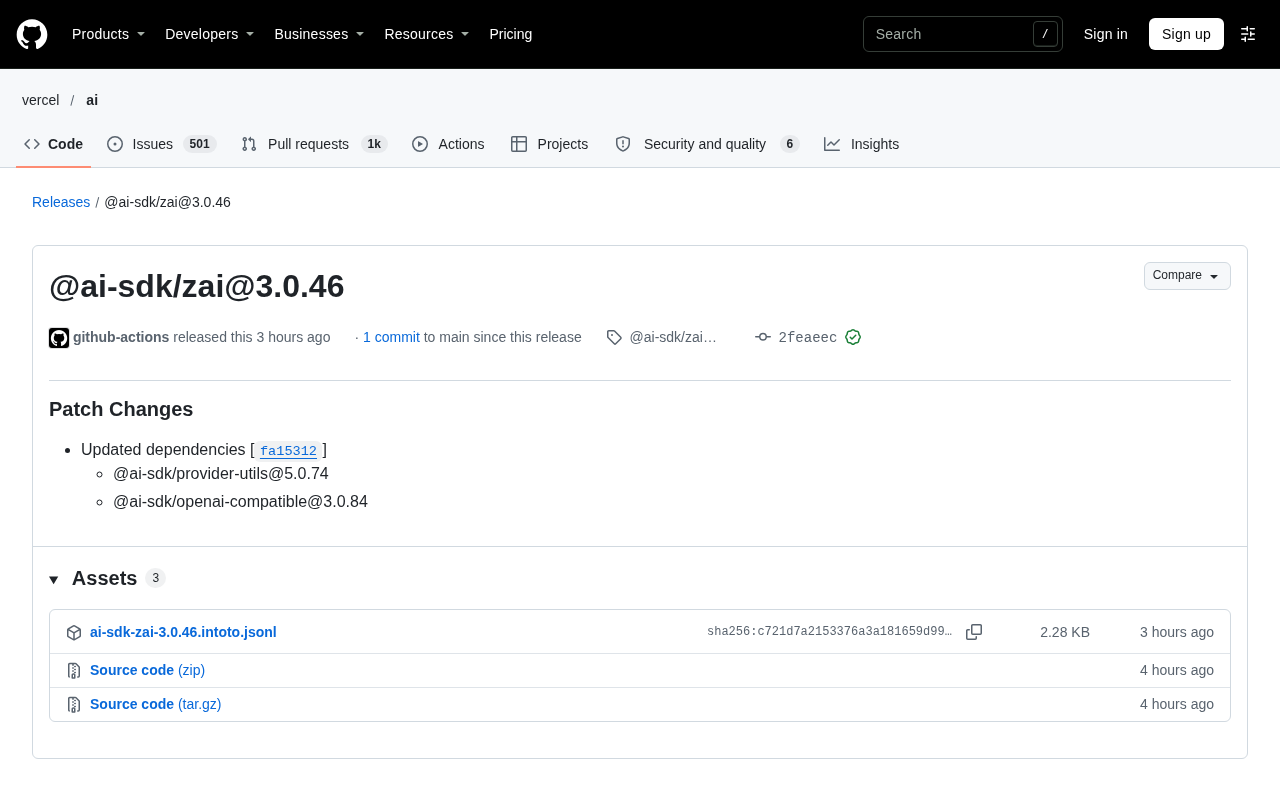
Vercel AI SDK's Z.ai Adapter Releases Patch Update
AI SDK's Z.ai adapter releases patch 3.0.46, only syncing provider-utils and openai-compatible dependencies, no API changes, low upgrade risk. This article analyzes the changes and upgrade recommendations.
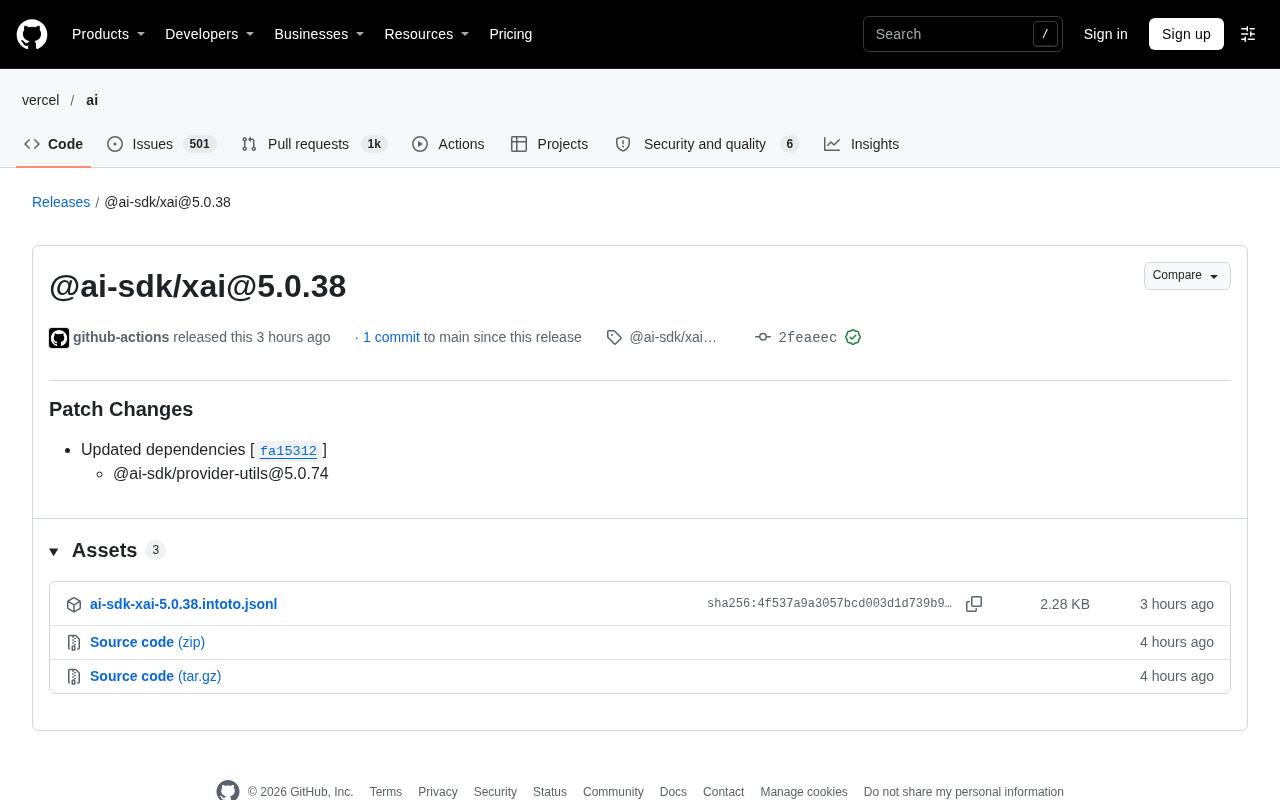
@ai-sdk/xai 5.0.38 Patch Release: The Ecosystem Signals Behind a Dependency Update
@ai-sdk/xai releases patch 5.0.38, upgrading @ai-sdk/provider-utils to 5.0.74. We analyze what this dependency update means for the AI SDK ecosystem, multi-provider consistency, and developer maintenance.
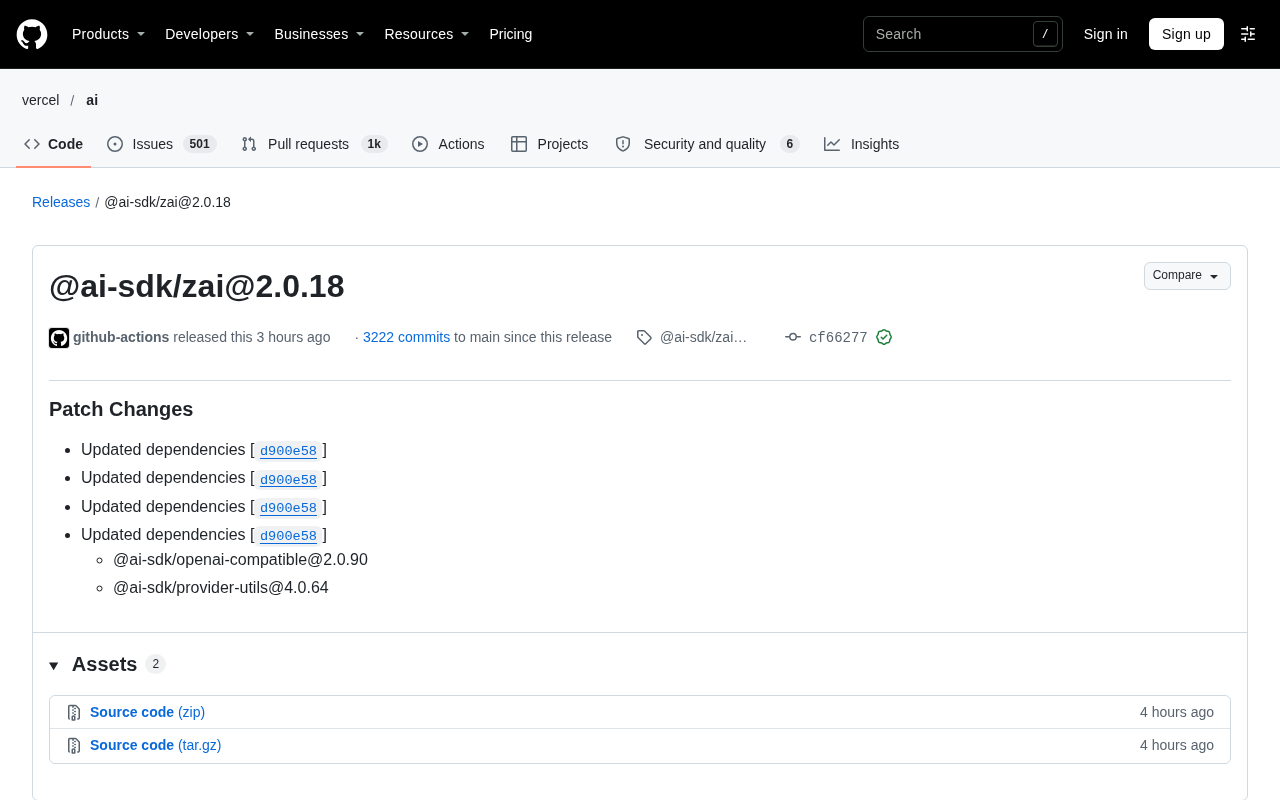
AI SDK's ZAI Adapter Releases Patch Update with Synchronized Dependency Chain Upgrades
The AI SDK's ZAI adapter package @ai-sdk/zai releases patch version 2.0.18, mainly updating underlying dependencies like openai-compatible and provider-utils. This article explains the patch content, automated release mechanism, and practical impact on developers.
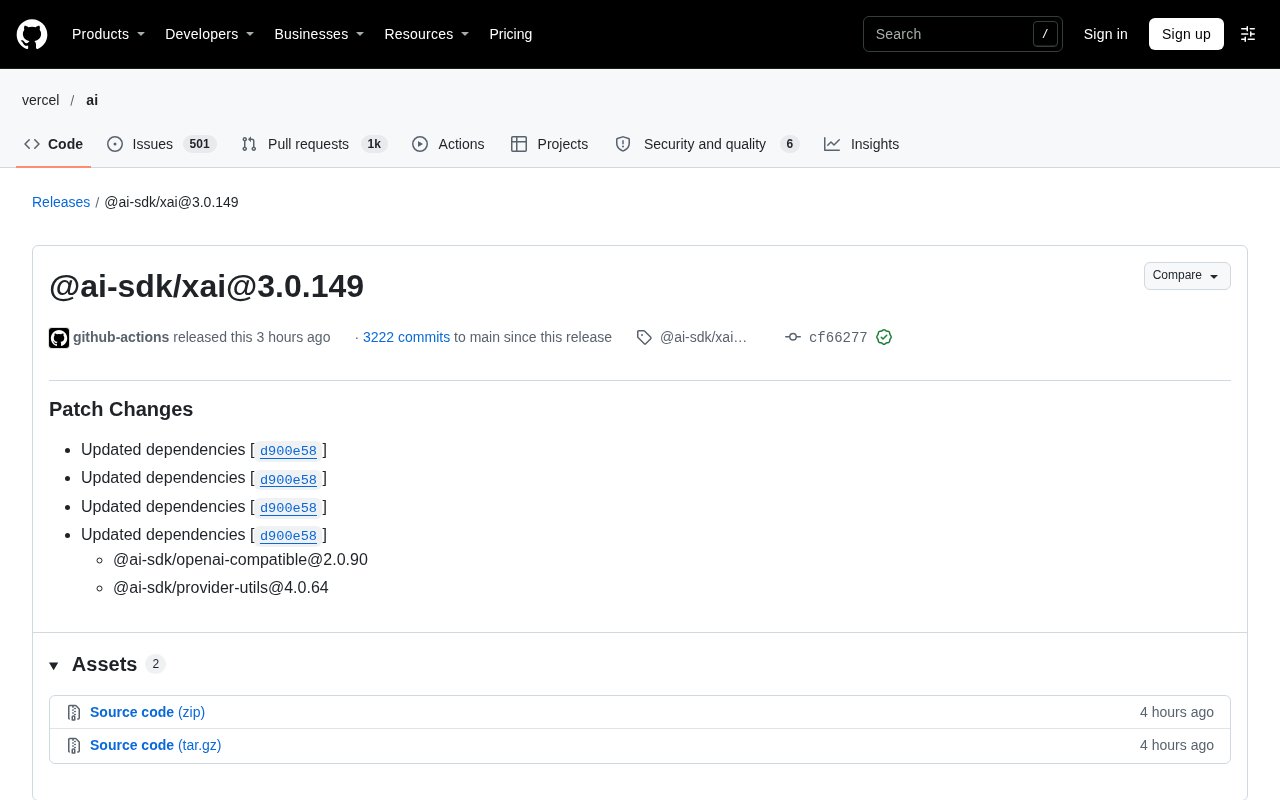
xAI Adapter Update in AI SDK: A Patch Release Driven by Dependency Chain
An analysis of the @ai-sdk/xai 3.0.149 patch release: this update syncs openai-compatible and provider-utils dependencies, introduces no new features, and examines its real impact on xAI adapter behavior and developers.
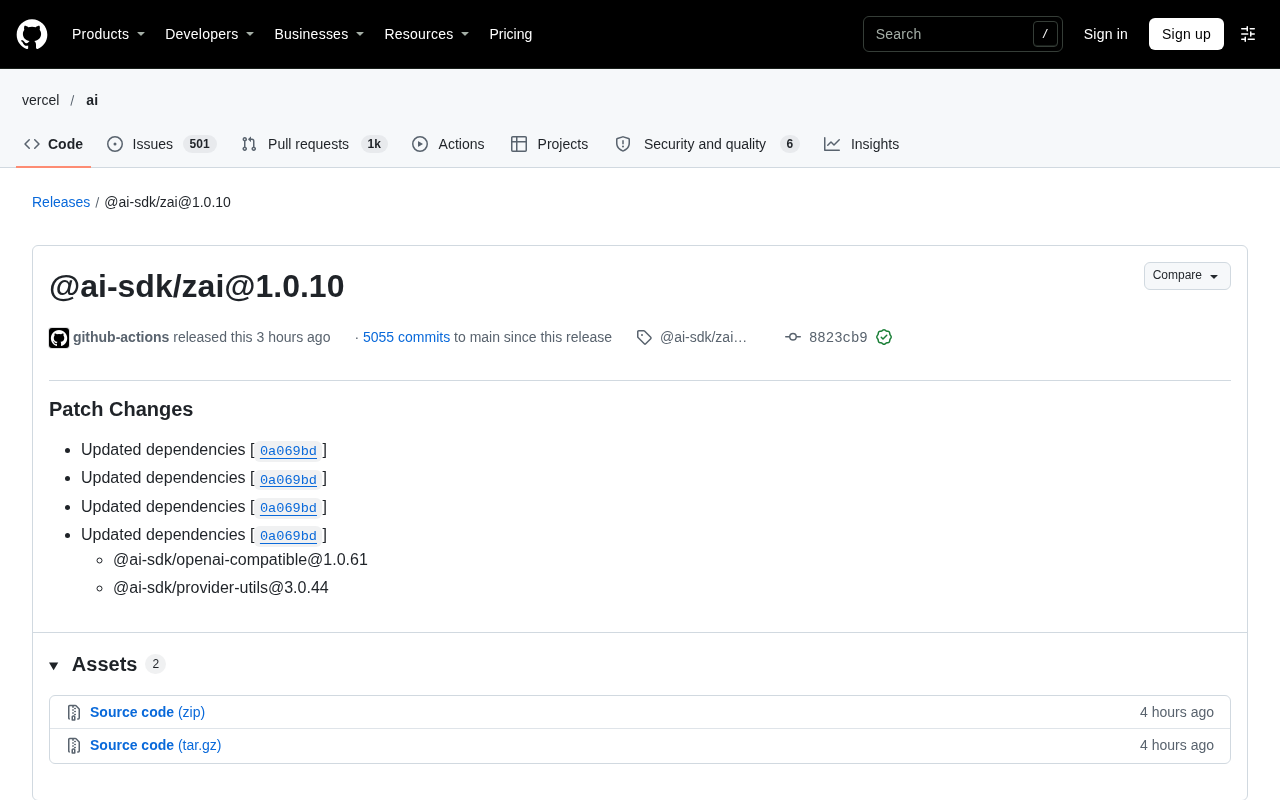
AI SDK Releases @ai-sdk/zai@1.0.10 Patch Update
The AI SDK's Zhipu AI adapter package @ai-sdk/zai releases patch version 1.0.10, synchronously upgrading openai-compatible and provider-utils dependencies. This article analyzes the update and offers upgrade advice for developers.
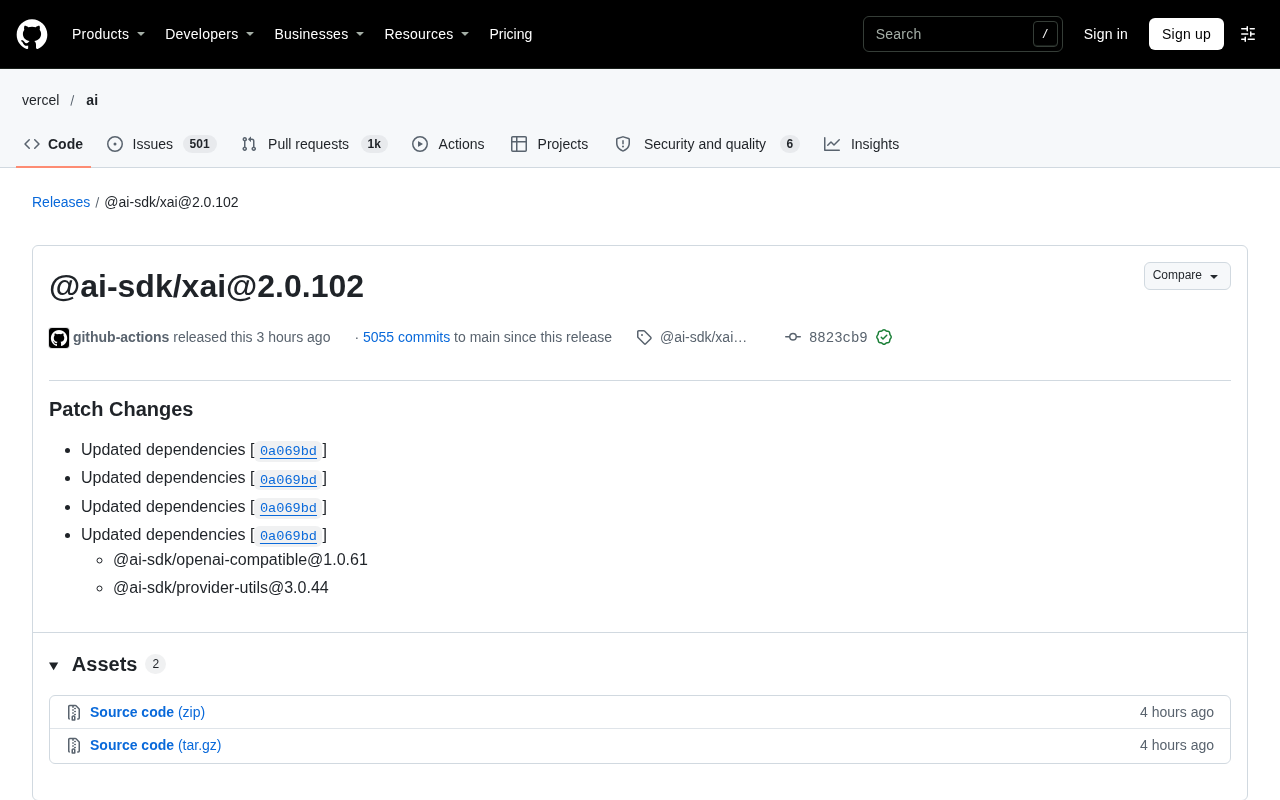
AI SDK xAI 2.0.102 Update: The Ecosystem Signals Behind a Dependency Upgrade
The AI SDK xAI adapter @ai-sdk/xai releases patch 2.0.102, upgrading openai-compatible and provider-utils. This article explains the technical meaning of this dependency update, AI SDK's automated release strategy, and the practical impact on developers using xAI models.
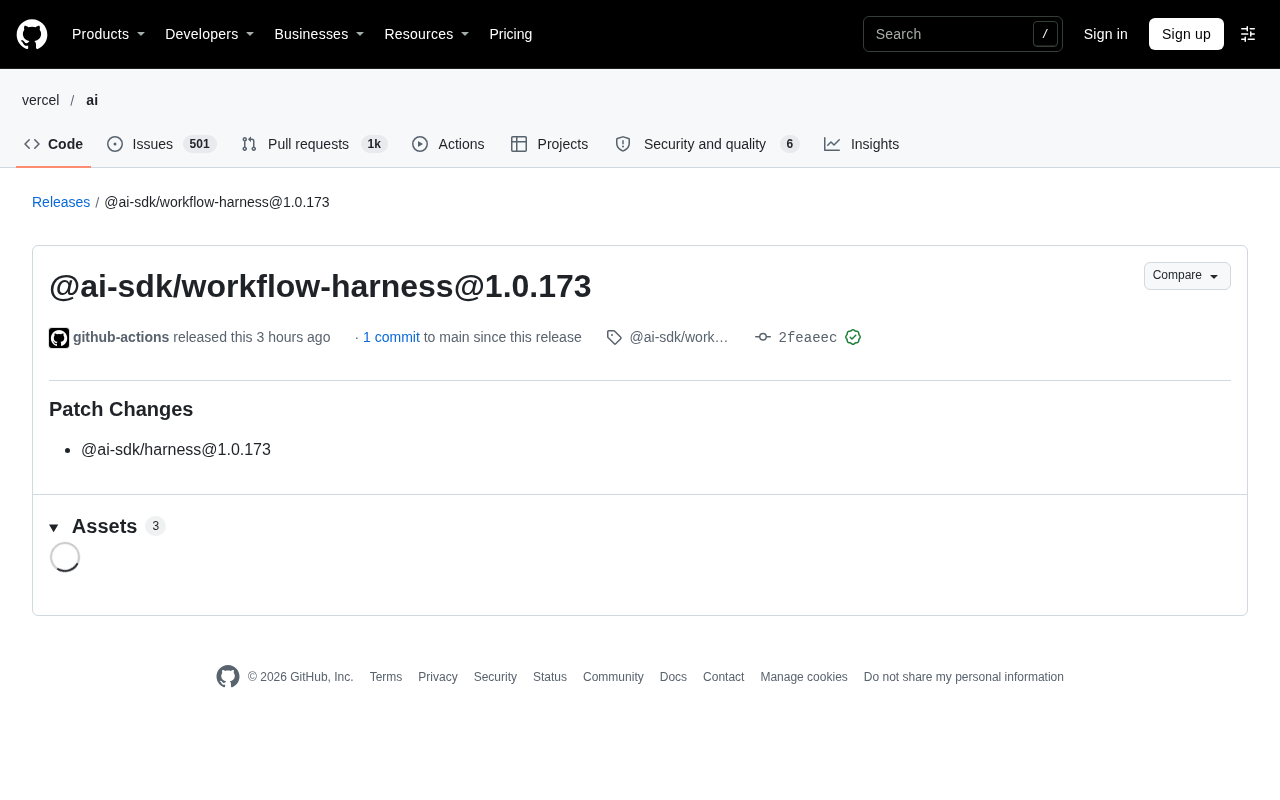
AI SDK Workflow Harness Toolkit 1.0.173 Released: A Patch Update
AI SDK workflow toolkit @ai-sdk/workflow-harness releases patch 1.0.173, syncing the @ai-sdk/harness dependency, auto-published by GitHub Actions with signature verification. This article covers the changes, version-following strategy, and upgrade advice.
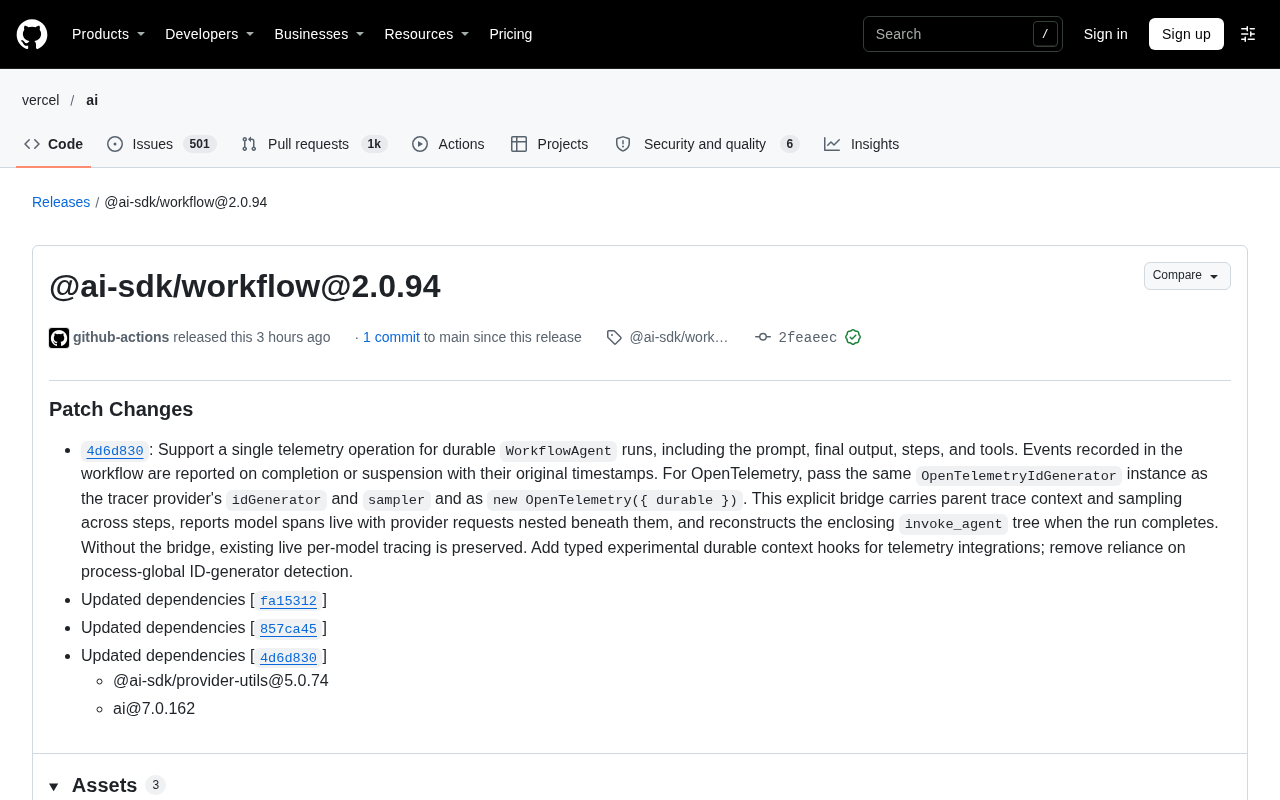
@ai-sdk/workflow 2.0.94 Release: Comprehensive Telemetry Upgrade for WorkflowAgent
@ai-sdk/workflow 2.0.94 introduces a single telemetry operation for durable WorkflowAgent, unifying prompts, outputs, steps, and tool calls with original timestamps and explicit OpenTelemetry bridging.
@ai-sdk/vue 4.0.162 Patch Release: Vue SDK Dependency Chain Synced and Upgraded
@ai-sdk/vue 4.0.162 patch released with dependency-only sync: @ai-sdk/provider-utils bumped to 5.0.74 and ai to 7.0.162. A look at AI SDK monorepo version propagation and Vue adapter upgrade notes.

LangChain's New CleanWeb Tool: 87% Token Compression for Web Scraping with Prompt Injection Defense
New LangChain ecosystem tool langchain-x402-cleanweb released: achieves 87% token compression during web scraping while defending against indirect prompt injection via hidden CSS text and zero-width characters, supports Next.js/Nuxt pre-rendered data extraction and x402 micropayments, with installation and Agent integration examples.
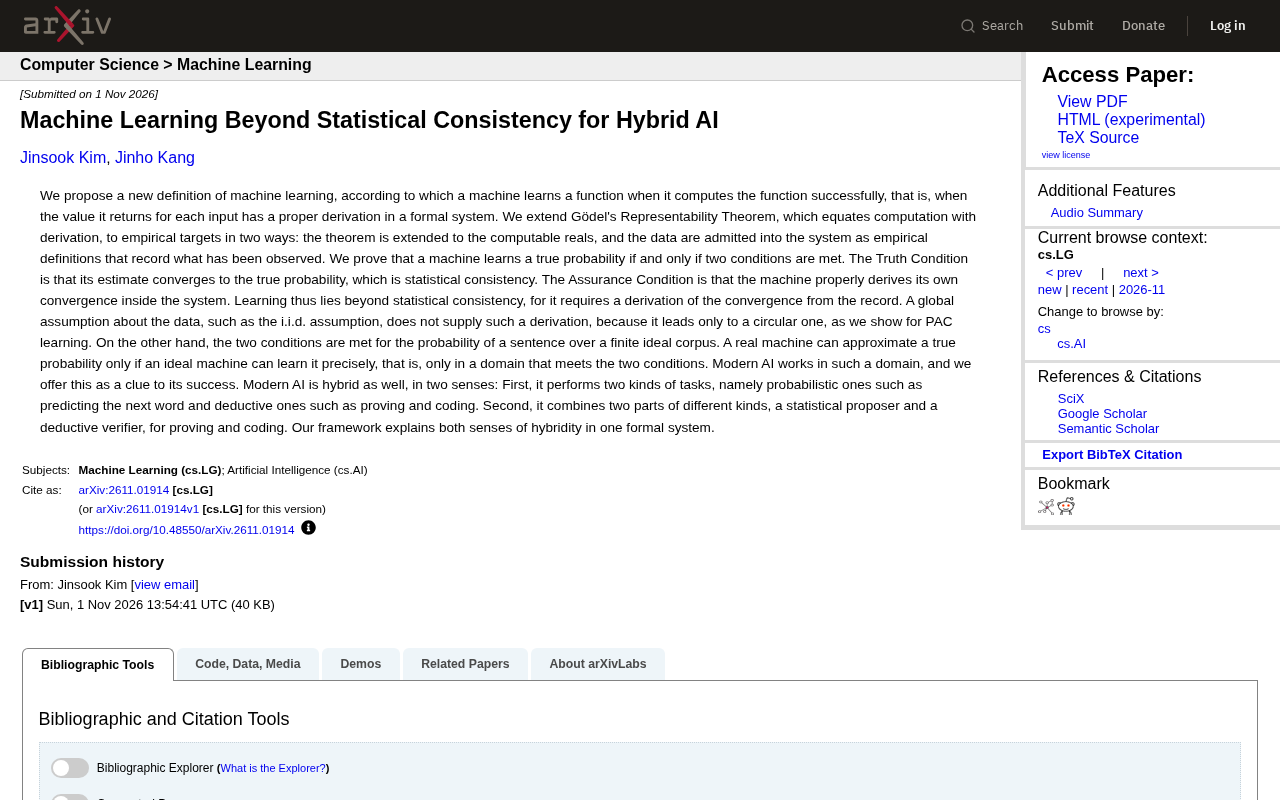
Machine Learning Beyond Statistical Consistency: A New Formal Account of Hybrid AI
A new paper redefines machine learning: it requires not only statistical consistency but also that machines derive their own convergence within a formal system. The framework extends Gödel's representability theorem to the empirical domain and unifies the task-level and architectural hybridity of hybrid AI.
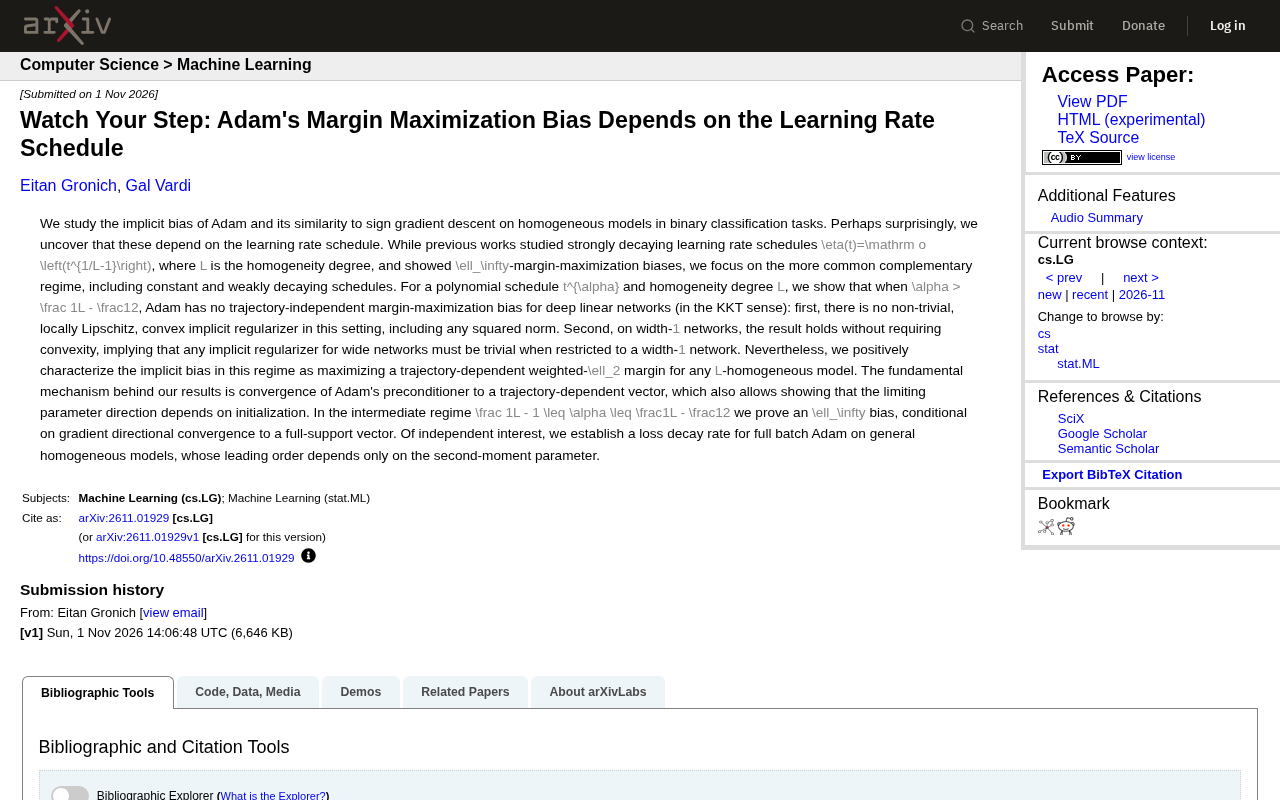
Adam Optimizer's Implicit Bias Depends on Learning Rate Schedule: New Research Reveals
New research reveals Adam optimizer's implicit bias depends on learning rate schedule: under constant or weak decay, Adam no longer has a trajectory-independent ℓ∞ margin maximization bias but maximizes a trajectory-dependent weighted ℓ2 margin.
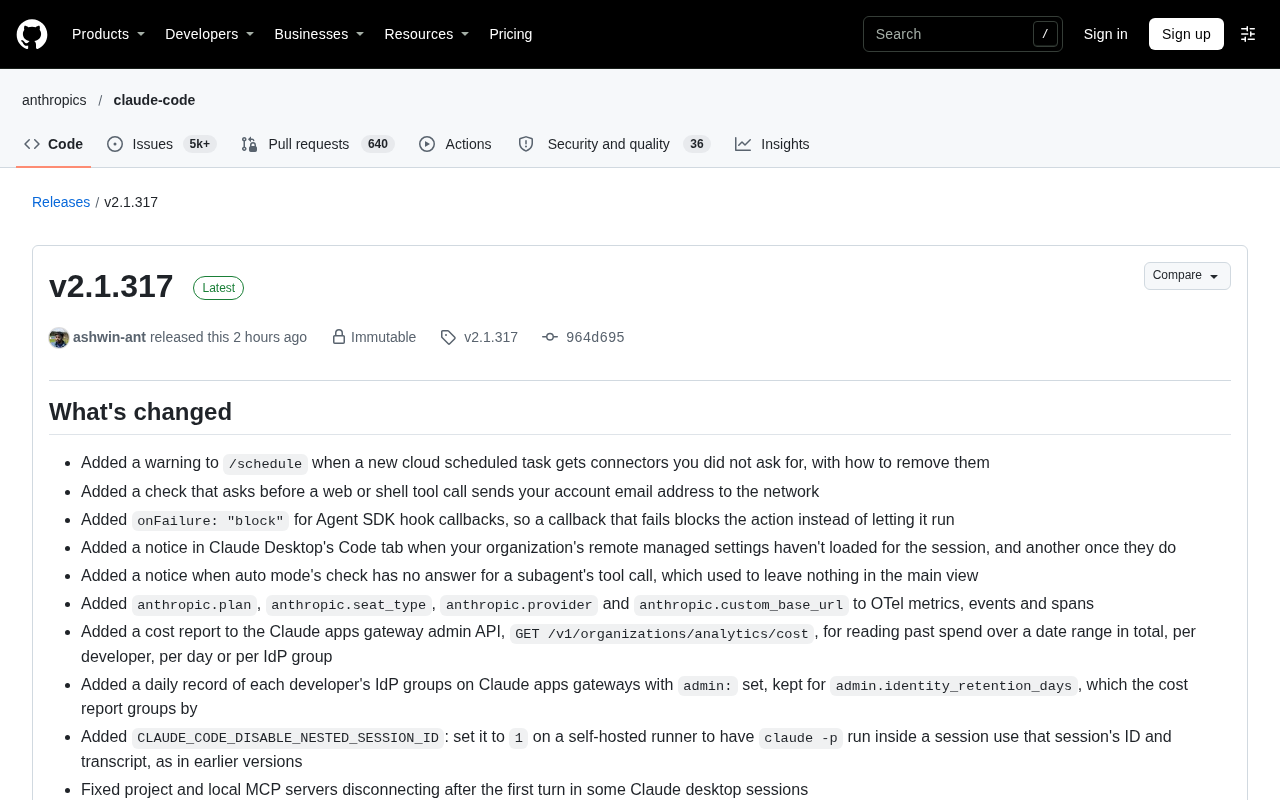
Claude Code v2.1.317 Update Breakdown: Tighter Permission Safety and Enterprise Cost Controls
Claude Code v2.1.317 breakdown: new email-send confirmation, Agent SDK onFailure block hook, gateway cost report API, and OTel dimensions, plus fixes for MCP disconnects and claude -p exit codes.
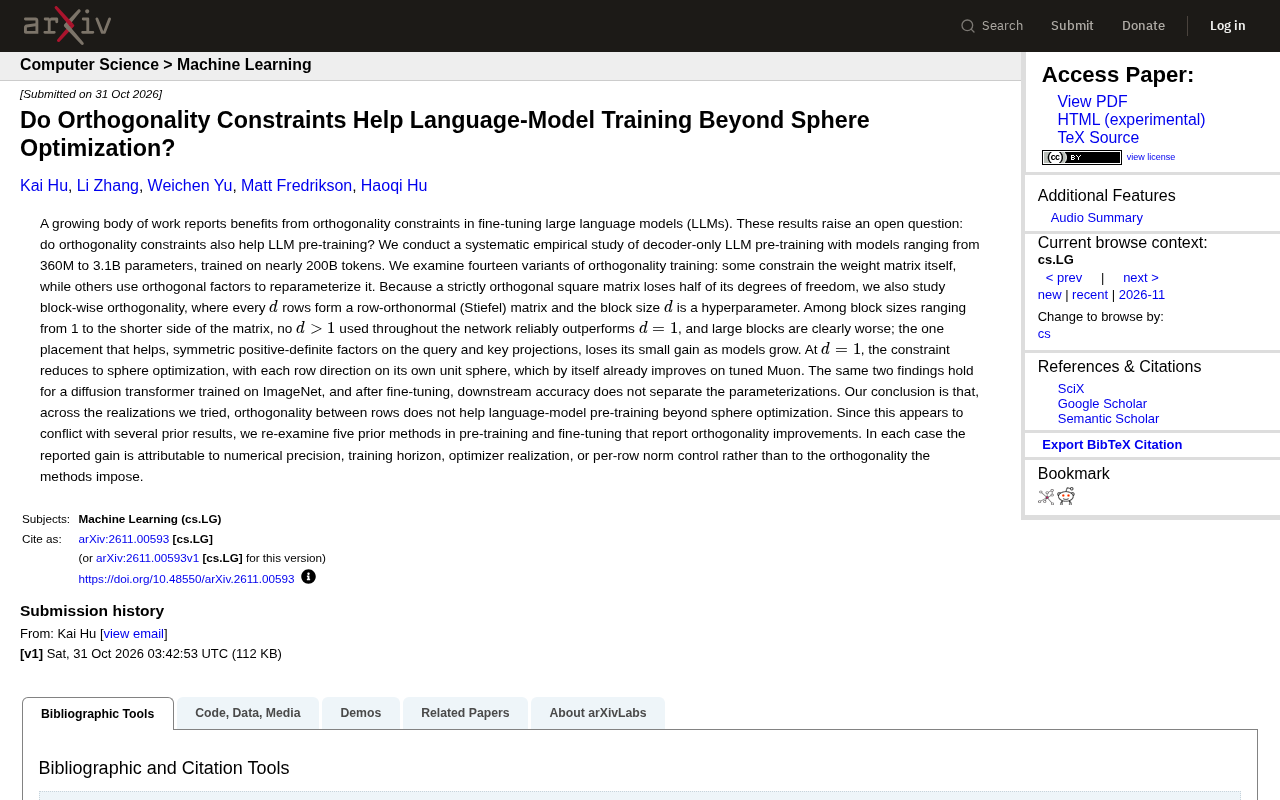
Does Orthogonality Actually Help LLM Pretraining? A Large-Scale Empirical Study Says No
A systematic study pretraining 360M–3.1B LLMs on ~200B tokens finds orthogonality constraints add no benefit beyond sphere optimization; prior gains traced to other factors.

New Method for Compressing Adam Optimizer State: Shared Gradient Bounds Safeguard Update Accuracy
This article introduces a new method for compressing Adam optimizer state: guarded moment compression via shared gradient bounds, ensuring decoded moments can reproduce FP32 updates. Experiments show ~70% reduction in moment payload on OPT-125M and ResNet-18, with first updates staying within tolerance.
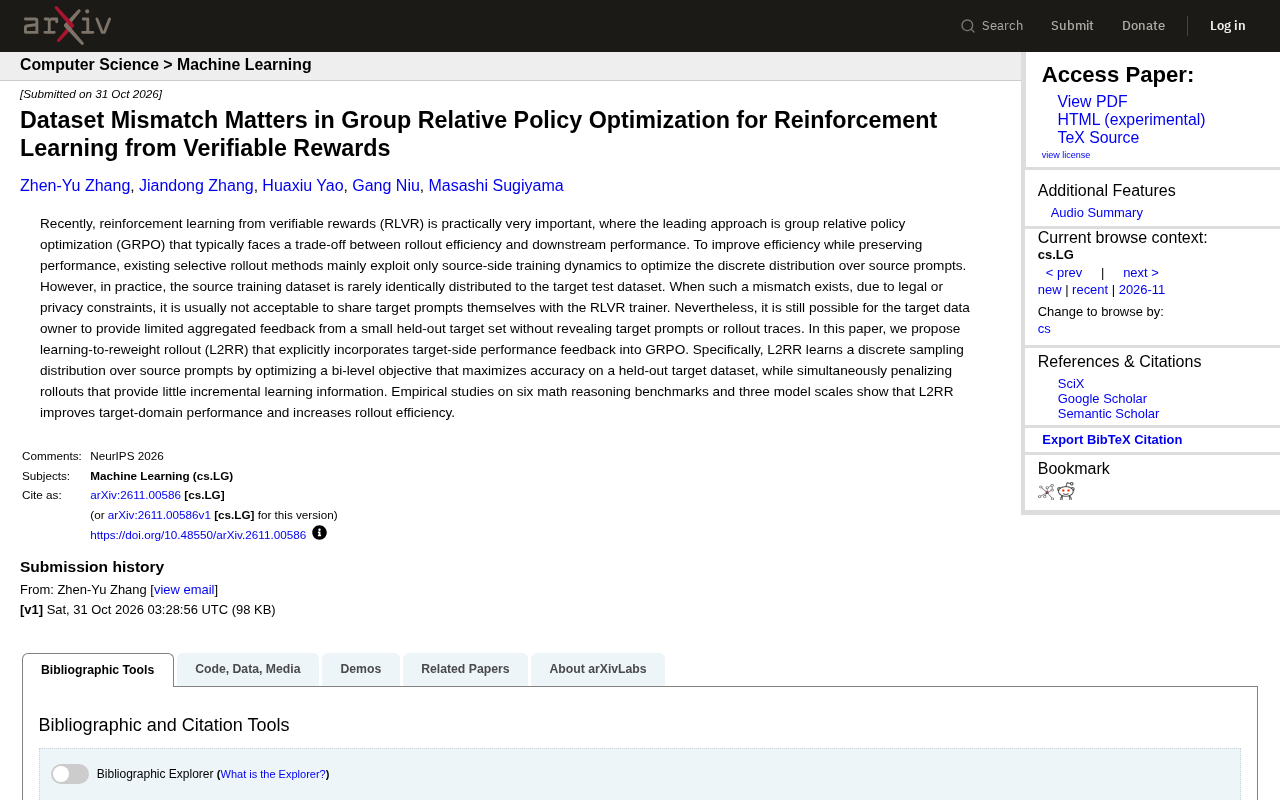
Dataset Mismatch? How L2RR Optimizes GRPO's Rollout Efficiency
GRPO faces a trade-off between rollout efficiency and performance, and existing selective rollout methods ignore source-target dataset mismatch. L2RR learns a reweighted sampling distribution via target-side aggregated feedback, improving target-domain performance and rollout efficiency across six math reasoning benchmarks and three model scales, offering a viable approach for RLVR under privacy constraints.
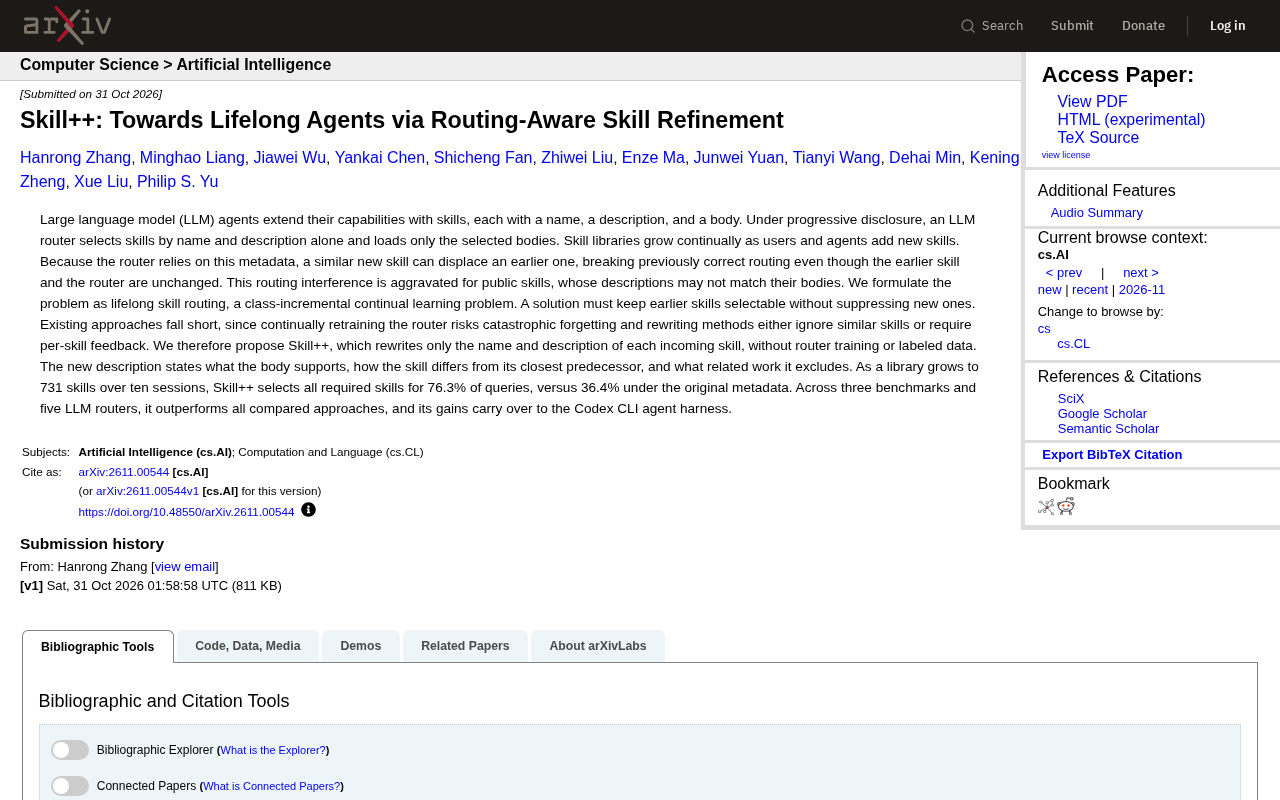
Skill++: Routing-Aware Skill Refinement to Solve Routing Interference in Lifelong Agents
Skill++ introduces routing-aware skill refinement by rewriting new skill names and descriptions to solve routing interference in lifelong agents. On a 731-skill library, routing success rises from 36.4% to 76.3% without training a router or labeled data, and transfers to Codex CLI.

Boundary Contracts: Drawing Clear Permission Boundaries for Coding Agents
A pilot study proposes Boundary Contracts—declaring editable, inspect-only, required, and protected roles for artifacts before coding agents modify repositories. On 40 enterprise tasks, edit-selection F1 and patch acceptability both improved, with gains not explained by file localization alone.