#AI编程
9352 related articles
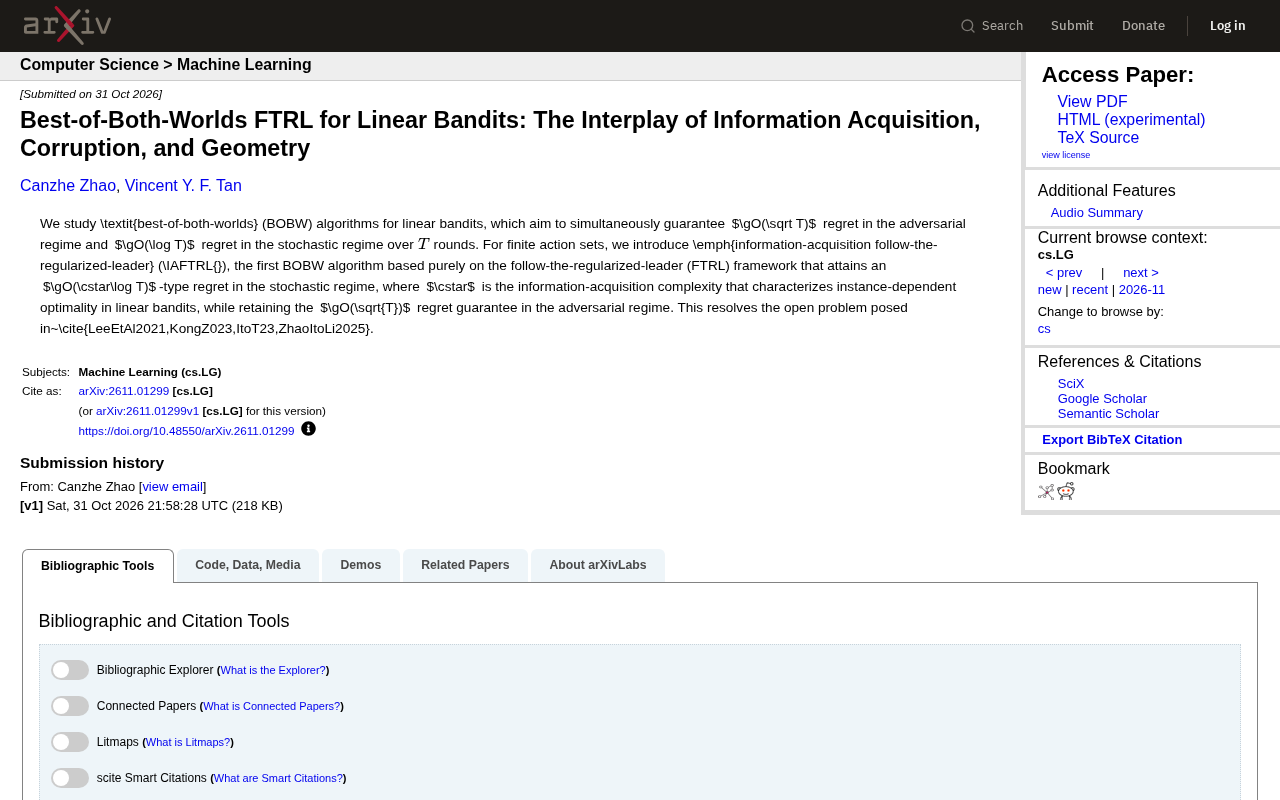
New Breakthrough in Linear Bandits: IAFTRL Achieves Dual Optimality in Stochastic and Adversarial Environments
The paper proposes IAFTRL, the first pure FTRL framework algorithm for linear bandits that achieves best-of-both-worlds, attaining information-acquisition complexity-dependent logarithmic regret in stochastic environments while maintaining square-root regret in adversarial environments, resolving multiple open problems.

New Claude API Feature: Message Threads Let Multi-Turn Chats Send Only New Messages
Claude API launches the Message Threads beta: the server retains conversation state for 5 minutes, so each turn only needs to send new messages, reducing redundant transmission. This article covers how it works, SDK integration, error handling, and applicable limits.
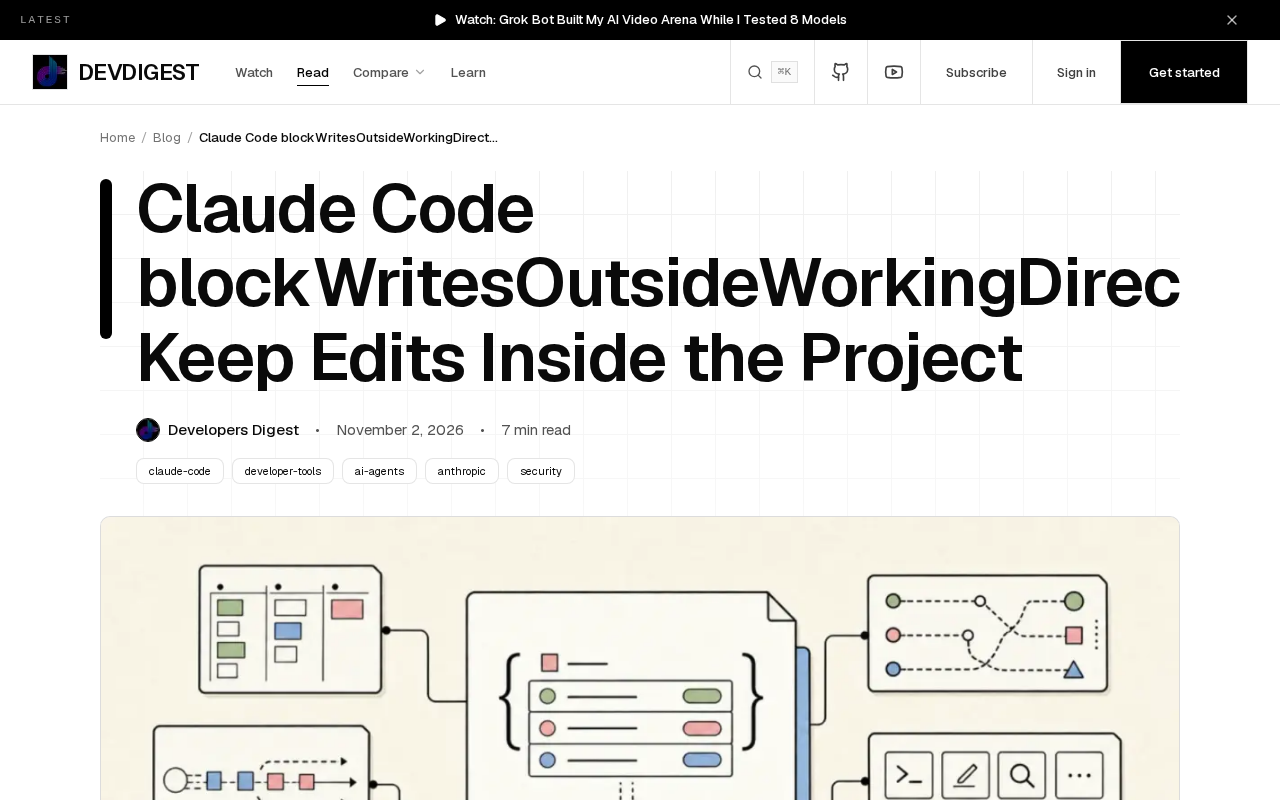
New Claude Code Setting: Lock Down Edit Boundaries with blockWritesOutsideWorkingDirectories
Claude Code 2.1.314 adds the blockWritesOutsideWorkingDirectories setting, making Write, Edit, and NotebookEdit reject paths outside the working directory in all modes, including bypassPermissions. This article analyzes its behavior, relationship with permission modes, and use cases.
OpenAI Builds Its Own Git Backend Pando: A New Version Control Approach for the AI Coding Era
OpenAI launches Pando, a Git-compatible backend designed for the large-scale AI coding workloads brought by Codex. This article analyzes the Git bottlenecks Pando addresses, its compatibility-first architectural trade-offs, and the impact on development teams' version control infrastructure.

VS Code Copilot Agent Fully Explained: 36 Concepts in One Go
A systematic breakdown of the 36 core concepts of VS Code Copilot Agent mode: Agentic Loop, Tools, context window, Instructions files, Skill, MCP protocol, Hooks, subagents, checkpoints and Git version management, plus model selection and cost control strategies—upgrading your understanding from chatbot to true AI Agent.
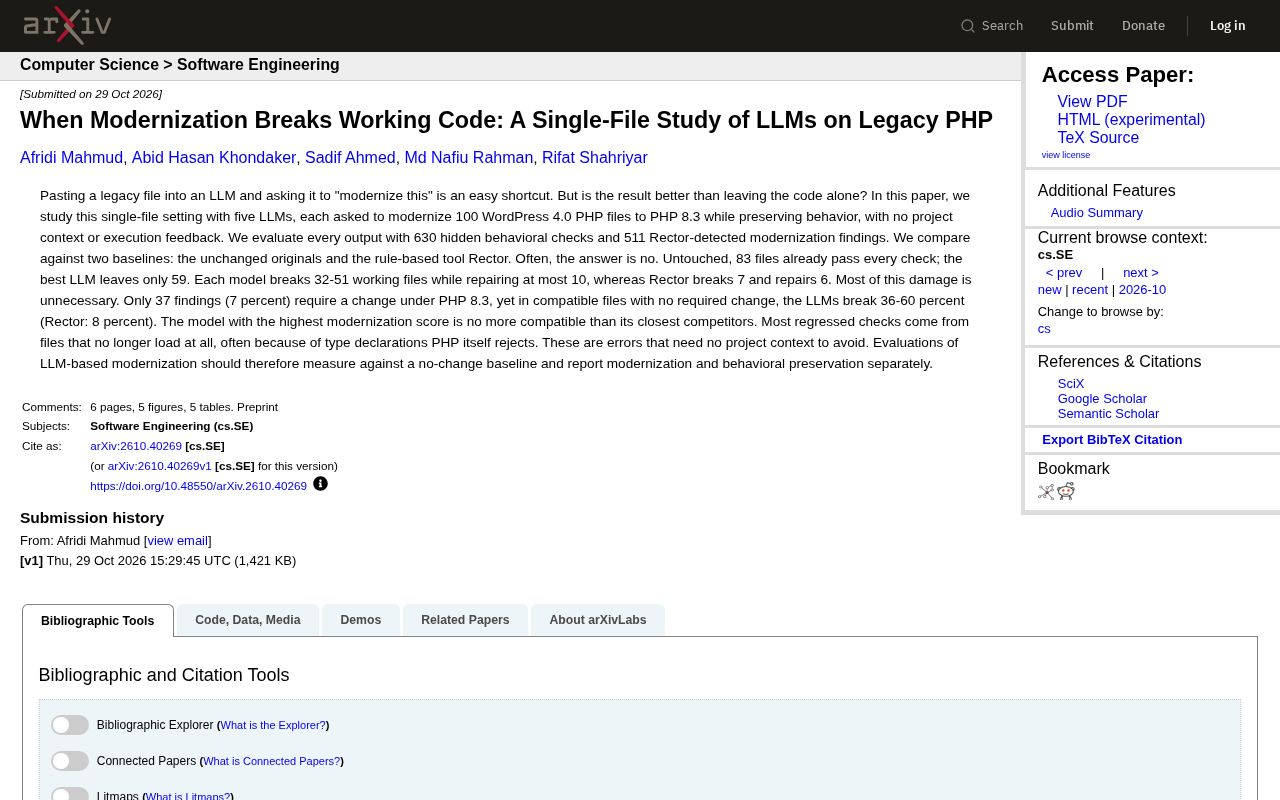
Why Modernization Breaks Working Code: An Empirical Study of LLMs on Legacy PHP
A Hacker News study reveals LLMs modernizing legacy PHP may break working business logic. We analyze the causes and offer practical advice for developers.
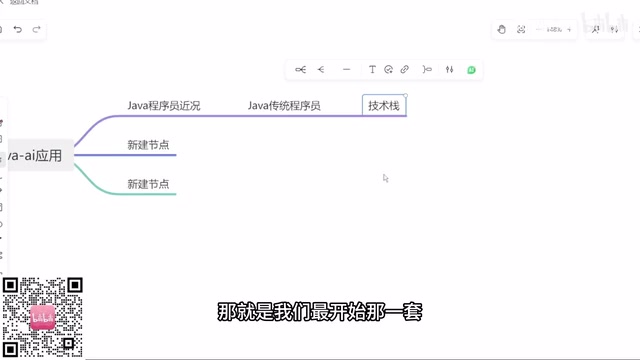
Java Programmers Transitioning to AI Large Model Development: A Complete Guide from Beginner to Practical Application
How Java programmers can transition to AI large model development: based on a Bilibili tutorial, covering new job requirements, Spring AI and LangChain4j, core concepts like streaming output, RAG, and MCP, plus a complete learning path.

AI Agent Automated Vulnerability Discovery Workflow: From Environment Setup to Report Generation
This article explains how AI Agents restructure the vulnerability discovery workflow—from information gathering and intelligent analysis to report generation—while highlighting the pain points of the traditional three-step method, the AI collaboration model, and the irreplaceable role of human verification.
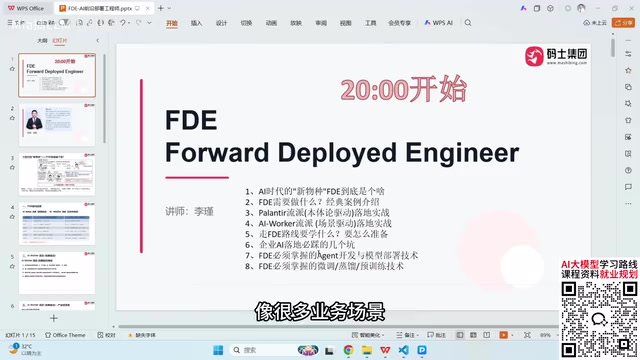
A Beginner's Guide to Forward Deployed Engineers (FDE): The New Species of the AI Era
An analysis of the origins, role positioning, and core skill path of FDEs (Forward Deployed Engineers): from Palantir's deep customization model to Agent development, fine-tuning, and RAG practice in the AI era, covering common pitfalls in enterprise implementation and capability profiles, offering an introductory reference for developers interested in this direction.
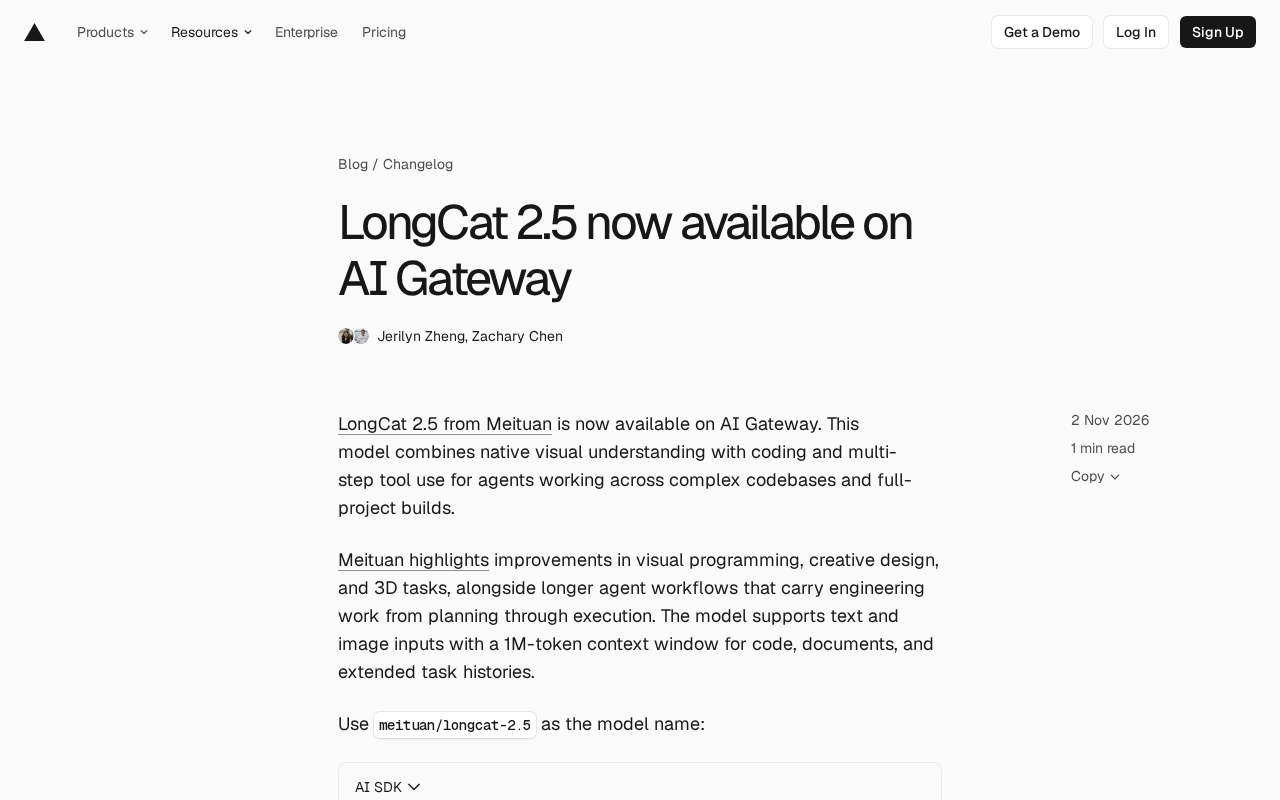
Meituan's LongCat 2.5 Lands on AI Gateway: 1M Context + Visual Coding
Meituan's LongCat 2.5 launches on AI Gateway, combining native visual understanding, coding, and multi-step tool calling, with text and image input and a 1M-token context window. It can be invoked via the model name meituan/longcat-2.5 in tools like AI SDK, Claude Code, and Cursor.
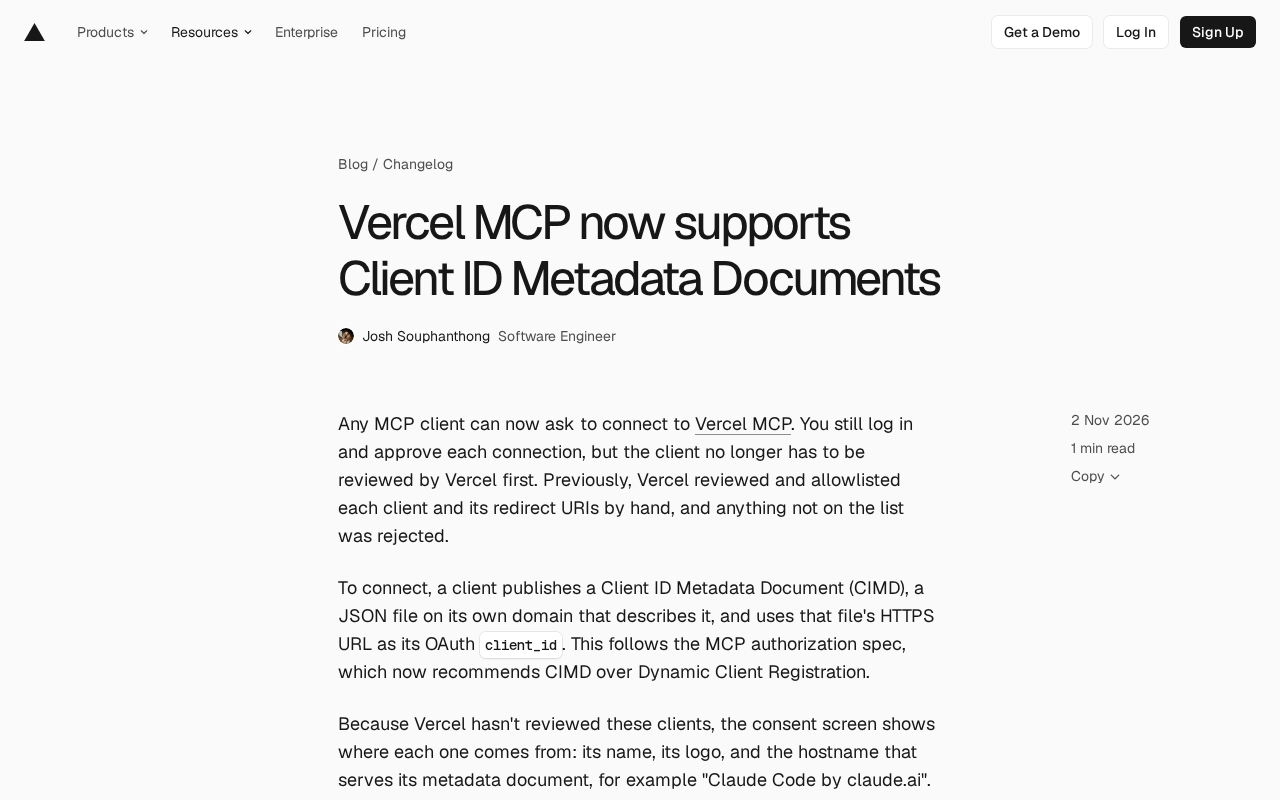
Vercel MCP Opens Access: Replacing Manual Review with CIMD
Vercel MCP now supports Client ID Metadata Documents, allowing any MCP client to request a connection without manual review. This article explains how CIMD works, how trust is displayed on the consent screen, and its impact on open access in the MCP ecosystem.
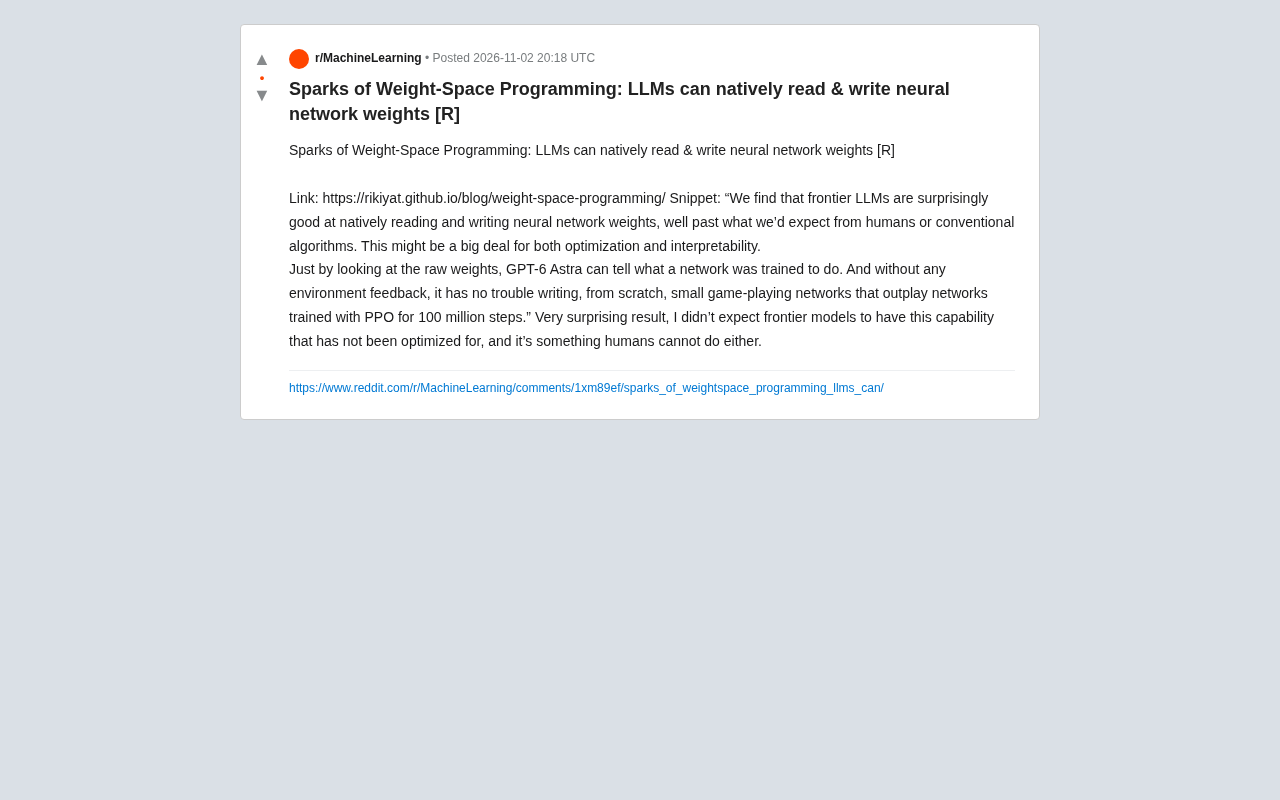
LLMs Natively Read and Write Neural Network Weights: A Breakthrough in Weight-Space Programming
Frontier LLMs can natively read and write neural network weights: GPT-6 Astra identifies network functions from weights alone and writes small game networks from scratch that beat PPO training. This unoptimized capability could disrupt optimization and interpretability research.
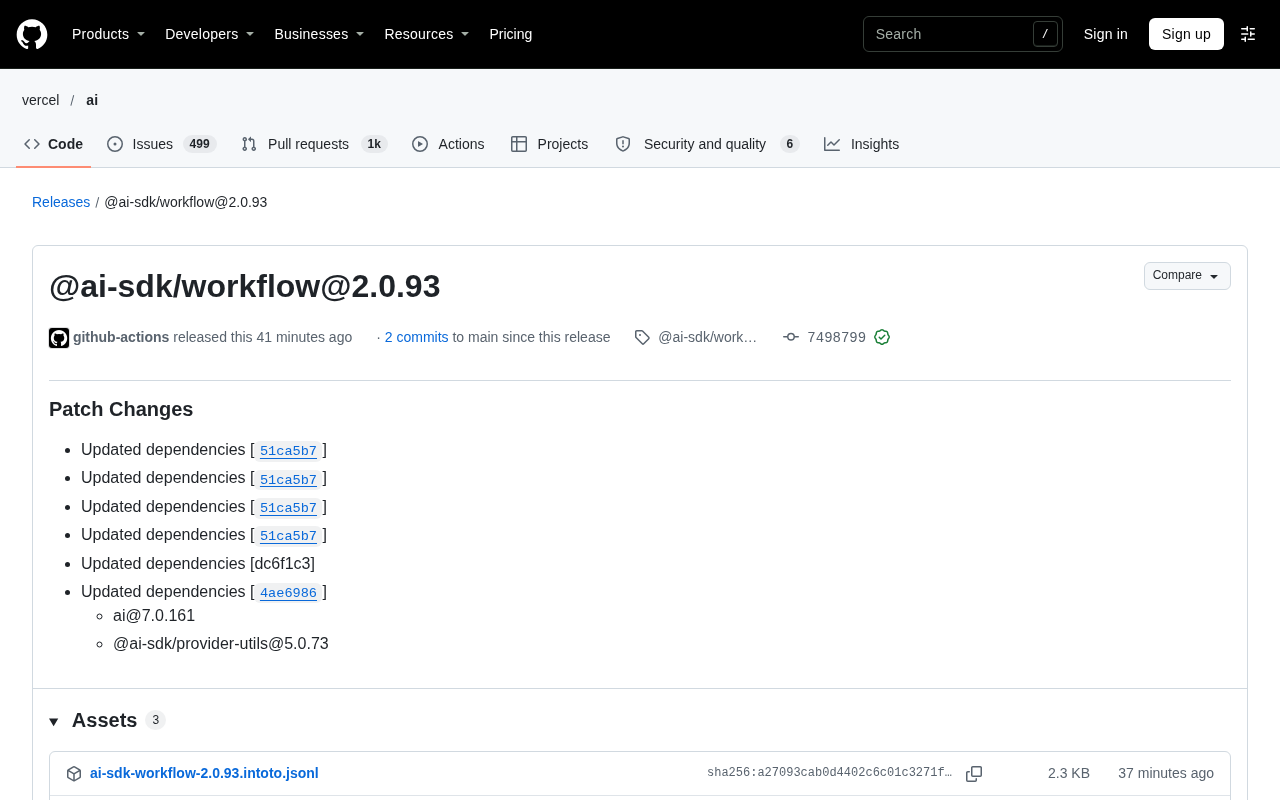
AI SDK Workflow 2.0.93 Update Analysis
AI SDK workflow package @ai-sdk/workflow releases patch 2.0.93, mainly synchronized dependency upgrades: ai to 7.0.161 and provider-utils to 5.0.73. This article analyzes the update, its practical impact on developers, and upgrade recommendations.
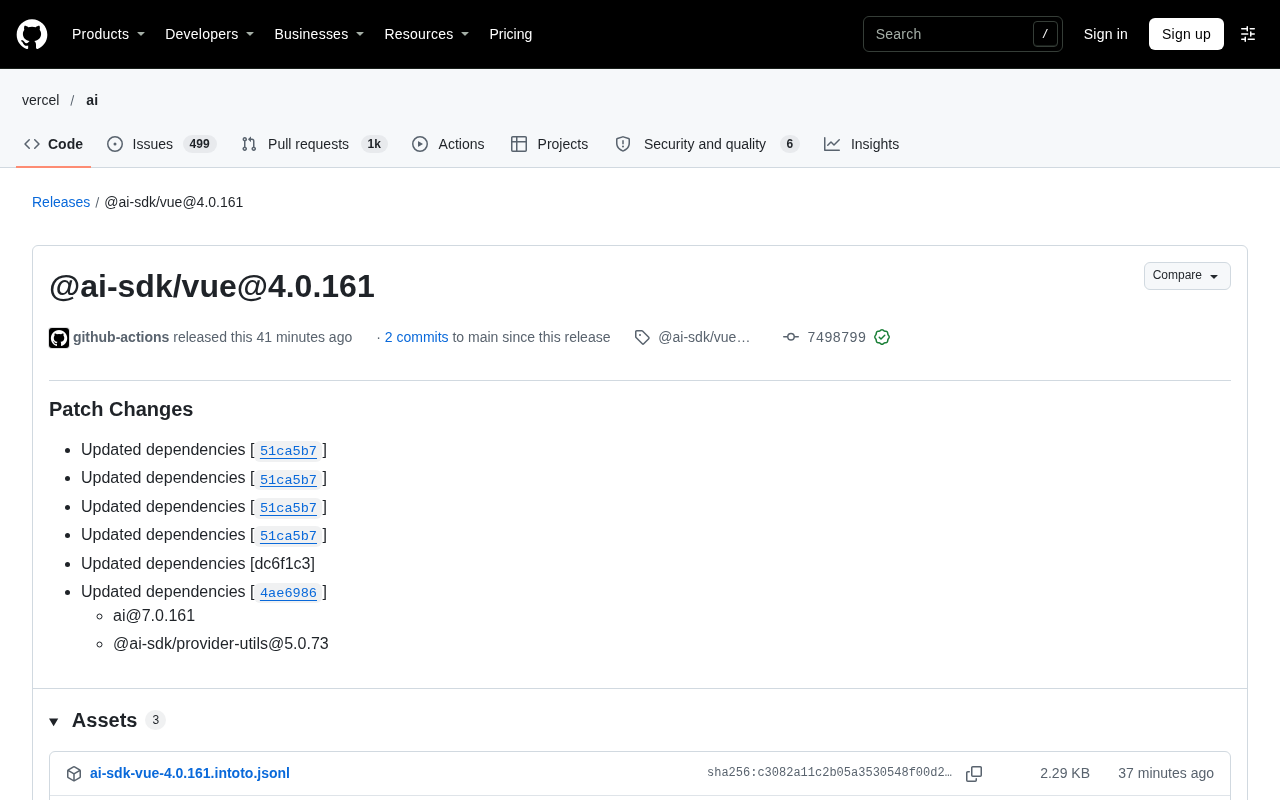
AI SDK Vue 4.0.161 Patch Released: Dependencies Synchronized
@ai-sdk/vue releases patch 4.0.161, synchronizing ai@7.0.161 and @ai-sdk/provider-utils@5.0.73 dependencies. This article explains the patch's positioning, dependency propagation, and upgrade impact for Vue AI app developers.
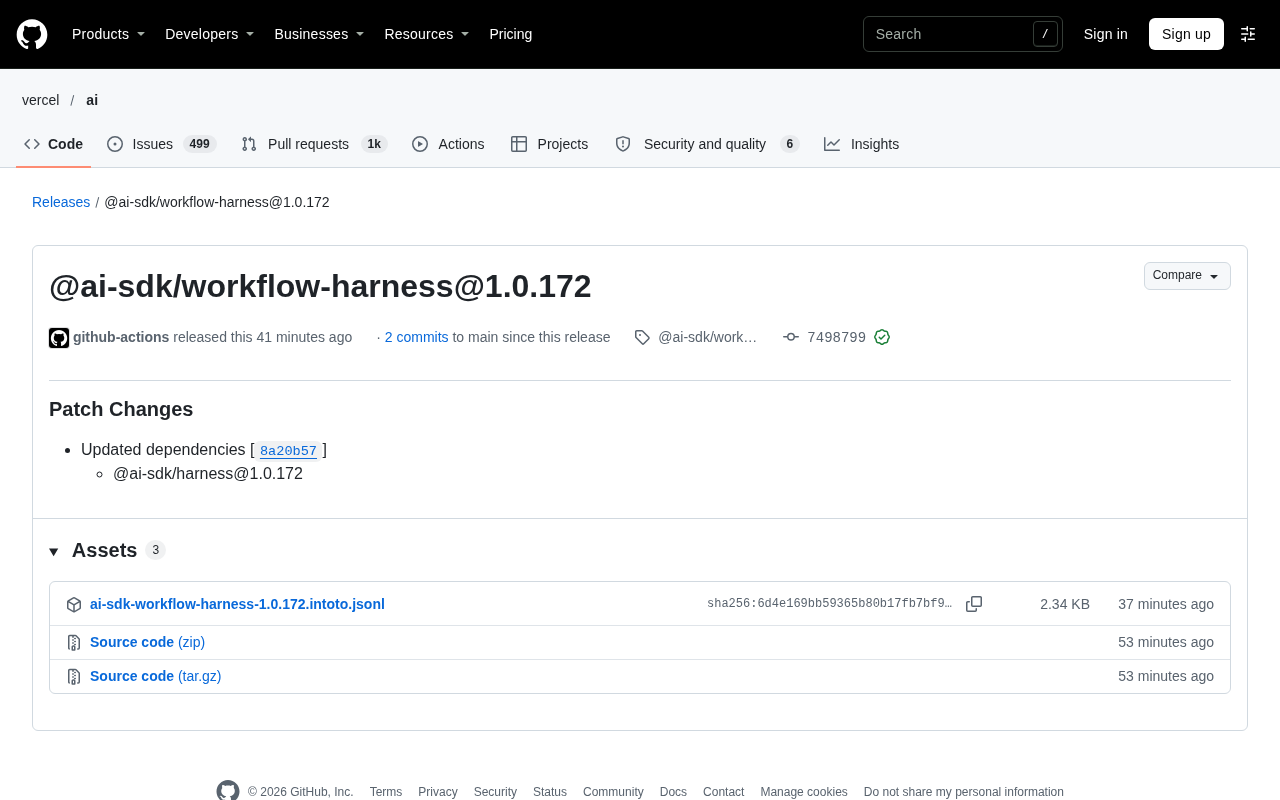
AI SDK Workflow Harness Releases 1.0.172 Patch Update
AI SDK's @ai-sdk/workflow-harness releases patch version 1.0.172, syncing the @ai-sdk/harness dependency to the same version, auto-published via GitHub Actions with signature verification—a low-risk maintenance update.
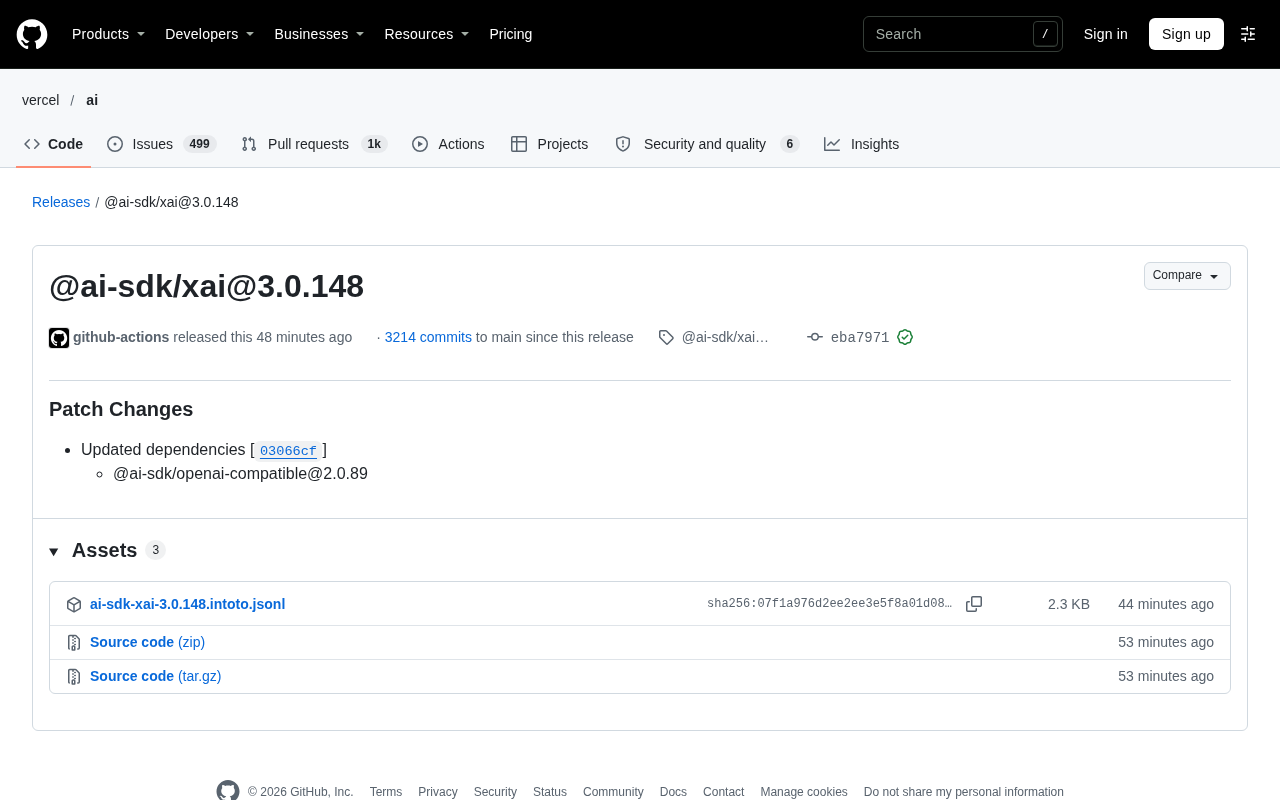
Vercel AI SDK's xAI Adapter Package Gets a Minor Version Update
Breaking down the @ai-sdk/xai@3.0.148 release: a Patch update that syncs @ai-sdk/openai-compatible to 2.0.89, with no feature or API changes, plus upgrade notes and AI SDK release cadence.
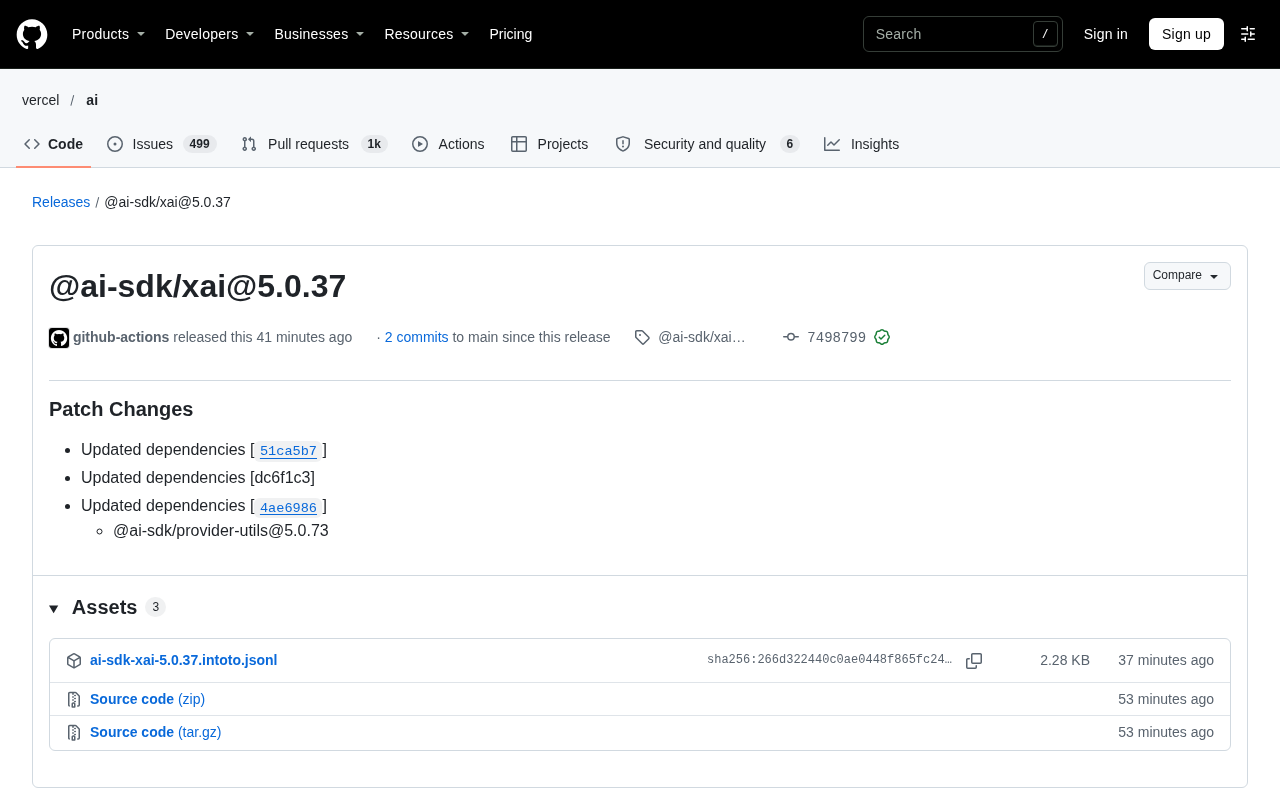
@ai-sdk/xai 5.0.37 Patch Release: The Ecosystem Signals Behind a Dependency Update
@ai-sdk/xai 5.0.37 patch release syncs dependencies to @ai-sdk/provider-utils 5.0.73. Here's what this automated release reveals about the layered architecture, developer impact, and xAI adapter maturity.
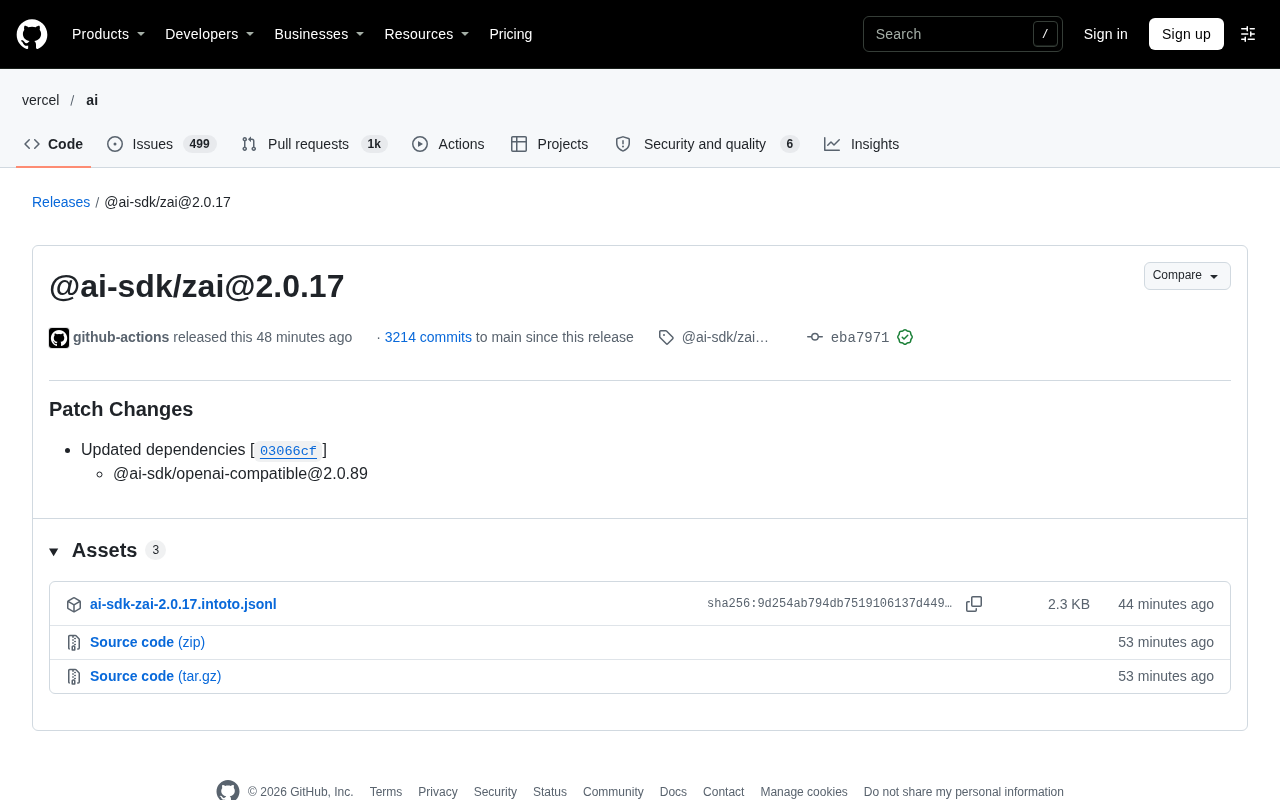
AI SDK Releases @ai-sdk/zai 2.0.17 Patch Update
AI SDK releases @ai-sdk/zai 2.0.17, a patch version that syncs @ai-sdk/openai-compatible to 2.0.89. This article explains what the dependency sync means for Zhipu AI Provider users and offers upgrade advice.
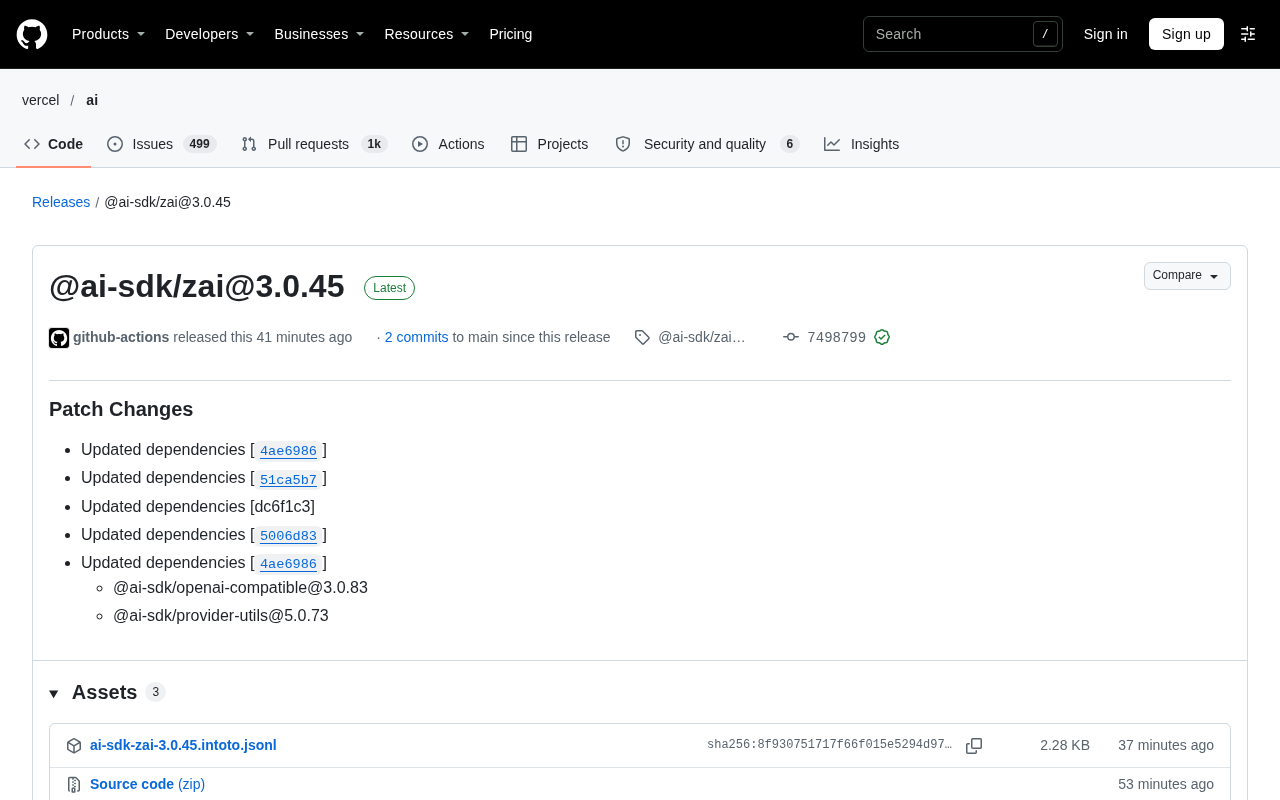
The zai adapter package for AI SDK gets an update: the dependency governance logic behind a patch release
An analysis of the @ai-sdk/zai@3.0.45 patch release: this update only synchronizes two upstream dependencies, @ai-sdk/openai-compatible@3.0.83 and @ai-sdk/provider-utils@5.0.73, with no functional changes. The article examines dependency governance logic, upgrade risk assessment, and the practical impact of automated release patterns on users.

How to Safely Ship AI-Written Code? Breaking Down the Claude Code Team's Review Process
Anthropic shares the Claude Code team's code review process: local verification, CI, multi-agent AI review, security review, risk-tiered human approval, and fast rollback—merged PRs doubled while rollback rate dropped over 40%. This article breaks down each stage and analyzes where human attention should focus.