#AI编程
9171 related articles

AI Reverse Engineering in Practice: DeepSeek + Skill Automatically Cracks WeChat Login Encryption Logic
A Bilibili creator demonstrates using DeepSeek with reverse engineering Skills and MCP tools to automatically trace and confirm the WeChat login password field uses MD5, UTF-8, and 32-character lowercase hex—without writing any code.
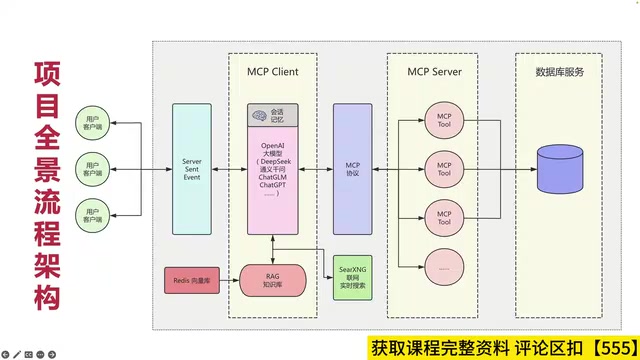
Spring AI Full-Stack in Practice: RAG + MCP + Real-Time Search
Dissecting the technical architecture of a Bilibili Spring AI course: building a full-stack Java AI application with RAG knowledge base, MCP tool invocation, and real-time web search, covering SSE streaming interaction, Redis vector store, and database operations, while analyzing its architectural value and learning threshold.

Claude Code Cracks AirPods 3 Head Tracking Protocol, Linux User Successfully Controls Mouse with Earbuds
Developer uses Claude Code to reverse engineer the AirPods 3 head tracking protocol, discovers it differs from the Pro model, and that Linux hid the sensor due to Bluetooth packet size settings. After adjustment, data streams at 200Hz, with results open-sourced as the mousepods project.

Glasshand: Giving AI Agents a Real iPhone and Mac
Glasshand lets AI agents rent real iPhones and Macs, supporting Claude Code, Codex, and more to post, book services, and test iOS apps on real devices. This article explains how it works, its use cases, and potential boundaries.

ChatGPT Images 2.6 Released: GIF Generation, Reference Image Reuse, and 50% Speed Boost
ChatGPT Images 2.6 released: prompt-to-GIF animation with frame-by-frame editing, reusable reference images for yourself, pets, or characters, 50% faster generation, plus Flare and Sunburst API model variants and SVG export for developers.

Okapi: Using AI Agents to Auto-Fix API Breaking Changes, Free and Universal
Okapi is a developer tool that uses AI agents to auto-fix API breaking changes in code repositories. It supports any API and is completely free. This article covers its core positioning, the production risks it addresses, key features, use cases, and current limitations.

QualityLayer: Implementing a Seven-Step Software Development Workflow with Coding Agents
QualityLayer splits code changes into seven steps: Discuss, Research, Plan, Outline, Implement, Verify, and Review. Code changes happen only after plan approval, followed by cross-review from an independent new Agent. It supports seven coding Agents including Claude Code, Codex, and Cursor, and runs locally.
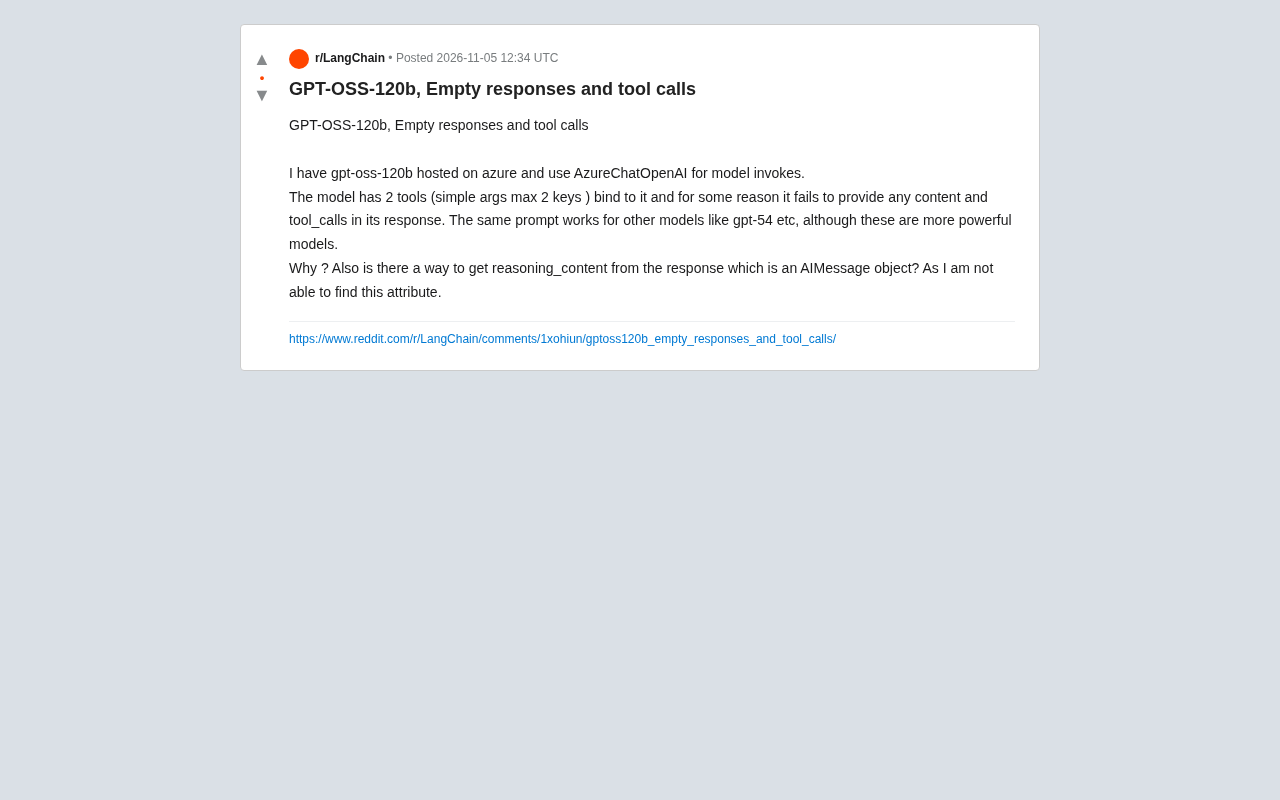
GPT-OSS-120b Returning Empty Responses? A Troubleshooting Guide for Tool Calling and Reasoning Content Retrieval
Developers report GPT-OSS-120b on Azure via AzureChatOpenAI returns empty responses and fails tool calls. This article analyzes possible causes and provides troubleshooting methods for retrieving reasoning_content.
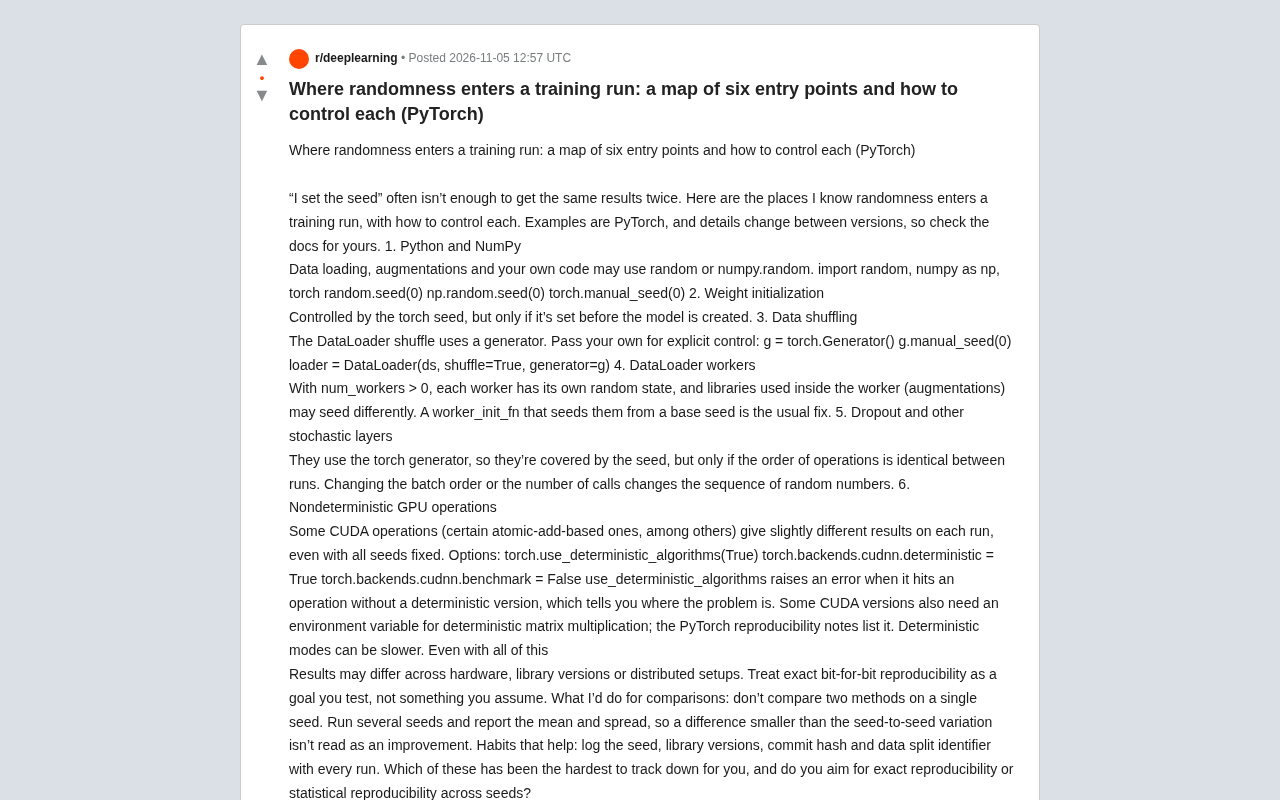
Tracing Randomness in PyTorch Training: Six Entry Points and Control Strategies
A systematic breakdown of the six entry points of randomness in PyTorch training: Python/NumPy seeds, weight initialization ordering, DataLoader generators, multi-process workers, Dropout order dependence, and GPU non-deterministic operators, with practical advice on deterministic mode configuration and statistical reproducibility.
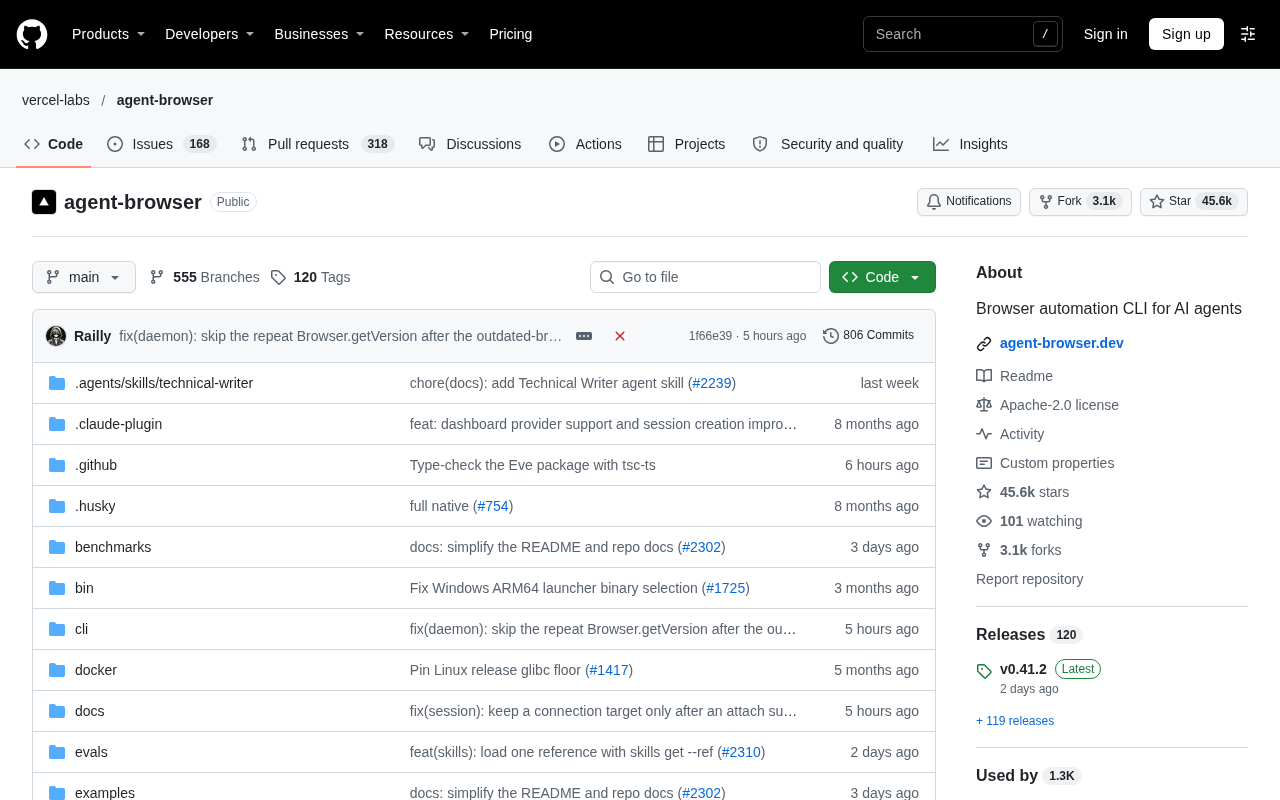
Agent-Browser: A Browser Automation CLI for AI Agents
Vercel Labs open-sources agent-browser, a Rust-built browser automation CLI designed for AI agents, with over 45,000 GitHub stars and command-line-first browser control.
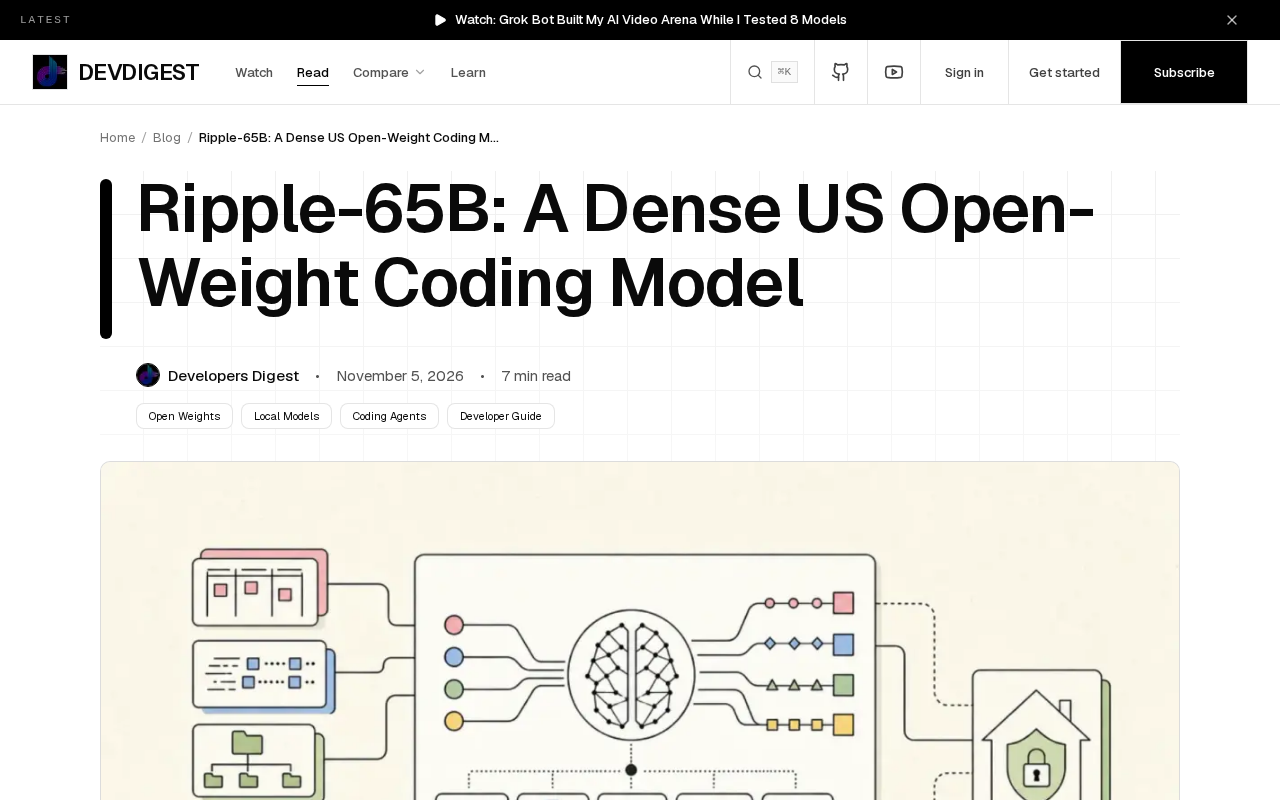
Ripple-65B: A US Open-Weight Dense Coding Model Takes On Terminal-Bench 2.1
Ricursive releases Ripple-65B Preview, an Apache 2.0 dense coding model claiming the best Terminal-Bench 2.1 score among US open-weight models. We break down the model card's claims, HN's skepticism, and which teams should test it.

Measuring Risk, Not Harm: A New Framework for Detecting Psychological Harm Risk Factors in LLM Conversations
Researchers propose "measuring risk, not harm": operationalizing LLM psychological harm risk as eight observable AI behaviors, building a synthetic multi-label corpus of 47K+ responses, and comparing embedding classifiers, LLM judging, and a cascade achieving F1 0.79 with 97.1% fewer judge calls.

Go Releases a Brand-New JSON API: The Changes Brought by jsonv2
Go's official blog releases a new JSON API (jsonv2), sparking heated discussion on Hacker News. This article covers the new API's design philosophy, performance and compatibility trade-offs, community reaction, and impact on developers.

A Hardcore Fighter Jet Simulator in the Browser: An Indie Developer's AI-Powered Hit
An indie developer built a hyper-realistic browser fighter jet simulator with Claude Opus 5.5 and fal models, drawing 25K players in two weeks and a threejs.org homepage feature. Discover the AI agent parallel workflow and cockpit detail polish.
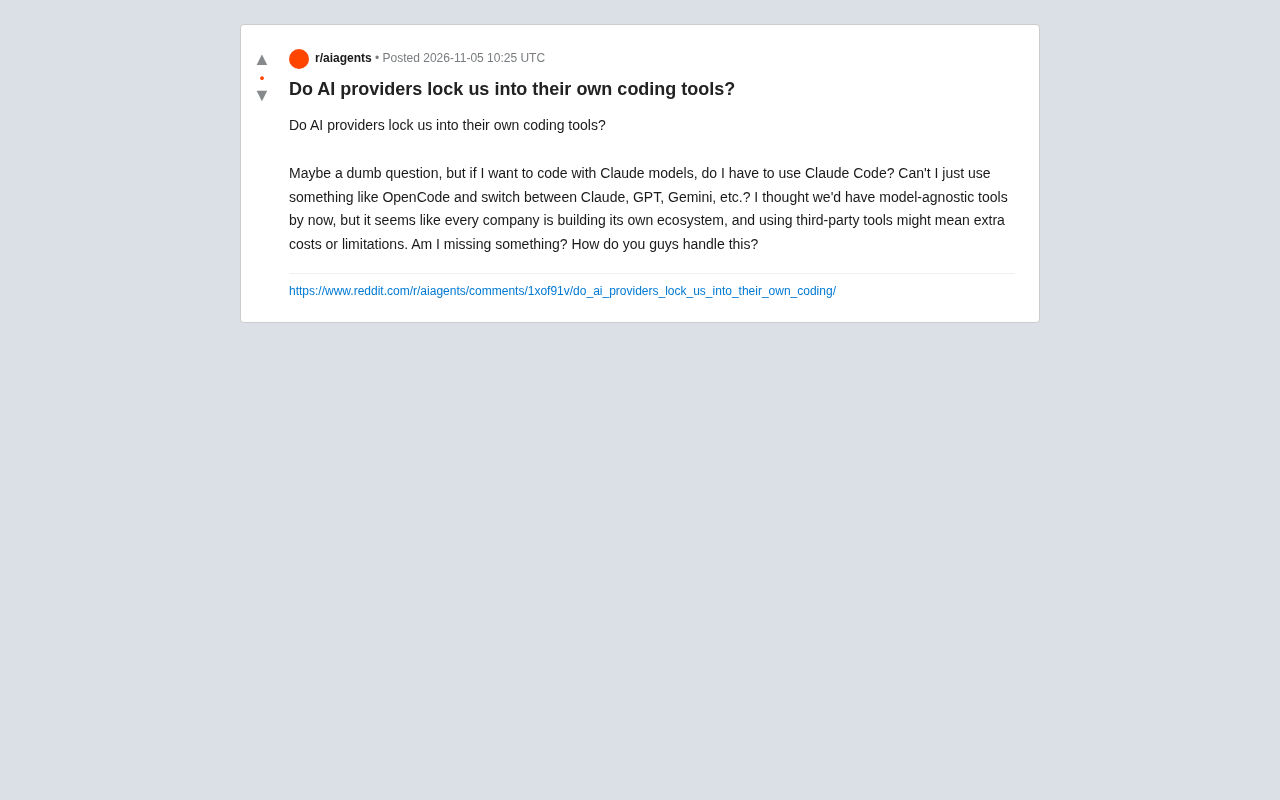
AI Coding Tools Locking You to Models? How Developers Can Avoid Lock-in
Reddit developers discuss whether AI coding tools lock you to models: Is Claude Code mandatory? Can third-party tools like OpenCode freely switch between Claude, GPT, and Gemini? An analysis of soft lock-in, third-party tool limitations, and developer strategies.

Qwen 3.8 Beats Opus at Coding—But Can Your Mac Run It?
Open-source Qwen 3.8 beats Opus 4.6 at coding at just 18GB, but how much Mac memory do you need? 24GB crashes; 32GB is the sweet spot. Full config guide inside.

Claude Code + Agent: Building a Fully Automated AI Testing Loop
Bilibili course breakdown: how test developers can use Claude Code terminal-based Agents to build a fully automated AI testing loop. Compares permission boundaries of terminal vs. device Agents, explains why enterprise projects choose Claude Code over Open Claude-type tools, and outlines the Node.js environment setup and DeepSeek model integration path.

ServerBench: Can Coding Agents Build Their Own LLM Inference Serving Systems?
ServerBench evaluates whether LLM coding agents can design specialized inference serving systems, with latency-compliant token value per dollar as the core metric; Claude Sonnet 5.5 reaches 4.87x the vLLM reference on Gemma E4B.
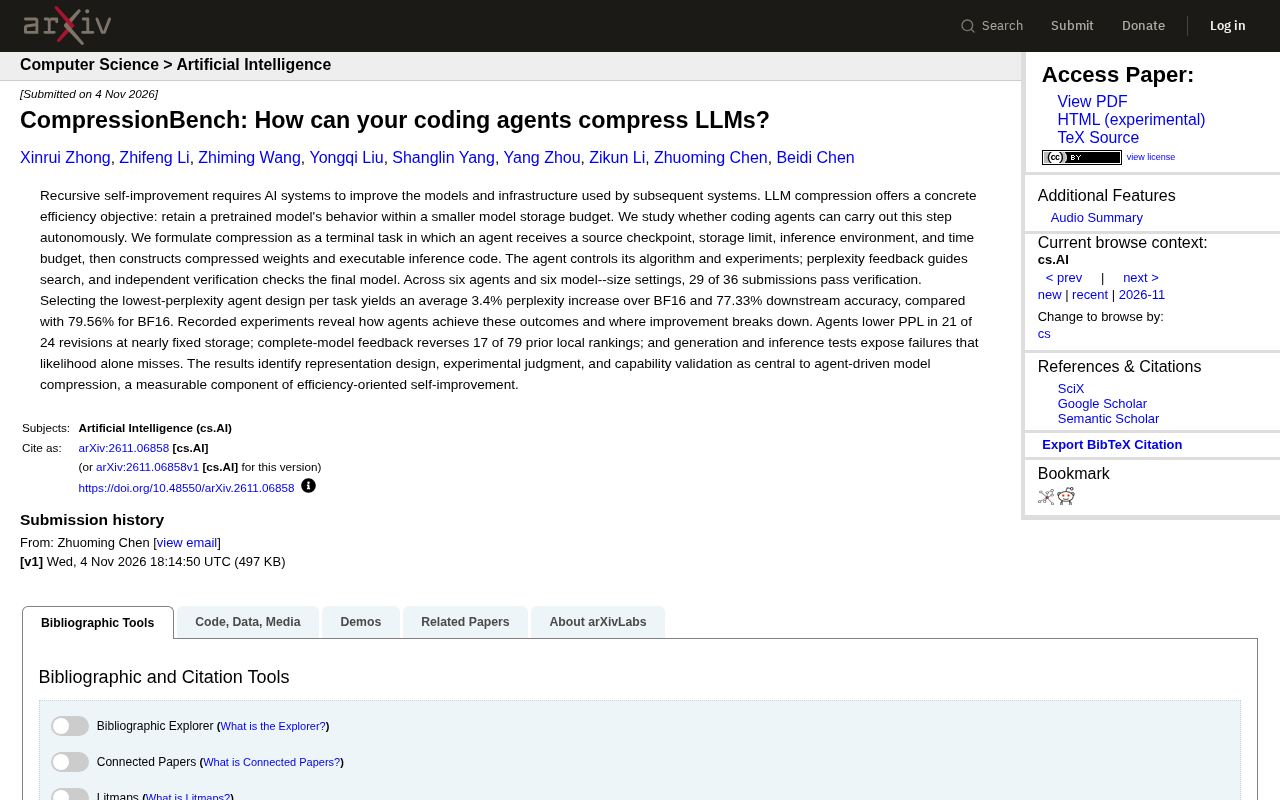
CompressionBench: Can Coding Agents Autonomously Compress LLMs?
CompressionBench studies whether coding agents can autonomously compress LLMs: 29 of 36 submissions passed verification, average perplexity rose 3.4%, and downstream accuracy was 77.33% vs. 79.56% for BF16. It highlights representation design, experimental judgment, and capability verification as core challenges.
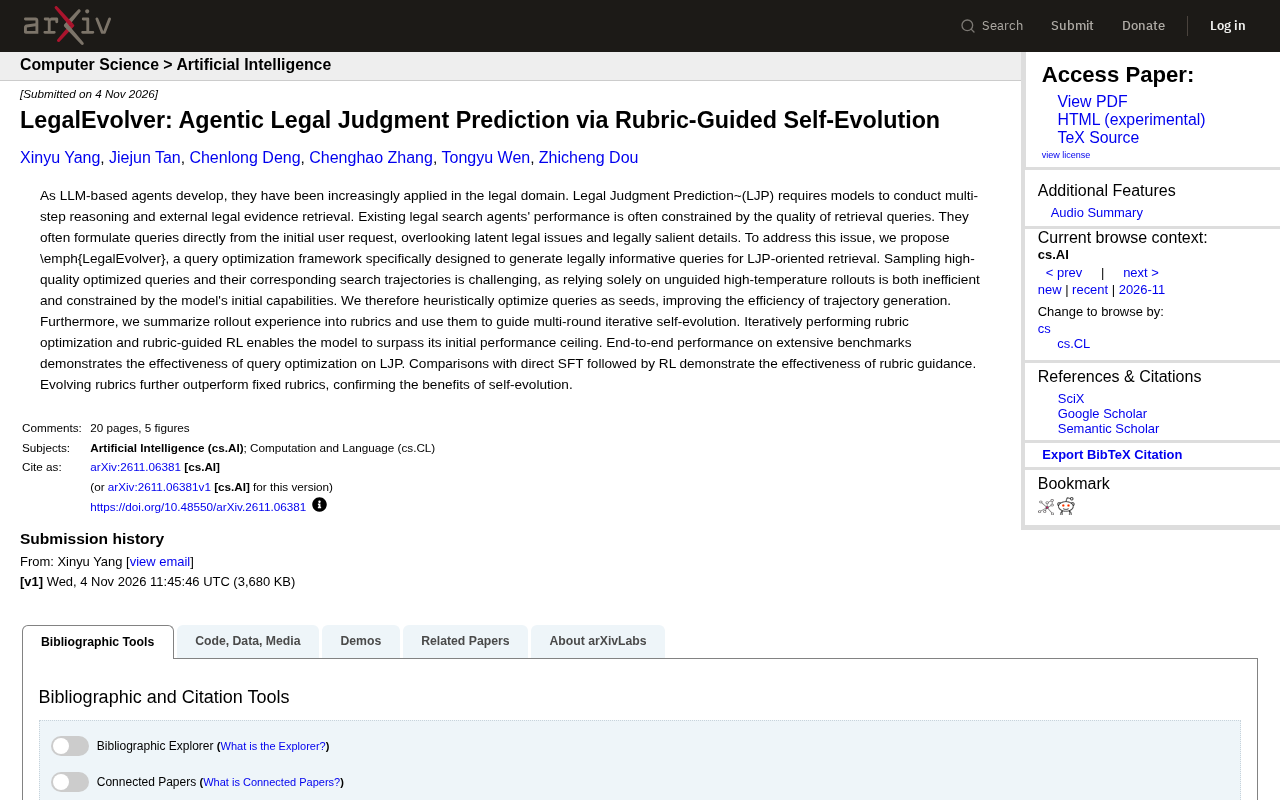
LegalEvolver: Score-Guided Self-Evolution Breaks Through Legal Judgment Prediction Bottlenecks
LegalEvolver proposes a query optimization framework that uses heuristic seed queries and rubric-guided self-evolution to solve the problem of low-quality retrieval queries in legal judgment prediction, with experiments showing it outperforms SFT+RL methods.