A Beginner's Guide to Vibe Coding: Turning Product Ideas into Reality with AI Programming — No Coding Experience Required
A Beginner's Guide to Vibe Coding: Tur…
Vibe Coding lets anyone turn product ideas into working software by describing requirements to AI.
Vibe Coding is a new programming paradigm where you describe what you want in natural language and let AI generate the code. Coined by Andrej Karpathy in 2025, it shifts the focus from writing code to communicating clearly. This guide covers the core concepts, explains why product managers are naturally suited for it, walks through Miniconda virtual environment setup, and shares practical tips for iterative AI-assisted development.
What Is Vibe Coding? A Completely New Programming Paradigm
Have you ever had this experience: a brilliant idea for an app or website suddenly pops into your head, you're buzzing with excitement, but then the thought "I can't code" hits you, your enthusiasm instantly fizzles, and the idea gets shelved forever?
If that sounds familiar, Vibe Coding is the solution made for you. This concept is fundamentally changing how people think about "programming" — in the Vibe Coding workflow, you don't need to be a programmer. You just need to be an excellent communicator.
The term Vibe Coding was first coined by OpenAI co-founder Andrej Karpathy in February 2025. He described an entirely new programming experience: fully immersing yourself in conversational interaction, relying on AI to generate code, while you focus solely on describing your intent and validating the results. The concept resonated so widely because it touches on a fundamental question — is the essence of programming about writing code, or about solving problems? Looking at the evolution of software engineering, programming languages have always been moving toward higher levels of abstraction: from machine code to assembly, from assembly to C, from C to Python. Each leap in abstraction has enabled more people to participate in software creation. Vibe Coding can be seen as the latest step on this evolutionary path — using natural language as the programming interface.
From "How to Write Code" to "How to Describe What You Want"
The core idea behind Vibe Coding is remarkably intuitive: you're not "writing code" — you're clearly and precisely describing the effect and feel you want to AI, letting it serve as your dedicated programmer, available 24/7.
The "Vibe" here — the atmosphere, the feel — isn't abstract at all. It's like a CEO describing requirements to a product manager: you don't need to know the technical implementation details, you just need to articulate "what I want."
Here's a construction industry analogy to help you understand:
- Traditional programming = You're the construction worker, laying bricks one by one. Steep learning curve, grueling process.
- Vibe Coding = You're the client/designer, and AI is the construction crew. You just describe: Gothic or minimalist style? How should the rooms be lit? What's the layout?
The clearer your description, the closer AI's output will match your expectations. And even if your description isn't precise enough, no big deal — just send the "construction crew" back for another round of revisions.
The essence of this shift is that the focus moves from how to code to how to describe.
The tools supporting this workflow are already quite mature. Mainstream AI programming tools include Cursor, GitHub Copilot, Windsurf, Bolt.new, and others. Built on large language models like GPT-4 and Claude, they transform users' natural language descriptions into executable code. Cursor, as an AI-first IDE (Integrated Development Environment), allows users to generate, modify, and debug code directly through conversation, making it one of the most commonly used tools in Vibe Coding practice today. These tools now cover every aspect of full-stack development, from front-end interfaces to back-end logic and database design.
Why Product Managers Are Naturally Suited for Vibe Coding
The daily work of a product manager is essentially "requirements communication" — understanding user pain points, organizing business logic, and translating abstract needs into concrete product solutions. These skills happen to be the most critical competencies for Vibe Coding.
In other words, product managers are naturally playing the "client" role, and Vibe Coding simply swaps the collaboration partner from a development team to AI. The communication skills, requirements decomposition abilities, and scenario description capabilities you've already built up can all be directly applied in this new paradigm.
From a methodological perspective, the ability to "clearly articulate requirements" in Vibe Coding has a professional term in the AI field: Prompt Engineering. Effective descriptions typically include several elements: clear functional goals, specific technical constraints, expected user interaction patterns, and reference examples. For instance, "build a website" is a low-quality description, while "build a single-page to-do app that supports adding, deleting, and marking tasks as complete, with data saved in browser local storage, using a clean card-based UI" is a high-quality description. A product manager's experience writing PRDs (Product Requirements Documents) is essentially a form of structured Prompt Engineering — a rare professional advantage among non-technical people that transfers directly to Vibe Coding.
For people with zero programming background, the entry-level goal of Vibe Coding is clear: complete your first practice from zero to one in a short time, personally creating an actual working product with AI. This isn't some far-off goal — it's something entirely achievable within an hour or two.
Essential Preparation Before Getting Started: Setting Up a Miniconda Virtual Environment
Before you start using Vibe Coding tools, there's one foundational concept you must understand — the virtual environment. It's the key to ensuring your code runs reliably.
Why Do You Need a Virtual Environment?
Think of your computer as your home, and each programming project as needing a specific set of tools (compilers, third-party libraries, etc.). If you dump all the tools from every project into the living room, it'll quickly become a mess — Project A needs Python 2.0, Project B needs Python 3.0, and their dependencies will clash when mixed together.
A virtual environment creates an independent "tool room" for each project. Each environment has its own Python version and dependency libraries, completely isolated from one another, keeping everything clean and organized.
This problem is known in the developer community as "Dependency Hell" — a classic challenge that has plagued the software industry for decades. Python, as the dominant programming language in AI and data science today, has an ecosystem with hundreds of thousands of third-party libraries (distributed through the PyPI package management platform). Version dependencies between different libraries are incredibly complex — one project might need numpy 1.24 while another needs numpy 1.26, and the two may have incompatible APIs. For Vibe Coding practitioners, while you don't need to deeply understand these technical details, properly configuring your environment can prevent 90% of "the code won't run" problems.
Step-by-Step Miniconda Installation Guide
We recommend using Miniconda as your virtual environment management tool. It's a lightweight version of Anaconda, simpler to install and use. Conda manages not only Python packages but also non-Python system-level dependencies (such as C compilers, image processing libraries, etc.), making it more powerful than Python's built-in venv tool — especially for AI and data science projects.
Here's how to do it:
- Visit the Anaconda official website and go to the Download page
- Find the Miniconda Installer section (note the distinction between Anaconda on the left and Miniconda on the right)
- Download the version for your operating system (Windows users should choose the graphical installer; Mac/Linux users can also opt for the command-line installer)
- During installation, make sure to check "Register Miniconda as the system Python interpreter" — this step is crucial; otherwise, your IDE may not be able to detect your Python environment later
- Complete the installation with default options
Verifying a Successful Installation
After installation, open your system's Start menu, and you'll see a newly added Anaconda terminal (either CMD mode or PowerShell mode works). Open either terminal and enter the following command:
python --version
If it displays a Python version number (e.g., 3.13.5) that matches the version indicated during the Miniconda download, your environment is successfully configured.
Vibe Coding Tips and Best Practices
Based on hands-on experience, here are several key recommendations:
First Learn to "Say It Clearly," Then Aim to "Say It Well"
The quality ceiling of Vibe Coding depends on the quality of your descriptions. In the beginning, don't chase the perfect prompt — first get the core logic of your requirements across clearly, then gradually refine your wording and details.
A practical description framework: start by explaining the target users and usage scenarios, then describe the core features and interaction flow, and finally add visual style and technical preferences. This closely mirrors the structure product managers use when writing requirements documents, and it also aligns with how AI models process context.
Environment Setup Is a One-Time Investment
Setting up a virtual environment may seem tedious, but it's foundational work you only need to do once. After configuring Miniconda, creating a new project environment takes just a single command, saving you countless hours of troubleshooting down the road.
Embrace the "Iterative" Mindset
Just as construction projects sometimes require rework, the Vibe Coding process is inherently iterative. It's completely normal for the first generated result to fall short of expectations. The key is learning how to give AI more precise feedback so that each iteration moves closer to your goal.
This iterative approach has a well-established methodological counterpart in software development — Agile Development. Traditional waterfall development requires you to fully define all requirements before starting, while Agile emphasizes taking small steps quickly, validating fast, and continuously adjusting. Vibe Coding is agile by nature: each round of conversation is a micro-iteration where you can immediately see results and issue your next instruction.
Final Thoughts
Vibe Coding represents more than just a new way to use tools — it's a shift in role identity: from "I need to learn to write code" to "I need to learn to collaborate with AI." As AI capabilities continue to evolve, the value of this shift will only grow.
For product managers, designers, operations professionals, and others without a technical background, Vibe Coding truly lowers the barrier to turning ideas into reality. Those brilliant ideas that once got shelved in your mind? Now you have every opportunity to build them yourself.
Related articles

Claude Code for Test Development in Practice: An AI Programming Workflow That Doubles Your Efficiency
A practical guide to Claude Code for test development: auto-generating test scripts, Plan Mode workflows, MCP + Playwright integration, and Subagent parallel tasks to build systematic AI-assisted workflows.
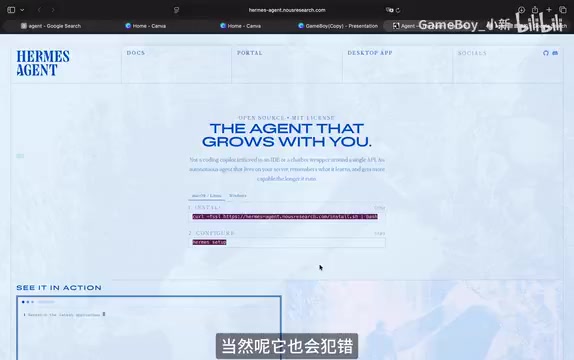
Hermes Agent Hands-On Review: An AI Efficiency Revolution for Indie Game Developers
Indie game developer reviews Hermes Agent vs OpenClaude: intelligent context compression, real-time Memory, remote control via Telegram, and practical use cases in game dev, social media, and email.
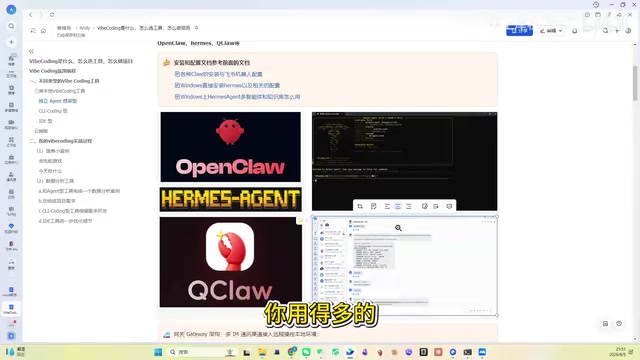
Vibe Coding Beginner's Guide: Tool Selection Across Three Categories with Practical Examples
A comprehensive guide to Vibe Coding's three tool categories: Agent frameworks, CLI Coding, and IDE tools, with practical examples including Snake game and data analysis workbench.