A Beginner's Guide to Vibe Coding: Build Software with Natural Language, No Coding Required
A Beginner's Guide to Vibe Coding: Bui…
Vibe Coding lets non-coders build software by describing ideas to AI in natural language.
Vibe Coding is a new AI-powered programming paradigm that lets anyone build software using natural language — no coding skills required. Coined by Andrej Karpathy, it removes traditional barriers like learning programming languages and software architecture. This guide covers what Vibe Coding is, a three-stage learning path from understanding to hands-on practice, key tools like Cursor and GitHub Copilot, the importance of prompt engineering, and honest limitations around security and complexity.
What Is Vibe Coding?
Recently, a concept called Vibe Coding has been rapidly gaining traction in the tech world. In simple terms, Vibe Coding is a brand-new programming paradigm that leverages AI to enable anyone — even those with zero coding experience — to build software. You don't need to learn any programming language or understand software architecture. All you have to do is describe the features you want in natural language — the way you normally talk — and AI will write the code for you.
The core idea behind Vibe Coding is to let you immerse yourself in your creative vision and complete development simply by chatting with AI through a conversation window. If you can talk, you can code. If you can type, you can build.
The concept was first coined by Andrej Karpathy, former AI Director at Tesla. He described a state where you stop worrying about code details and instead focus on articulating your ideas and requirements — as if you were talking to an all-capable programmer. Karpathy is one of the most influential researchers in deep learning, having led the development of Tesla's Autopilot vision system and served as a founding member of OpenAI. In February 2025, he introduced the concept on social media, describing his experience using AI coding assistants: he completely abandoned writing code by hand and didn't even carefully review the AI-generated code, instead relying on "vibes" to judge whether the output was correct. The concept spread quickly precisely because it came from a top AI expert — if even he chose to stop writing code manually, ordinary people have even less reason to resist this new paradigm.
Why Vibe Coding Deserves Your Attention
It Completely Lowers the Barrier to Programming
Traditional software development has three major hurdles: programming languages, software architecture, and technology selection. Learning a single programming language alone takes months or even years, not to mention understanding MVC architecture or choosing front-end and back-end frameworks. Vibe Coding flattens all three of these barriers — you don't need to worry about any of them.
To be specific: on the programming language front, mainstream options include Python, JavaScript, Java, Go, and dozens of others, each with unique syntax rules and use cases. On the software architecture front, MVC (Model-View-Controller) is just one of many architectural patterns — there are also microservices architecture, event-driven architecture, layered architecture, and more, each determining how code is organized and how components interact. Technology selection involves countless combinations of front-end frameworks (React, Vue, Angular), back-end frameworks (Django, Express, Spring), databases (MySQL, MongoDB, Redis), deployment platforms (AWS, Vercel, Docker), and more. A professional developer typically needs 3–5 years to master a complete tech stack — and all of this is handled automatically by AI in Vibe Coding.
Here's a helpful analogy: when you're writing a poem or painting a picture, do you stop to research what brand of pen you're using? Do you agonize over whether the paper texture is right? Of course not. You focus on the creative work itself. Vibe Coding aims to turn software development into exactly that kind of experience — making programming less of a technical skill and more of a low-friction creative process, like writing poetry or painting.
From "Learning to Code" to "Using Code"
We used to say "everyone should learn to code," but the reality is that most people give up during their first week of learning Python or JavaScript. Vibe Coding changes this logic entirely: you don't need to learn programming — you just need to use it. Just as you don't need to understand how a car engine works to drive one, Vibe Coding lets you skip all the underlying technical details and go straight to bringing your ideas to life.
The Three-Stage Learning Path for Vibe Coding
Getting started with Vibe Coding from scratch can be broken down into three stages:
Stage 1: Building Understanding
Understand what Vibe Coding is, what it can do, and what it can't. The key at this stage is setting the right expectations — Vibe Coding isn't a magic bullet, but for most common use cases (web pages, small tools, data processing, etc.), it's already powerful enough.
Stage 2: Hands-On Practice and Prompt Engineering
Choose the right AI coding tools and learn how to accurately describe your requirements in natural language. The Vibe Coding tool ecosystem is already quite rich: Cursor is the most popular AI code editor, deeply integrating AI conversation and code generation capabilities on top of VS Code; GitHub Copilot is Microsoft's AI programming assistant, embedded directly into development environments to provide real-time code suggestions; Bolt.new and Lovable are online platforms designed for beginners with zero coding experience, allowing you to generate complete web applications through conversation and deploy them with one click; Replit Agent lets users describe requirements in natural language and then automatically handles everything from coding to deployment. These tools are powered by the code generation capabilities of large language models like GPT-4, Claude, and Gemini, which are trained on massive amounts of open-source code and can understand natural language requirements and transform them into runnable programs.
There's one core skill here that's easy to overlook: Prompt Engineering. While Vibe Coding doesn't require you to write code, you do need to learn how to express your requirements clearly and precisely. The more precise your description, the closer the AI's output will be to what you expect.
Good prompts typically include several elements: a clear functional description (what it should do), specific constraints (what technology or style to use), the expected output format (web page, API, script), and how to handle edge cases (what happens when something goes wrong). For example, "make me a web page" is a vague prompt, while "make me a mobile-responsive web page with a to-do list that supports adding, deleting, and marking items as complete, with data saved in the browser's local storage, using a clean blue-and-white color scheme" is a high-quality prompt. Mastering this kind of structured expression is the key to success with Vibe Coding.
Stage 3: Project Practice
Build a real project with your own hands. Starting with a mobile web page is recommended because it's simple enough, the results are immediately visible (you can view it directly on your phone), and it quickly builds confidence. This "learn by doing" approach is far more effective than purely theoretical study.
A Clear-Eyed Look at Vibe Coding's Limitations
Despite Vibe Coding's promising future, we need to stay grounded:
First, it won't replace professional developers. For large-scale complex systems, high-performance applications, and security-sensitive financial systems, deep involvement from professional engineers is still essential. Vibe Coding is better suited for rapid prototyping, personal tool development, and building simple applications.
Second, "zero code" doesn't mean "zero learning." You still need to learn how to communicate effectively with AI, develop basic logical thinking skills, and understand fundamental principles of product design. The difference is that the learning curve shifts from a "steep technical climb" to a "gentle cognitive ramp."
Third, code quality and security require attention. AI-generated code may contain security vulnerabilities or performance issues, and if used in production environments, it still needs professional review. A 2023 Stanford University study found that developers using AI-assisted programming actually produced code with a higher rate of security vulnerabilities than a control group that didn't use AI — partly because developers placed excessive trust in AI output and relaxed their review standards. Common issues include: SQL injection vulnerabilities (AI may generate database queries without parameterized handling), hardcoded sensitive information (API keys written directly in the code), lack of input validation (user input processed without filtering), and use of outdated dependencies with known vulnerabilities. For personal projects or internal tools, these risks are manageable; but if user data or payment functionality is involved, professional security review is a must.
Final Thoughts
Vibe Coding represents more than just a new way to program — it's a shift in mindset: from "I need to master the technology before I can realize my ideas" to "I just need an idea, and I can make it happen." For entrepreneurs, product managers, designers, content creators, and others without a technical background, this is an opportunity worth seizing.
If you've always had an app idea but couldn't build it because you didn't know how to code, give Vibe Coding a try right now. Start with a small project, describe your requirements in natural language, and let AI turn your ideas into reality.
Related articles

Claude Code for Test Development in Practice: An AI Programming Workflow That Doubles Your Efficiency
A practical guide to Claude Code for test development: auto-generating test scripts, Plan Mode workflows, MCP + Playwright integration, and Subagent parallel tasks to build systematic AI-assisted workflows.

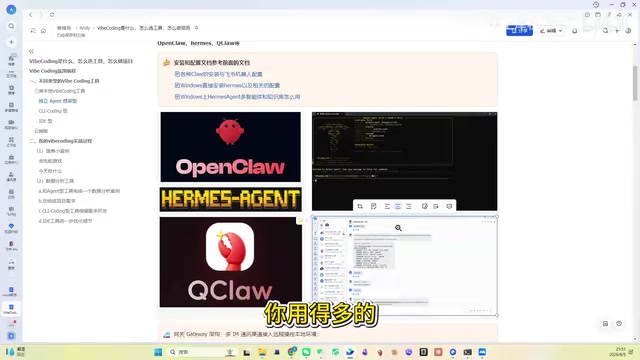
Hermes Agent Hands-On Review: An AI Efficiency Revolution for Indie Game Developers
Indie game developer reviews Hermes Agent vs OpenClaude: intelligent context compression, real-time Memory, remote control via Telegram, and practical use cases in game dev, social media, and email.
Vibe Coding Beginner's Guide: Tool Selection Across Three Categories with Practical Examples
A comprehensive guide to Vibe Coding's three tool categories: Agent frameworks, CLI Coding, and IDE tools, with practical examples including Snake game and data analysis workbench.