AI Programming: Can You Really Build Apps Without Coding? An In-Depth Analysis of Real Capabilities and Monetization Paths

A deep dive into what AI programming can really do and how non-coders can realistically monetize it.
AI programming tools have dramatically lowered the barrier to software development, enabling non-coders to build simple apps, games, and websites. However, a huge gap remains between a working demo and a monetizable product. This article examines AI coding's true capabilities, the challenges of app store publishing and marketing, realistic monetization paths like WeChat Mini Programs and freelance development, and why creativity and execution matter more than code in the AI era.
When AI Completely Breaks Down the Programming Barrier
Not long ago, building an app or a website was the exclusive domain of programmers. Ordinary people could only stare at screens full of code and walk away. But with the explosive growth of AI programming tools, that barrier is being rapidly leveled.
Recently, a book titled Everyone Can Master AI Programming: From Getting Started to Making Money has been gaining attention on platforms like Bilibili. Its core claim is remarkably bold — you don't need to learn any programming language; just by asking AI the right questions, you can develop mini-programs, apps, web games, and even build AI chat websites similar to DeepSeek.
But how realistic is this claim? Where are the true boundaries of AI programming capabilities? Is it actually feasible for ordinary people to build products with AI and monetize them? This article provides an in-depth analysis from both the technical reality and business logic perspectives.
The Real Capabilities of AI Programming: What It Can and Can't Do
Simple Projects Can Indeed Be Built Quickly
The cases mentioned in the book — "build a Snake game in 30 minutes" or "develop a DeepSeek chat assistant in 60 minutes" — are not exaggerations from a technical standpoint.

Today's mainstream AI programming tools (such as Cursor, GitHub Copilot, Claude, etc.) can indeed generate complete code from natural language descriptions. These tools represent three different paradigms in AI programming: Cursor is an AI-native IDE deeply rebuilt on VS Code that embeds large language models directly into the editor workflow, allowing users to generate, modify, and debug code through conversation; GitHub Copilot, jointly developed by Microsoft and OpenAI, started with code auto-completion and has expanded into a full-featured assistant that supports natural language code generation; Claude, developed by Anthropic, is a general-purpose large language model that excels at complex code tasks thanks to its powerful contextual understanding and ultra-long context window. Additionally, emerging tools like Bolt.new, Replit Agent, and Windsurf have further lowered the barrier, even allowing users to generate and deploy complete applications through conversation directly in a browser. The common trend across these tools is a shift from "assisted programming" to "autonomous programming" — AI is no longer just completing code snippets but can understand requirements, plan architecture, and generate entire projects.
For the following types of projects, AI performs remarkably well:
- Classic mini-games: Snake, Tetris, 2048, and other games with clear logic
- API-based applications: Chat assistants wrapping LLM APIs, translation tools, etc.
- Static web pages and landing pages: Product showcase pages, personal blogs, simple corporate websites
- Small utility apps: Calculators, to-do lists, data format converters
API-based applications deserve special explanation. The "DeepSeek chat assistant" mentioned in the book is essentially an API wrapper application. An API (Application Programming Interface) is a standardized protocol for communication between software systems. Taking LLM APIs as an example, providers like OpenAI, DeepSeek, and Baidu's ERNIE all offer RESTful API endpoints — developers simply send an HTTP request to a specified URL with the user's question text, and the server returns the AI-generated response. The entire process is similar to "sending and receiving mail." Developers don't need to understand the neural network computations inside the model; they only need to know how to properly format requests and parse responses. This is why AI can help zero-experience users quickly build chat assistants — the core logic is just a few dozen lines of API calling code plus a frontend interface, and AI handles this kind of templated task with great proficiency.
These projects share common characteristics: relatively simple logic, abundant open-source references, and no complex backend architecture involved. AI can generate runnable code in very short timeframes, and beginners following along can indeed get things working.
Complex Projects Still Require Professional Knowledge
However, it's important to recognize clearly that AI programming still has obvious capability boundaries. When projects involve the following scenarios, relying solely on AI prompts is far from sufficient:
- Complex business logic: Applications involving payment systems, user permission management, and data consistency
- Performance optimization: Architecture design for high-concurrency and large-data-volume scenarios
- Security requirements: Compliant handling of user privacy data
- Multi-platform adaptation: Cross-platform development that needs to support iOS, Android, and Web simultaneously
In other words, AI programming makes going "from 0 to 1" extremely easy, but the refinement process of going "from 1 to 100" still requires genuine technical understanding.
There is an enormous engineering gap between a demo that runs locally and a product that can serve real users. This gap includes: database design and data persistence (how to securely store and efficiently retrieve user data), authentication and authorization (such as the OAuth 2.0 protocol and JWT token mechanisms), error handling and fault-tolerant design (how to maintain user experience when servers crash or networks go down), CI/CD continuous integration and deployment (how to automate testing and release new versions), and monitoring and logging systems (how to quickly locate issues in production environments). These engineering practices represent decades of accumulated wisdom from the software industry. While AI can currently generate code for individual modules, it still heavily relies on human engineering judgment when it comes to understanding system-wide architectural constraints, handling coupling between modules, and making sound technology selection decisions.
From Development to Monetization: Is a Business Loop Feasible?
The Real Challenges of Publishing and Promotion
The book mentions covering commercialization aspects like "App Store publishing and SEO optimization," which is commendable — many AI programming tutorials only teach development, not monetization. In reality, development accounts for only about 20% of the entire business chain.

But publishing to app stores itself comes with significant hurdles:
- Apple App Store: Requires an annual $99 developer account, has strict review processes, and demands compliance with UI design, privacy policy, and feature completeness standards
- Google Play: A one-time $25 fee with relatively lenient reviews, though standards are tightening
- Chinese Android markets: Require software copyright registration, ICP filing, and other qualifications

It's worth elaborating that Apple's App Store review mechanism is one of the strictest app distribution review systems in the industry. Its App Store Review Guidelines contain hundreds of detailed rules covering five major categories: safety, performance, business model, design specifications, and legal compliance. Common rejection reasons include: app crashes or obvious bugs, use of private APIs, in-app purchase mechanisms that don't comply with Apple's rules (Apple requires digital goods to use its in-app purchase system with a 15%-30% commission), and incomplete privacy policies. Chinese Android market requirements have their own distinctive characteristics: software copyright registration typically takes 30-60 business days, ICP filing requires that the app's backend servers be located within China and the domain name must have completed real-name registration, and certain app categories (such as social, news, and education) require additional industry-specific licenses. These compliance requirements mean that even if AI writes all your code, there may still be weeks or even months of administrative processes between development completion and product launch.
SEO (Search Engine Optimization) and ASO (App Store Optimization) are entirely separate disciplines that require sustained investment of time and effort. SEO targets search engines like Google and Baidu, focusing on improving a website's organic ranking in search results by optimizing page content, meta tags, backlink structure, page load speed, and other factors. It relies on search engine crawlers and ranking algorithms, involving keyword research, content quality assessment, domain authority, and hundreds of other ranking factors. ASO targets app search within the App Store and Google Play, with key factors including keywords in the app title and subtitle, app description, user ratings and review counts, download growth trends, and click-through conversion rates of app icons and screenshots. Neither is a one-time effort — both require continuous data monitoring, A/B testing, and ongoing strategy adjustments. For independent developers, this often means investing equal or even more time in marketing and promotion beyond product development. The difficulty of these stages often exceeds that of development itself.
Realistically Viable AI Programming Monetization Paths
For AI programming beginners, the following monetization paths are relatively practical:
- WeChat Mini Programs: No need to publish to app stores, lower review barriers, suitable for utility and content products
- Web applications: Deploy on your own server and monetize through ads or subscriptions
- Freelance development: Use AI to boost development efficiency and take on small projects through freelancing platforms
- Tutorials and content: Turn your AI programming experience into tutorials and monetize through paid knowledge products
Path #4 is somewhat ironic — teaching others to make money with AI programming may be easier than making money with AI programming yourself. This book is a textbook example of this very path. This phenomenon is known in economics as the "selling shovels" strategy — during a gold rush, the most consistent profits often go not to the gold miners but to the merchants selling shovels and jeans. In today's AI programming education market, this model has formed a complete industry chain: top creators publish free tutorials on YouTube, Bilibili, and similar platforms to attract traffic, then monetize through paid courses, community memberships, and one-on-one consulting. The global AI skills training market is estimated to have exceeded tens of billions of dollars in 2024. However, this market also faces the risk of rapid saturation — as more and more people flood into the AI programming education space, content becomes highly homogenized, and users' willingness to pay drops quickly. Those who can sustain monetization are creators who offer differentiated value, such as focusing on specific vertical domains (medical AI applications, financial data analysis) or providing verifiable, real-world results.
A Rational View of the AI Programming Dividend
The Dividend Is Real, but the Window Is Limited
We are indeed in a dividend period for AI programming. Most people haven't yet realized what AI can do, and those who master this capability early can gain a first-mover advantage. But this window won't last long — as AI tools become increasingly user-friendly, the barrier will drop further and competition will intensify.
The Core Competitive Advantage Isn't Technical — It's Creativity and Execution
When everyone can write code with AI, code itself is no longer a moat. The real competitive advantages lie in:
- The ability to identify needs: Finding pain points that users are genuinely willing to pay to solve
- Product design skills: Making features that are both functional and aesthetically pleasing
- Marketing and promotion skills: Getting your product in front of target users
- The ability to iterate continuously: Constantly optimizing based on feedback
These capabilities cannot be fast-tracked by any single book — they must be accumulated through practice.
Conclusion: The Opportunities and Boundaries of AI Programming
AI programming has genuinely lowered the entry barrier to software development, enabling ordinary people to quickly build simple applications. But between "being able to build it" and "being able to make money from it," there are still multiple stages to cross — product design, business operations, and market promotion among them. Rather than expecting a single book to solve everything, it's better to treat AI as a powerful tool and combine it with your own industry knowledge and user insights to find a truly valuable entry point.
AI won't turn everyone into a programmer, but it does give everyone with an idea one more way to bring that idea to life. The key question is whether your idea itself is worth building.
Related articles
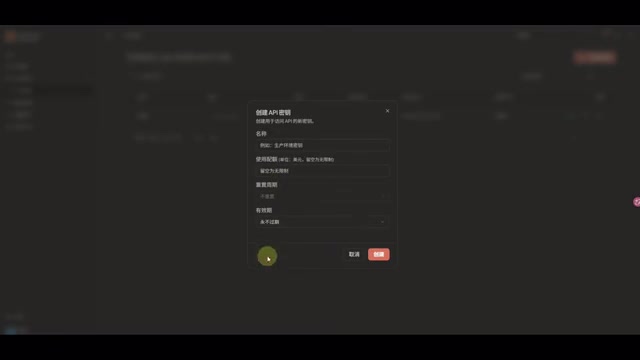
DeepSeek V4 Flash Free Usage Guide: Configuration for Cherry Studio and CC Switch
DeepSeek V4 Flash is free for a limited time with zero token charges. Learn how to register on OpenModel and configure it in Cherry Studio and CC Switch.
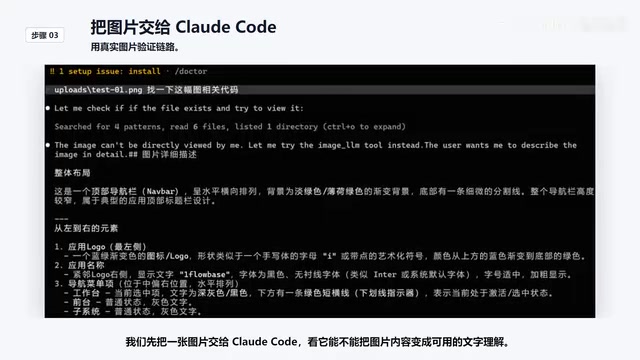
1FlowBase in Practice: Adding Vision Tools to DeepSeek V4 for Multimodal Capabilities
Learn how to use 1FlowBase to mount MIMO 2.5 as a vision tool on DeepSeek V4, creating a Fusion multimodal endpoint with step-by-step orchestration guide.

Chrome DevTools MCP Hands-On: Using AI to Automatically Control a Browser, Write Articles, and Publish Them
Hands-on test of Chrome DevTools MCP with Claude Code: AI automatically opens a browser, writes an article, fills in tags, and publishes — full workflow breakdown with pros and cons analysis.