Building a CLI Coding Tool for DeepSeek with Claude Fable
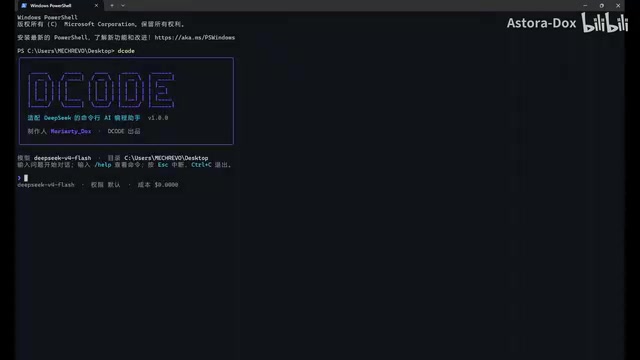
Claude Fable powers a new CLI coding tool that runs on DeepSeek API — no VPN or subscription required.
A developer leveraged Claude's Fable model to build an open-source CLI coding tool similar to Claude Code, but powered entirely by DeepSeek's API. The tool eliminates the need for a VPN, international payment methods, or Claude Code subscriptions, allowing Chinese developers to access command-line AI coding with just a DeepSeek API Key. The project demonstrates the growing trend of model-agnostic AI tool design and is open for community contributions on GitHub.
Project Background: Bringing the Command-Line Coding Experience to DeepSeek
Claude Code, the command-line AI coding tool from Anthropic, has attracted widespread attention from developers thanks to its powerful code generation and project management capabilities. Unlike traditional IDE plugins (such as GitHub Copilot), CLI tools like Claude Code run directly in the terminal environment, reading project directory structures, executing Shell commands, and manipulating the file system — all of which enable stronger project-level context understanding. This paradigm, known as "Agentic Coding," is becoming the new standard for AI-assisted development — developers no longer need to constantly switch between their IDE and terminal, instead letting AI handle end-to-end development tasks directly from the command line.
However, using Claude Code requires a VPN and a subscription (currently mainly through Anthropic's Max subscription plan at roughly $100–200/month, or pay-per-use API billing), along with an international credit card for payment. These requirements create a significant barrier for developers in China.
Recently, a developer used Claude's Fable model to successfully build a CLI command-line tool similar to Claude Code — but powered by DeepSeek's API under the hood. This means Chinese developers can enjoy a smooth command-line AI coding experience without a VPN, without a Claude Code subscription (CC Switch), and with nothing more than a DeepSeek API Key.
Core Features and Usage
Zero-Barrier Access via DeepSeek API
The biggest highlight of this CLI tool is its extremely low barrier to entry:
- No VPN required: Runs entirely within China's domestic network environment
- No CC Switch needed: No dependency on Claude Code's subscription service
- Only a DeepSeek API Key: AI coding capabilities are powered through DeepSeek's API
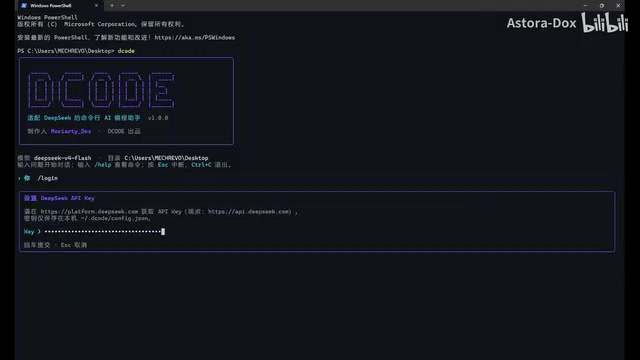
For developers who prefer command-line workflows and want to leverage domestic large language models, this is a highly practical solution. DeepSeek is a series of large language models from the company DeepSeek (深度求索), with DeepSeek-V3 and DeepSeek-Coder performing particularly well on code generation tasks. More importantly, the DeepSeek API follows an OpenAI-compatible interface specification, meaning a large number of tools built on the OpenAI API can be migrated simply by changing the Base URL and API Key. In terms of pricing, DeepSeek API calls cost a fraction — sometimes even a few tenths — of what GPT-4-level models charge. With servers deployed domestically in China, there's no need for a VPN, and response latency is lower, making the overall cost and experience very developer-friendly.
Live Demo: Generating a Website with Natural Language
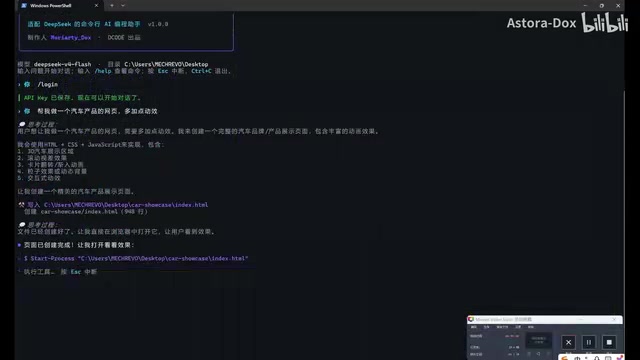
In the demo video, the developer showcased the complete process of generating a website using this CLI tool. The demo shows that the tool accurately understands natural language instructions and generates complete website code.
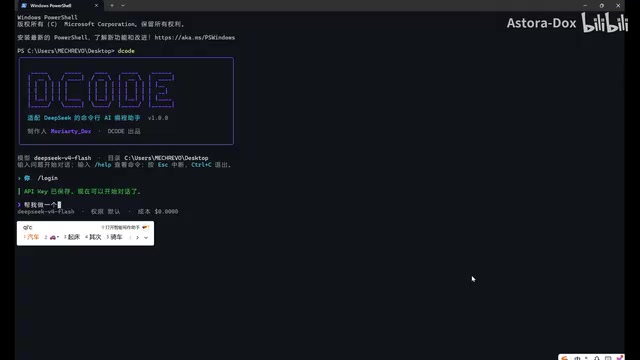
The resulting website was impressive, demonstrating that DeepSeek's model performance on code generation tasks is more than sufficient for everyday development needs.
Technical Implementation Analysis
Looking at the implementation approach, the developer used Claude's Fable model to build this tool. Claude Fable is a model from Anthropic optimized for creative content generation and tool-building scenarios, with unique strengths in code generation and toolchain construction. Using the Fable model to "manufacture" a development tool is essentially a meta-programming practice — having AI understand CLI tool architecture patterns, API calling conventions, and interaction design principles, then automatically generating complete tool code that conforms to these specifications. This is a fascinating case of "AI building AI tools" — using one AI model to construct a development tool that calls another AI model, dramatically lowering the barrier to tool development.
The overall architecture roughly breaks down as follows:
- CLI Interaction Layer: Receives the user's natural language input and provides a terminal-based interactive experience
- API Call Layer: Translates user instructions into DeepSeek API requests. This is the core component of the entire tool, involving several key technical aspects — carefully designed System Prompts determine the AI's behavior patterns, such as having it act as a senior developer familiar with the project structure; context window management requires intelligently selecting which file contents and conversation history to pass to the model within a limited token count; streaming output handling ensures users can see the AI's generation process in real-time in the terminal rather than waiting for the complete response, which is critical for user experience when generating large blocks of code
- Result Processing Layer: Formats the AI-returned code for output and file writing, automatically saving generated code to the appropriate project directories and files
This architectural design gives the tool an interactive experience similar to Claude Code, while the underlying compute relies entirely on DeepSeek, bypassing network access and subscription cost limitations.
Open Source: Community Contributions Welcome
The project has been open-sourced on GitHub, and the developer welcomes community members to submit PRs (Pull Requests) to help improve the tool. Pull Requests are the core mechanism for open-source collaboration on GitHub: contributors first Fork the original repository to their own account, complete code modifications locally, then submit a PR to the original repository. Project maintainers then perform a Code Review on the PR and merge it into the main branch once quality is confirmed.
For AI tool projects like this, community contribution opportunities are typically abundant, including: supporting additional model APIs (such as Tongyi Qianwen, ERNIE Bot, Kimi, and other domestic models), optimizing prompt engineering to improve code generation quality, adding new CLI commands and features (such as project scaffolding generation and automated test writing), and improving error handling and user experience. An active open-source community can drive rapid tool iteration far beyond what a single developer could maintain. For developers interested in contributing to open source, this is a worthwhile opportunity to watch.
Summary and Outlook
The emergence of this DeepSeek API-based CLI coding tool reflects a clear trend in the current AI development tool ecosystem: developers are actively combining and adapting capabilities from different AI models to meet the needs of specific scenarios. This "model-agnostic" tool design philosophy — unified frontend interaction experience with flexible backend AI model switching — is becoming the mainstream architectural approach for AI development tools.
As domestic large language models continue to improve, particularly with rapid advances in code understanding and generation, similar localized AI development tools will become increasingly common, providing Chinese developers with more convenient AI-assisted coding experiences. Looking ahead, these tools will move beyond just code generation to encompass code review, automated testing, deployment and operations, and other stages across the full software development lifecycle — truly enabling AI-driven full-stack development workflows.
Related articles

Xiaomi MIMO vs. Huawei Pangu AI Strategy Comparison: The Android vs. iOS Battle of the Agent Era
Xiaomi releases open-source MIMO Code while Huawei enters the Agent era with Pangu. Compare their AI strategies: Xiaomi's Android-like open ecosystem vs. Huawei's iOS-like vertical integration.
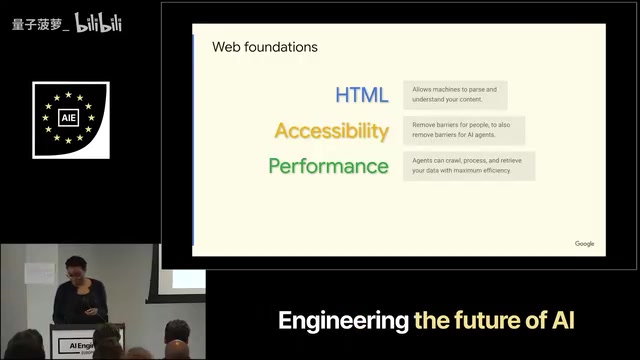
What Is Google WebMCP? A Deep Dive into the New Standard for AI Agents to Directly Invoke Web Functionality
A deep dive into Google WebMCP (Web Model Context Protocol): how it works, its technical implementation, and use cases. Learn how WebMCP lets AI Agents directly invoke web tools.
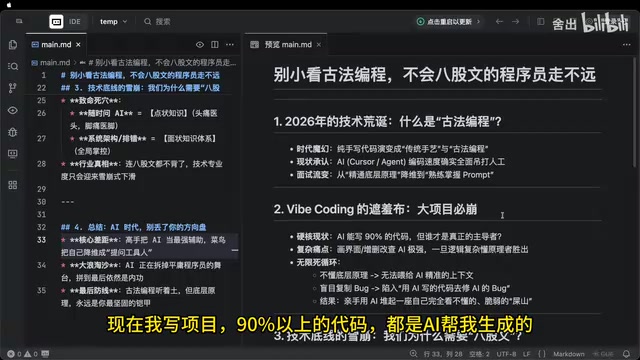
AI Can't Kill Old-School Programming: Why Fundamentals Are Still a Developer's Moat
Vibe Coding is trending, but can it replace solid fundamentals? A deep analysis of why core principles, systems thinking, and knowledge frameworks remain a developer's moat in the AI era.