Codex vs Claude Code in Practice: A Complete Guide to AI-Engineered Programming for Enterprise Projects
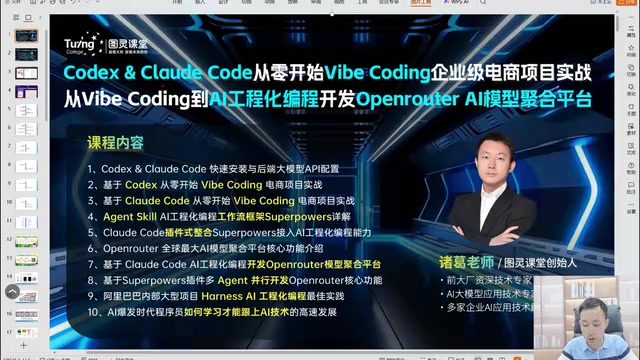
A practical guide to enterprise AI programming with Codex and Claude Code beyond Vibe Coding.
This article compares Codex and Claude Code as enterprise AI programming tools, explaining why Vibe Coding falls short for real-world projects. It covers multi-Agent parallel development workflows, OpenRouter model aggregation platform architecture, Alibaba's internal Harness AI engineering practices, and a learning roadmap for programmers adapting to the AI era.
From Vibe Coding to Engineered Programming: The Path to Advanced AI Development
AI programming tools are emerging at a rapid pace, and Codex and Claude Code are undoubtedly the two most powerful AI coding tools in the world. However, many developers discover in practice that pure "Vibe Coding" can only produce toy-level projects — real enterprise-grade development requires a systematic engineering methodology.
This article is based on a 55-minute end-to-end practical walkthrough by a senior developer, systematically covering how to build an enterprise-grade e-commerce project from scratch using AI programming tools, along with an in-depth look at the development practices behind an OpenRouter-style model aggregation platform.
Why Vibe Coding Can't Handle Enterprise Projects
Vibe Coding is a concept that originated overseas, first coined by Tesla and OpenAI co-founder Andrej Karpathy in February 2025. He described a completely new way of programming on social media: coding entirely by "feel" with AI, where developers don't even need to read the generated code — they simply describe requirements in natural language and paste error messages back to the AI when things break. The core idea is: just describe what's in your head clearly enough, and the AI tool will generate the code for you. This approach essentially downgrades programming from "precision engineering" to "fuzzy conversation." While it dramatically lowers the barrier to entry, it sacrifices code controllability and maintainability. For product managers and non-technical people, it seems like a revolutionary breakthrough.
But reality is harsh. As project scale grows and business logic becomes more complex, Vibe Coding's problems become glaringly obvious:
- Poor code quality: Generated code is often "throwaway code" — lacking architectural design and difficult to maintain
- Difficult bug fixing: Non-technical users can't precisely guide AI to fix production issues, easily falling into infinite loops
- Can't handle complex scenarios: High concurrency, distributed systems, microservice architectures, and other enterprise-grade requirements far exceed Vibe Coding's capabilities
Early on, many AI influencers claimed Vibe Coding could "replace programmers," but if you look closely at their work — it's just a ring light utility tool or a simple cross-border e-commerce page. The complexity of these projects is worlds apart from real enterprise-grade systems.
Codex vs Claude Code: How to Choose Between the Two
Claude Code's Advantages and Potential Risks
Claude Code is the most widely used tool among professional programmers, with its core advantage being a built-in, comprehensive Harness AI engineered programming system. Looking at Claude Code's source code reveals extensive optimizations for professional programming, including code standards checking, architecture recommendations, test generation, and full-pipeline support.
However, Claude Code currently faces a practical issue: Anthropic's policies toward Chinese users are not particularly friendly. The latest models are restricted to US-only access, and the risk of account bans is high. Once an account is banned, the recovery process is extremely cumbersome. This has driven many domestic developers to explore alternative solutions.
Codex's Rapid Catch-Up and Rise
Codex previously had a noticeable gap compared to Claude Code, but with the release of GPT's latest versions and continuous internal optimization, its programming capabilities have improved dramatically. For developers concerned about Claude's ban risks, Codex is an increasingly reliable alternative.
Ranking of Chinese LLMs by Programming Capability
For backend model selection, after comprehensive testing of mainstream Chinese LLMs, the current tier ranking is roughly as follows:
- Tier 1: DeepSeek (JAM) — strongest overall programming capability with extremely high market recognition
- Tier 2: Minimax, KIMI — solid capabilities, each with unique strengths
- Best value: Nipsec — capabilities approaching Tier 1 at highly competitive pricing
- Other options: Xiaomi Mimo, Alibaba Tongyi, Tencent Hunyuan, etc.
Enterprise AI Engineered Programming: A Detailed Walkthrough
SuperPowers Agent Workflow
Real enterprise-grade AI development isn't about simply generating code through conversation — it relies on a complete engineering pipeline. The core tool here is SuperPowers — a Claude Code plugin with a built-in suite of enterprise-grade Agent Skills.
The core philosophy of this workflow is to upgrade AI programming from "casual conversation" to a "standardized pipeline," where each development phase has a dedicated Agent responsible for it — including requirements analysis, architecture design, code generation, test verification, and code review. This design philosophy originates from the CI/CD (Continuous Integration/Continuous Deployment) pipeline in traditional software engineering — CI/CD is an engineering practice that accelerates software delivery through automated building, testing, and deployment. SuperPowers extends this concept into the AI-assisted development domain, with specialized AI Agents ensuring quality at every stage. This is also the AI development model many companies are currently adopting.
Development Environment Setup Steps
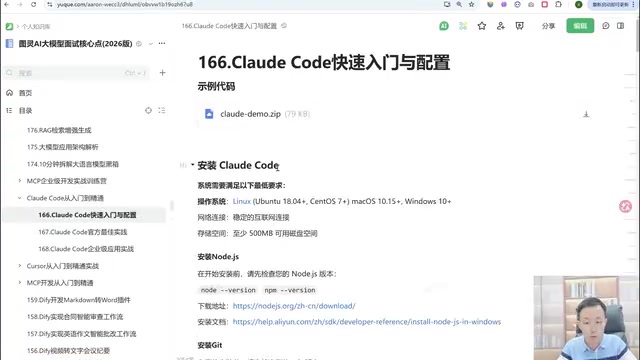
The approach to setting up the practical environment is as follows:
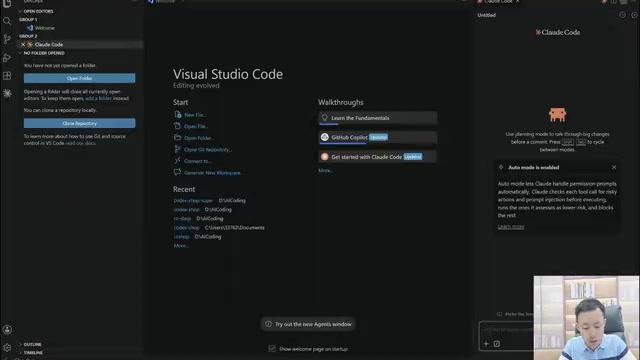
- IDE selection: VS Code as the primary choice (Cursor also works — it's essentially a wrapper around VS Code)
- Plugin configuration: Install the Claude Code plugin and interact with AI through the dialog box
- CLI mode: Simultaneously use Codex CLI and Claude Code CLI for command-line development
- Model configuration: Select backend models based on requirements and configure the corresponding API Keys
Interestingly, traditional IDEs like IntelliJ IDEA risk being marginalized within two to three years if they can't quickly embrace the AI programming ecosystem. The generational replacement of development tools follows a clear historical trajectory in the software industry: in the early 2000s, Eclipse dominated Java development with its open-source model and plugin ecosystem; in the 2010s, JetBrains' IntelliJ IDEA gradually replaced Eclipse as the mainstream choice with smarter code completion and refactoring capabilities; in the 2020s, VS Code rapidly rose to become the world's most-used code editor thanks to its lightweight architecture and incredibly rich extension ecosystem. Now, the emergence of AI-native IDEs like Cursor marks the fourth era of development tools — AI-driven intelligent development environments. The core driver behind each transition has been "generational leaps in development efficiency," and this time, the driving force is the deep integration of AI programming capabilities.
Multi-Agent Parallel Development Model
In enterprise project development, a key practice is multi-Agent parallel development. Unlike linear development in a single conversation window, the multi-Agent model allows multiple AI agents to work on different modules simultaneously:
- Frontend UI component development
- Backend API endpoint implementation
- Database schema design
- Unit test and integration test case writing
This model borrows from distributed systems thinking, breaking a large project into multiple relatively independent subtasks, each handled by a separate AI Agent. These Agents share the same code repository but work on different branches or modules, using pre-defined Interface Contracts to ensure cross-module compatibility. The key challenges of this model are conflict management and context isolation — each Agent only needs to understand the context of its own module rather than the entire project's codebase. This both reduces Token consumption and lowers the probability of AI "hallucinations" (where AI generates content that seems plausible but is actually incorrect) caused by overly long contexts. With multiple modules progressing in parallel, development cycles can be significantly shortened and overall delivery efficiency improved.
OpenRouter Model Aggregation Platform: Technical Architecture and Business Logic
Why Model Aggregation Platforms Are So Profitable
In the current AI landscape, there's a counterintuitive fact: consumer-facing AI applications (like Doubao, Tencent Yuanbao) are almost all losing money, while the businesses actually making money fall into these categories:
- Computing infrastructure: Chips, memory, semiconductors — stock prices have already skyrocketed
- Token trading: API services from major companies like Zhipu and Tencent
- Model aggregation platforms: Like OpenRouter, acting as "Token middlemen"
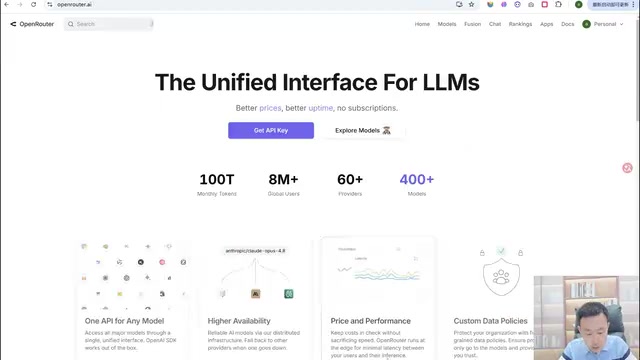
OpenRouter, as the world's largest AI LLM aggregation platform, brings together virtually all mainstream LLMs on the market — users top up their balance and can call any model. This "reselling Tokens with a wrapper" business model seems simple but is extremely profitable. The profit logic is essentially Token "wholesale-to-retail" — the platform purchases API call quotas from model providers at lower bulk prices, then sells them to end users at slightly higher unit prices, earning the spread. Additionally, the platform can reduce actual call costs through Semantic Caching (which identifies semantically similar requests to reuse existing responses), further expanding profit margins. This model is similar to resource reselling in cloud computing — the technical barrier isn't high, but the operational barrier is significant. According to the presenter, a friend running a similar Token aggregation platform with a team of just a dozen people generates annual revenue of 100-200 million RMB.
Core Technical Implementation Points
Developing an OpenRouter-type model aggregation platform requires the following core tech stack:
- API Gateway Layer: Unified access to various model APIs, handling authentication, rate limiting, and billing. The API gateway is a core component in microservice architecture, serving as the unified entry point for all external requests. In the model aggregation platform scenario, the gateway needs to handle protocol conversion (different model providers have varying API formats — for example, OpenAI uses the Chat Completions format while some Chinese models have their own protocol specifications), identity authentication (API Key verification), and traffic control (preventing individual users from over-calling and crashing upstream services).
- Model Routing: Intelligently selecting the optimal model based on user requests. Routing strategies need to consider model real-time availability, response latency, price/cost, and the specific characteristics of user requests (e.g., code generation suits models with strong programming capabilities, while copywriting suits models with strong language expression), achieving optimal matching through intelligent scheduling algorithms.
- Billing System: Token consumption tracking and user balance management. Tokens are the basic unit by which LLMs process text — one token corresponds to roughly 3-4 characters in English or 1-2 characters in Chinese. Precise token metering is the foundation of platform profitability.
- Monitoring Dashboard: Model availability monitoring and performance metrics display
Alibaba's Internal Harness AI Engineered Programming Practices
Leading Chinese tech companies have already fully implemented AI engineered programming systems internally. Taking Alibaba as an example, their internal Harness system represents the evolution of AI programming from "tool assistance" to "process reengineering."
The core idea is to embed AI programming capabilities into every phase of software engineering, forming a standardized, replicable development pipeline. Specifically, it decomposes the software development lifecycle into six major stages — requirements analysis, system design, coding implementation, code review, test verification, and deployment — with each stage equipped with a dedicated AI Agent. For example, the requirements analysis Agent is responsible for converting vague business requirements into structured technical specifications (similar to the traditional software engineering process of converting a PRD into a technical proposal); the code review Agent automatically checks code quality against preset coding standards, identifying potential security vulnerabilities and performance bottlenecks.
The key value of this system lies in transforming individual AI programming experience into organization-level standardized processes, ensuring every team member produces code at a consistent quality standard. It's not about AI replacing programmers — it's about enabling programmers to achieve 10x efficiency gains with AI while maintaining code quality and engineering standards.
A Learning Roadmap for Programmers Adapting to the AI Era
Facing the AI programming wave, programmers need to establish a systematic learning path:
- Master AI programming tools: Become proficient with mainstream tools like Codex and Claude Code
- Understand engineering thinking: Progress from Vibe Coding to standardized AI engineering development
- Develop deep model understanding: Learn the characteristics of different LLMs and how to select and configure them
- Accumulate real project experience: Hone AI-collaborative development skills through real-world projects
- Stay on the cutting edge: AI tools iterate extremely fast — maintain learning agility
The key insight is this: AI won't eliminate programmers, but it will eliminate programmers who don't know how to use AI. Mastering AI engineered programming is the most critical competitive advantage for programmers in this era.
Key Takeaways
Related articles
Andrew Ng's Advanced AI Prompting Guide: Core Methods for Going from Beginner to Expert
Based on Andrew Ng's latest AI prompting tutorial, learn the core gaps between beginners and experts: providing context, overcoming sycophancy, iterative workflows, and four key principles.
AI Batch Rename Tool: One-Click File Name Standardization with LLM Semantic Understanding
Explore the AI Batch Rename Tool Pro v5.0: use LLM semantic understanding to intelligently standardize file names, with multi-engine API support and dual-model collaboration.
AI Engineering in Practice: The Progression Path from Vibe Coding to Enterprise-Level Development
Deep dive into AI engineering methodology, comparing Vibe Coding vs enterprise development, covering Claude Code, Codex tool selection, SuperPower plugin practices, and the path from prototype to production.