Cursor AI Programming in Practice: A Complete Guide to Using Coding Agents Efficiently

A systematic methodology for efficiently using Cursor AI coding agents in real-world development.
This article provides a comprehensive methodology for using Cursor AI coding agents, covering the three-layer core architecture (instructions, tools, models), code search (exact match and semantic search), feature development (Plan Mode workflow and iterative optimization), systematic debugging (six principles and Debug Mode), code review and testing, and customizing Agents with Rules and Skills to fit team workflows. The core philosophy centers on high-quality prompts, effective context management, and human-AI collaboration.
Introduction: A Paradigm Shift in Programming
Developers are experiencing a profound transformation in how they work — instead of writing code line by line, they're conversing with AI agents that generate, debug, and review code for them. Cursor, an AI code editor with built-in programming agents, is becoming the central tool driving this transformation.
This article is based on a systematic Cursor AI programming tutorial, covering everything from agent architecture, code search, feature development, debugging, code review, to custom configuration — a comprehensive methodology for using coding agents efficiently.

Core Architecture of Cursor's Agent
Three Key Components
Cursor's programming agent runs within a framework called a "Harness," consisting of three critical parts:
- Instruction Layer: System prompts or rules that guide behavior, defining the agent's behavioral boundaries
- Tool Layer: Capabilities like editing files, searching the codebase, and running terminal commands
- Model Layer: A choice of multiple frontier LLMs, such as Claude, GPT, and others
These programming agents can execute complex tasks based on the goals you set, while the implementation details of each Harness are handled automatically by Cursor — developers only need to focus on how to use them efficiently.
Prompt Quality Determines Output Quality
Simple prompts force the Agent to guess your intent — layout, components, and styling may all deviate from expectations. In contrast, high-quality prompts should:
- Reference existing patterns and file paths in the codebase
- Provide additional context such as logs and error messages
- Clearly express design intent and constraints
Key Principles of Context Management
Context accumulated in a conversation acts like the Agent's working memory — powerful but limited. Two important recommendations:
- Start a new conversation when developing new features to prevent old context from interfering with the current task
- Decisively start over when the Agent goes off track — frequent errors are often a signal of context pollution

Code Search: A Powerful Tool for Understanding Codebases
Exact Match Search
The most precise way to find code is through exact matching — function names, variable names, or code snippets. Cursor uses InstantGrep technology, which significantly accelerates searches in large codebases. Developers don't need to learn regular expressions or configure additional tools — just describe what you need in natural language.
The Power of Semantic Search
When you're not sure exactly what you're looking for, semantic search can locate relevant code based on textual meaning. For example, asking "where do we handle authentication" can find Middleware and related files even if the string "Authentication" doesn't appear in them.
Behind this, Cursor uses embedding models to transform the entire codebase into a searchable vector space, understanding code semantics and mapping them to natural language queries.
The Clever Use of Sub-Agents
The built-in Explore Agent has its own context window independent of the main Agent, so searching large codebases doesn't consume space in the main conversation. It returns only refined results, keeping the main conversation focused — this is crucial for projects with many files.
For large, unfamiliar codebases, you can also have the Agent generate Mermaid architecture diagrams to visualize the entire system's data flow — extremely useful for team onboarding and technical documentation.
Feature Development: From Idea to Working Software
The Plan Mode Workflow
Cursor's Plan Mode is the core tool for turning ideas into features. The typical workflow is:
- Research the codebase: The Agent automatically explores project structure and existing patterns
- Clarify questions: The Agent asks questions to define requirement boundaries
- Generate an editable plan: An interactive Markdown plan that can be modified at any time
- Execute the build: Click Build to start code generation
A key technique is to intentionally keep the initial prompt slightly vague, collaborating with the model to iteratively refine the plan, thereby ensuring the quality of the final output.
Iterative Development
Once the first version of a feature is complete, you can quickly iterate and optimize through:
- Screenshot feedback: Paste UI screenshots directly and tell the Agent exactly what needs adjustment
- Voice mode: Describe design adjustments verbally, such as "make the colors more aligned with the design system's brand style"
- Integrated browser verification: Preview changes directly within Cursor to shorten the feedback loop

Debugging: Systematically Finding and Fixing Bugs
Six Principles of Effective Debugging
Whether performed by a human or an Agent, excellent debugging follows the same principles:
- Reproduce the issue — if you can't reproduce it, you can't verify the fix
- Simplify to a minimal case — remove extraneous information and focus on the core problem
- Isolate the changed parts — avoid modifying multiple pieces of code simultaneously
- Form specific hypotheses — think about the root cause
- Add instrumentation — use logs or debuggers to trace data flow
- Write tests to prevent regression — ensure the problem doesn't recur after fixing
Deep Debugging with Debug Mode
For complex systemic issues, Cursor's Debug Mode provides a structured debugging workflow:
- Generates hypotheses about what went wrong
- Adds targeted logging instrumentation
- Guides you to reproduce the issue and collect runtime evidence
- Analyzes log data to identify the root cause
Practical Debugging Tips
- Multi-model comparison: Use different models to fix the same bug and compare solutions to choose the optimal one
- External tool integration: Bring in real-time error monitoring information from tools like Sentry via MCP servers
- Keep asking follow-ups: Ask the Agent "are there other edge cases that haven't been considered?" about its proposed fixes
Code Review & Testing: Ensuring Quality
Self-Review Process
Before asking team members to review, it's recommended to perform these self-check steps first:
- Have the Agent check the generated code (using the "find problems" feature)
- Split changes into smaller, semantically meaningful commits
- Use AI code review tools (like BugBot) to automatically detect potential regressions
Agent-Assisted Testing
Agents make writing tests much more efficient. You can have them:
- Write unit tests based on existing test infrastructure
- Set up Playwright integration test environments
- Fuzz test the application to cover various edge cases
Optimizing CI Pipelines
System speed is determined by the slowest link. Agents excel at optimization tasks with clear scope and verifiable outcomes:
- Speed up test suite execution
- Trim redundant dependencies
- Optimize CI pipeline configuration
- Reduce overall build time

Customizing Agents: Adapting to Team Workflows
The Difference Between Rules and Skills
Cursor provides two layers of customization for different scenarios:
| Dimension | Rules | Skills |
|---|---|---|
| Loading method | Always included in every conversation | Dynamically loaded, invoked on demand |
| Use case | Build commands, code conventions | Specialized workflows, occasionally used knowledge |
| Best practice | Keep concise and high-quality | Can include scripts and custom assets |
The key principle for Rules: keep them short, specific, and pointing to actual examples in the codebase. Too many rules consume the context window and can even confuse the Agent.
Plugin Ecosystem
Cursor has established a comprehensive plugin system that packages Rules, Skills, MCP servers, and sub-Agents together, shared with teams through a marketplace. Agents can also invoke any CLI tool installed in the terminal (such as GitHub CLI, AWS CLI, Docker, etc.), greatly expanding the boundaries of automation capabilities.
Conclusion: Core Skills and Practical Recommendations
The ability to collaborate with coding Agents is rapidly becoming one of the most important skills in software engineering. Tools and models iterate quickly, and specific details will change over time, but the following principles will remain effective:
- Understand the codebase before making changes — let the Agent help you explore and map out the project structure
- Make a plan, execute step by step, and verify continuously — leverage Plan Mode to reduce error probability
- Follow debugging fundamentals — let the Agent assist rather than replace your thinking process
- Maintain consistent code review standards — regardless of whether code comes from a human or AI
- Codify team knowledge through Rules and Skills — transform experience into reusable shared assets
The best way to learn is to actually build something — stay curious and keep building.
Related articles
 Tutorials
Cursor + Codex Dual-IDE Collaboration: A Practical Methodology for Open-Source Project Customization
A complete methodology for open-source project customization based on real-world experience, detailing the Cursor+Codex dual-IDE workflow, seven-stage process, MVP validation, and AI source code reading techniques.
 Tutorials
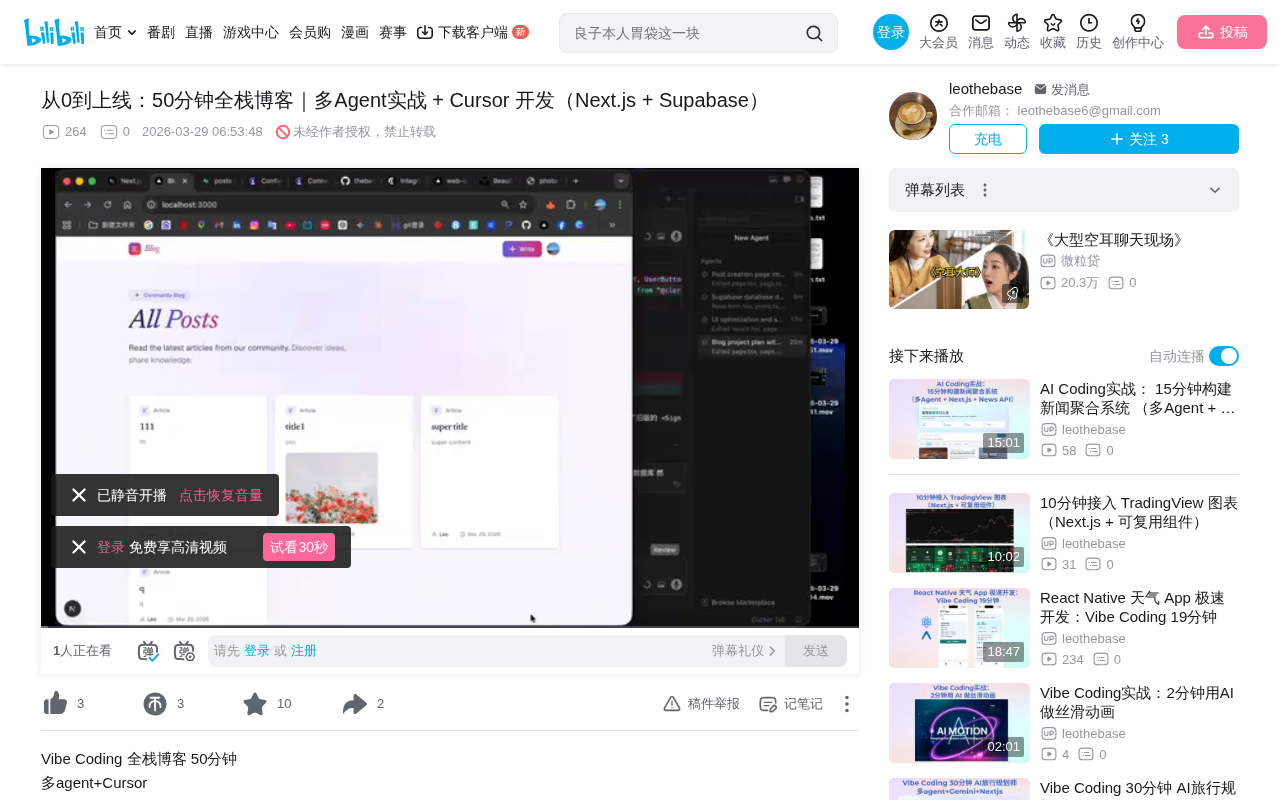
Cursor Multi-Agent in Practice: Building a Full-Stack Next.js Blog in 50 Minutes
Build a full-stack blog in 50 minutes using Cursor IDE's multi-Agent mode with Next.js, Clerk auth, and Supabase. Learn the 4-phase AI Agent workflow and key integration pitfalls.
 Tutorials
Building an AI Software Factory from Scratch: A Cursor Engineer's Hands-On Experience with Multi-Agent Collaboration
Cursor engineer Eric shares practical insights on building an AI software factory: automation levels, guardrail design, parallel Agent management, and scaling to 1000+ Agents for 24/7 development.