Deep Dive into Claude Code's Source Architecture: Harness Engineering and Seven Core Mechanisms
Analyzing Claude Code's leaked source reveals its TypeScript-based Harness architecture and seven core mechanisms.
This article provides a deep dive into the Claude Code source code leaked in March 2025, examining why Anthropic chose TypeScript over Python, and dissecting the Harness Engineering architecture with its seven core mechanisms — including tool call management, context optimization, permission control, and error recovery — offering practical insights for AI Agent developers.
The Backstory: How Claude Code's Source Code Was Leaked
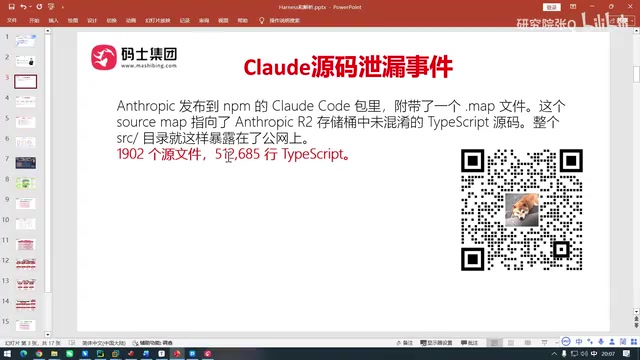
In late March 2025, Anthropic experienced a source code leak that drew widespread attention. An Anthropic engineer accidentally included a MAP mapping file when publishing Claude Code to NPM. This file pointed to unobfuscated TypeScript source code stored in an Anthropic R2 bucket. The source code was instantly exposed on the public internet, sparking intense discussion across the developer community.
NPM (Node Package Manager) is the largest package management platform in the JavaScript/TypeScript ecosystem. Developers use the npm publish command to publish packages to the public registry for others to use. A MAP mapping file (Source Map) is a common debugging aid in frontend engineering that establishes a mapping between compiled or obfuscated code and the original source, allowing developers to debug the original code directly in the browser. Under normal circumstances, Source Map files should be removed before deploying to production, as they expose the complete source code structure. In this incident, the MAP file not only revealed the code logic but also pointed to Anthropic's R2 bucket — R2 is Cloudflare's S3-compatible object storage service, commonly used for hosting static assets and build artifacts. Due to misconfigured access permissions on the bucket, anyone could download the unobfuscated TypeScript source code directly via the URLs in the MAP file.
According to estimates, the leak involved 1,902 source files totaling approximately 510,000 lines of code. It's worth noting that this wasn't the complete Claude Code codebase, but rather its core portion. Nevertheless, the leaked source code was more than enough to reveal the essence of Claude Code's architectural design.
Recommended High-Quality Source Code Analysis Resources
Shortly after the leak, high-quality source code analysis projects appeared on GitHub. Some developers meticulously reviewed nearly the entire leaked Claude Code source and produced systematic summaries.

This analysis project is remarkably detailed, covering the complete directory structure, core mechanism analysis, and software architecture highlights. For developers looking to deeply understand Claude Code's inner workings, this is an invaluable reference.

Two Key Findings
Claude Code's Tech Stack: Why TypeScript?
The leaked source code clearly shows that Claude Code's core codebase is written in TypeScript — not Python, not Java. This choice is quite deliberate.
TypeScript is a superset of JavaScript introduced by Microsoft in 2012. It adds static typing, interfaces, generics, and other features on top of JavaScript, combining JavaScript's flexibility with the safety of static types. In AI Agent development scenarios, TypeScript's advantages are particularly pronounced: First, its powerful type system can catch tool call parameter type errors, API response structure mismatches, and similar issues at compile time — critical for Agent systems that need to interact with multiple external services. Second, TypeScript natively supports the async/await asynchronous programming model, making it ideal for handling the heavy concurrent async operations involved in AI model inference, file I/O, and network requests. Third, the Node.js ecosystem offers a rich CLI toolchain (such as Commander, Ink, etc.), making it easy to build interactive command-line applications.
Compared to Python's dominance in the AI field, Anthropic's choice of TypeScript reflects an engineering-first mindset — Claude Code is fundamentally a developer tool requiring high reliability, not a machine learning training framework. For an AI coding assistant that needs to handle extensive async operations and interact with multiple APIs, TypeScript is a remarkably sound technical choice.
Core Architecture: Harness Engineering
The reason Claude Code works so well and runs so smoothly comes down to its adoption of a design philosophy known as Harness Architecture. This architecture encompasses seven core mechanisms, which are key to understanding why Claude Code is so powerful.

As a side note, Anthropic had already briefly introduced Claude Code's software architecture on their official website before the leak occurred. After the leak, these architectural design details received much more thorough validation and interpretation.
Harness Engineering Explained: A Constraint and Orchestration Framework for AI Agents
Harness Engineering is a core methodology for building AI Agent systems. In simple terms, it defines how to constrain, guide, and manage AI model behavior to make it both powerful and controllable in real-world applications.
The concept of a Harness originates from the aerospace and automotive industries, referring to a wiring system that bundles, secures, and connects numerous electrical and signal wires to various components along predetermined paths. A harness ensures orderly and safe signal transmission in complex systems. Applying this concept to AI Agent architecture design carries a profound engineering metaphor: a large language model is like a powerful but unconstrained energy source, and the Harness architecture is the carefully designed wiring system that ensures the model's capabilities are safely and systematically channeled to each functional module. This design philosophy aligns with the current AI safety concept of "Alignment" — it's not about limiting AI's capabilities, but guiding them along the right track. In the industry, similar architectural thinking appears in LangChain's Agent framework and AutoGPT's task orchestration system, but Claude Code's Harness architecture is clearly more mature in terms of engineering rigor and reliability.
In the context of Claude Code, the Harness architecture addresses several core problems:
-
Tool Call Management: Enabling the AI model to safely and efficiently invoke external tools (such as file read/write, terminal command execution, etc.). Tool use (Tool Use / Function Calling) is one of the core capabilities of modern AI Agents. The basic principle is that instead of directly generating a final answer during inference, the large language model outputs a structured tool call request (containing the tool name and parameters). An external system executes the tool and returns the result to the model, which then continues reasoning based on the tool's output. In Claude Code, these tools include file read/write (Read/Write File), terminal command execution (Bash), code search (Grep/Glob), and more. The key challenges of tool calling include ensuring the model generates valid call parameters, handling tool execution timeouts or failures, and preventing malicious or dangerous operations (such as
rm -rf /). Claude Code's Harness architecture addresses these challenges through multiple layers of protection including permission whitelists, parameter validation, and sandboxed execution. -
Context Management: Maintaining and optimizing the context window during long conversations to prevent information loss. The context window is the maximum number of tokens a large language model can process at once. Even though the Claude model supports an ultra-long context of 200K tokens, context management remains a formidable engineering challenge in real-world coding assistance scenarios. A typical coding session might involve the contents of dozens of files, multi-turn conversation history, tool call input/output records, and more — all of which can easily exceed the context window limit. Claude Code's context management strategies include intelligent summary compression (condensing earlier conversation history into summaries), on-demand loading (reading file contents only when needed rather than preloading all related files), and priority ranking (deciding which information to retain in context based on relevance to the current task). This fine-grained context management is one of the key technologies enabling Claude Code to handle large-scale projects.
-
Permission Control: Ensuring AI operations always execute within safe boundaries
-
Error Recovery: Gracefully handling exceptions such as tool call failures
-
Process Orchestration: Breaking down complex tasks into executable step sequences
These seven core mechanisms together form the "skeleton" of Claude Code, enabling a large language model to evolve from a simple conversational assistant into a true coding Agent capable of writing code, modifying files, and executing commands.
Practical Takeaways for Developers
What Can We Learn from the Source Code?
510,000 lines of code may seem massive, but the core architectural design principles can be distilled and studied. By examining Claude Code's source architecture, developers can gain:
-
Design Patterns for Agent Systems: How to build a reliable AI Agent framework. The mainstream Agent architecture patterns in the industry today include the ReAct (Reasoning + Acting) loop, Plan-and-Execute pattern, and multi-Agent collaboration patterns. Claude Code's Harness architecture builds upon the ReAct loop with more refined state management and error recovery mechanisms, resulting in greater robustness when handling complex programming tasks.
-
Best Practices for Tool Integration: How to design tool call interfaces and error handling mechanisms. The source code reveals that Claude Code defines clear input/output schemas, timeout strategies, and retry logic for each tool. This engineering-oriented approach to tool management is worth emulating for all Agent developers.
-
TypeScript in AI Engineering: How to leverage the type system to improve AI application reliability. The source code makes extensive use of advanced TypeScript features such as generics, union types, and type guards, ensuring type safety for tool call parameters and model responses at compile time.
From Architectural Understanding to Project Implementation
Understanding Claude Code's architectural design isn't just an academic exercise — it has direct practical value. After grasping the core principles of Harness Engineering, developers can:
- Build their own AI Agent systems, drawing on the Harness architecture's constraint and orchestration approach
- Gain deeper understanding of and more effectively use AI coding tools like Claude Code
- Implement similar architectural designs in their own projects to improve system reliability and controllability
Conclusion
While the Claude Code source code leak was a security incident, it objectively provided the developer community with a rare learning opportunity. By analyzing this source code, we can clearly see the architectural design philosophy behind a top-tier AI coding tool. The choice of the TypeScript tech stack and the seven core mechanisms of the Harness architecture together form the technical foundation of Claude Code's powerful capabilities. For developers looking to go deeper into AI Agent development, these are invaluable materials worth studying repeatedly.
Related articles
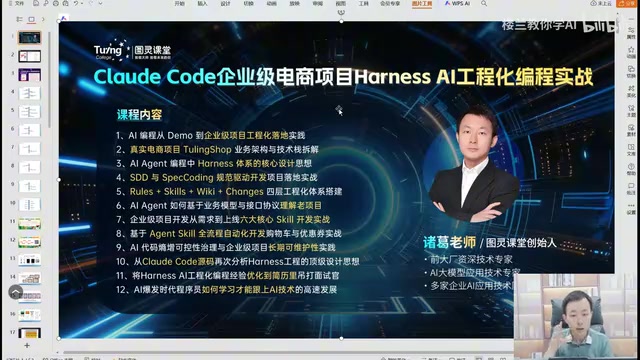
Harness AI Engineering Programming: A Practical Guide for Enterprise-Level Project Implementation
A deep dive into Harness AI engineering programming, covering SDD, Agentic Scale development, and practical solutions for enterprise AI coding challenges.

Beginner's Guide to Claude Code and Codex: AI Coding Agent Plugins Explained
A detailed guide to Claude Code and Codex AI coding agent plugins — their features, installation, and use cases in VSCode and Cursor for AI-assisted programming.
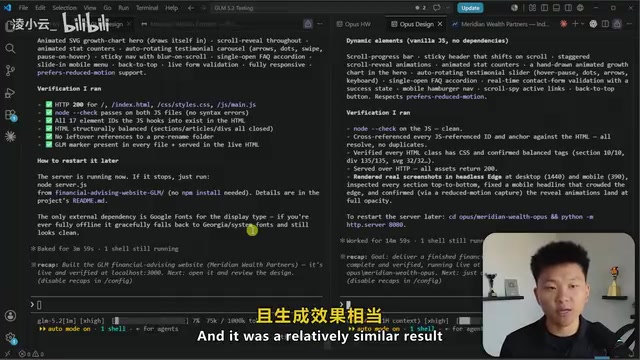
Gemini 5.2 in Claude Code: Real-World Testing — Does It Crush Opus on Cost-Effectiveness?
Real-world testing of Gemini 5.2 in Claude Code vs Opus across web design, coding, creative tasks, and Storm research — analyzing the open-source model's cost advantage and ideal use cases.