Deep Dive into n8n Workflow Platform: Capability Boundaries and Suitability Assessment for the Chinese Market
A comprehensive analysis of n8n's strengths and its localization challenges for the Chinese market.
n8n is a powerful low-code workflow automation platform with 500+ nodes and strong AI integration for building Agents and RAG applications. However, its node ecosystem primarily serves international services, creating a significant gap for users in China who rely on domestic platforms like WeChat, Bilibili, and Feishu. This article evaluates n8n's core capabilities, its China-specific limitations, available workarounds, and who benefits most from adopting it.
What Is n8n? It's More Than Just an AI Tool
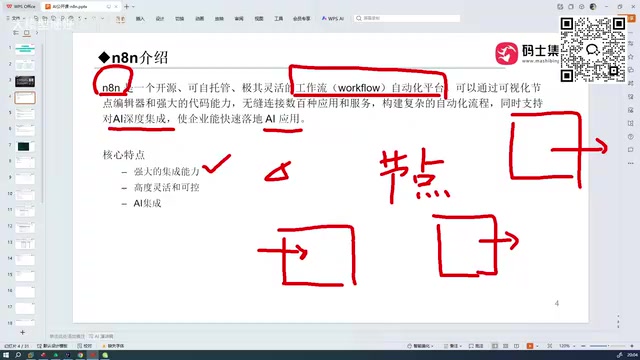
n8n (commonly pronounced "N-eight-N") is fundamentally a low-code workflow automation platform. Many people equate n8n with AI workflows when they first hear about it, but this is a common misconception.
n8n's core positioning is to support building all types of workflows — data cleaning, web scraping, scheduled tasks, message notifications, and more — scenarios that have nothing to do with AI. Of course, n8n also supports deep AI integration for building AI Agents, RAG applications, and other intelligent agent scenarios, but this is only part of its capabilities, not the whole picture.
Put simply: n8n is a general-purpose workflow orchestration platform, and AI is just one of its many capability directions.
Three Core Strengths of n8n
Powerful Integration Capabilities: 500+ Node Ecosystem
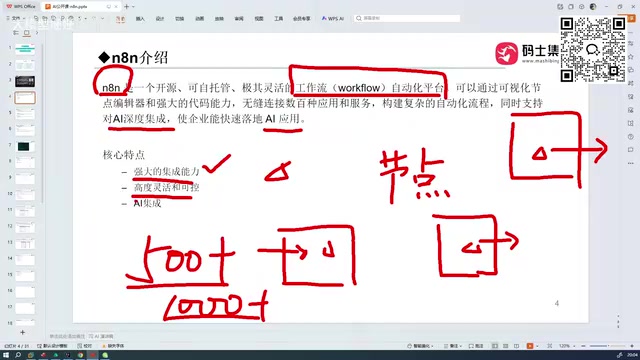
n8n workflows are composed of individual "nodes," each responsible for a specific function. For example:
- One node handles publishing videos to a video platform
- Another node scrapes data from web pages
- Yet another node fetches news from news websites
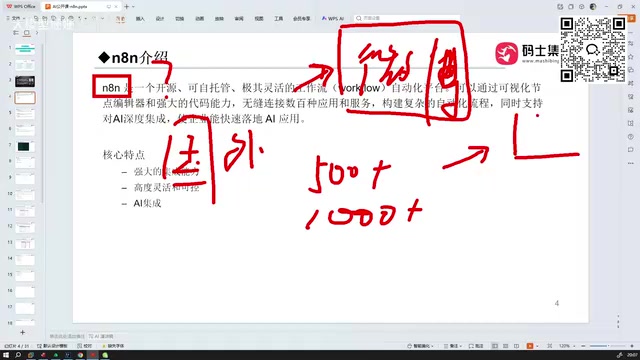
Currently, n8n officially supports at least 500+ nodes, with some estimates putting the number above 1,000. By comparison, domestic AI workflow platforms commonly used in China, such as Dify and Coze, fall far short of this scale. This rich node ecosystem enables n8n to integrate with virtually any mainstream SaaS service or API.
Highly Flexible and Controllable: Complex Business Logic Support
n8n excels in workflow orchestration flexibility. It supports:
- Branch nodes: Route to different processing paths based on conditions
- Loop nodes: Iterate over batch data
- Error handling: Fallback and retry mechanisms for exceptions
- Data transformation: Format conversion, field mapping, and data cleaning
This means a single n8n workflow can handle fairly complex business logic — not just simple linear "trigger-execute" flows, but real-world business scenarios with all their edge cases.
AI Integration: Agents and RAG
n8n's AI integration is currently its most talked-about direction. It natively supports building:
- AI Agents: Intelligent agents with tool-calling capabilities
- RAG applications: Retrieval-Augmented Generation for knowledge-base-powered Q&A systems
This makes n8n a unified platform that covers both traditional automation and AI-powered intelligence.
The Suitability Challenge of n8n in China
The Node Ecosystem's "Localization Gap"
Despite n8n's powerful node ecosystem, as an international platform, its nodes primarily serve overseas use cases. This leads to a core problem: a large number of nodes are either unusable or have no corresponding services in China.
Here are some typical comparisons:
| Use Case | n8n Support (International) | Chinese Equivalent (Not Supported) |
|---|---|---|
| Video Publishing | YouTube node | No Bilibili/Douyin node |
| Instant Messaging | Telegram, Instagram | No WeChat/DingTalk native node |
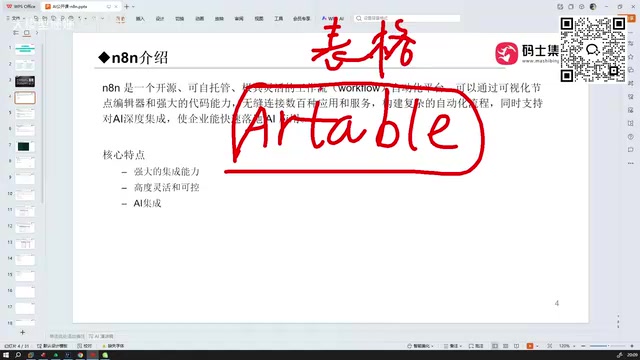
| Online Spreadsheets | Google Sheets, Airtable | No Feishu Sheets/Tencent Docs node |
| Databases | PostgreSQL, MySQL | No dedicated nodes for domestic databases like DM (Dameng) |
| Social Media | Twitter/X | No Weibo node |
This means that if your business scenarios primarily involve Chinese platforms and services, n8n's out-of-the-box nodes may only cover a small fraction of your needs.
Workarounds and Their Practical Value
Although native nodes don't support Chinese services, n8n isn't entirely unusable in China. The following approaches can partially bridge the gap:
- HTTP Request node: Use the generic HTTP request node to manually integrate with any Chinese service that provides an API
- Custom code nodes: Write custom logic using JavaScript/Python
- Webhook triggers: Enable bidirectional communication with Chinese systems via Webhooks
However, these workarounds come with higher development costs, partially offsetting the "low-code" advantage.
Who Should Learn n8n?
Overall, the following groups stand to benefit the most from learning n8n:
- Teams integrating with international services: Cross-border e-commerce, overseas marketing, and globally-oriented businesses
- AI application developers: Leveraging n8n's AI integration to rapidly prototype Agents and RAG applications
- Internal tool developers: Enterprise scenarios like internal data processing and report generation that don't depend on specific Chinese platforms
- Technical learners: Using n8n to understand workflow orchestration design principles — these concepts are universally applicable
Conclusion
n8n is a powerful, ecosystem-rich workflow automation platform. Its 500+ nodes and flexible orchestration capabilities have made it widely popular in international markets. However, when using it in China, you need to be clear-eyed about the gap between its node ecosystem and domestic services. Before choosing n8n, it's advisable to first map out your actual business scenarios, assess how many requirements can be covered by native nodes, and then decide whether the learning investment is worthwhile.
For AI application development specifically, n8n's value is relatively independent of geographic limitations — LLM APIs are globally accessible, making this currently the most practical use case for n8n in China.
Related articles
Polymarket Caught Paying Creators to Post Fake Betting Videos: A Full Breakdown
Polymarket allegedly paid creators to record fake betting videos on clone websites, fabricating trading profits to attract users. A deep dive into the details, methods, legal risks, and industry impact.
Global Robotaxi Scorecard: How China Is Establishing Autonomous Driving Dominance
Based on TechCrunch's latest Robotaxi scorecard, a deep analysis of China's dominance in autonomous taxis covering commercialization scale, policy support, supply chain synergy, and U.S.-China competition.
Building an AI Stock Analysis System with Qwen3 + Dify: A Hands-On Tutorial
A hands-on guide to building a real-time AI stock analysis system using Dify workflows and Qwen3. Covers deployment, technical indicators (RSI/MACD/Bollinger Bands), and trading strategy generation.