GPT-5.4 Powers a Drug Chemistry Project: A Complete Closed Loop from Literature Review to Experimental Validation
GPT-5.4 Powers a Drug Chemistry Projec…
GPT-5.4 drives a complete drug chemistry project from literature review to validated experimental results.
GPT-5.4, working with Emerald Cloud Lab's Maria AI and automated laboratory, has achieved a first-of-its-kind complete closed loop in drug chemistry—spanning literature review, hypothesis generation, experimental design, and physical validation. The AI proposed an unexpected reaction improvement strategy, showcasing cross-disciplinary creativity beyond traditional computational tools. This milestone signals a paradigm shift in human-AI collaboration for drug discovery.
Introduction: AI Drives a Complete Drug Chemistry Experimental Closed Loop for the First Time
A tweet sent ripples through the drug R&D community: GPT-5.4 successfully drove a complete drug chemistry project, progressing from literature review all the way to validated experimental results. This wasn't simply AI-assisted literature retrieval or data analysis — it was a demonstration of genuine creative capability by AI in optimizing core chemical reactions for drug discovery.
What makes this even more noteworthy is that the achievement was accomplished collaboratively by GPT-5.4, Maria AI from Emerald Cloud Lab (ECL), and their specialized automated laboratory. The AI model proposed an unexpected approach to improving a chemical reaction widely used in drug discovery — meaning AI wasn't just executing known tasks, but proposing innovative solutions that human researchers might have overlooked.
GPT-5.4's Role Breakthrough in Drug Chemistry
From Assistive Tool to Research Driver
Historically, AI's role in drug R&D has been concentrated in areas like virtual screening, molecular docking simulations, and ADMET property prediction. Virtual Screening uses computational methods to rapidly screen massive compound libraries for candidate molecules likely to bind to a target protein, typically evaluating millions of compounds within hours. Molecular Docking predicts the binding mode and affinity between small-molecule ligands and protein targets by calculating the optimal conformation of a ligand within a protein's active site to assess binding strength. ADMET stands for Absorption, Distribution, Metabolism, Excretion, and Toxicity — five parameters that determine a drug candidate's pharmacokinetic behavior in the human body. Traditionally, ADMET evaluation requires extensive in vitro and in vivo experiments. AI prediction models, trained on existing ADMET data for known compounds, can screen out candidates with poor pharmacokinetic properties at the molecular design stage, thereby avoiding costly experimental failures later on. All of these are essentially "assistive" roles — human scientists set the direction, and AI accelerates execution.
But GPT-5.4's performance in this project was fundamentally different. It completed an entire research closed loop:
- Literature Review: Systematically surveying existing research in the relevant field
- Hypothesis Generation: Proposing targeted improvement strategies based on literature analysis
- Experimental Design: Translating hypotheses into executable experimental protocols
- Result Validation: Verifying the effectiveness of AI-proposed strategies through actual experiments
This end-to-end research capability marks a qualitative shift in AI's role in scientific research — from a passive tool to an active research driver.
Proposing an "Unexpected" Reaction Improvement Strategy
Particularly worth exploring in depth is that GPT-5.4 proposed an "unexpected way" to improve a commonly used reaction in drug discovery. This suggests the AI may have discovered reaction condition optimization pathways long overlooked by human chemists, or cross-pollinated strategies from other branches of chemistry.
Traditional chemical reaction optimization relies primarily on the experience of experimental chemists and systematic condition screening (such as combinatorial optimization of solvents, temperatures, catalysts, and ligands), with Bayesian optimization and high-throughput experimentation introduced in recent years. But these methods fundamentally still search within known parameter spaces. The unique advantage of large language models lies in their ability to establish connections across disciplinary boundaries — for example, applying catalytic mechanism insights from materials science to drug synthesis, or borrowing enzyme engineering strategies from biocatalysis for organic synthesis reactions. The "unexpected improvement strategy" proposed by GPT-5.4 is very likely a product of this kind of cross-disciplinary knowledge transfer, identifying reaction strategies that were underexplored in drug chemistry literature but had successful precedents in adjacent fields.
This creative proposal capability far exceeds that of traditional computational chemistry tools. Traditional tools search for optimal solutions within known chemical space, while large language models, leveraging their deep understanding of massive scientific literature, can establish cross-disciplinary connections at the conceptual level that are difficult for humans to perceive.
Maria AI and the Automated Laboratory: Turning AI Hypotheses into Physical Validation
The Critical Link in Closed-Loop Validation
No matter how good an AI-generated hypothesis is, its value is greatly diminished if it cannot be rapidly validated. Emerald Cloud Lab's Maria AI and its accompanying automated laboratory played a crucial role in this project — they transformed GPT-5.4's digital hypotheses into experimental results in the physical world.
Emerald Cloud Lab (ECL) is a company providing remote programmable laboratory services, with the core philosophy of fully digitizing and API-ifying laboratory operations. Researchers don't need to be physically present in the lab; they simply describe experimental protocols through code or natural language, and ECL's automated equipment can execute a wide range of operations including organic synthesis, analytical chemistry, and biological experiments. Its companion Maria AI system is specifically responsible for translating high-level experimental intentions into concrete instrument operation instructions, including reagent selection, reaction condition settings, injection sequences, and data acquisition parameters. This cloud-based laboratory model eliminates the variability of manual operations in traditional experiments, giving experiments a high degree of reproducibility, while also providing an ideal physical execution layer for AI-driven automated research closed loops.
This "AI thinks + automated lab executes" model dramatically compresses the time cycle from hypothesis to validation. In traditional drug chemistry research, validating a new reaction condition optimization strategy might take weeks or even months, while AI-driven automated workflows have the potential to shorten this process to just days.
A New Paradigm for Human-AI Collaboration
This case demonstrates a research collaboration paradigm that is taking shape:
- Large Language Model (GPT-5.4): Responsible for knowledge integration, hypothesis generation, and experimental design
- Specialized AI System (Maria AI): Responsible for experimental protocol translation and execution control
- Automated Laboratory: Responsible for precise physical experiment execution and data collection
- Human Scientists: Responsible for final scientific judgment, result interpretation, and strategic decision-making
This is not a story of AI replacing scientists, but rather of AI liberating scientists from tedious literature searches and repetitive experiments, enabling them to focus on higher-level scientific insight and innovative decision-making.
Profound Implications for the Drug Discovery Industry
Accelerating Early-Stage Drug Discovery
The early stages of drug discovery — lead compound identification and optimization — represent one of the most time-consuming and experience-dependent phases of the entire R&D pipeline. Lead compound optimization is extremely challenging: initial active compounds (Hits) obtained from high-throughput or virtual screening typically lack sufficient potency, selectivity, and pharmacokinetic properties, requiring extensive structural modifications and structure-activity relationship (SAR) studies to evolve into lead compounds with clinical development potential. This process averages 2–4 years, involves the synthesis and testing of hundreds to thousands of compounds, and can cost tens of millions of dollars. The efficiency and reliability of chemical reactions directly determine the pace of this stage — if a key chemical transformation step has low yield, poor selectivity, or harsh conditions, the entire optimization process is severely constrained.
If AI can systematically propose and validate reaction improvement strategies, this would significantly enhance lead compound synthesis efficiency, reduce early-stage R&D costs, and shorten the time window from target validation to drug candidate.
Risks and Limitations to Watch
Of course, maintaining a cautious perspective is equally important. A single successful case does not mean AI can fully replace the professional judgment of drug chemists. The following issues still require ongoing attention:
- Reproducibility: Can these results be consistently replicated across different reaction systems and chemical scaffolds?
- Safety Assessment: Has the "unexpected" strategy proposed by AI undergone thorough safety and feasibility evaluation?
- Scope of Applicability: Is this approach only suitable for specific types of chemical reactions, or does it possess broader generalizability?
Future Outlook
From GPT-4 to GPT-5.4, the improvement in large language models' scientific reasoning capabilities has been evident. This evolution is not simply a matter of parameter scale growth: GPT-4 already demonstrated foundational abilities to understand chemical reaction mechanisms and interpret experimental data, but had clear limitations in proposing original scientific hypotheses. Subsequent models, through larger-scale scientific literature training, optimization of reasoning chain quality via reinforcement learning, and deep integration with specialized tools (such as cheminformatics databases and reaction prediction engines), gradually acquired the ability to make cross-disciplinary knowledge connections and generate creative strategies. Notably, this "creativity" doesn't emerge from thin air — the model identifies knowledge fragments scattered across different research fields and time periods within massive literature, then recombines them into coherent scientific hypotheses. This is precisely the kind of work that human researchers, constrained by disciplinary silos and information overload, find difficult to accomplish systematically.
As model capabilities continue to strengthen and automated laboratory infrastructure continues to mature, "AI-driven scientific discovery" is transitioning from proof of concept to practical application.
Drug R&D is likely to be one of the first fields to benefit at scale — this industry possesses massive structured data and literature accumulation, an urgent need for efficiency improvements, and a relatively mature automated experimentation technology foundation. The convergence of these three factors creates ideal conditions for deep AI participation.
Conclusion
This collaboration between GPT-5.4 and Maria AI may well become an important milestone in the progression of AI-driven scientific discovery. It demonstrates that large language models can not only understand scientific literature but also propose creative experimental strategies based on that understanding, completing end-to-end validation through automated laboratories. While there is still a considerable road ahead before AI can comprehensively and deeply participate in drug R&D, this case has clearly pointed the way: AI is becoming the most powerful research partner in a scientist's arsenal.
Related articles
Ponytail Plugin for Claude Code Tested: Dramatically Less Code, 50% Lower Costs
Real-world testing of Claude Code plugin Ponytail: YAGNI decision ladder dramatically reduces AI-generated code, cutting costs 47%-77% with weather dashboard comparison and benchmark analysis.
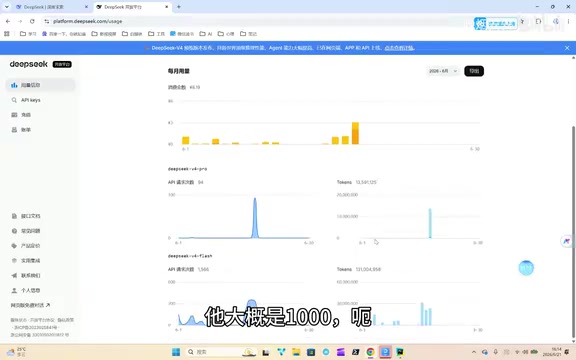
DeepSeek + Resonix: A Low-Cost AI Coding Solution — 150 Million Tokens for Just $1.10
Real-world test: DeepSeek API + Resonix coding tool consumed 150M tokens for just $1.10. Deep dive into DeepSeek pricing, Resonix's 95% cache hit rate, and honest comparison with GPT models.
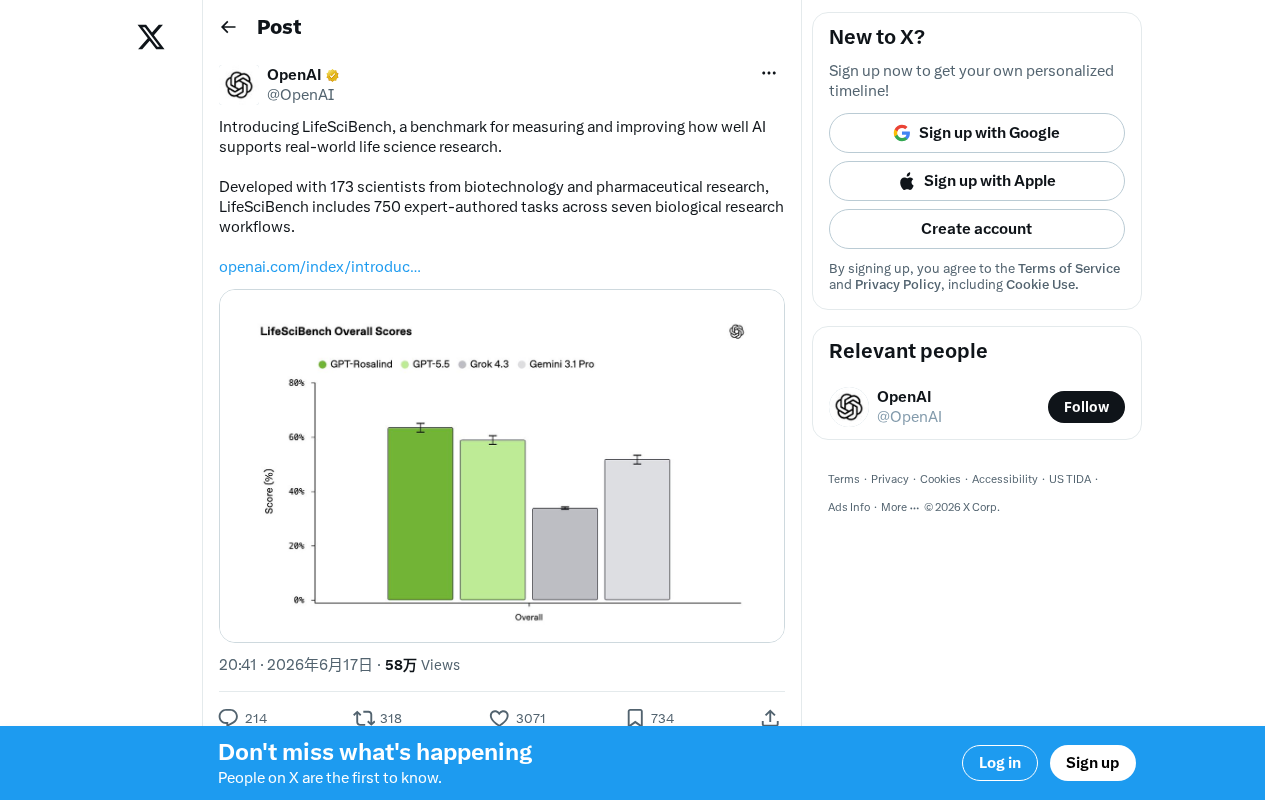
LifeSciBench: A Life Science AI Benchmark Built by 173 Scientists
LifeSciBench is a life science AI benchmark developed by 173 biotech and pharma scientists, featuring 750 expert tasks across seven research workflows.